The 10 Most Underrated Michael Caine Movies, Ranked (from Least to Most Underrated)


Michael Caine’s filmography stretches across decades, countries, and genres, with lead turns, character parts, and scene-stealing cameos that keep showing new sides of his craft. Beyond the household classics like ‘Alfie’, ‘The Italian Job’, and ‘The Dark Knight’, there’s a deep bench of titles where he anchors thrillers, dramas, and off-beat gems, often working with heavyweight directors and acclaimed novelists’ material.
This list spotlights a range of projects—crime capers, espionage pieces, literary adaptations, and intimate character studies—where his role is central to the film’s design. You’ll find collaborations with directors such as Mike Hodges, Norman Jewison, John Mackenzie, Michael Radford, and Phillip Noyce, plus ensembles stacked with performers including Helen Mirren, Brendan Fraser, Tilda Swinton, and Bob Hoskins.
‘Pulp’ (1972)
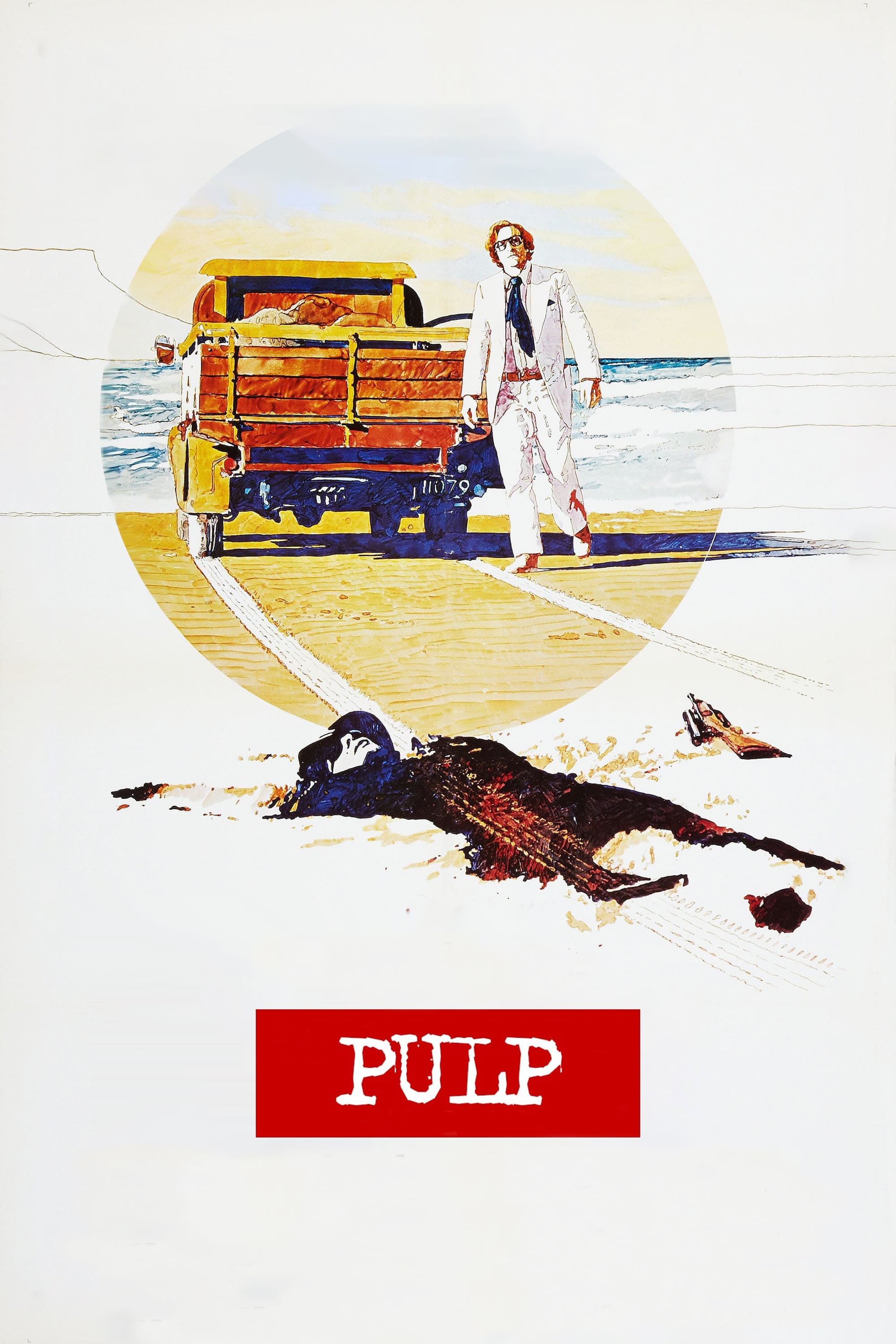
Mike Hodges directs this black-comic crime story with Michael Caine as Mickey King, a fast-writing ghost author who’s hired to pen the life story of a notorious figure and finds himself pulled into a contract killing. The film pairs Caine with Mickey Rooney and folds its mystery into a meta-pulp premise that riffs on genre tropes, with location work in the Mediterranean and a playful hard-boiled voiceover threading the plot.
Produced by ITC and released as the follow-up to Hodges and Caine’s earlier collaboration ‘Get Carter’, the movie uses the publishing world and a faded-celebrity milieu as its backdrop. Its production leaned on on-location shooting for a sun-bleached look and a spare, economical design, while Hodges’ script layers in literary in-jokes, false identities, and a finale that circles back to the opening narration setup.
‘The Whistle Blower’ (1986)
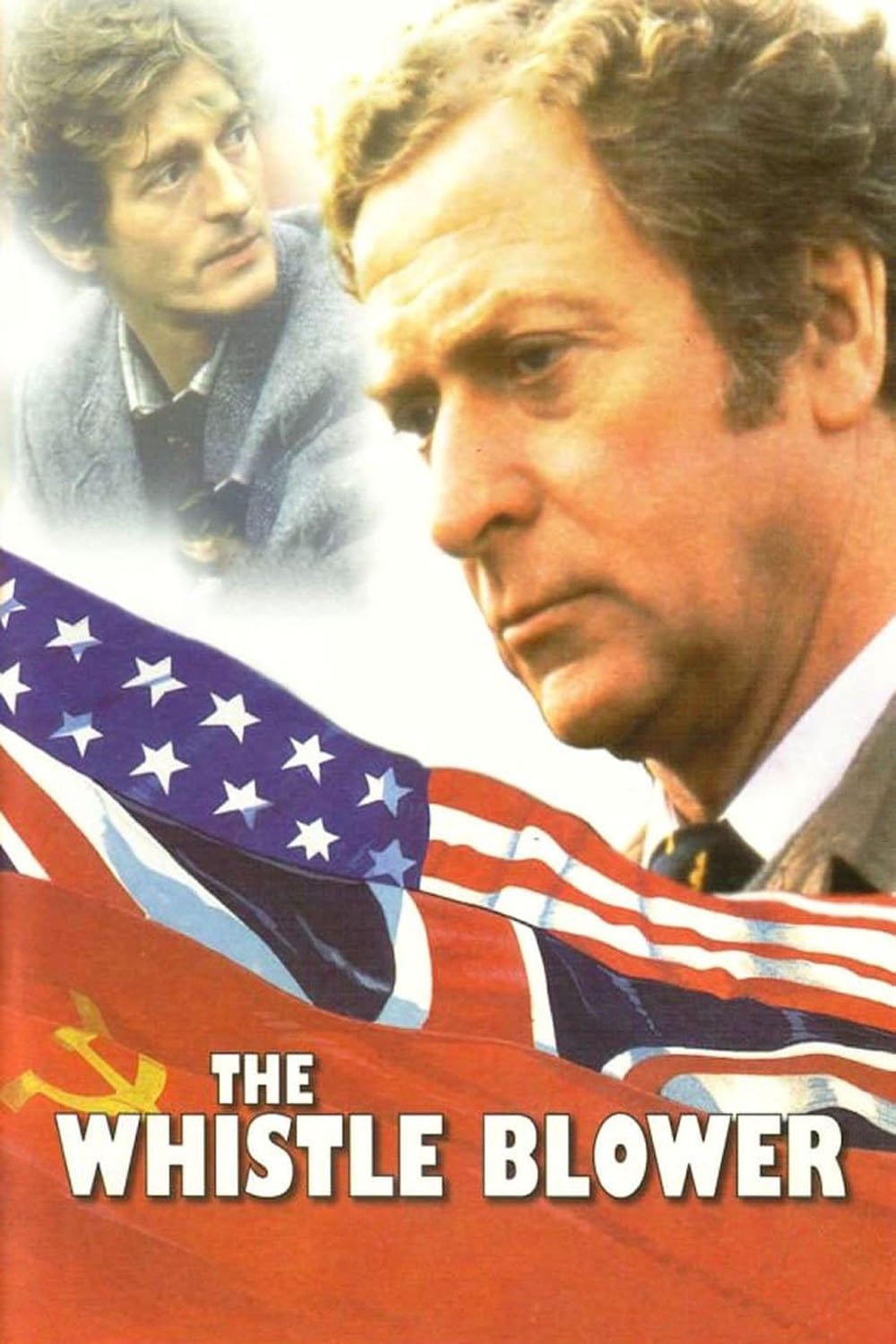
Caine plays Frank Jones, the father of a linguist working for British signals intelligence whose unexplained death pushes him into the world of Cold War surveillance and internal leaks. Directed by Simon Langton and adapted from John Hale’s novel, the film mixes procedural detail—cover names, secure sites, and inter-agency friction—with the rhythms of a personal investigation.
The production was mounted in and around real-world government-adjacent settings, using Cheltenham as a touchpoint for the communications-intelligence storyline. The cast includes Nigel Havers, John Gielgud, and James Fox, and the adaptation keeps the novel’s themes of institutional opacity while paring the narrative to emphasize the chain of events that leads from an office-level dispute to a political flashpoint.
‘The Statement’ (2003)

Directed by Norman Jewison from Brian Moore’s novel, the film follows Pierre Brossard, a former wartime collaborator being hunted by a magistrate and security services years after his crimes. Caine’s character moves from safe house to safe house across provincial France as competing groups—official investigators and unknown assailants—close in, turning the story into a man-on-the-run procedural rooted in archival files and church records.
The cast features Tilda Swinton, Jeremy Northam, Alan Bates, and Charlotte Rampling, with production photographing monasteries, town squares, and administrative offices to ground the manhunt in recognizable civic spaces. The adaptation preserves Moore’s structure of alternating pursuit and respite, and it frames the legal questions through interviews, dossiers, and jurisdictional handoffs rather than action set-pieces.
‘The Fourth Protocol’ (1987)
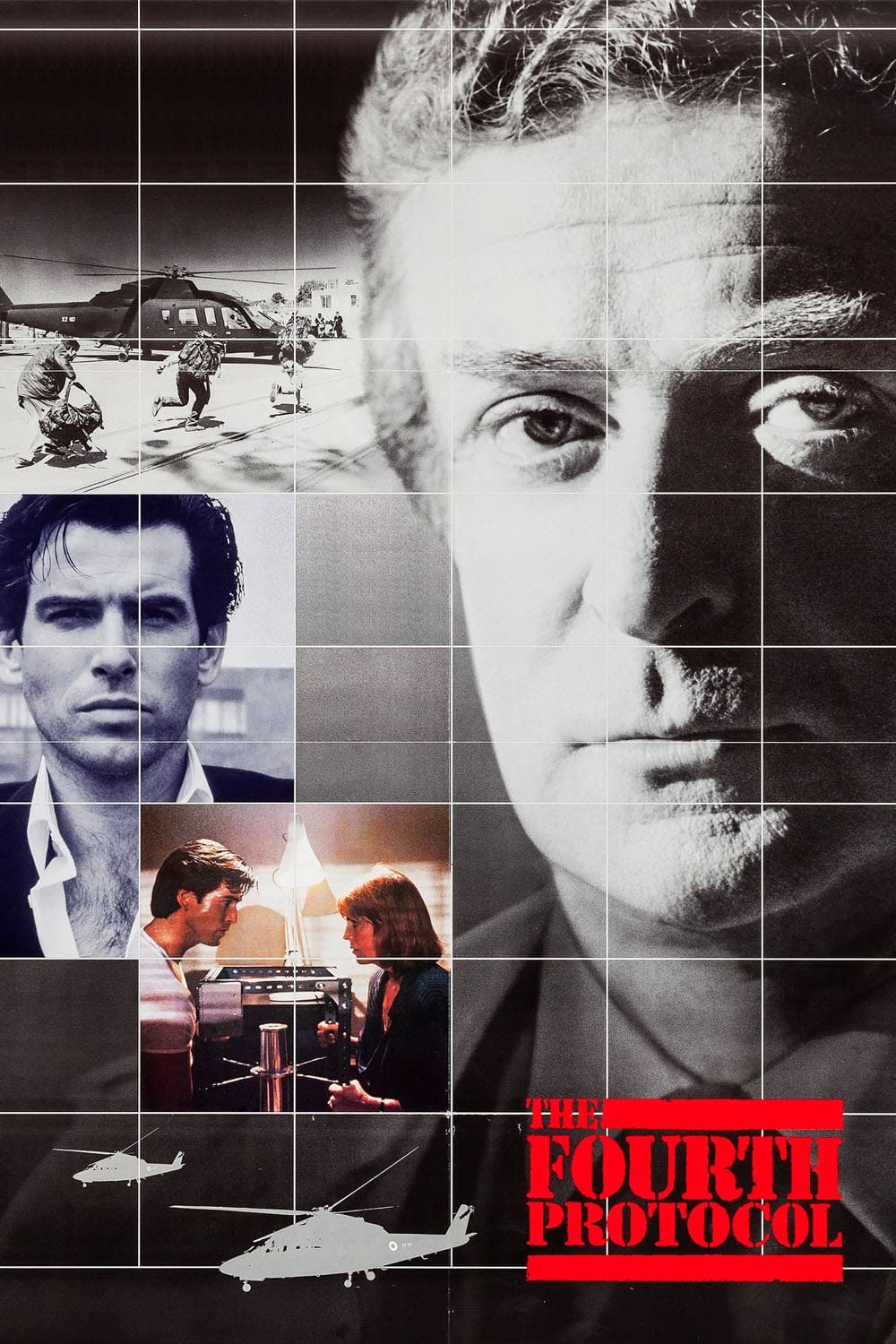
John Mackenzie directs this Frederick Forsyth adaptation about a clandestine operation to assemble a nuclear device on British soil, with Caine as intelligence officer John Preston tracking Pierce Brosnan’s undercover operative. The story details courier drops, covert apartments, and the incremental smuggling of component parts, building its plot around security briefings and counter-surveillance.
Shot across English locations—including urban new-town architecture that doubles for safe flats and government offices—the film emphasizes tradecraft: dead letters, tailing techniques, and inter-department memos that star in the escalation. Forsyth’s scenario supplies the political frame, while Mackenzie—well known for ‘The Long Good Friday’—keeps the emphasis on process and the implications of a single device detonated near a strategic site.
‘Flawless’ (2007)

Set in the City of London’s diamond district, Michael Radford’s film pairs Caine’s night janitor with Demi Moore’s overlooked executive to mount a theft inside a heavily secured vault. The plot uses office hierarchies, personnel files, and shift patterns as functional tools, showing how access badges, cleaning schedules, and routine deliveries become the blueprint for the operation.
Radford—whose credits include ‘Il Postino’—stages much of the action in boardrooms, security suites, and loading bays to underline how corporate infrastructure can be repurposed. The production blends period detail from the era’s business culture with a heist that prefers duplicate keys, misdirection logs, and audit trails over high-tech gadgetry, and it maps the company’s chain of command onto the caper’s phases.
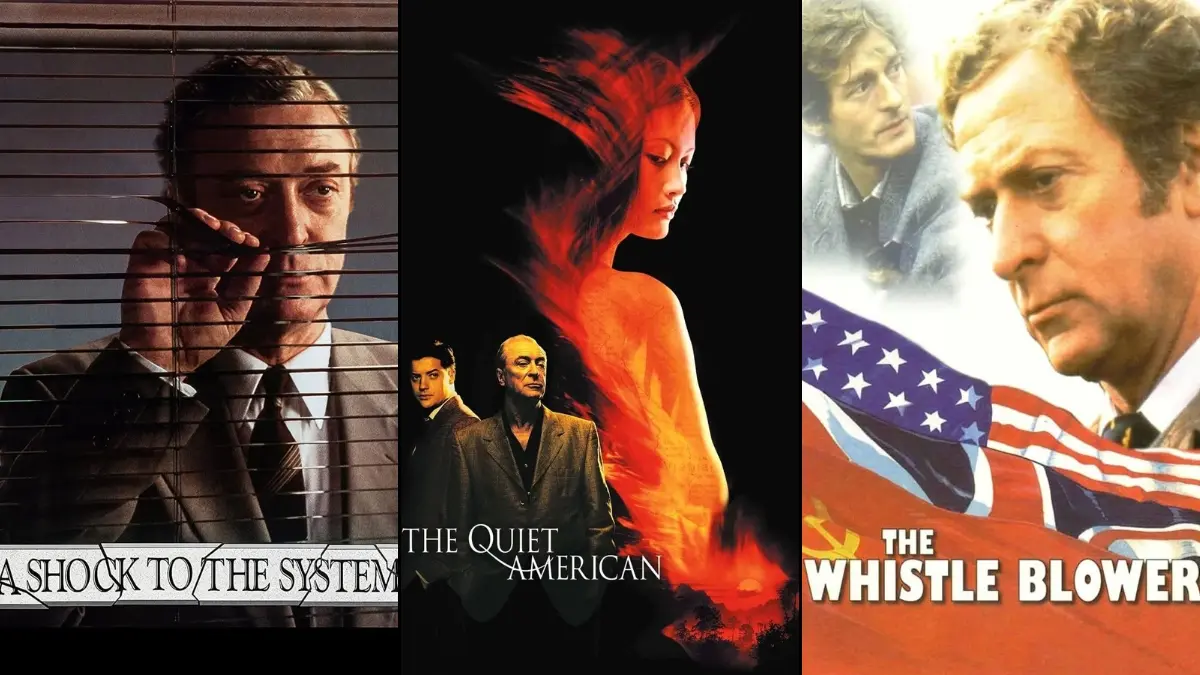
‘A Shock to the System’ (1990)
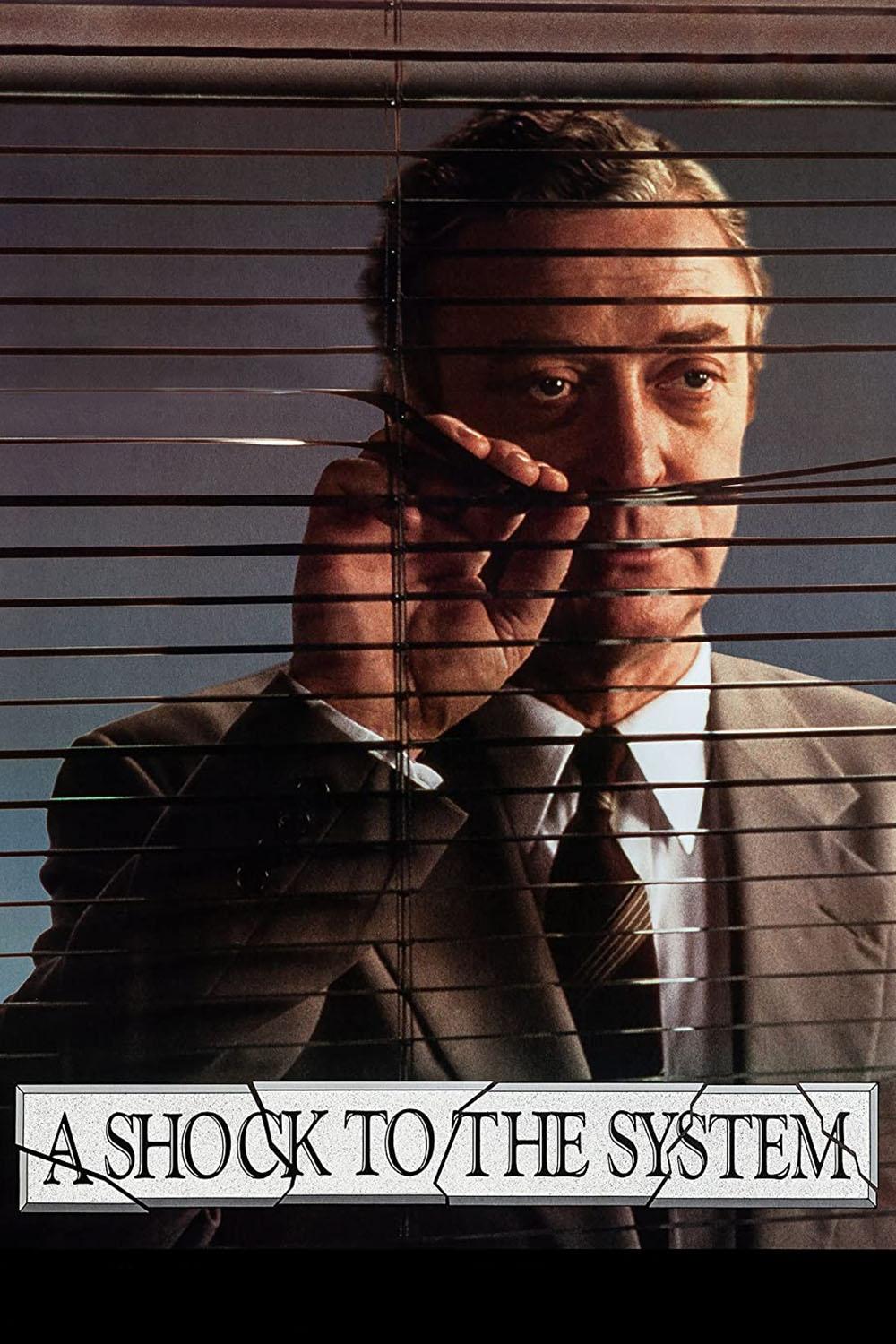
Based on Simon Brett’s novel, this New York-set dark comedy-thriller follows Caine’s marketing executive Graham Marshall as a workplace setback spirals into a series of precisely planned crimes. Jan Egleson’s direction treats trains, stairwells, and office corridors as recurring motifs, using everyday spaces to show how routine becomes cover.
The adaptation foregrounds the mechanics of alibis, office politics, and insurance arrangements, with supporting turns by Elizabeth McGovern, Peter Riegert, and Swoosie Kurtz. Its production favors practical locations, and it keeps the narrative tightly aligned with Marshall’s project timelines, expense claims, and calendar entries, turning executive tools into structural elements of the plot.
‘Is Anybody There?’ (2008)
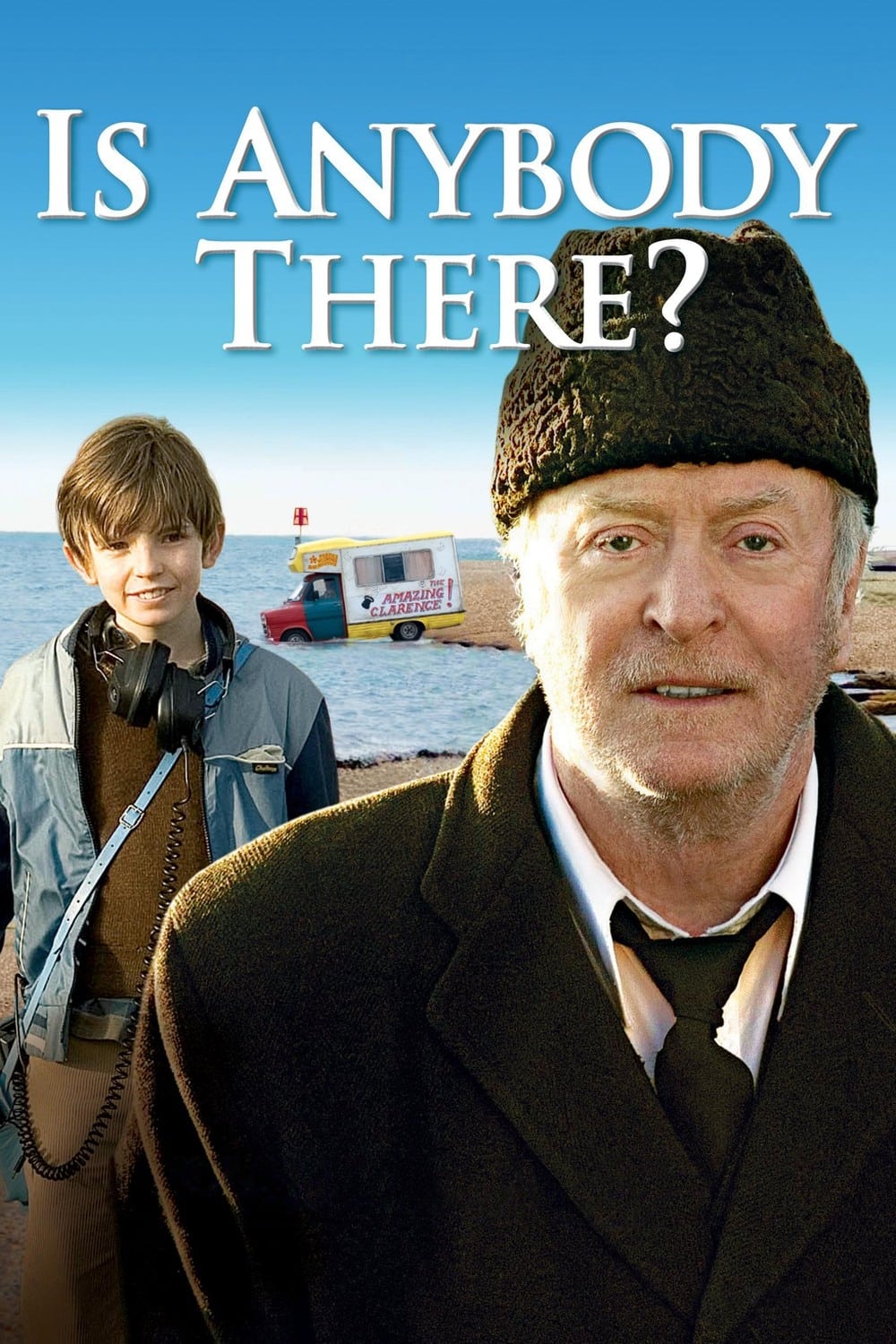
John Crowley directs this small-scale drama about the friendship between Caine’s retired stage magician and a boy living in his parents’ residential care home. The film sets their relationship inside mealtime routines, visiting hours, and shared rooms, and it uses props trunks, magic posters, and practice notebooks to connect the character’s past life to the present story.
Written by Peter Harness, the film draws on the textures of a coastal English town—arcades, charity shops, and community halls—and features Bill Milner, Anne-Marie Duff, David Morrissey, and Leslie Phillips. Production design leans on period household items and care-home signage, while the narrative uses tapes, diaries, and tricks-in-progress to move scenes forward.
‘Last Orders’ (2001)
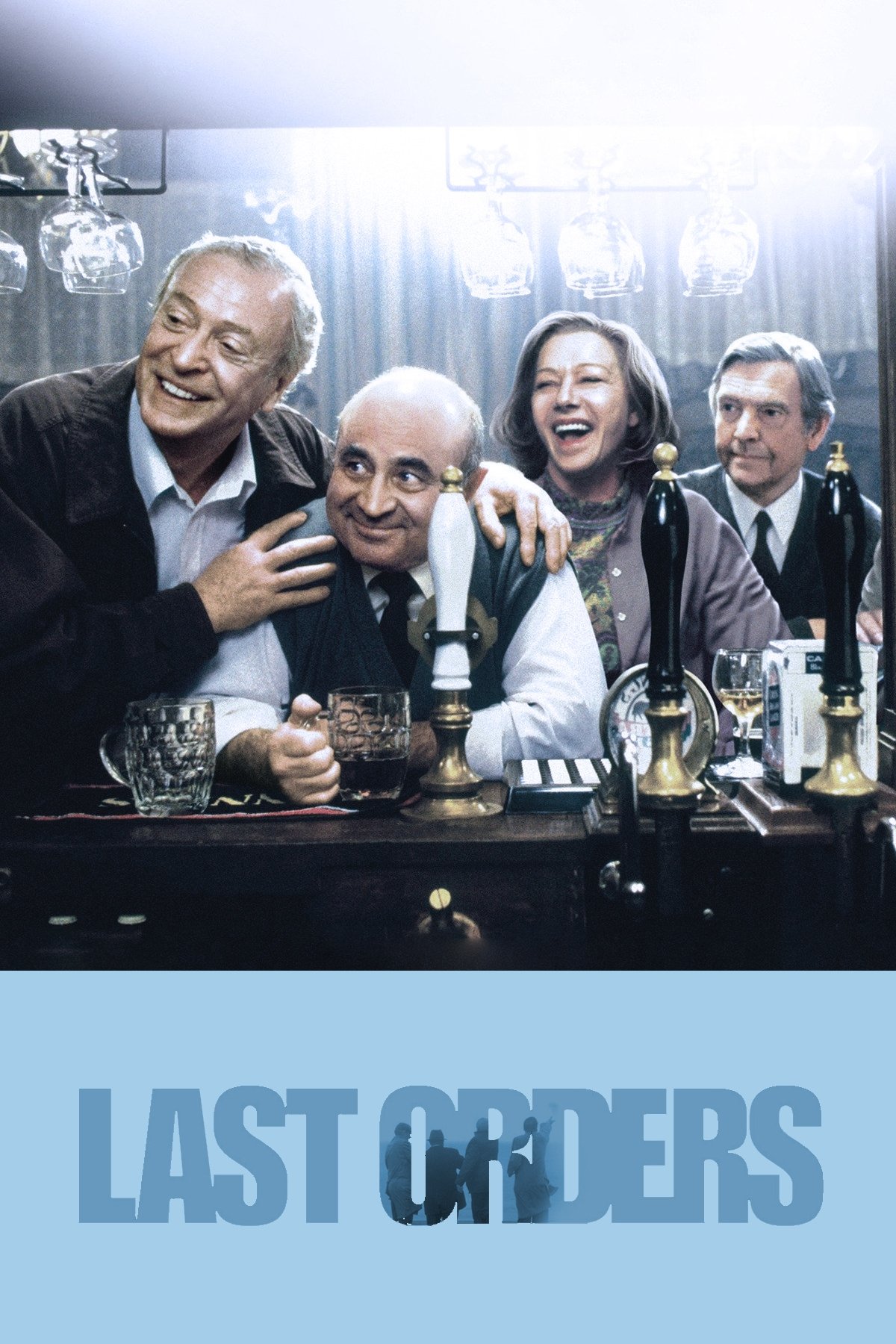
Fred Schepisi adapts Graham Swift’s Booker Prize-winning novel, with Caine as Jack Dodds, whose friends carry out a request to scatter his ashes on a seaside pier. The story unfolds through pub stops, car rides, and memories keyed to specific London and Kent landmarks, and it intercuts present-day travel with glimpses of past events to reveal the group’s shared history.
The ensemble includes Bob Hoskins, Tom Courtenay, David Hemmings, Ray Winstone, and Helen Mirren, and the production maps the book’s route onto real locations, from butcher’s shops to racecourses. Editing and structure preserve the novel’s shifting viewpoints, while costume and vehicle choices track class, trade, and era without relying on exposition.
‘The Quiet American’ (2002)

Phillip Noyce adapts Graham Greene’s novel with Caine as Thomas Fowler, a British reporter in Saigon whose relationship with a young woman intersects with the activities of an American operative played by Brendan Fraser. The film lays out intelligence fronts, aid programs, and press conferences alongside domestic scenes, using letters, dispatches, and coded conversations to connect personal choices to geopolitical maneuvers.
Shot on location in Vietnam, the production uses markets, riverboats, and colonial-era architecture to anchor the setting, with Do Thi Hai Yen as Phuong and a supporting cast that includes local performers. Caine’s performance earned major award nominations, and the release restored elements of Greene’s political argument by emphasizing the mechanics of covert operations and the sourcing of explosive materials.
‘Harry Brown’ (2009)
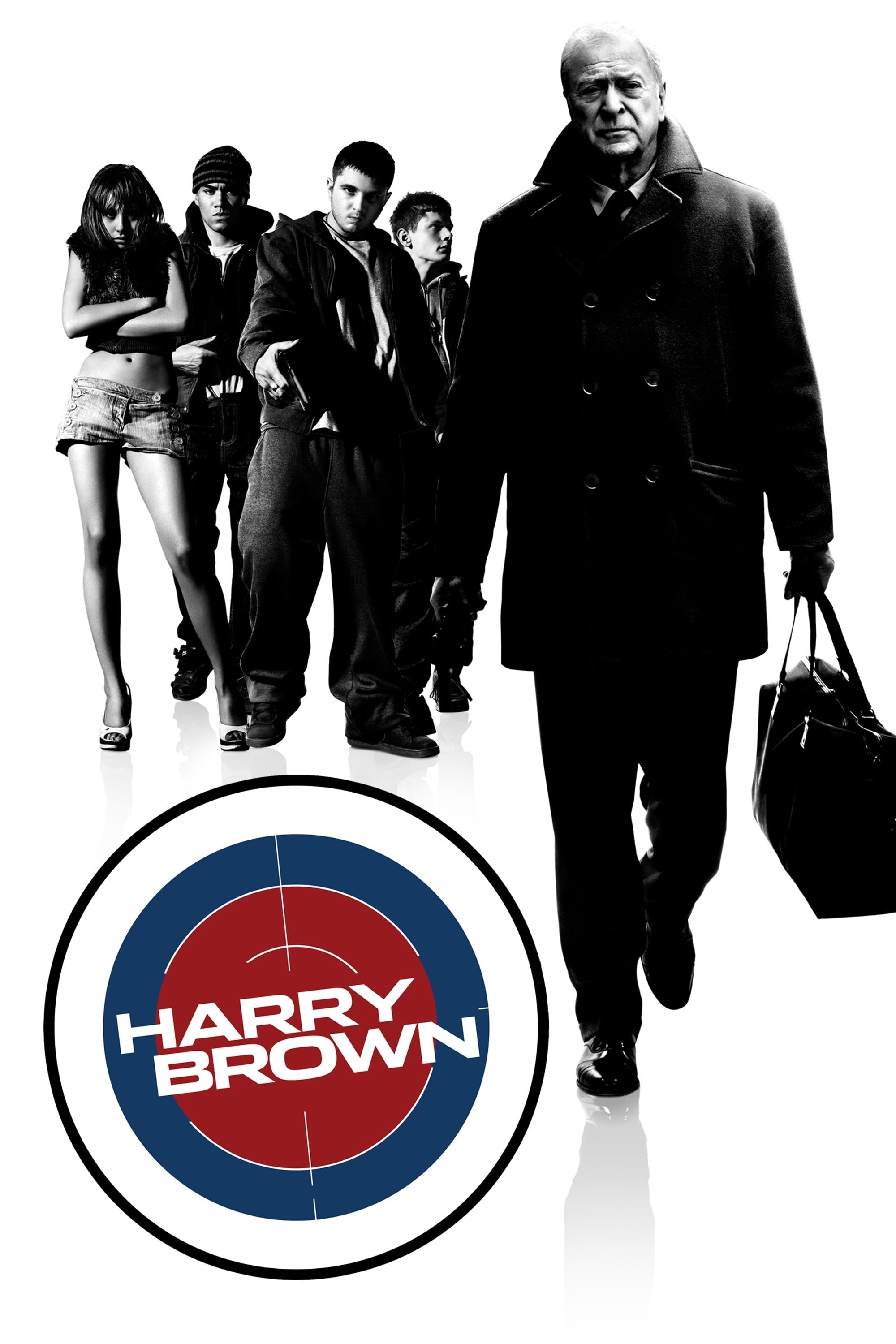
Daniel Barber directs this urban thriller with Caine as a widowed ex-Royal Marine whose housing estate is dominated by gang violence. The film’s police-investigation strand, led by Emily Mortimer’s detective, runs parallel to scenes in underpasses, community bars, and CCTV-watched courtyards, establishing how evidence logs, incident reports, and witness interviews accumulate.
Filmed on the former Heygate Estate in South London for its distinctive architecture and sight lines, the production integrates estate maps, transit routes, and hospital procedures to ground events in civic systems. The release featured supporting turns from Ben Drew and Jack O’Connell, and it charts escalation through formal encounters—questionings, inquests, and patrol briefings—rather than relying solely on set-piece spectacles.
Share your own picks for overlooked Michael Caine performances in the comments!