The Worst 1970s Movies that Are Hard to Watch Till the End


Some films from the decade of disaster epics, off-the-wall musicals, and wild studio gambles became infamous not for their brilliance but for how tough they can be to sit through. This list looks at titles that struggled with production troubles, mismatched creative choices, or chaotic releases—yet remain fascinating snapshots of the era’s risks and trends. They’re curiosities packed with big stars, big budgets, and bigger ambitions, and each one has a story worth knowing even if the viewing itself can feel like a slog.
Depending on when and where you’re reading this, some of these titles might not be available on your preferred services or in your region. With that in mind, here’s a fact-first tour through notorious efforts from the decade—who made them, who starred in them, and what actually happens on screen.
‘Exorcist II: The Heretic’ (1977)
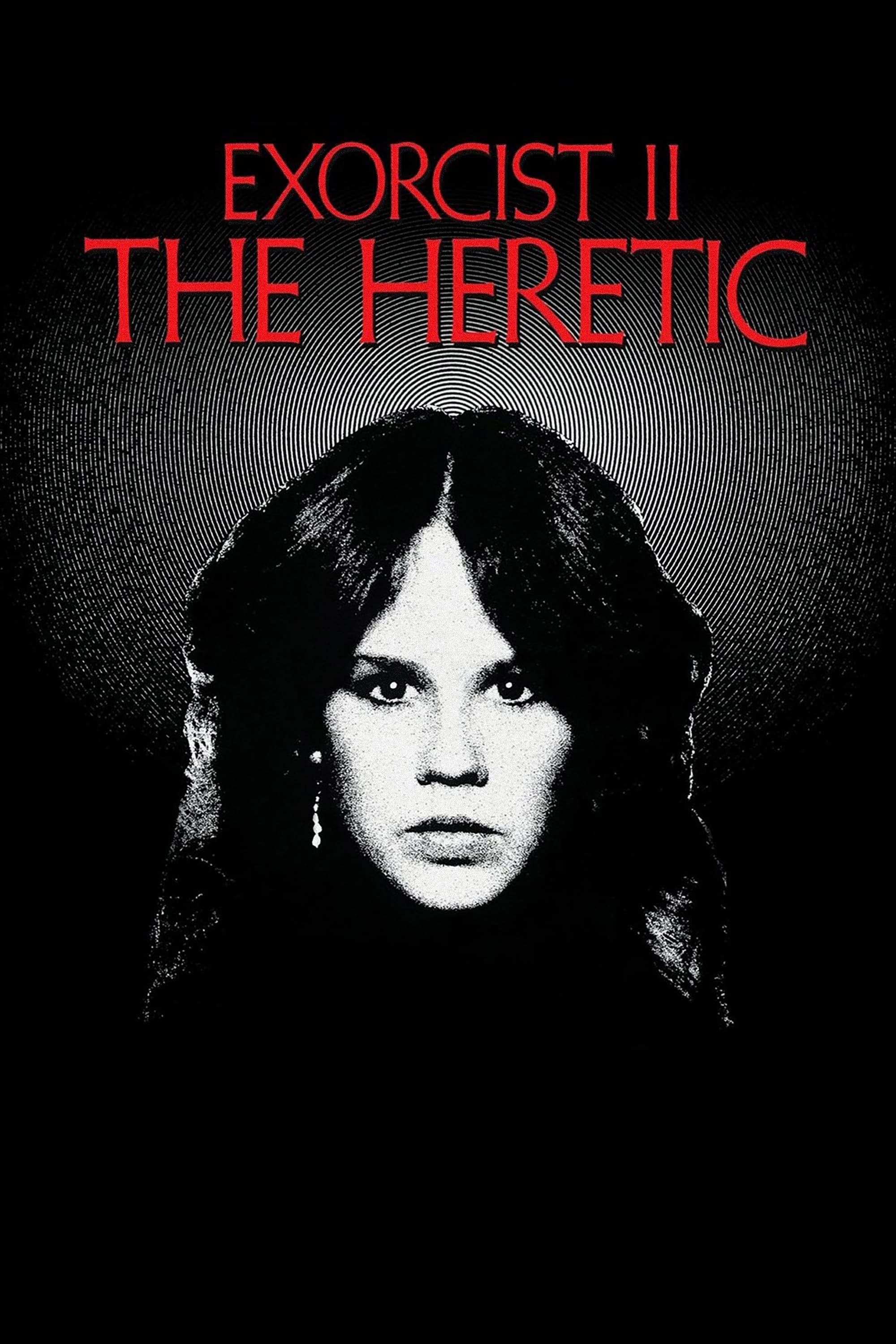
Director John Boorman reunited part of the original creative footprint with Linda Blair as Regan MacNeil, Richard Burton as Father Philip Lamont, Louise Fletcher as Dr. Gene Tuskin, and Max von Sydow returning in flashbacks as Father Merrin. The story follows an investigation into the demonic force known as Pazuzu, mixing psychiatry with a biofeedback device called a synchronizer as Lamont probes whether Merrin’s faith or a malevolent presence is at the center of Regan’s lingering trauma. Ennio Morricone composed the score, and the film incorporated large-scale sets, location work, and optical effects intended to expand the mythology.
The production went through multiple rewrites and reshoots, with Boorman steering the sequel toward a metaphysical tone rather than straight horror. Released by Warner Bros., it opened strong but saw rapid audience drop-off as word spread, and later home-video releases preserved substantially different cuts for different markets. Over time it became a staple of sequel cautionary tales, frequently cited in genre histories for how it shifted away from William Friedkin’s approach and leaned into dreamlike imagery, hypnotic set-pieces, and recurring locust motifs.
‘Sgt. Pepper’s Lonely Hearts Club Band’ (1978)
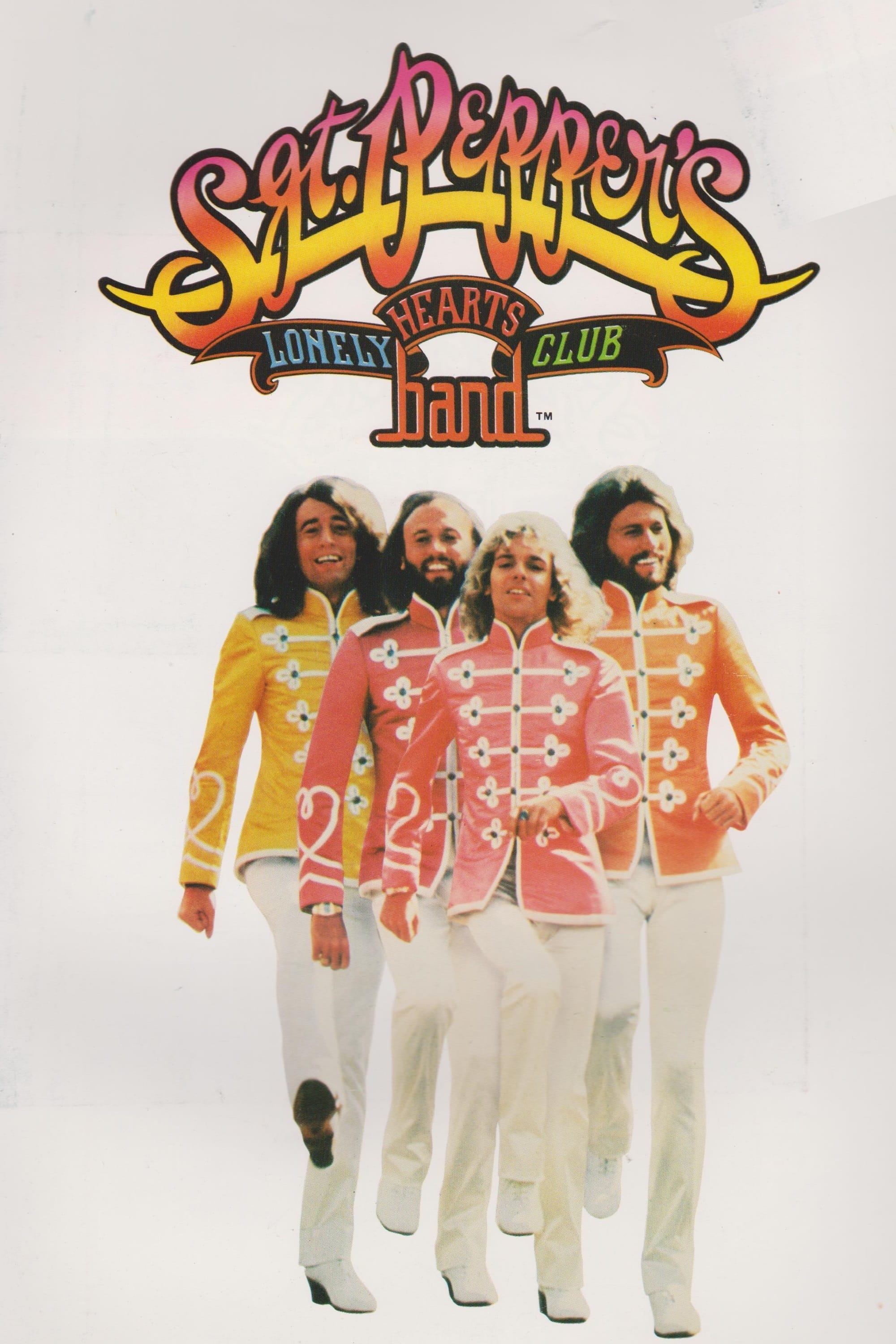
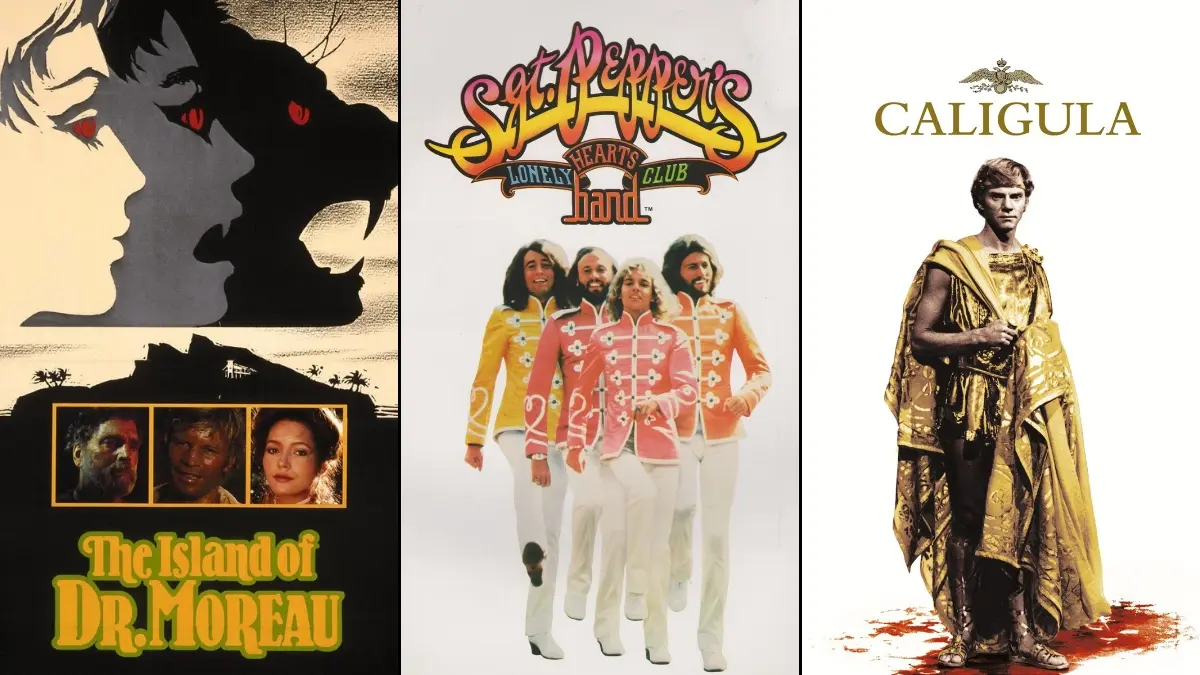
Produced by Robert Stigwood and directed by Michael Schultz, this jukebox musical stars Peter Frampton and the Bee Gees as members of the fictional band, with supporting turns from Steve Martin, Alice Cooper, Aerosmith, and Earth, Wind & Fire. The plot loosely stitches together a small-town fairy tale about stolen magical instruments, a sinister music mogul, and a rescue mission told almost entirely through covers of songs associated with the Beatles. The soundtrack was issued as a sprawling multi-disc release, with elaborate studio arrangements and cameo-packed numbers.
Shot on glossy sets with elaborate choreography, the film leans into spectacle: oversized villain lairs, Broadway-style staging, and a bright, candy-colored palette. Despite the star power and marketing push, it underperformed against expectations, while the soundtrack—though commercially notable—didn’t translate to lasting cinematic momentum. The project remains a high-profile example of the period’s fascination with turning pop catalogs into narrative features, bringing together rock icons, comedians, and studio musicians under one extravagant umbrella.
‘The Swarm’ (1978)
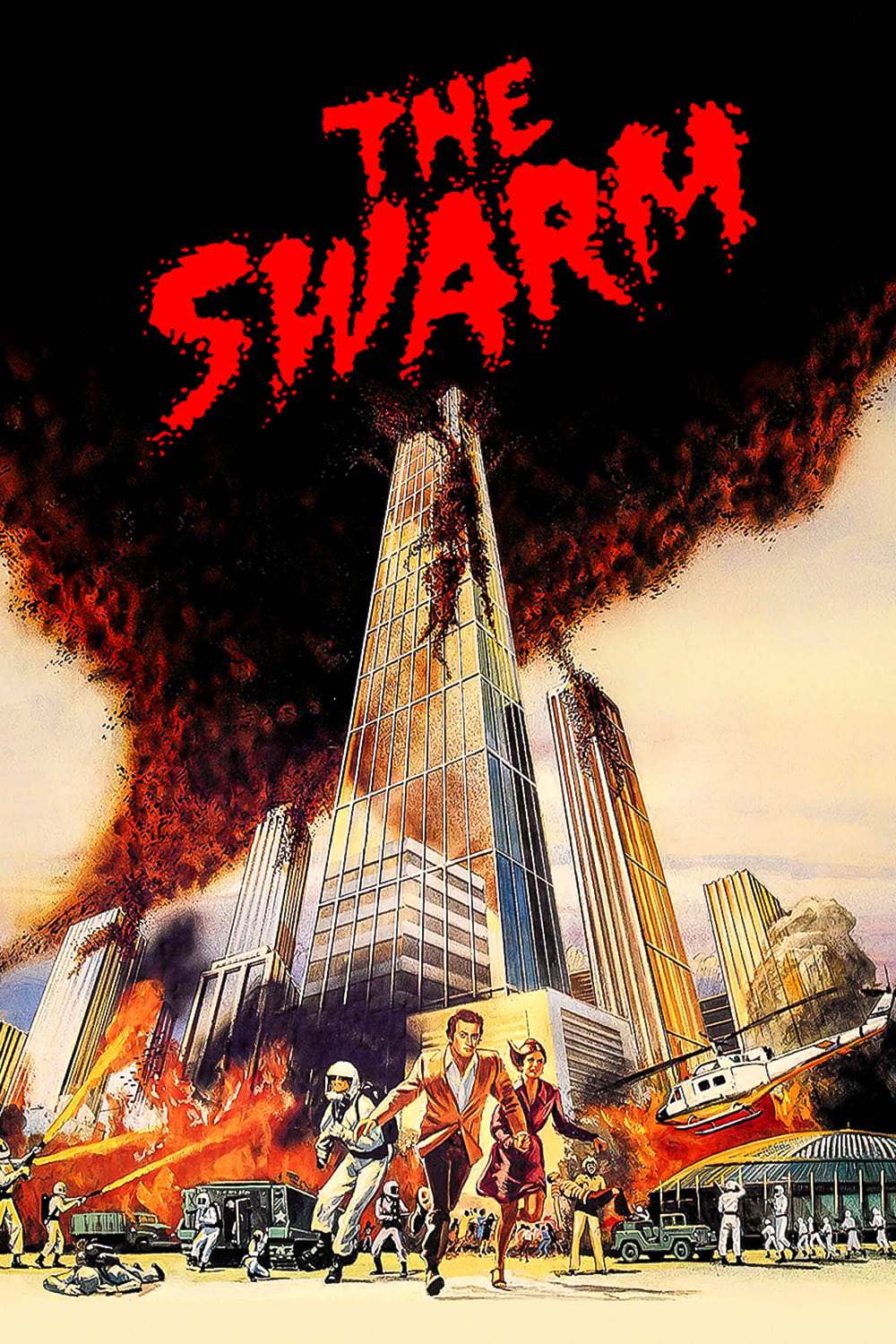
Irwin Allen, the “Master of Disaster,” directed this killer-bee thriller led by Michael Caine, with Katharine Ross, Richard Widmark, Henry Fonda, and Olivia de Havilland among the ensemble. The story follows a military and scientific response to a massive influx of Africanized honeybees threatening towns across the American Southwest, focusing on field containment, evacuation plans, and the logistics of confronting a moving, living hazard. The production deployed practical insect wrangling, miniatures, and pyrotechnics typical of Allen’s large-scale disaster formula.
The film arrived deep into the cycle of star-studded catastrophe pictures, pairing procedural command-center scenes with on-the-ground set-pieces like train and refinery emergencies. Despite extensive location work and a stacked cast list, it struggled to connect at the box office relative to prior Allen hits. Subsequent television and home-video versions have circulated with various edits, and its place in the disaster lineage is often noted for the sheer number of Oscar winners and nominees assembled for a creature-feature premise.
‘Moment by Moment’ (1978)
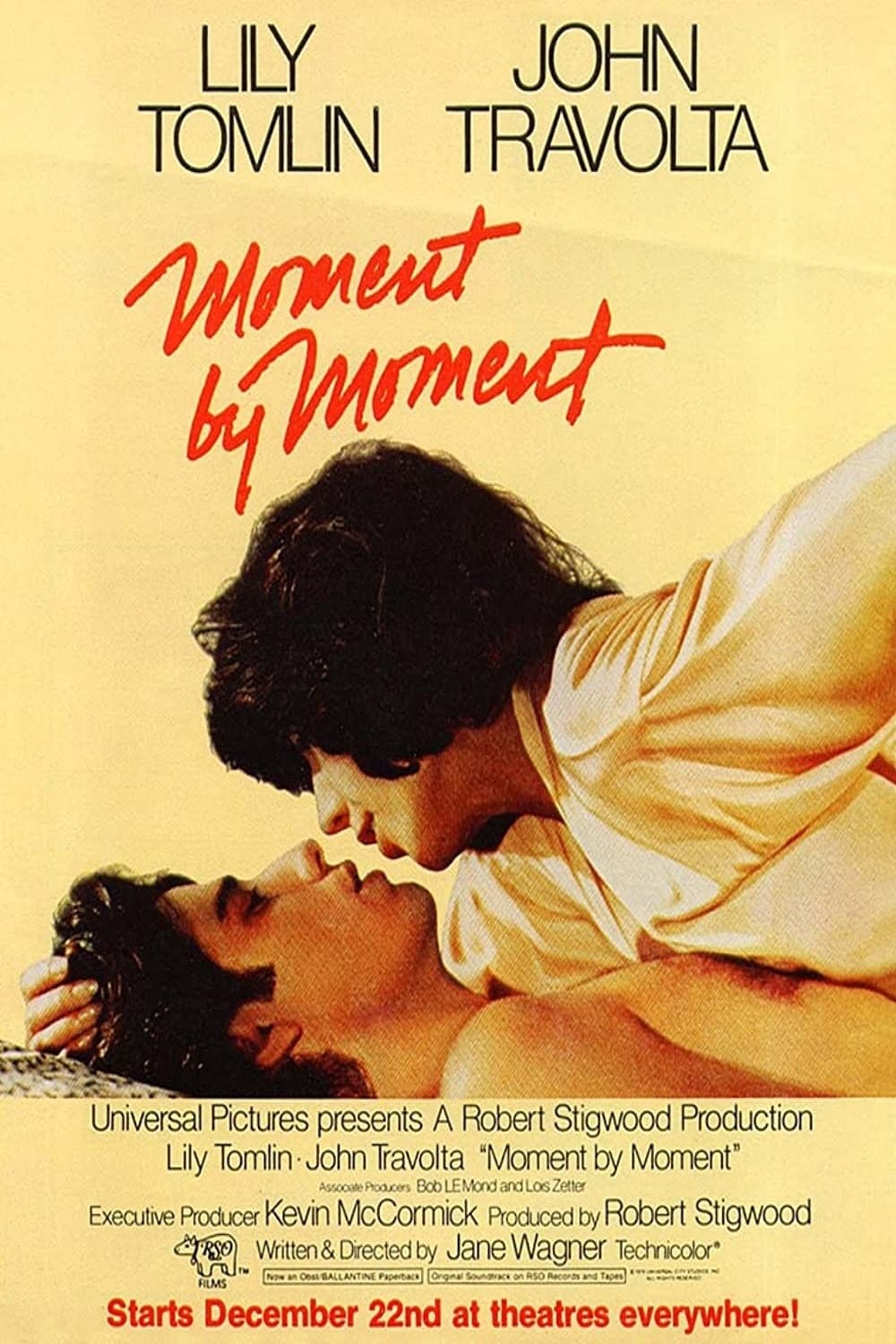
Written and directed by Jane Wagner, this romantic drama pairs Lily Tomlin as a wealthy, recently separated woman with John Travolta as a younger drifter nicknamed “Strip.” Set largely in Malibu and Beverly Hills, the film charts their tentative, then all-consuming relationship as it moves from chance encounters to cohabitation, exploring class divides, emotional dependency, and conflicting expectations. The production emphasizes intimate two-hander scenes, soft-focus photography, and a contemporary pop soundtrack.
Backed by Universal, the movie was marketed around the marquee pairing of Tomlin and Travolta during a period when both were major draws. The story’s focus remains squarely on the duo, with supporting roles kept minimal to foreground their dynamic. Despite significant promotional attention, the film’s theatrical performance was modest, and over time it has been referenced in retrospectives for its star casting and for how its restrained structure contrasted with the era’s more kinetic studio fare.
‘The Concorde… Airport ’79’ (1979)

The fourth entry in the ‘Airport’ series, this installment stars George Kennedy as chief pilot Joe Patroni, joined by Alain Delon, Susan Blakely, Robert Wagner, and Sylvia Kristel. The plot centers on an arms manufacturer’s attempt to eliminate a whistleblowing girlfriend by sabotaging a Trans Global Airlines Concorde flight through drone attacks, missile lock-ons, and in-flight malfunctions. Production collaborated with Air France for aircraft access and featured aerial cinematography highlighting the supersonic jet’s distinctive design.
David Lowell Rich directed, leaning on franchise staples: cross-section ensembles, cockpit crisis management, and cascading mechanical threats. The movie’s set-pieces include emergency maneuvers, perilous landings, and decompression sequences that push the series’ technical theatrics. Box-office returns tailed off compared with earlier entries, and the ‘Airport’ cycle wound down soon after, with this film often cited as a late-period attempt to update the formula with contemporary aviation technology.
‘Beyond the Poseidon Adventure’ (1979)
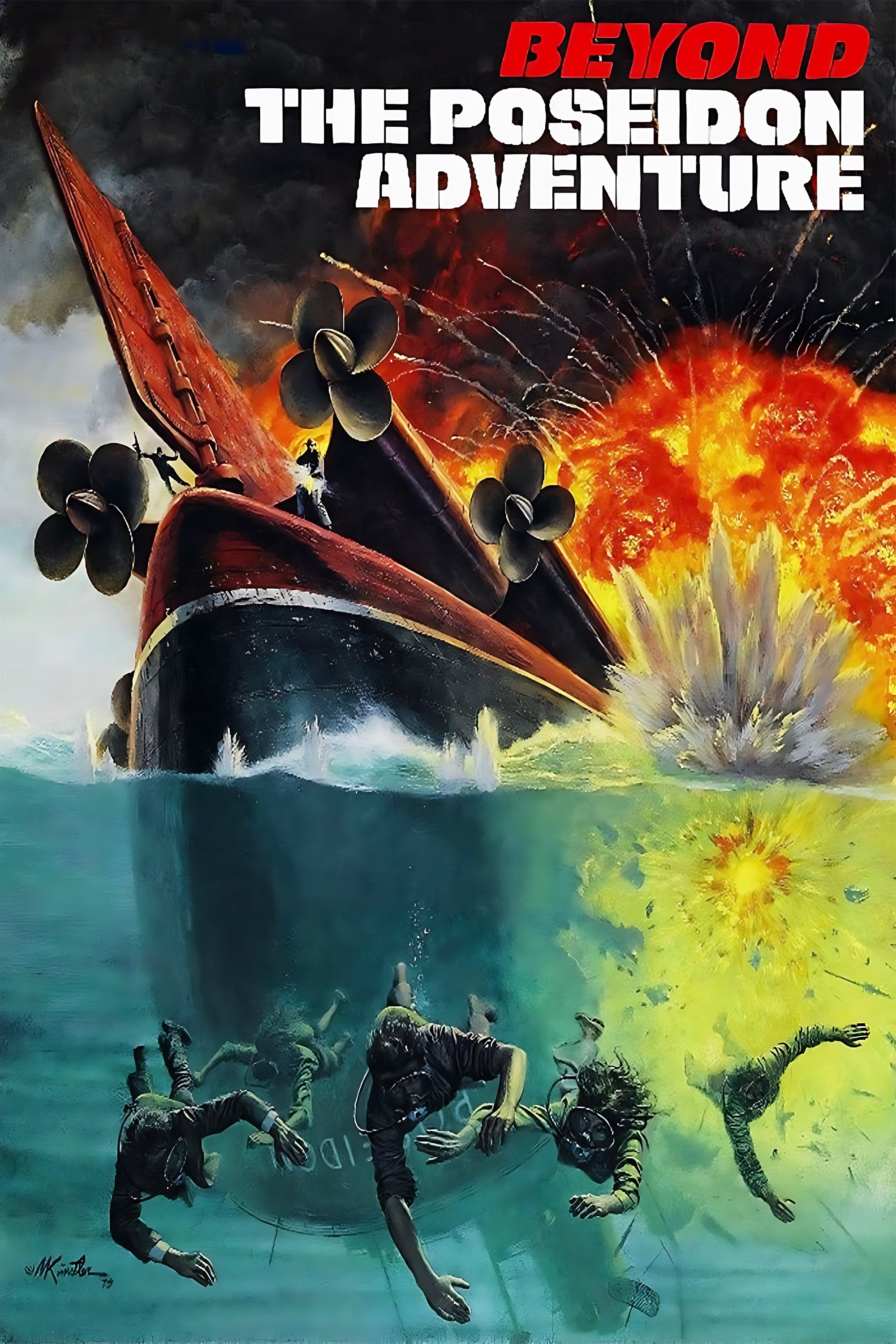
Irwin Allen returned to the world of the capsized ocean liner with Michael Caine, Sally Field, Karl Malden, and Telly Savalas leading the cast. Rather than a rescue, the sequel follows rival groups entering the overturned ship on a salvage mission, only to encounter fires, flooding compartments, and a criminal plot involving contraband aboard the wreck. The film revisits the iconic upside-down sets, creating maze-like interiors where ceilings become floors and familiar ship spaces are reimagined as hazardous obstacle courses.
The ensemble dynamic mirrors disaster conventions—teams splitting up, clashing agendas, and timed escapes—while expanding into action-adventure territory with armed antagonists. Despite Allen’s proven track record staging large-scale peril, the sequel didn’t replicate the original’s audience impact. It has since been discussed as a case study in how following a closed-book survival story with a treasure-hunt premise can shift both tone and stakes for a franchise.
‘Meteor’ (1979)
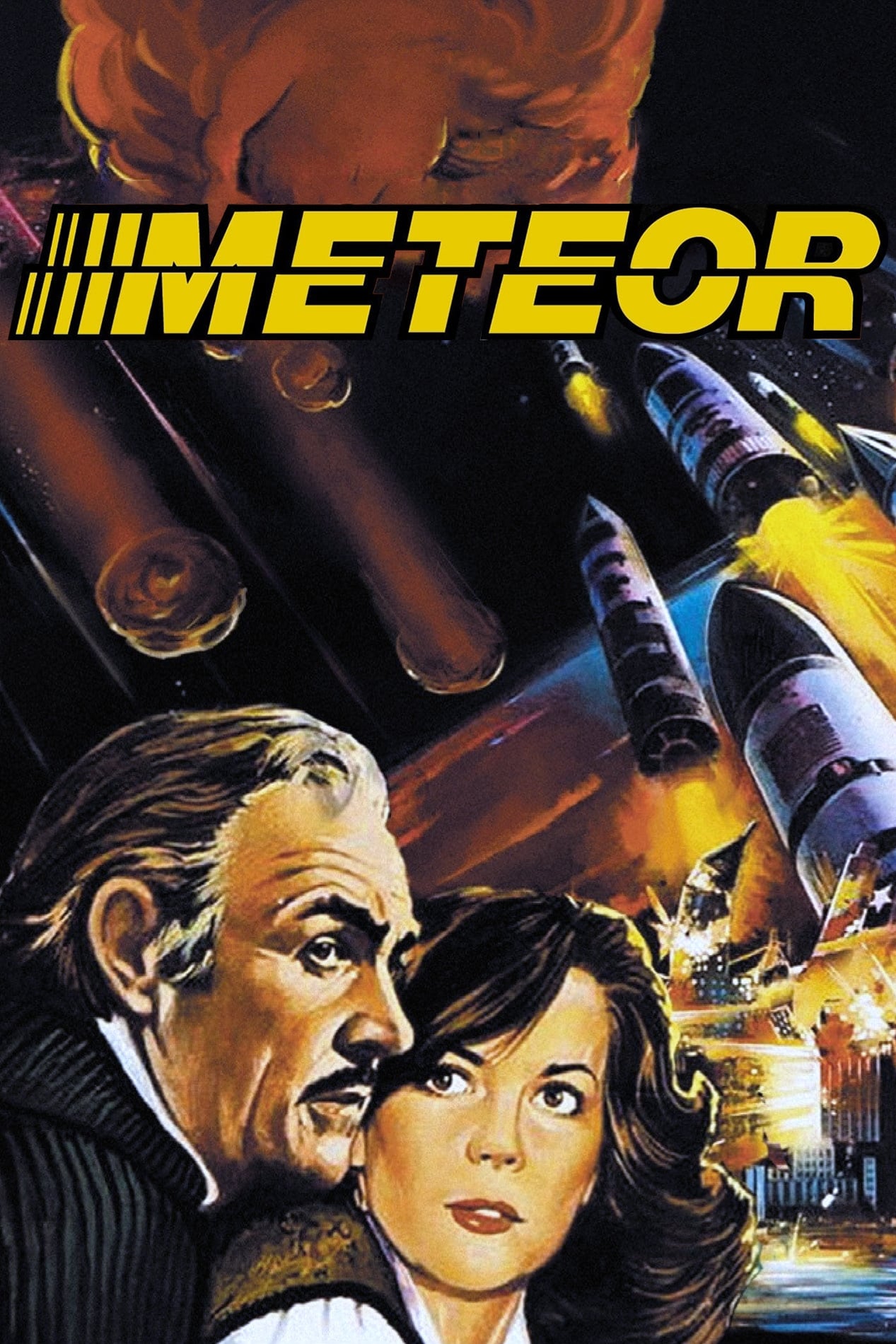
Directed by Ronald Neame, this Cold War-era thriller stars Sean Connery as a former NASA scientist enlisted to coordinate a planetary-defense response, with Natalie Wood, Karl Malden, Henry Fonda, Brian Keith, and Martin Landau in supporting roles. The plot centers on a giant asteroid on a collision course with Earth, forcing cooperation between American and Soviet superpowers to re-target nuclear platforms as improvised interceptors. The narrative intercuts command-center scenes, international diplomacy, and ground-level disaster beats as fragments strike various locations.
The production blended model work, optical compositing, and location shooting to convey both global scope and technical detail, including mission briefings, satellite control, and emergency protocols. Distributed by American International Pictures, the film arrived during a wave of cosmic-threat stories and disaster spectacles. While it featured high-profile leads and topical themes, its theatrical run proved limited compared with contemporaries, and later television airings kept it in circulation as a quintessential late-cycle catastrophe entry.
‘Caligula’ (1979)
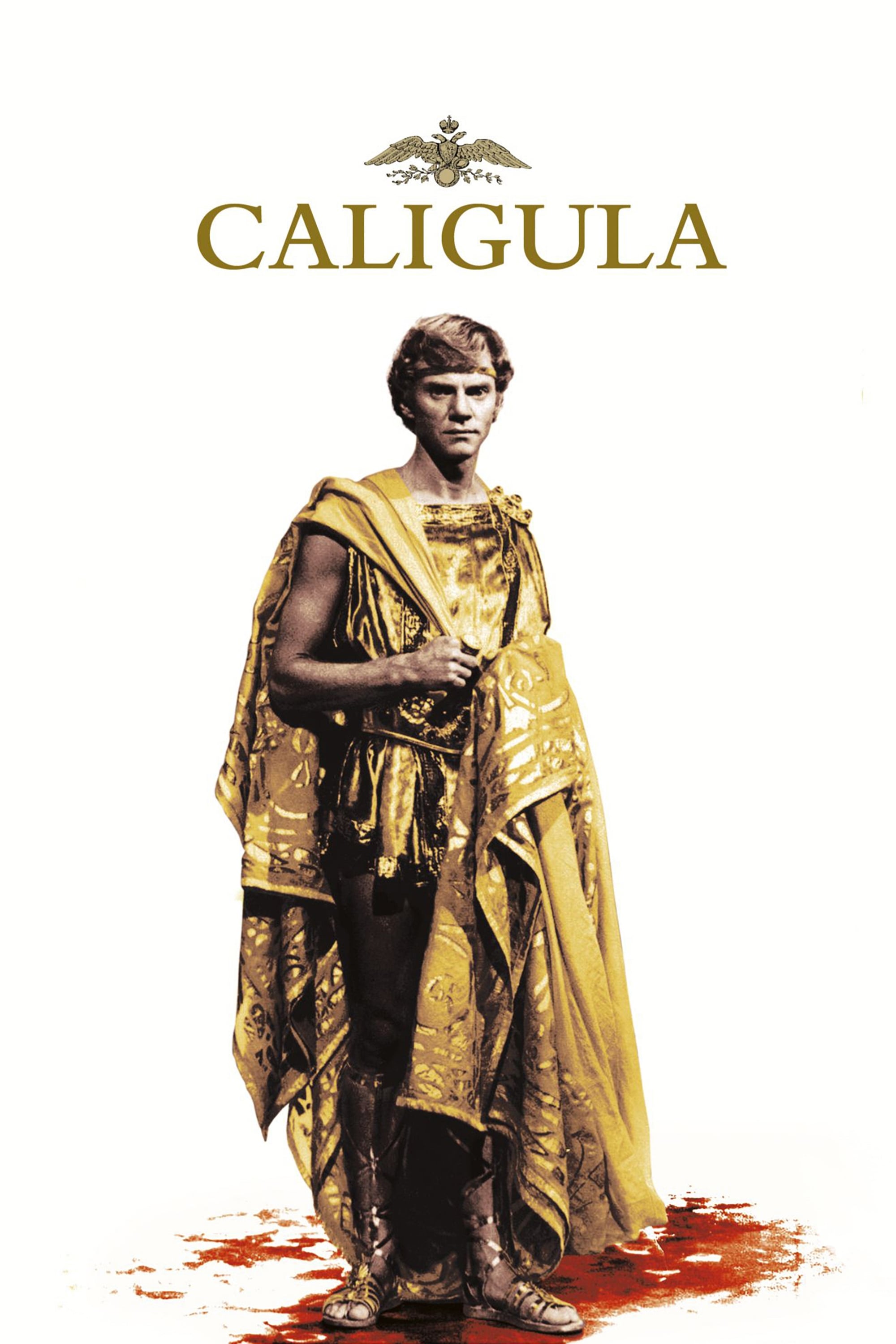
Shot with an international cast including Malcolm McDowell as the Roman emperor, Teresa Ann Savoy as Drusilla, Helen Mirren as Caesonia, Peter O’Toole as Tiberius, and John Gielgud as Nerva, this historical epic was initiated by Penthouse publisher Bob Guccione and originally directed by Tinto Brass. The storyline charts Caligula’s ascent, consolidation of power, and descent into paranoia, framed by palace intrigues, Senate conflicts, and depictions of imperial excess. Multiple versions exist, some adding explicit material shot without the principal director’s involvement.
The production famously became a tug-of-war over creative control, with disputes about tone, content, and final cut leading to legal battles and fragmented releases. Different territories saw different edits, contributing to a patchwork distribution history that continued on home video. The film’s elaborate sets, costuming, and marquee cast kept it in the conversation, while the editorial and authorship controversies made it a frequent subject in discussions of producer-driven alterations to a director’s vision.
‘At Long Last Love’ (1975)
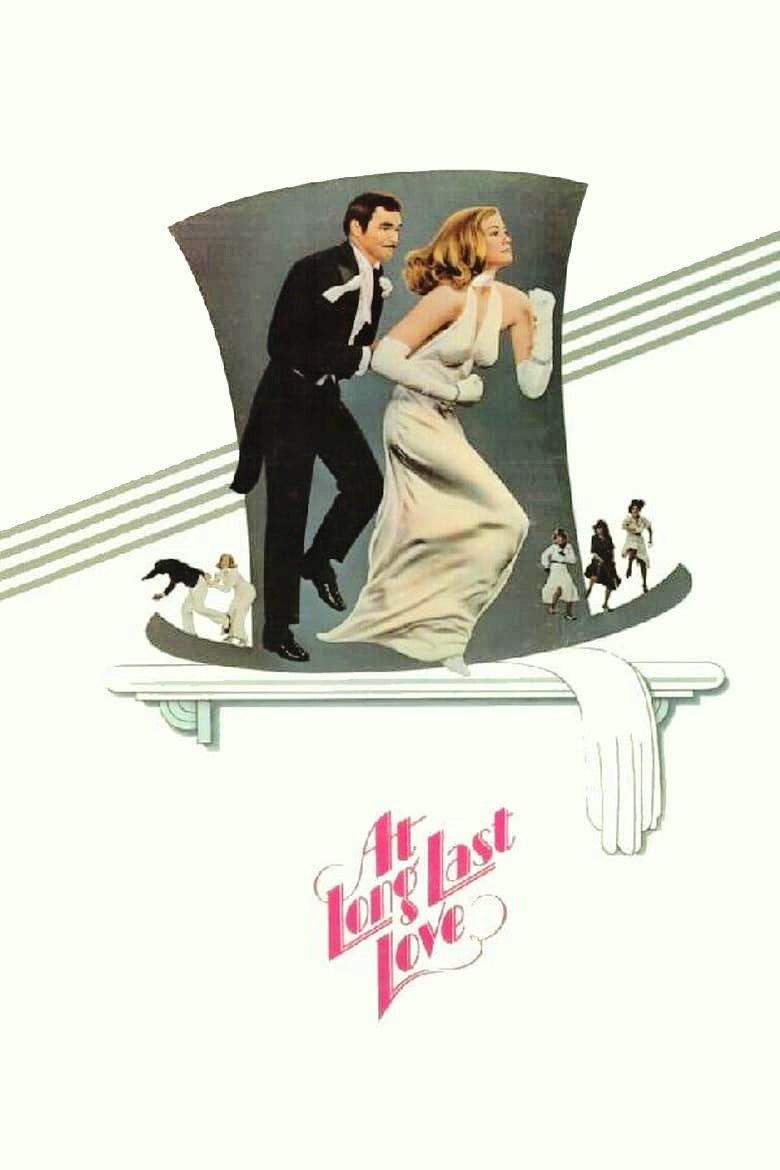
Peter Bogdanovich directed this Cole Porter songbook musical starring Cybill Shepherd, Burt Reynolds, Madeline Kahn, and Duilio Del Prete. The film follows wealthy socialites in a round-robin of flirtations, engagements, and comic misunderstandings, staged as an homage to elegant screwball romances. Notably, the production recorded the vocal performances live on set—a rarity for big studio musicals—so the actors’ singing and acting play as single takes rather than post-synced tracks.
Lavish black-and-white-inspired costuming, continuous-shot choreography, and art-deco-inflected sets define the visual approach. After its initial release, alternate edits surfaced, including a later recut that restored intended sequencing and song balances closer to the director’s preferences. While the theatrical run struggled, the film’s craft choices—especially the live-singing experiment—remain a touchpoint in discussions about musical production methods in the decade.
‘The Giant Spider Invasion’ (1975)
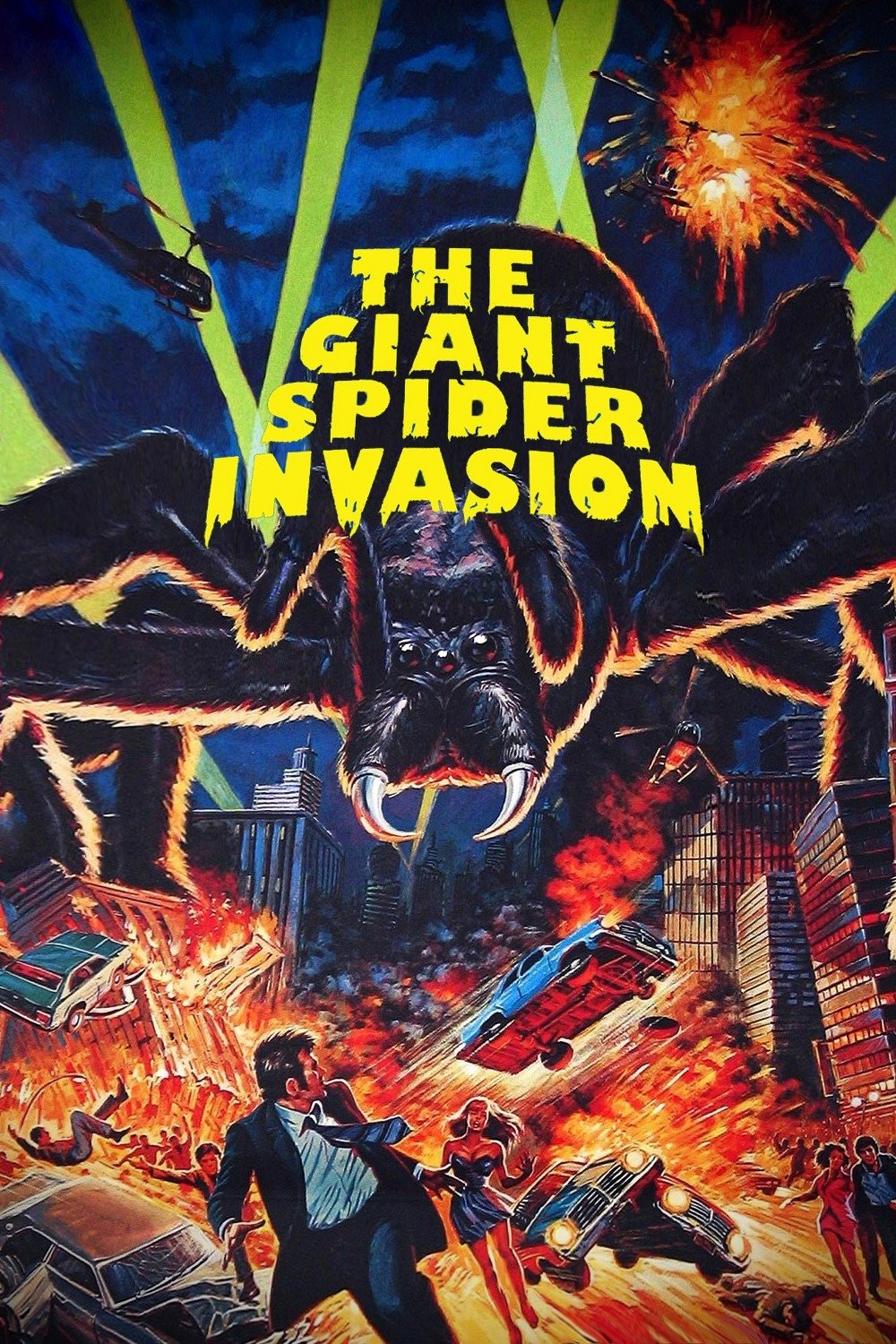
Directed by Bill Rebane and starring Steve Brodie, Barbara Hale, Alan Hale Jr., and Leslie Parrish, this Midwestern creature feature tracks strange celestial phenomena that bring oversized arachnids to rural Wisconsin. The plot follows local law enforcement and scientists investigating collapsing barns, mysterious eggs, and a rapidly growing threat that culminates in a rampage through small-town streets. The production relied on practical effects, including a full-scale spider rig built over a vehicle chassis, alongside miniatures and optical tricks.
A regional indie success story, it was booked into drive-ins and small theaters across the country, illustrating how low-budget exploitation films found national audiences through touring distribution. The movie later gained a second life on television packages and revival screenings, where its handmade special effects and earnest performances were highlighted as emblematic of resourceful filmmaking outside major studio systems. Cast members’ TV fame helped with promotion, especially for markets familiar with their earlier work.
‘The Island of Dr. Moreau’ (1977)
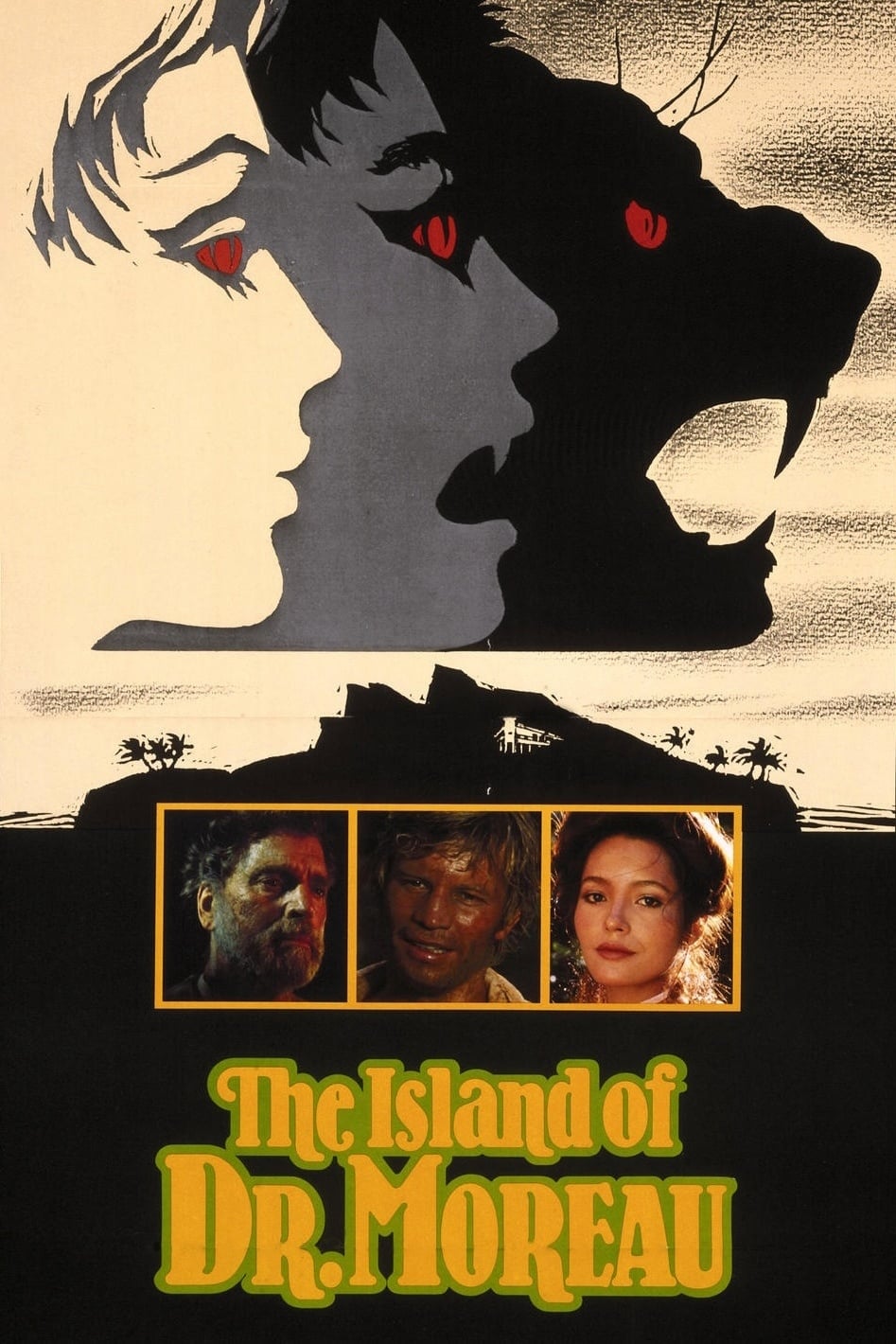
Don Taylor directed this adaptation of H. G. Wells’s novel with Burt Lancaster as Dr. Moreau and Michael York as shipwrecked sailor Andrew Braddock, joined by Nigel Davenport and Barbara Carrera. The narrative follows Braddock’s discovery of a remote island where Moreau conducts experiments transforming animals into humanoid hybrids, governed by the “Law” and enforced through a mix of fear and surgical intervention. The film emphasizes jungle settings, laboratory sets, and makeup effects to visualize the line between man and beast.
The production leaned on then-state-of-the-art prosthetics to differentiate various hybrid species while staging chase sequences and tribunal-style confrontations among the creatures. Released by American International Pictures, it became a staple of late-night TV rotations and home-video shelves, often paired in discussions with other Wells adaptations. The movie’s focus on ethical debates over scientific experimentation kept it in genre conversations even as later versions revisited the same material with different tones and techniques.
‘The Visitor’ (1979)
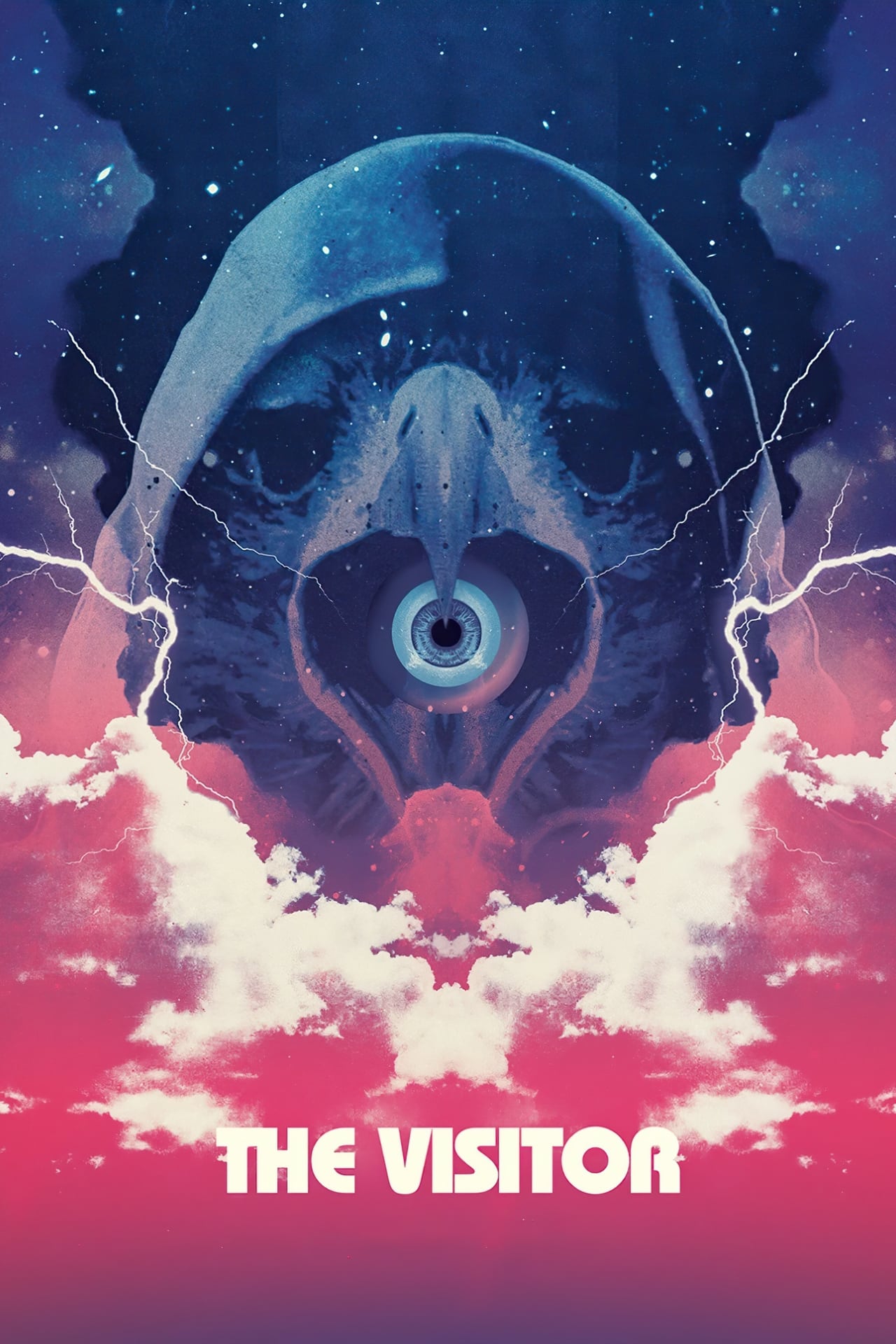
Directed by Giulio Paradisi (credited as Michael J. Paradise), this Italian-American oddity features John Huston as a cosmic visitor, Shelley Winters as a caretaker with hidden motives, Lance Henriksen as a basketball team owner, and Glenn Ford and Mel Ferrer in supporting roles. The plot blends science fiction and occult horror as a mysterious girl’s telekinetic powers attract competing forces—some looking to harness her abilities, others seeking to prevent a larger, otherworldly plan. The film is known for eclectic imagery, from rooftop confrontations to surreal light-burst sequences.
The production shot in Atlanta and Rome, stitching together European genre sensibilities with American settings and English-language performances. Its distribution history included re-edits and retitles in certain territories, and repertory screenings later spotlighted its unusual mash-up of influences, including nods to ‘The Omen’, ‘Close Encounters of the Third Kind’, and cosmic-battle allegories. Over time it developed a cult following precisely because of its blend of cast prestige and unconventional narrative choices.
If we missed a title that belongs here, share your pick in the comments and tell everyone which cast, crew, or production details make it a must-mention.