Best Dog Horror Movies

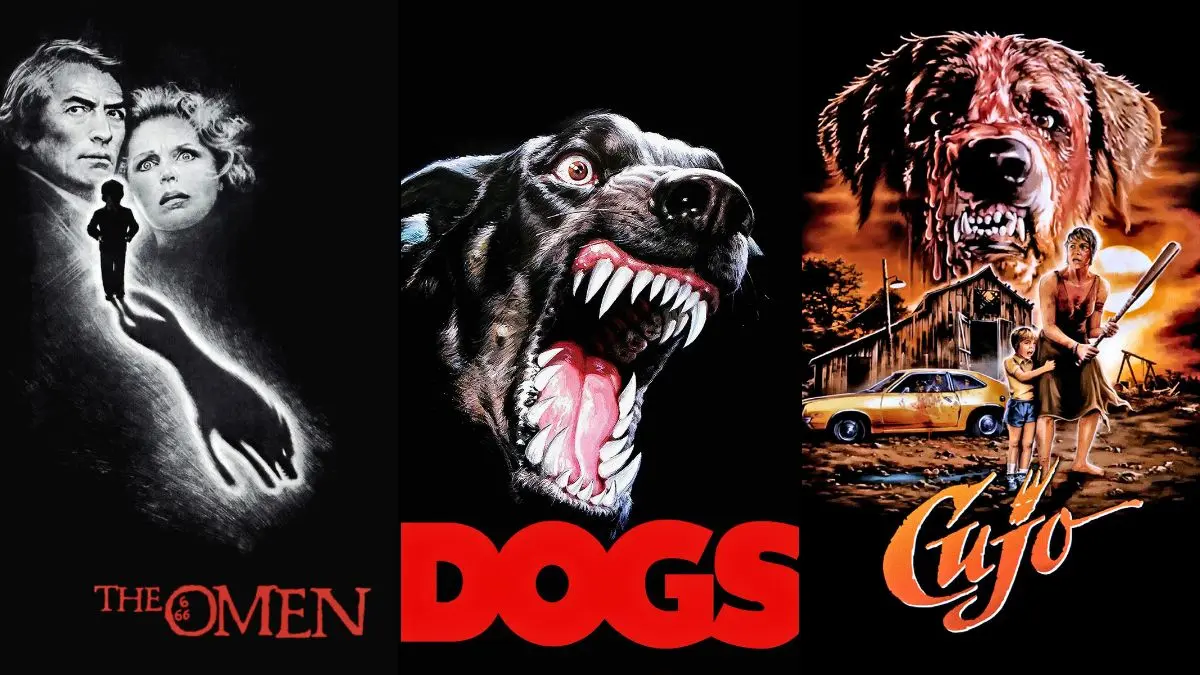

From demonic hounds to science-gone-wrong guard dogs, canines have prowled horror cinema for decades and turned man’s best friend into a source of dread. This list rounds up films where dogs drive the scares, whether as the monster, the messenger, or the tragic catalyst that shifts a story into nightmare territory. You’ll find theatrical releases, TV movies, creature features, psychological thrillers, and even animation that put dogs at the center of the horror. Each entry includes concrete details so you know what you’re in for before you press play. Ready to meet the pack?
‘Cujo’ (1983)
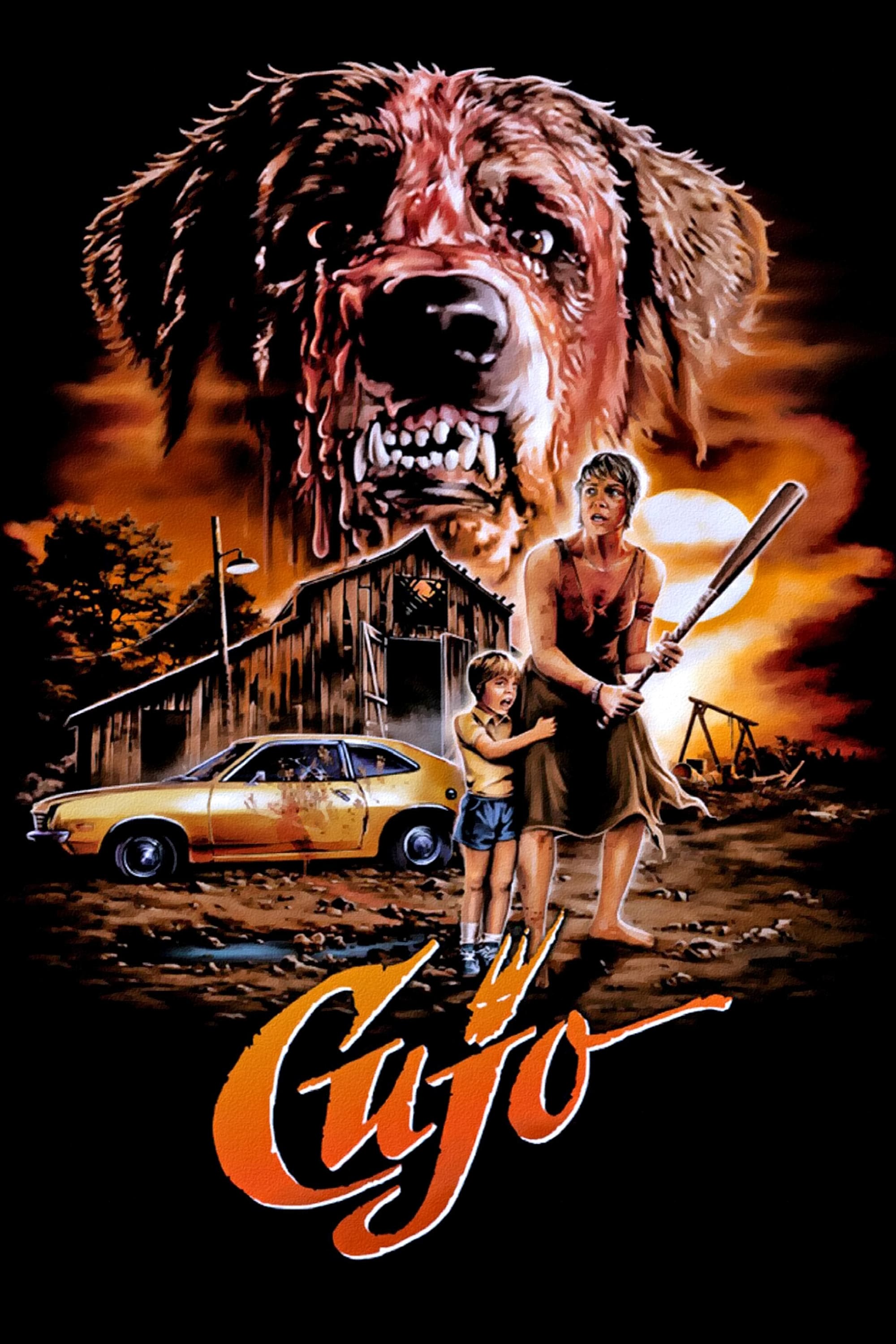
Adapted from Stephen King’s novel, this film follows a friendly St. Bernard that contracts rabies after a bat bite. A mother and her young son become trapped in a sweltering car while the infected dog stalks them outside. Lewis Teague directed, and the film was shot in California with multiple trained dogs and a mechanical head for close attacks. The story unfolds largely in broad daylight, emphasizing heat, dehydration, and escalating peril.
‘The Pack’ (1977)

On a sparsely populated vacation island, abandoned domestic dogs form a feral pack and begin hunting humans. Directed by Robert Clouse, the movie uses real canines choreographed for large-scale pursuit sequences. The narrative tracks residents who are cut off from the mainland and forced to barricade and plan an escape. Practical stunt work and location photography build a siege structure reminiscent of survival thrillers.
‘Dogs’ (1976)
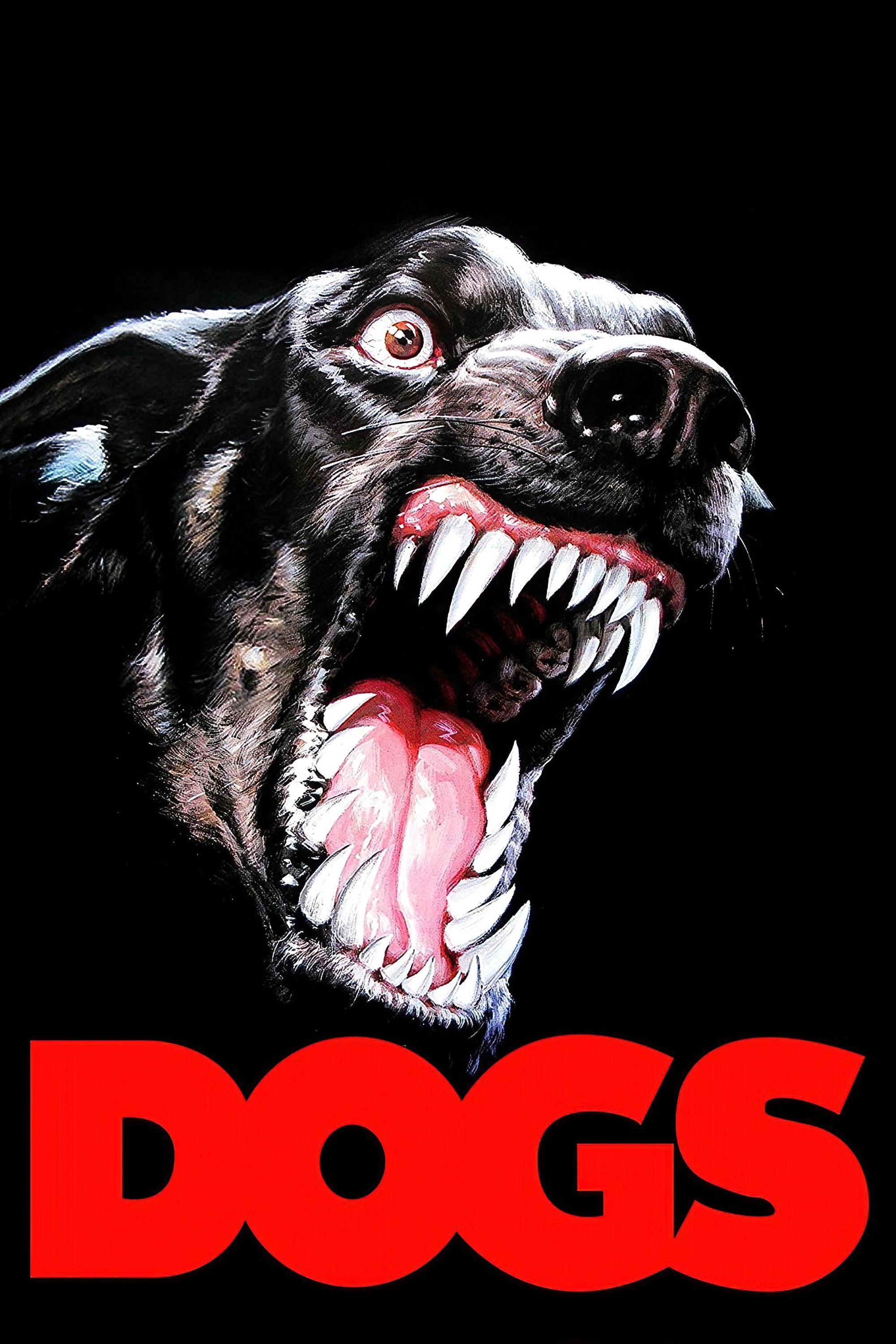
College-town scientists discover unusual aggression patterns among local canines just as coordinated attacks begin. Also known as ‘Slaughter’, the film features a professor and sheriff trying to diagnose the cause before a campus event turns deadly. The production uses a variety of breeds to convey the idea of a cross-community uprising. It leans on lab scenes, town-hall panic, and night assaults for momentum.
‘Dracula’s Dog’ (1977)
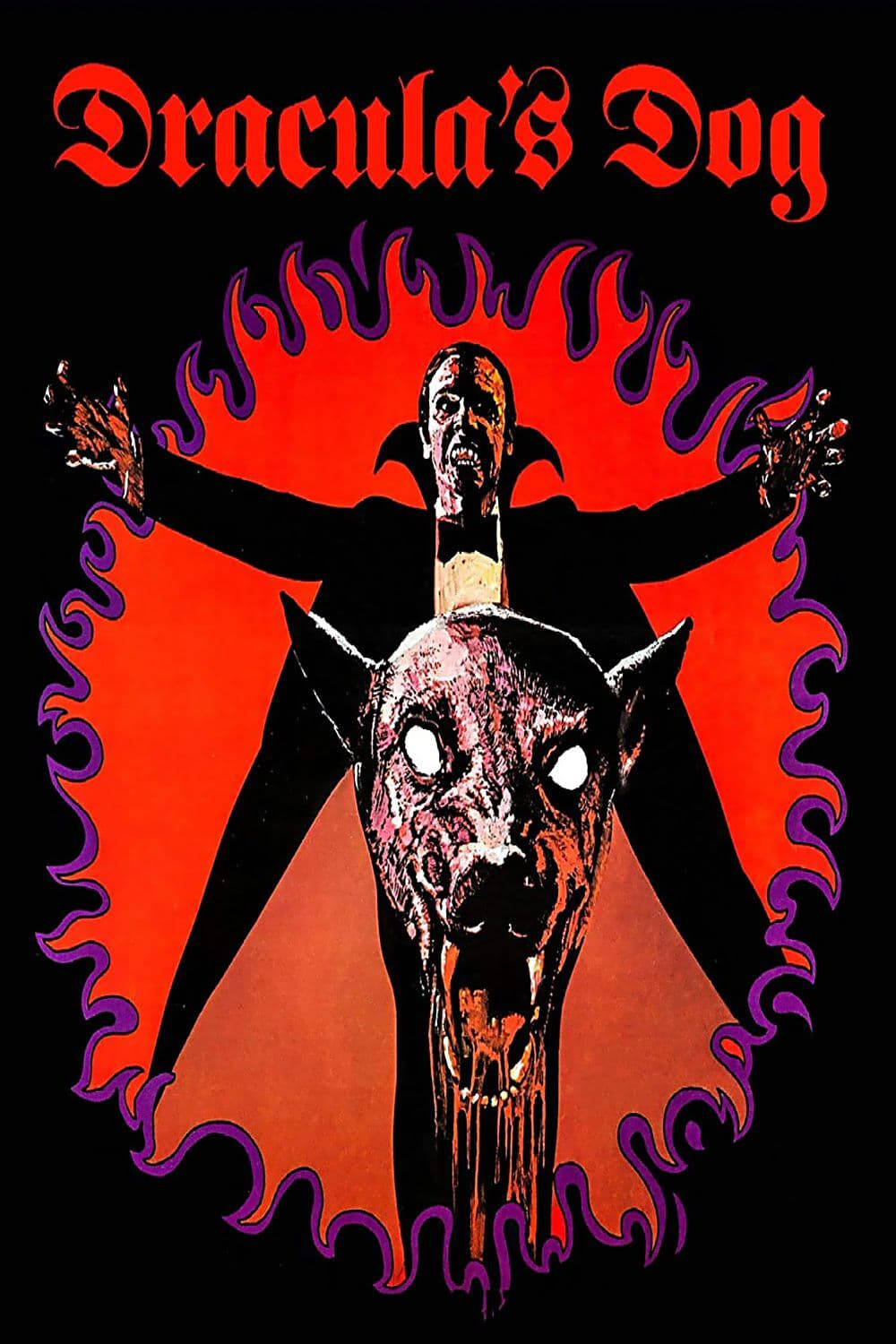
This vampire-dog spinoff sends a coffin-bound canine servant searching for Dracula’s descendant in modern-day America. The story connects to the Dracula dynasty through a military excavation that disturbs graves. Makeup effects support both undead handlers and the fang-bearing dog for attack sequences. The film blends road-movie tracking with campfire-style folklore exposition.
‘Devil Dog: The Hound of Hell’ (1978)

This made-for-TV horror film centers on a suburban family that unknowingly adopts a puppy bred by a satanic cult. The dog exerts supernatural influence, causing accidents and personality changes inside the household. Richard Crenna and Yvette Mimieux star, and the script escalates from subtle manipulation to fiery set pieces. Occult trappings include ritual artifacts, visions, and a demonic reveal.
‘Man’s Best Friend’ (1993)
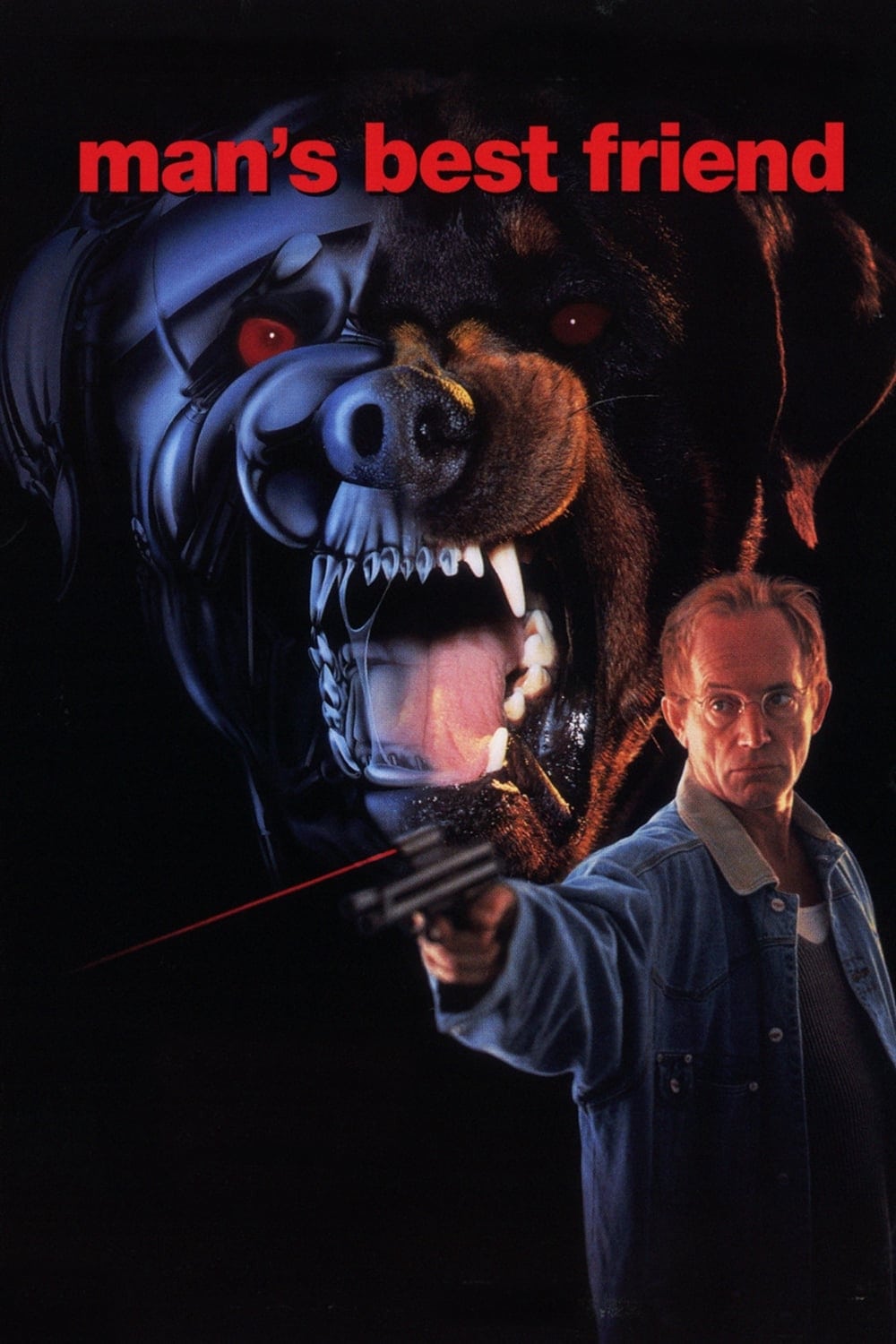
A biotech corporation’s escaped experimental Tibetan Mastiff becomes both protector and threat to a tabloid reporter. The dog exhibits gene-spliced abilities like wall-climbing reflexes and acid-like urine as a running gag turned hazard. Writer-director John Lafia structures the movie as a cat-and-mouse between the animal, the journalist, and corporate trackers. Urban chases and lab tech set design ground the sci-fi angle.
‘The Breed’ (2006)
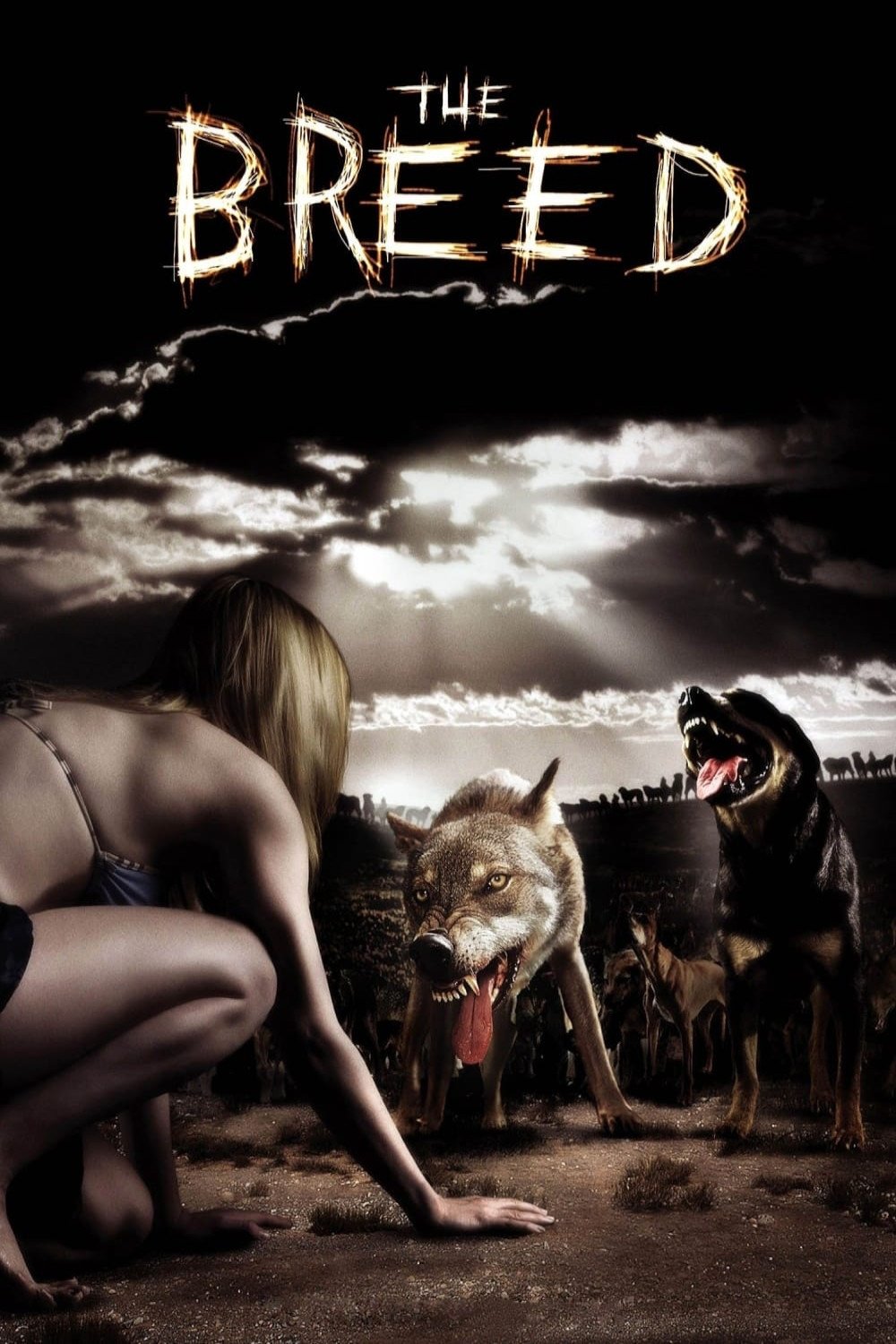
Stranded on a remote island, a group of friends encounters highly trained attack dogs that have gone feral. Shot in South Africa, the film emphasizes pack tactics, perimeter breaches, and waterline set pieces. Practical animal work combines with selective CGI for leaps and swarms. The characters map the compound, test fences, and improvise defenses to survive extraction.
‘Rottweiler’ (2004)
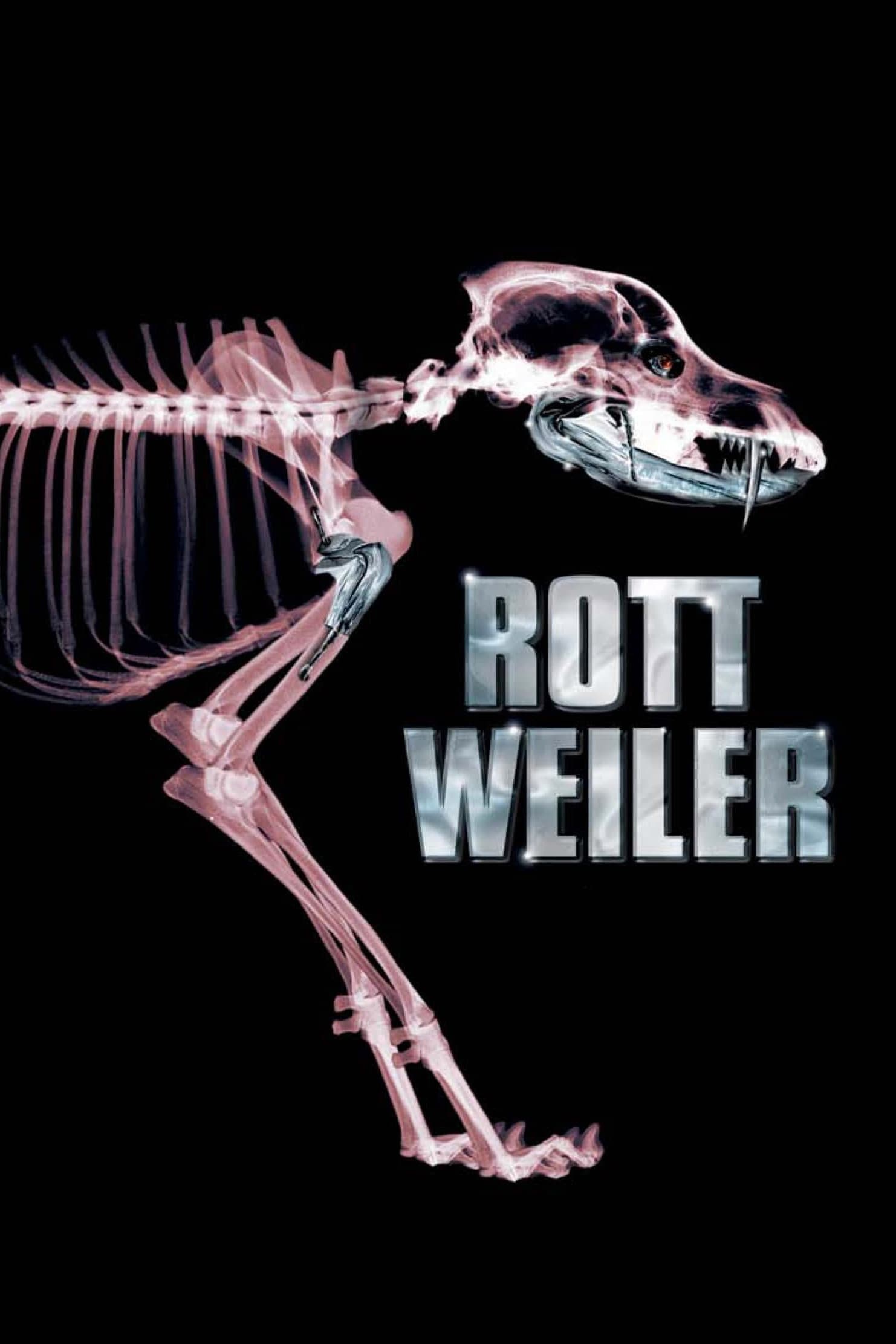
In this Spanish-English production directed by Brian Yuzna, a cybernetically enhanced guard dog hunts an escaped prisoner across a dystopian landscape. The dog’s metal augmentations turn bites and sprints into slasher-like beats. The chase structure moves through prisons, alleys, and industrial ruins. Flashbacks fill in the origin of both the captor and the engineered animal.
‘Baxter’ (1989)

This French psychological horror follows a bull terrier who narrates his own cold observations of the humans he lives with. The dog shifts owners, gravitating toward a boy with violent fascinations. The film adapts Ken Greenhall’s novel and uses voiceover to present the dog’s calculating perspective. Its incidents accumulate into an ethical study of training, influence, and capability.
‘White Dog’ (1982)
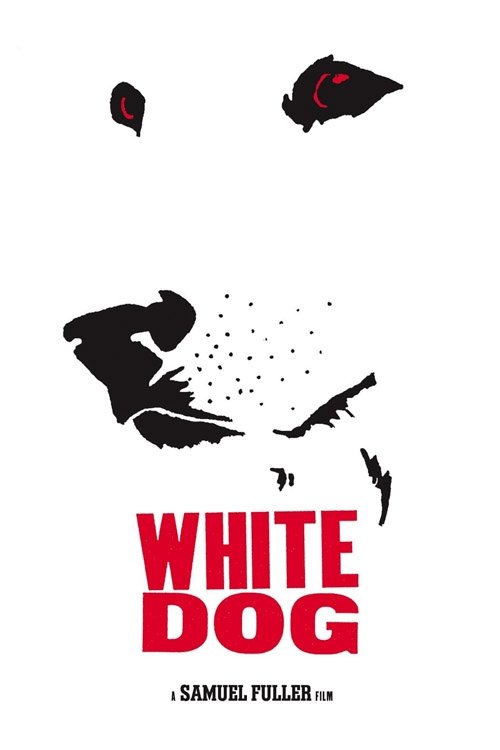
Samuel Fuller’s film examines a stray trained to attack Black people and the attempt to deprogram him. A professional trainer tests conditioning methods to overwrite the animal’s violent responses. While often labeled a drama, it contains tense, predatory set pieces built like horror stalking scenes. The production became controversial and saw delayed distribution that later drew critical reappraisal.
‘Watchers’ (1988)

Based on Dean Koontz’s novel, this story pairs a super-intelligent golden retriever with a man on the run from a government-made creature. The dog communicates via learned behaviors and guides the protagonist toward safe choices. Military agents and the pursuing monster close in for rural and small-town showdowns. The narrative balances buddy-movie warmth with lab-origin menace.
‘Watchers II’ (1990)
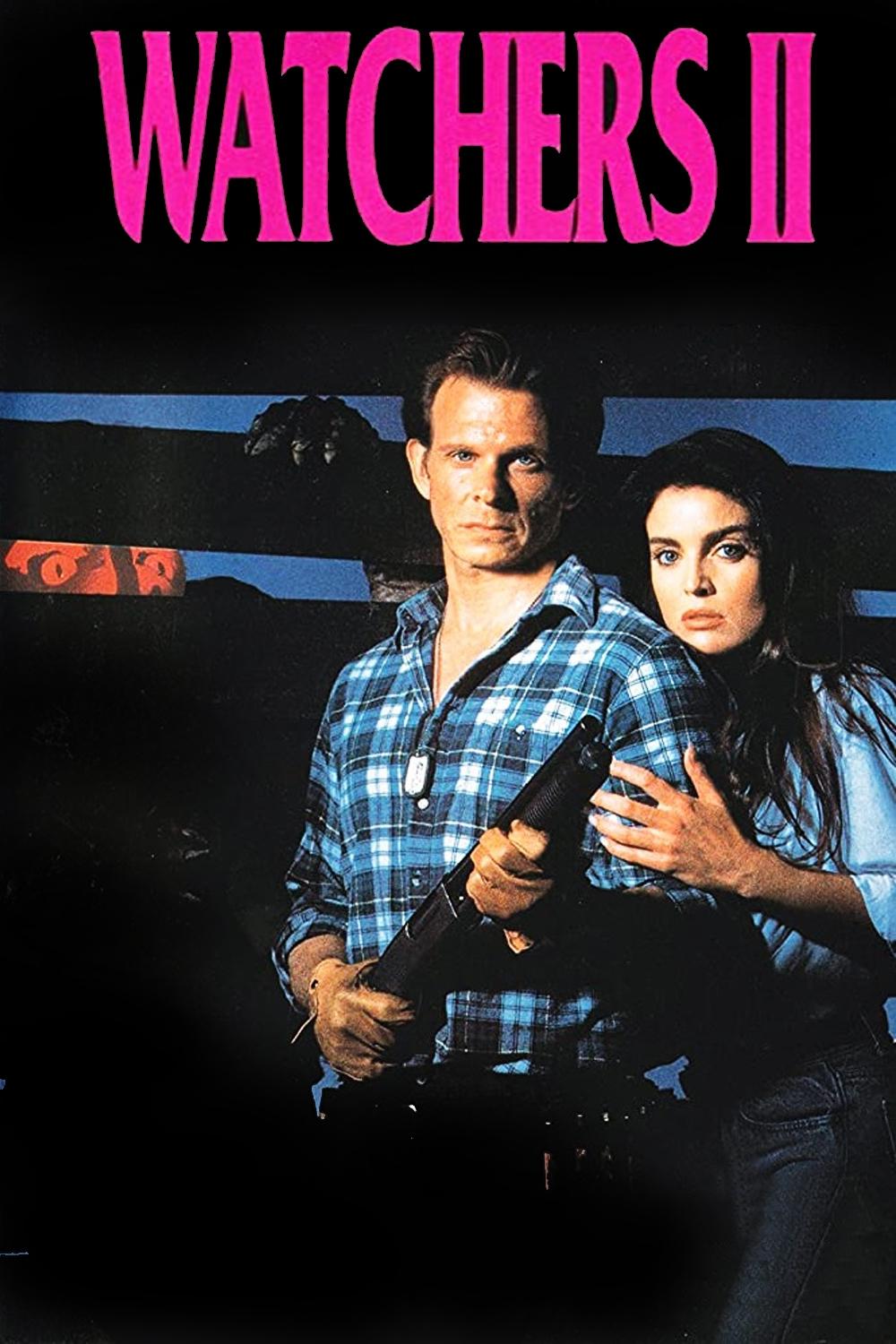
This sequel again pits an engineered dog against its monstrous counterpart after a laboratory breach. Government cleanup teams track both animals while civilians are pulled into the chaos. The film reuses the genetic-weapon program premise to stage motel, highway, and warehouse confrontations. The dog’s problem-solving remains the key survival mechanism for sympathetic characters.
‘Watchers III’ (1994)
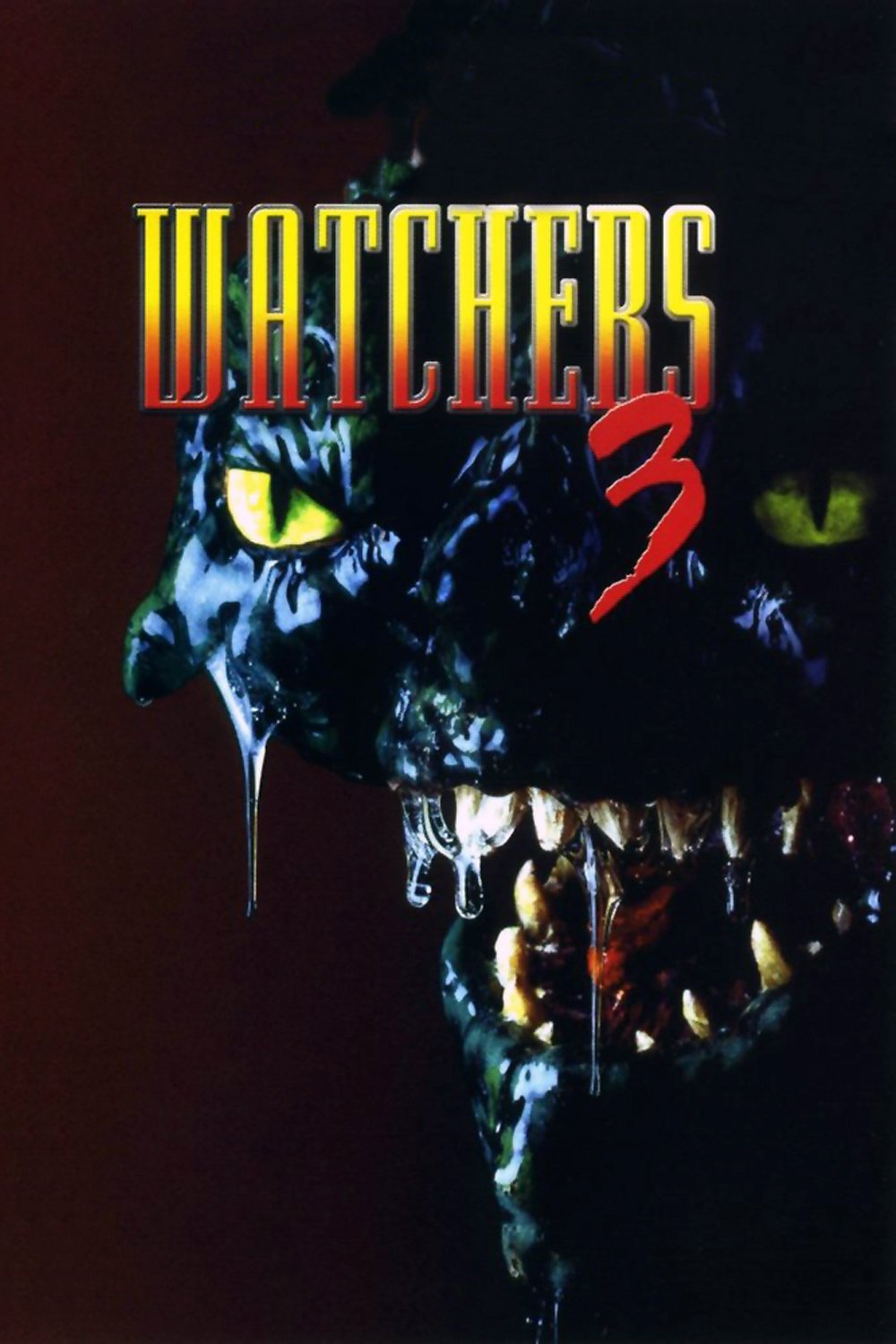
Relocating the experiment fallout to a foreign setting, the third entry introduces a new handler-dog bond under paramilitary pressure. The creature’s pursuit leads to jungle and compound skirmishes. Military radio chatter and lab logs deepen the continuity of the failed program. The dog’s intelligence manifests through trap-setting and route selection.
‘Watchers Reborn’ (1998)

This later follow-up reboots elements of the first story with a detective intersecting the dog’s escape from a research facility. Evidence boards and autopsy clues trace back to clandestine funding and behavioral trials. Industrial corridors and suburban streets host the major set pieces. The dog again serves as both target and guide to the truth behind the project.
‘The Omen’ (1976)
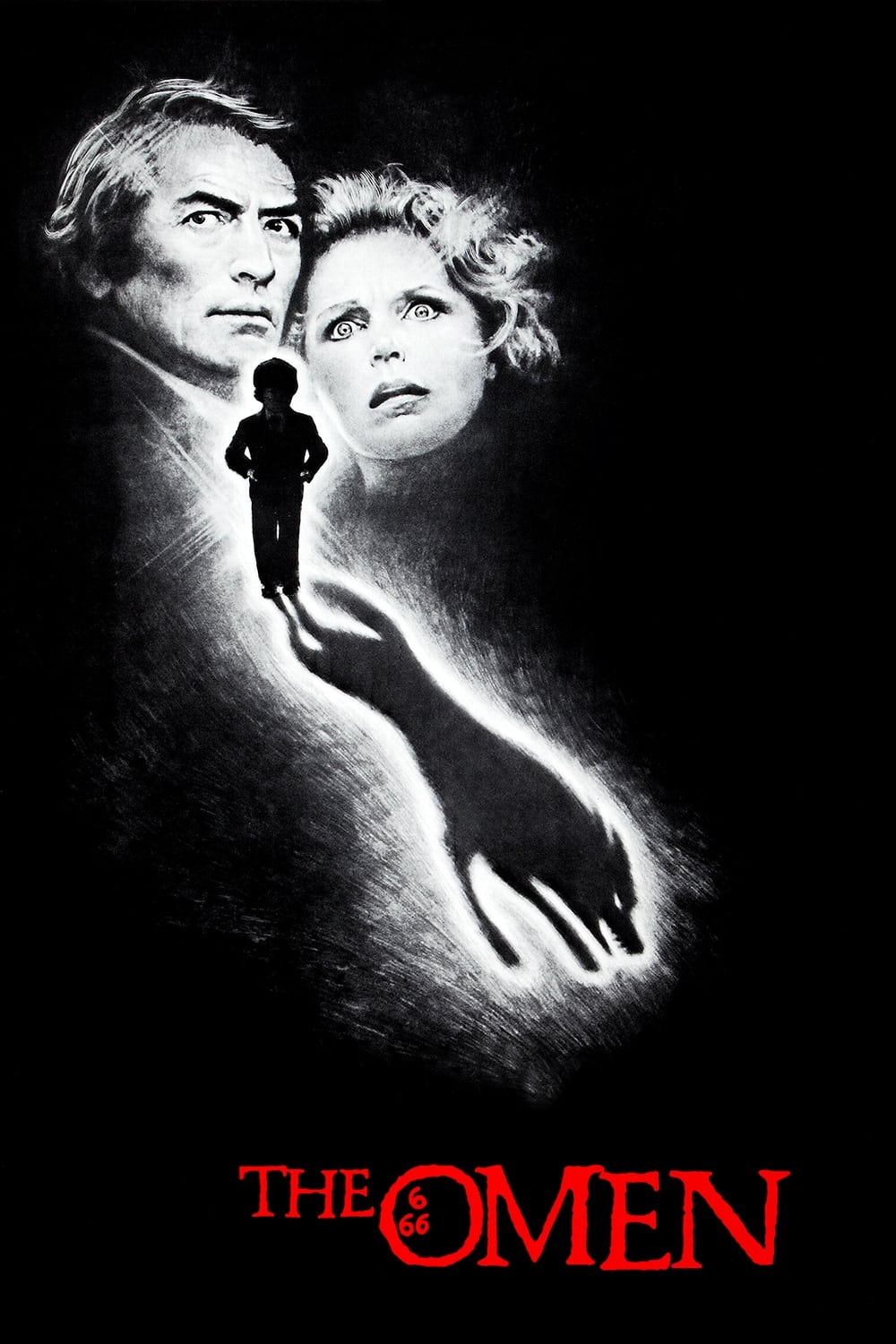
Demonic Rottweilers appear as protectors and enforcers around a child believed to be the Antichrist. Key scenes use churchyards, graveyards, and a menacing nanny to link the dogs to ritual evil. Jerry Goldsmith’s choral score and gothic settings build the supernatural framework. The animals act as sentinels that trigger pivotal turns in the investigation.
‘The Omen’ (2006)
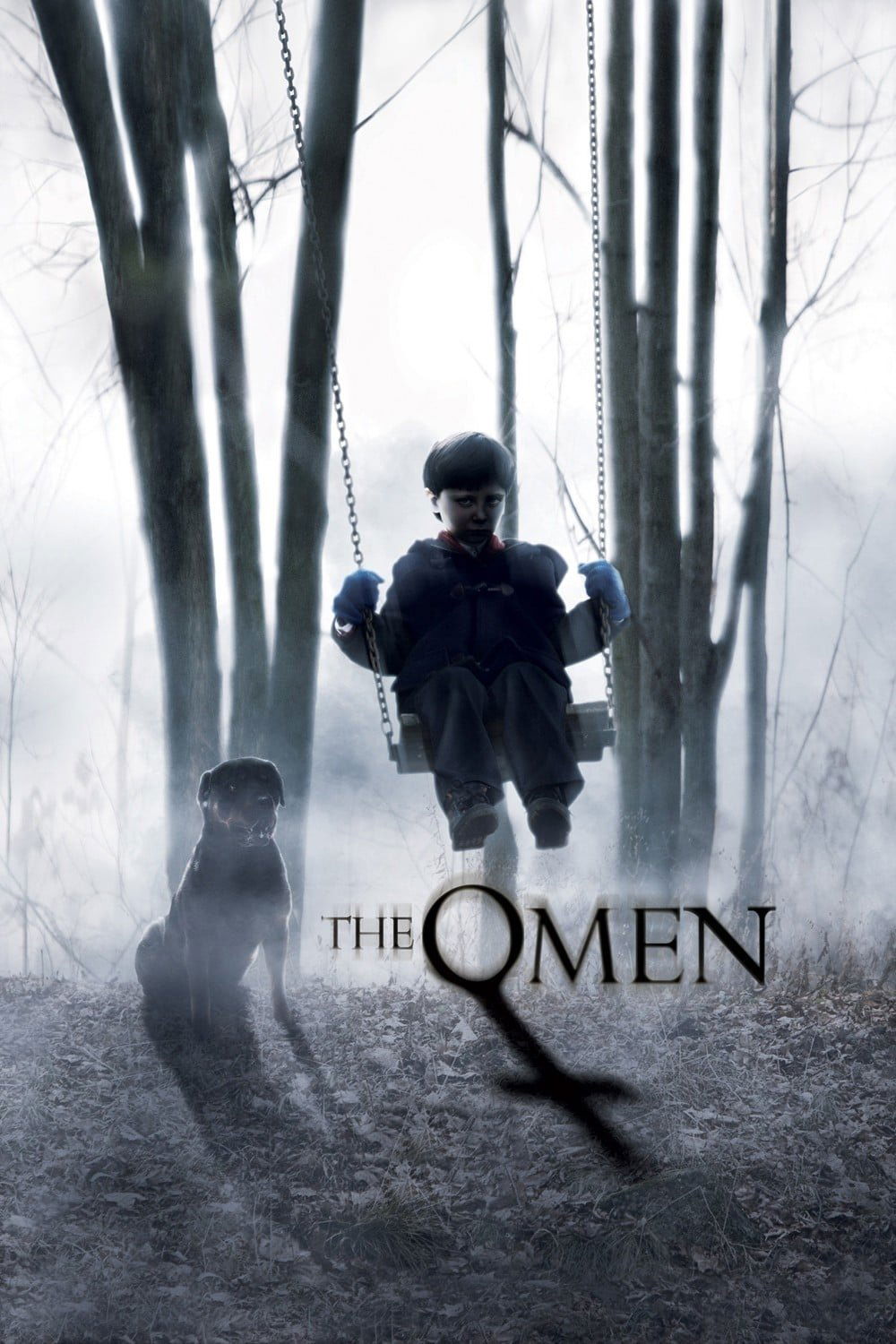
This remake reprises the role of Rottweilers as omens and bodyguards within a modernized conspiracy. Set pieces mirror the original’s key beats with updated staging and locations. Surveillance imagery and news footage integrate the dogs into a network of apocalyptic signs. The film maintains the protective, coordinated behavior associated with the child’s rise.
‘The Hound of the Baskervilles’ (1959)
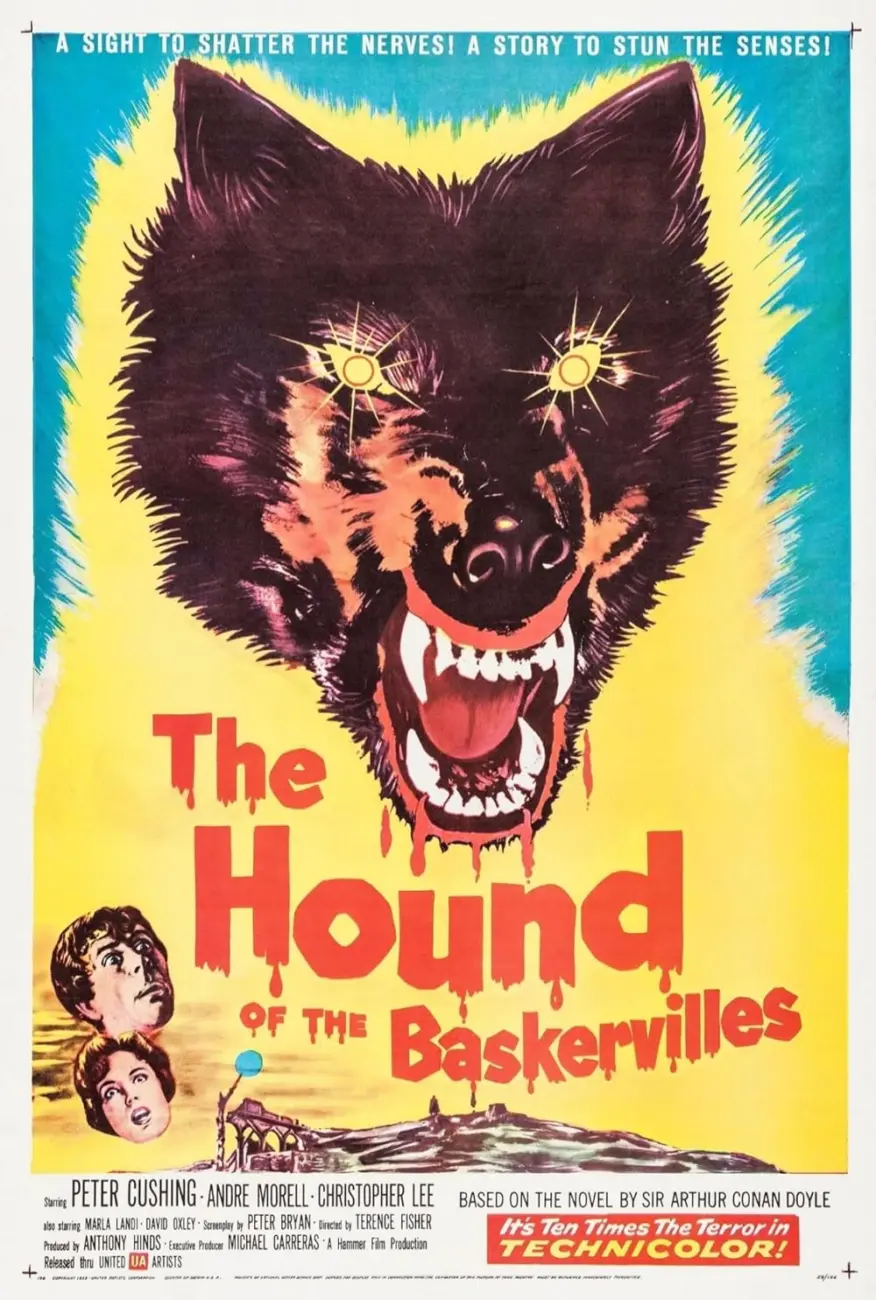
Hammer Films’ take on Arthur Conan Doyle’s story presents a phantom hound terrorizing the moors and the Baskerville estate. Sherlock Holmes disentangles folklore from human scheming while the canine threat prowls fog-laden terrain. The production emphasizes footprint clues, family legends, and spectral illusions. The hound’s reveal aligns with environmental manipulation and greed.
‘Monster Dog’ (1984)
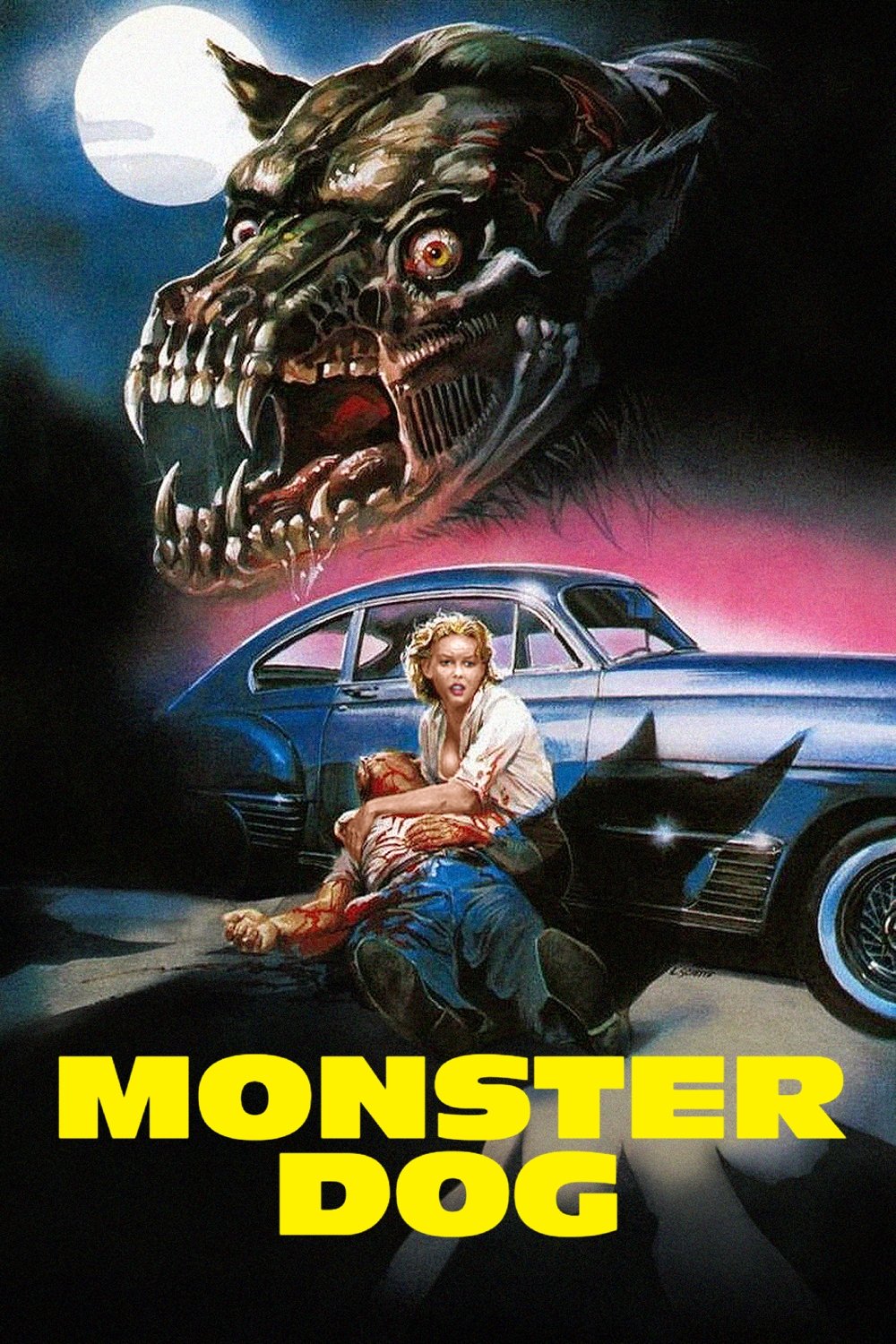
Alice Cooper stars in this were-creature tale where a rock musician returns to his hometown amid rumors of vicious dog attacks. The plot links family history to transformations tied to the lunar cycle. Rural roadblocks, fog, and a besieged mansion shape the action. Practical makeup and music-video-style interludes mark its period flavor.
‘Wilderness’ (2006)

Young offenders on a remote island training exercise find themselves hunted by a mysterious figure using trained dogs. The film uses dense forest, cliffs, and abandoned structures to stage ambushes. Group dynamics, maps, and flare signals become survival tools. Dog attacks are coordinated with traps, forcing the characters to split or fortify.
‘The Pack’ (2015)
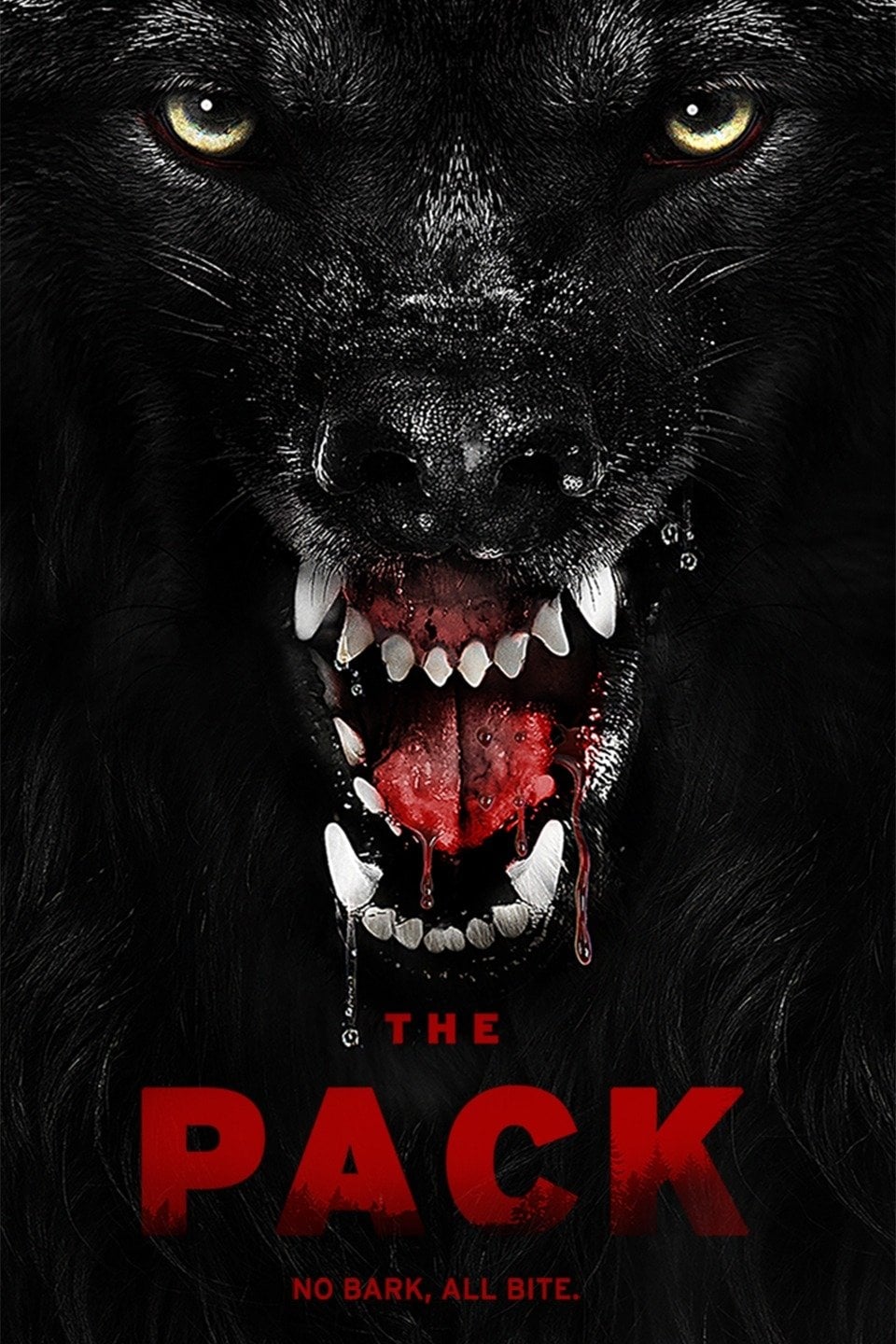
An Australian farmer and his family are targeted by a pack of feral dogs after drought drives wildlife toward settlements. The isolated homestead becomes a defensive battleground. Night-vision shots and blackout tactics heighten the threat around fences and windows. Veterinary knowledge and improvised barriers factor into the family’s response.
‘Night of the Wild’ (2015)
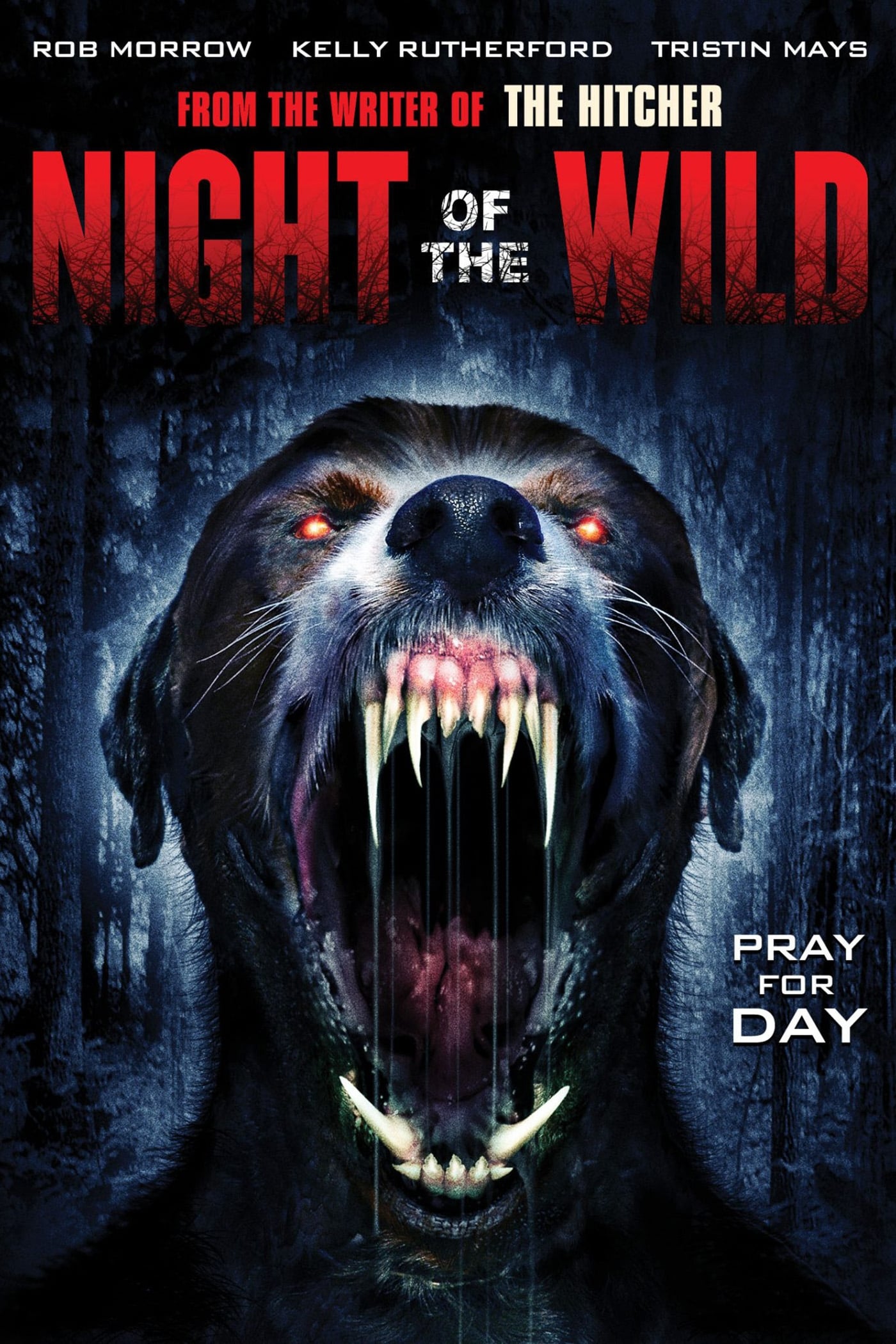
A meteor shower triggers a frequency that sends household dogs across a town into homicidal frenzies. The narrative tracks multiple survivors converging on evacuation routes. Radio alerts and emergency vehicles establish a disaster framework. The film cycles through suburban streets, farms, and shelters to show varied dog behaviors under the signal.
‘The Thing’ (1982)

An Alaskan malamute brought into an Antarctic research station spreads an extraterrestrial organism that assimilates hosts. Kennel scenes depict the first transformation with animatronics and practical effects. Quarantine protocols, flame-throwers, and blood tests become procedural responses. The dog’s quiet entry and sudden change set the stage for paranoia and isolation.
‘Suspiria’ (1977)
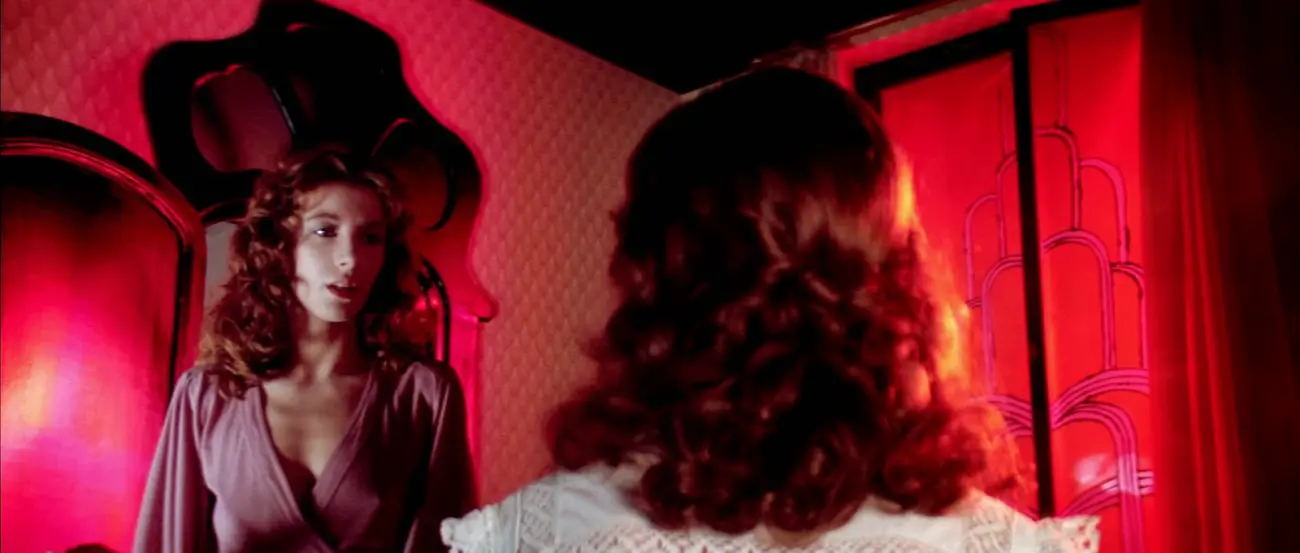
A blind pianist’s guide dog becomes a key figure in one of the film’s most shocking courtyard sequences. The academy’s occult secrets ripple into the animal’s behavior under extreme stress. Argento’s stylized lighting and architecture frame the attack as a ritualized event. The dog’s presence underscores vulnerability and manipulation within the coven’s reach.
‘The Beyond’ (1981)
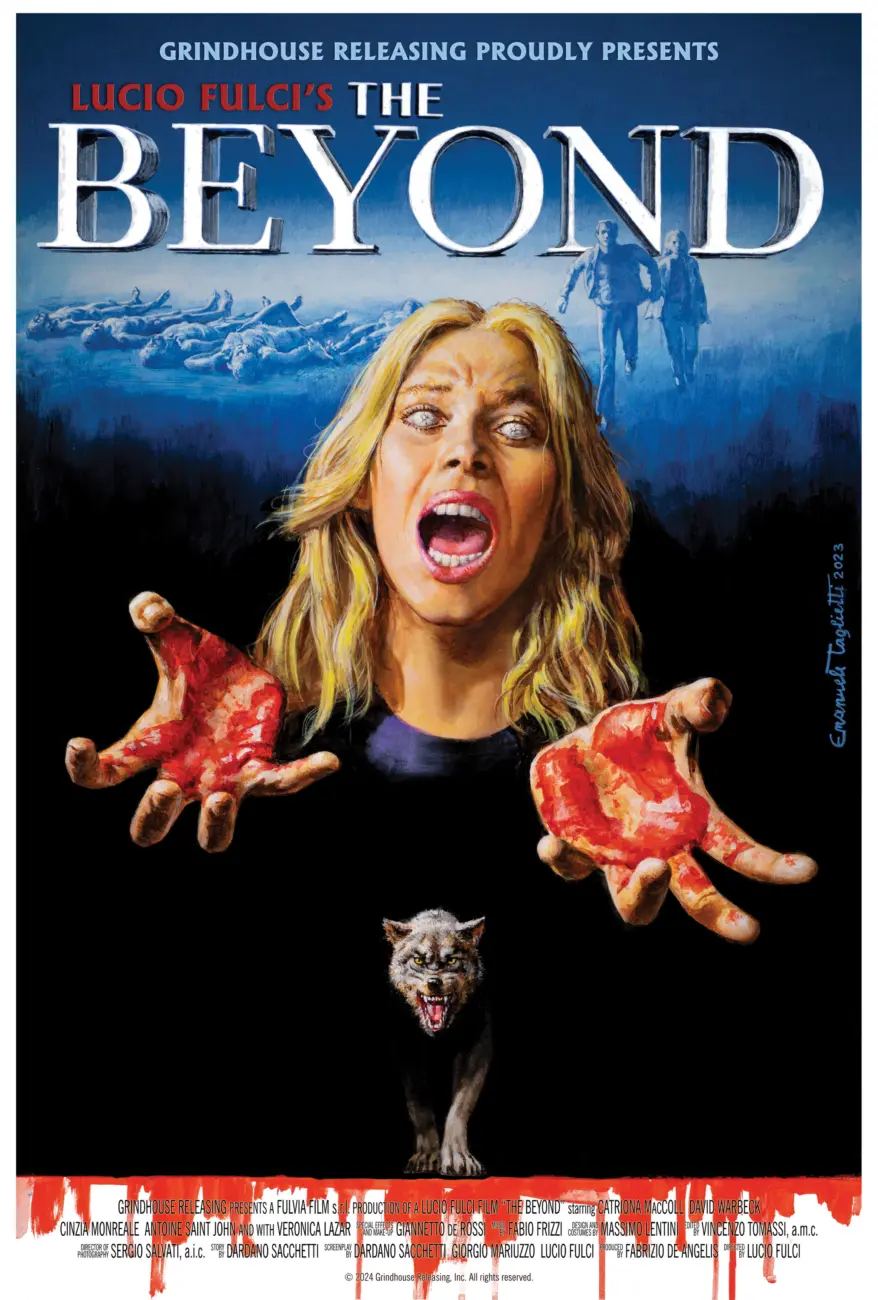
A seeing-eye dog accompanies its owner inside a hotel connected to a gateway to hell. Supernatural forces twist the animal’s instincts during a nighttime confrontation. The movie links the hotel’s basement, ancient text, and undead incursions. The dog functions as both aid and instrument within an escalating series of hauntings.
‘The Plague Dogs’ (1982)
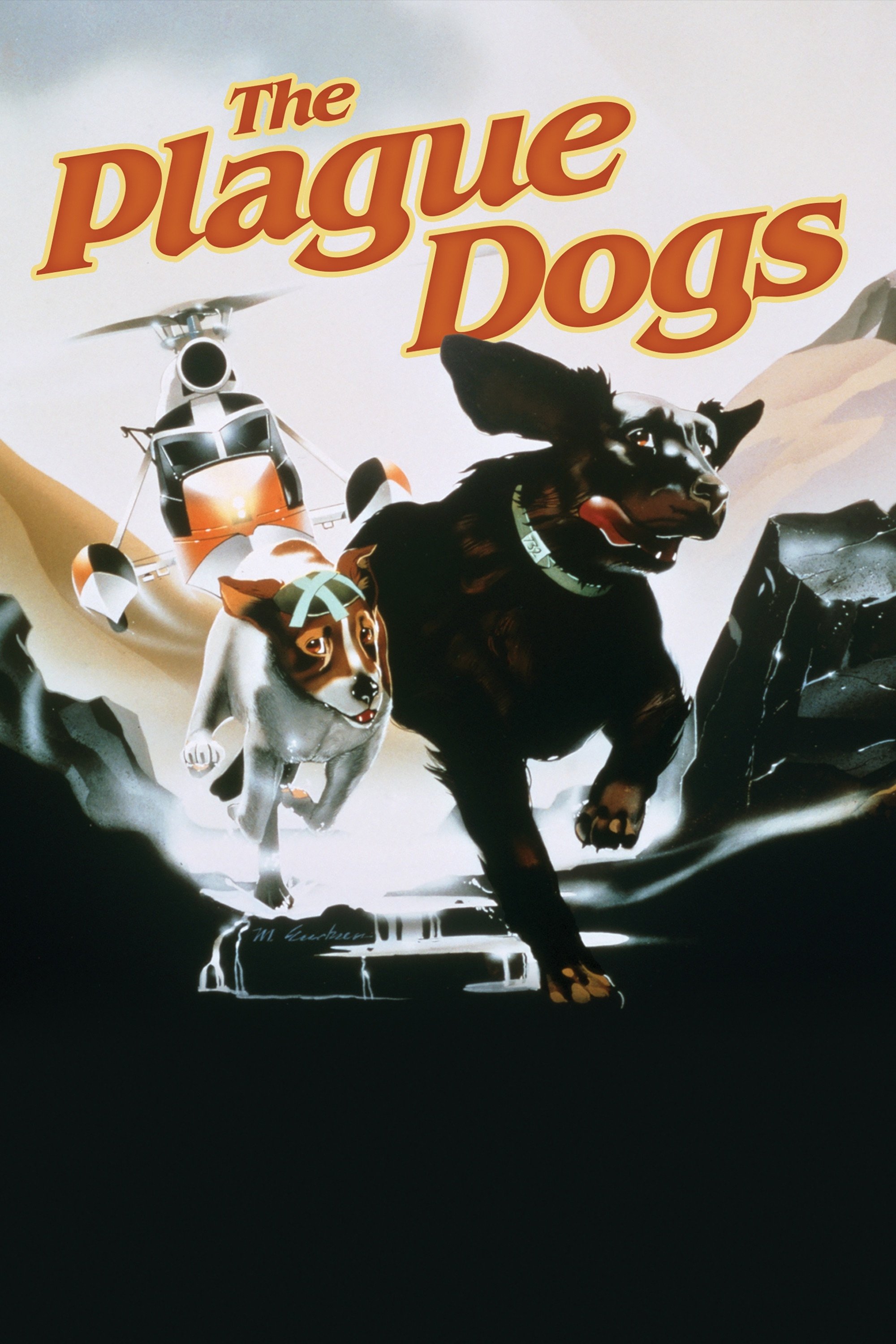
This animated feature follows two laboratory dogs that escape animal testing and are pursued as a biohazard risk. Military units mobilize based on rumors of contamination, turning the countryside into a manhunt. The film uses naturalistic landscapes to contrast with harsh lab interiors. Its tone is grim, presenting fear-driven policy and survival choices without easy resolution.
‘Mongrel’ (1982)
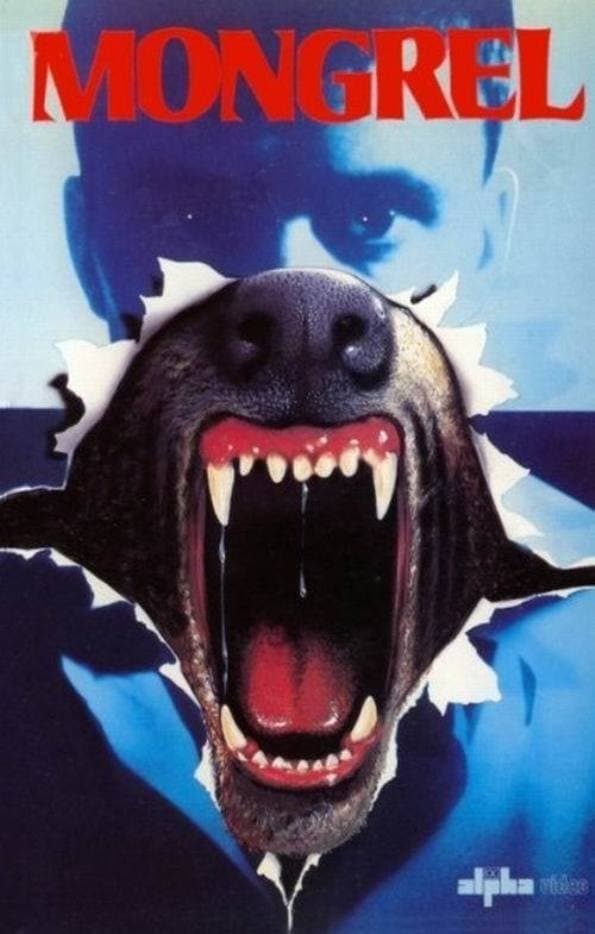
A troubled youth in a small town forms an unhealthy fixation that coincides with a series of dog-related deaths. The story blurs whether the threat is a specific animal or human violence projected onto pets. Police reports, kennel sequences, and alley stakeouts structure the investigation. The low-budget production emphasizes suggestion and aftermath.
‘Good Boy’ (2022)
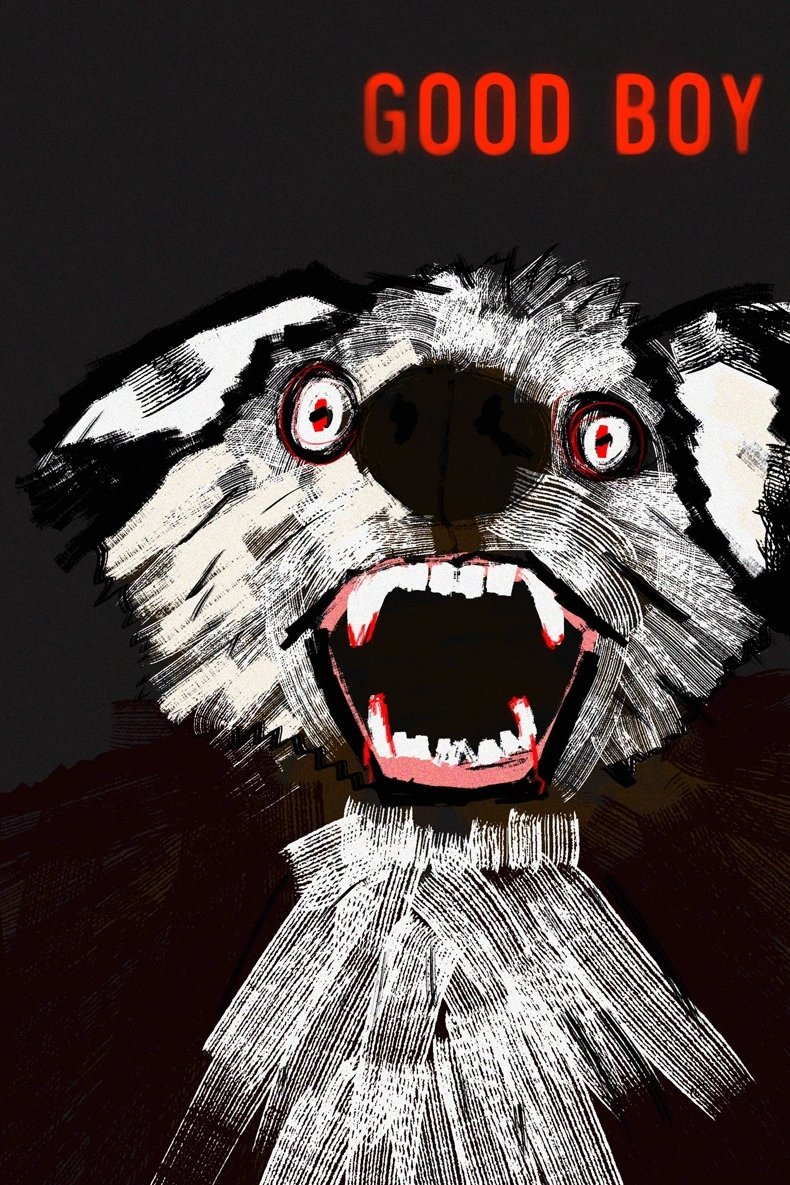
This Norwegian chiller involves a woman who discovers her new partner lives with a man who wears a full-body dog suit and never breaks character. The canine motif becomes a rule-bound system that governs the household. Scenes focus on boundaries, obedience cues, and escalating punishments. The film treats the dog identity as a psychological trap with bodily danger.
‘Resident Evil’ (2002)

Umbrella Corporation’s T-virus turns security Dobermans into fast, flesh-stripping threats inside an underground facility. The movie stages kennel breakouts, hallway ambushes, and elevator chokepoints. Makeup appliances and quick-cut action depict muscle-tearing bites. Tactical teams adapt with shields, shot placement, and door-control hacks during containment efforts.
‘Resident Evil: Retribution’ (2012)

Zombie dogs return with new mutations, including plated armor growths that alter impact and bite angles. Urban-simulation floors and suburban mock-ups provide varied arenas for pursuit. The creatures are integrated into larger tactical swarms with lickers and soldiers. Combat choreography relies on spacing, reload timing, and environmental kills.
‘Bad Moon’ (1996)

A family German Shepherd recognizes a werewolf threat encroaching on a rural home and repeatedly intervenes. The movie frames the dog’s protective instincts through point-of-view shots and territorial markers. Transformations employ practical effects timed to nocturnal visits. The canine’s warnings and confrontations become the primary early-defense system.
‘Dogs of Hell’ (1983)
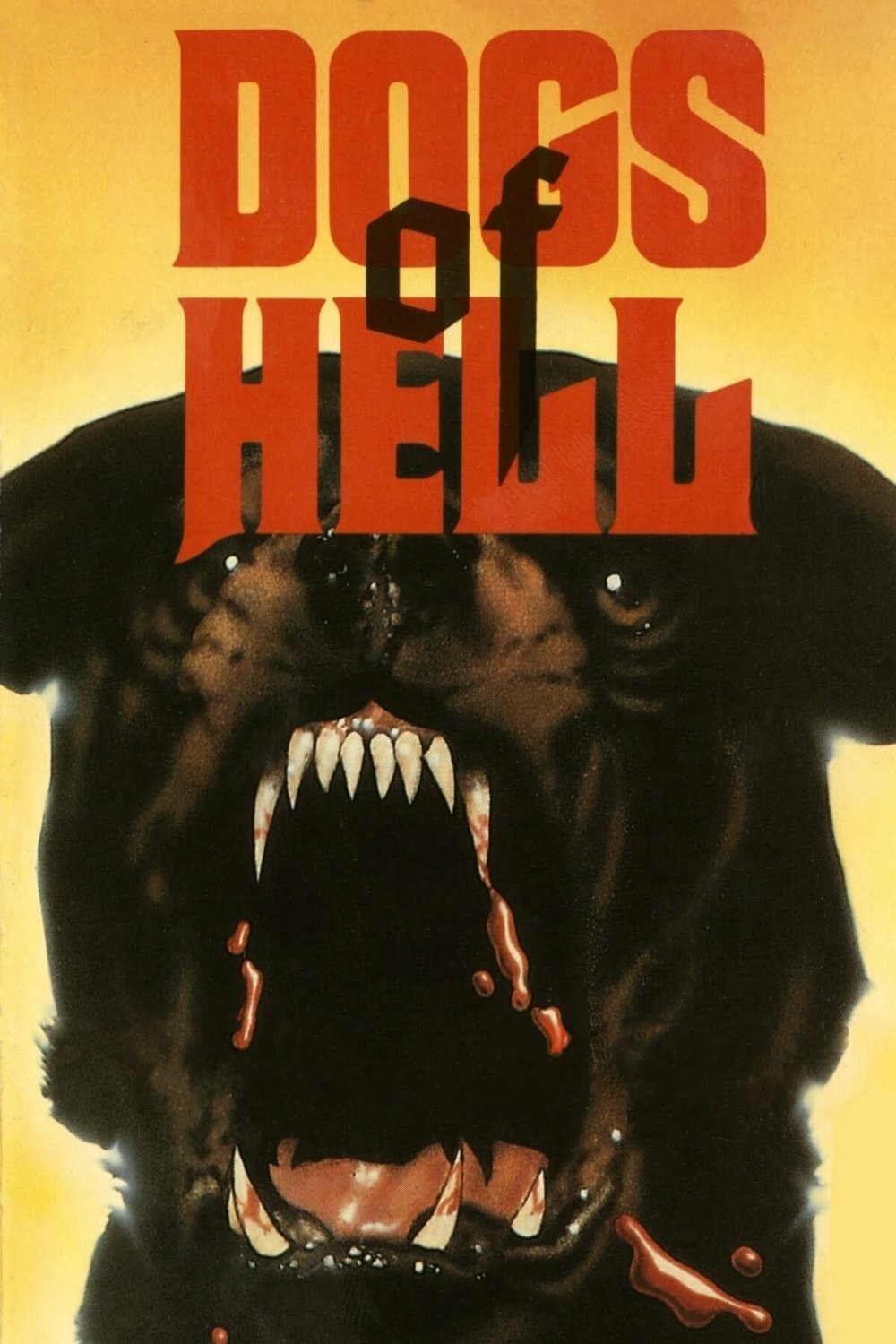
Released in 3D and also known as ‘Rottweiler: Dogs of Hell’, this film features military-bred Rottweilers that escape transport and terrorize a Southern town. Training footage and muzzle-close shots emphasize speed and bite strength. Local law enforcement organizes search grids and curfews as attacks spread. Community shelters and school gyms become emergency hubs.
‘Play Dead’ (1983)
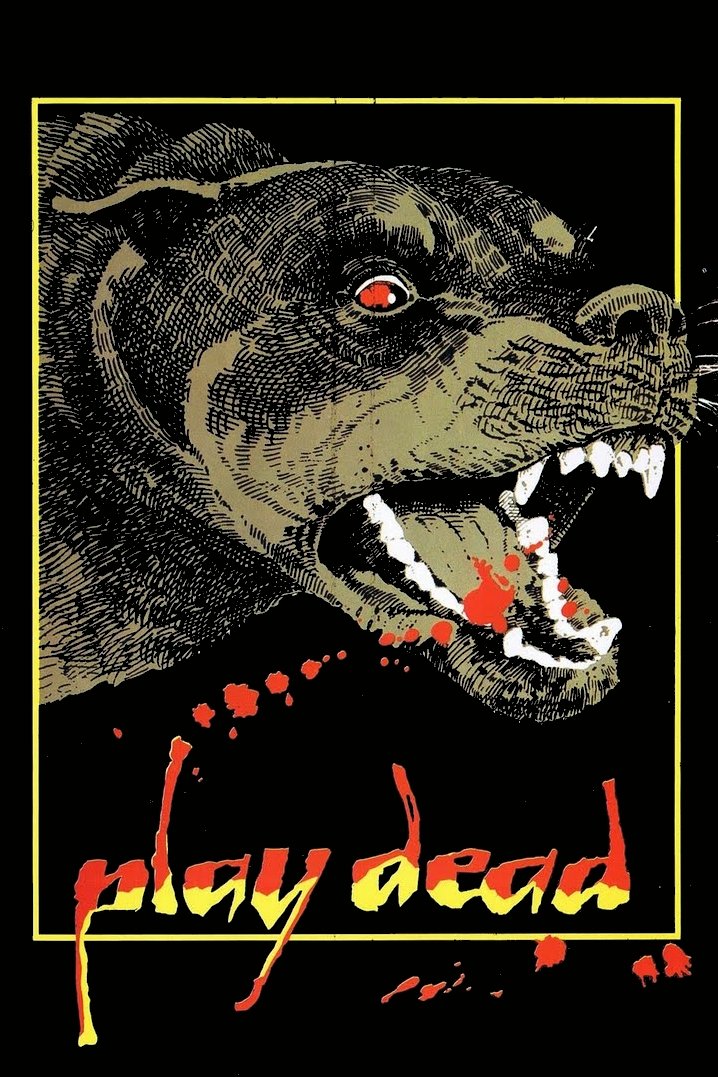
A vindictive heiress uses her Rottweiler to eliminate family members in a string of staged accidents. The film tracks police suspicion through veterinary records and estate paperwork. Set pieces exploit household spaces like stairwells, bathrooms, and garages. The dog’s obedience to specific triggers is central to the plot mechanics.
‘Atomic Dog’ (1998)

A nuclear-plant accident exposes a stray to radiation, creating an aggressive, hyper-territorial animal that returns to claim a family home. The story uses pregnancy and offspring as stakes for escalating conflicts. Animal-control strategies and containment cages feature prominently. Suburban cul-de-sacs, basements, and yards provide confined battlegrounds.
‘The Boneyard’ (1991)

This morgue-set horror includes a late-film transformation of a standard poodle into a giant, monstrous version of itself. Practical effects inflate fur, teeth, and limbs for slapstick-leaning carnage. Police tape, freezer drawers, and embalming rooms form the obstacle course. The canine mutation serves as a chaotic midpoint before the finale.
‘The Hounds’ (2011)

A group of friends on a camping trip encounter masked figures and aggressive dogs tied to a local crime ring. The plot alternates between investigation and pursuit through fields and abandoned farm buildings. Flashbacks connect the hounds to prior disappearances. The film favors handheld photography and nighttime exteriors.
‘The Thing’ (2011)
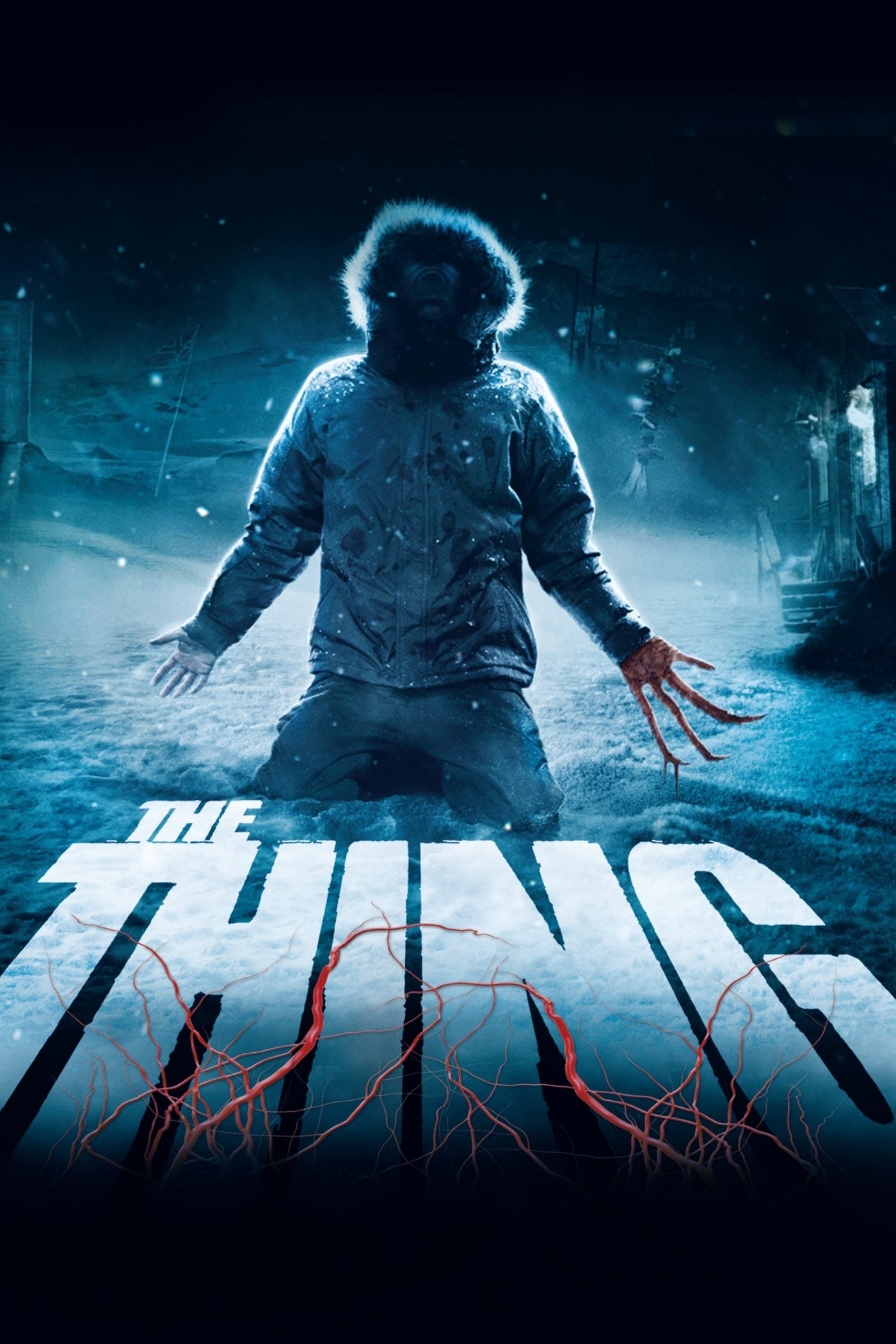
This prequel shows how the shapeshifting organism first escapes the Norwegian base using a sled dog. Kennel containment protocols and flamethrower deployment echo forward into the events of the 1982 story. Ice-tunnel sets, helicopter pads, and snow tractors build the timeline. The dog’s flight across the ice closes the loop into the next film.
‘Damien – Omen II’ (1978)

Rottweilers again appear as protectors and instruments guiding the boy’s ascent within a military academy environment. Incidents around construction sites, museums, and rail yards tie back to prophetic warnings. The dogs’ placement suggests surveillance and intimidation rather than random attack. The storyline expands the network of adult handlers coordinating signs.
‘The Final Conflict’ (1981)

As Damien pursues political power, the presence of Rottweilers signals ritual enforcement and loyalty tests. The film moves through embassies, churches, and rural estates. The animals flank processions and appear at critical turning points tied to prophecy. Their use underscores continuity in the series’ visual language for demonic authority.
‘The Breed’ (2001)

This early-2000s release centers on illegal dog fighting and a breakaway group of trained animals that start attacking spectators and handlers. Police raids and stadium chases structure the second half. The production incorporates muzzle cams and handler POVs for immediacy. Evidence logs and veterinary autopsies detail conditioning injuries.
Share your picks and the scariest canine moments we missed in the comments.