What makes a game feel lively even without a cast?



Gaming franchises and development have come a long way over the last 30 to 40 years. While the 80s were awash with games that focused on arcade-style, rather rudimentary concepts like Pac-Man and Space Invaders, it wasn’t long before the industry began exploring the idea of introducing casts and main characters into many of its games and titles.
Some of the most definitive games throughout history feature casts and storylines, ranging from Zelda, Super Mario and Halo to the Grand Theft Auto series.
However, as these games become more ambitious and broader in scope, it creates a disparity between conventional gamers who enjoy gaming titles for their fundamentals and mechanics, and narrative-focused gamers who prefer cinematic or story-driven experiences. So, what makes a game feel lively, even when there’s no cast involved? Let’s take a look, shall we?
Sticking to the basics
There are plenty of games that have not strayed too far from their initial designs and have instead focused on the elements that made them so endearing to the industry in the first place.
Slot gaming, which is a smaller subsector within the world of casino gaming, is an excellent example of this. As this sector has grown into an enormous global library of games that includes some titles driven by a story or a main character, the majority of these games champion the mechanics and designs rather than interlocking gameplay dynamics.
We’ve seen it across several themes, including food-themed games, where designers zero in on a range of ideas to deliver an audiovisual kick. Extra Chilli falls into this category, and while the designers have not spent much time on designing this game with a main character or storyline that weaves through it, it is the design of the slot itself, and the vivid colors and sounds that really inject a sense of liveliness into the game, despite not having a storyline to string people along.
Key elements that make a game feel lively
We’re talking about such a broad topic here, but if you are somebody who enjoys games where there’s no emphasis on a main character, NPCs or a cast, then there are plenty of different elements to design that help a game to feel lively.
Games that involve an explorable world tap into this in dozens of ways. They ensure that depictions of stormy weather really feel windy and gloomy; if it is sunny, they use sound effects like chirping birds and bright blue skies to make the world feel more cheerful and lifelike.
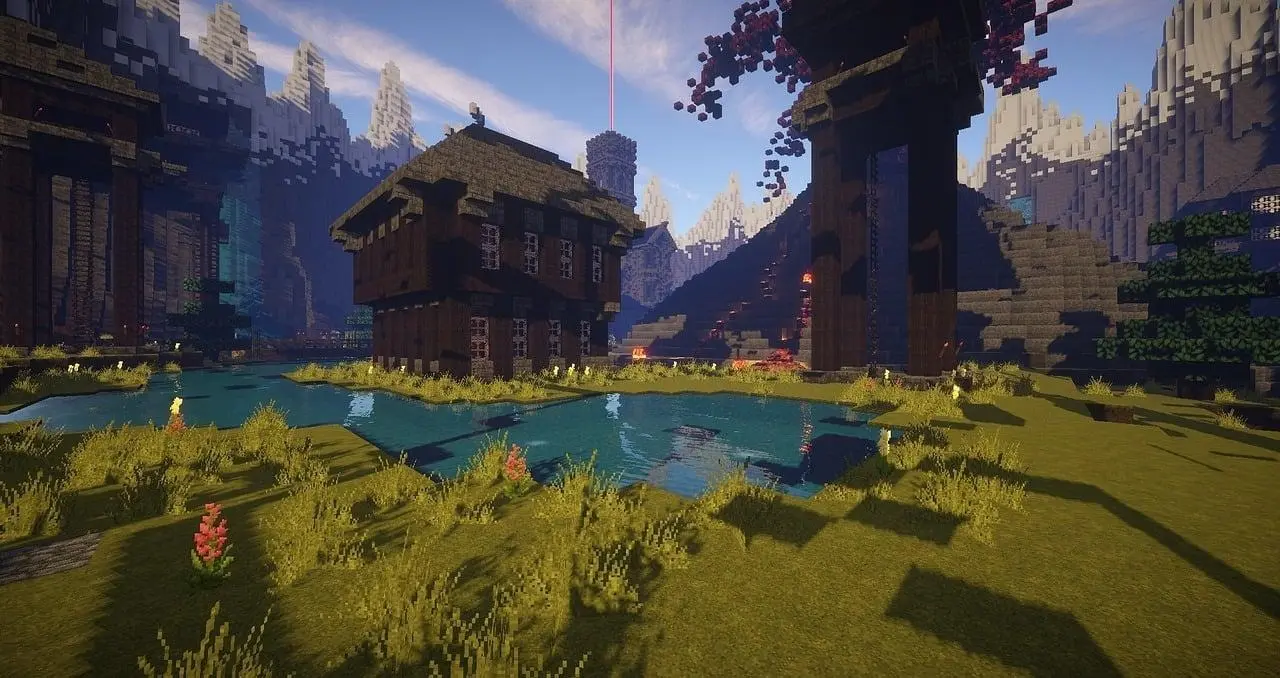
In dystopian games, where you are rummaging around with no other characters or life in sight, it is the presence of old buildings, communes or homes that help convey the idea that there used to be life or community there.
A game does not need these elements to have a palpable sense of liveliness. It can be as simple as gaming modes that follow the pattern of our day and the seasons of the year, which can make it much easier for us to feel as though it is grounded in our own world.
While The Last of Us is a game that has plenty of characters and storylines, so much so that it turned into one of the biggest TV shows of the 2020s, there are plenty of games that don’t have a cast, but follow a similar theme and use these game design techniques to breathe life into their ideas.
Can AI recreate the lively feel without a designer?
While it would be unfair to suggest that games that don’t have a main character or cast lack the liveliness of games that do, it is fair to say that the industry has grown to such a size that there is something that will appeal to everyone. Some in the gaming industry have suggested that the designers who are behind the more basic games on the market could soon find themselves out of work, especially as the quality and investment in AI continues to ramp up.
The CEO of Take-Two recently fielded a number of questions about whether AI could design GTA 6 entirely on its own. While he didn’t deny that it wouldn’t be able to, he also confirmed that it wouldn’t be very good.
Now, with AI making such inroads into the world of creativity and gaming development, there are plenty of areas where it will be utilized and leveraged. Ironically, a game designed entirely by machines and AI could have many lifelike elements, especially when it comes to NPCs.
However, if a game has a strong team behind it, a solid budget and a great idea, it will trump a generative AI model every time, despite how impressive it might be and how far AI has come along since 2022.
Final thoughts
A game does not need human interaction, speech or overlapping characters and NPCs to feel lively. While it definitely helps, it is not the be-all and end-all of the design.
Whether a game feels lively or not is something that is in the mind of the player. You and I could play the same game, and while I might think it has life to it, even without a cast, you might believe it feels soulless without one. The subjectivity of gaming makes this a tricky issue.
Ultimately, however, there needs to be a good team behind the game, and they must know what they want to integrate to ensure that the game feels like it has life pumping through it. Whether it is through the intricacy of the gameworld and its design, or vivid audiovisuals that make the experience sensory rather than psychological, there are many ways a game can feel lively, even without a cast. It all stems from the designer’s sense of creativity.