Science Just Made ‘Star Wars’ Canon as Astronomers Discover 27 Real-Life Tatooine-Like Planets

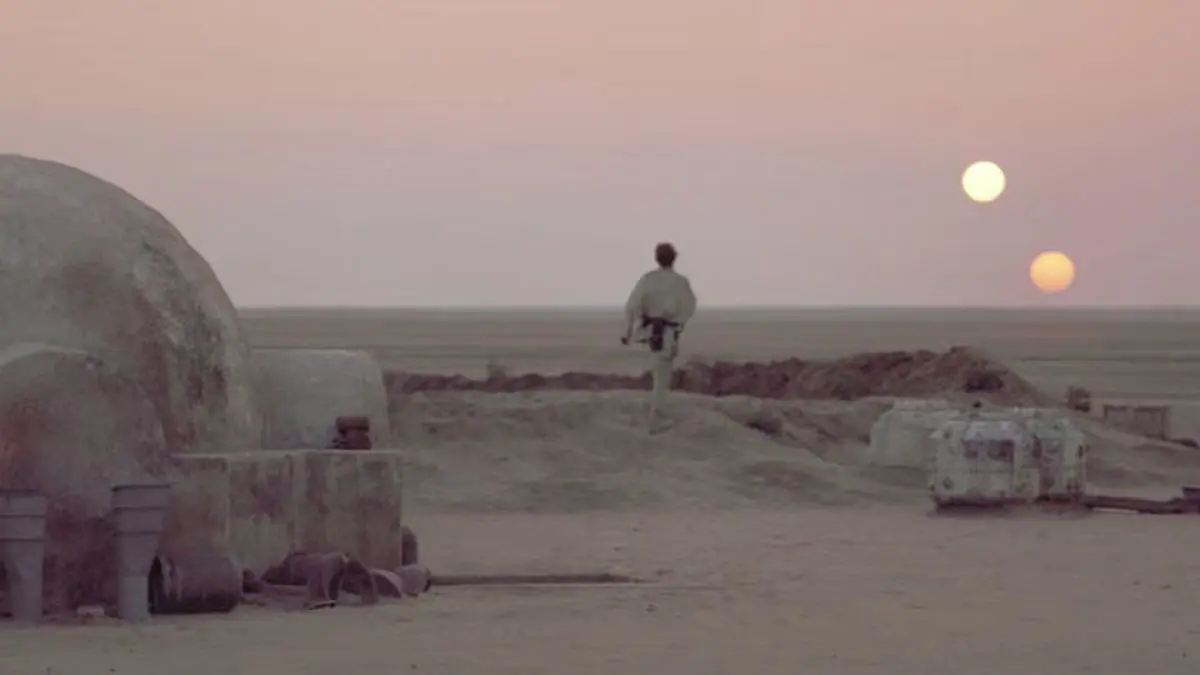

It is hard to imagine a more fitting date for a major astronomical discovery. On Star Wars Day, scientists announced findings that blur the line between George Lucas’s galaxy far, far away and the one we actually live in.
Astronomers from the University of New South Wales have identified 27 new candidate planets orbiting binary star systems, potentially doubling the number of known circumbinary worlds. These are planets that, much like the iconic desert homeworld of Luke Skywalker, orbit two suns at once.
The discovery was flagged by Star Wars Holocron on X, referencing a report from The Guardian, and it quickly captured the imagination of fans and science enthusiasts alike. Prior to this study, only about 18 such planets had been previously identified, a stark contrast to the more than 6,000 planets discovered orbiting single stars. The new findings suggest that Tatooine-style worlds may be far less of a cosmic rarity than anyone had assumed.
Lead author Margo Thornton, a PhD candidate at UNSW, detailed the team’s use of a method called apsidal precession to detect these worlds, which involves searching for gravitational wobbles between stars as they eclipse one another to signal the presence of an additional mass. It is a cleverly indirect approach that sidesteps the limitations of older detection techniques.
Most circumbinary planets have historically been discovered through transits, which limits discoveries to systems with mutually coplanar architectures and creates a bias that makes it difficult to infer the true circumbinary planet population.
By analyzing data from 1,590 eclipsing binary star systems, the research team identified 36 candidates exhibiting unexplained precession signals, and for 27 of these, the mass and orbital characteristics aligned with what would be expected for planets, though further confirmation is still needed.
The study used data from NASA’s Transiting Exoplanet Survey Satellite, and the candidate worlds are estimated to range in size from Neptune-like dimensions to ten times the mass of Jupiter, located between 650 and 18,000 light years from Earth.
Associate Professor Ben Montet, the study’s senior author, pointed to ‘Star Wars’ as a surprisingly effective educational tool. He noted that the concept of a planet with two suns is widely recognized due to popular culture references, and that this visual helps make complex astronomical concepts more relatable to the general public. It is a rare case where a science fiction franchise has genuinely helped prime public curiosity for a real scientific moment.
Separate recent research from the University of Lancashire also suggests that planets may actually form more easily around double stars than around single stars, with computer simulations showing that gas disks surrounding young binary stars can efficiently produce planets beyond a certain inner forbidden zone. The two studies together paint a picture of binary star systems as surprisingly hospitable nurseries for planet formation, upending decades of assumptions.
Confirming the 27 candidates will likely require follow-up observations from advanced telescopes such as the James Webb Space Telescope or the Atacama Large Millimeter Array, with scientists needing to measure the light spectra of these systems to determine mass and composition. The universe, it turns out, may be filled with twin sunsets waiting to be found.
Share your thoughts on this discovery in the comments below.