Daisy’s Real Parents In ‘The Testaments’ Just Rewrote A Major ‘Handmaid’s Tale’ Twist

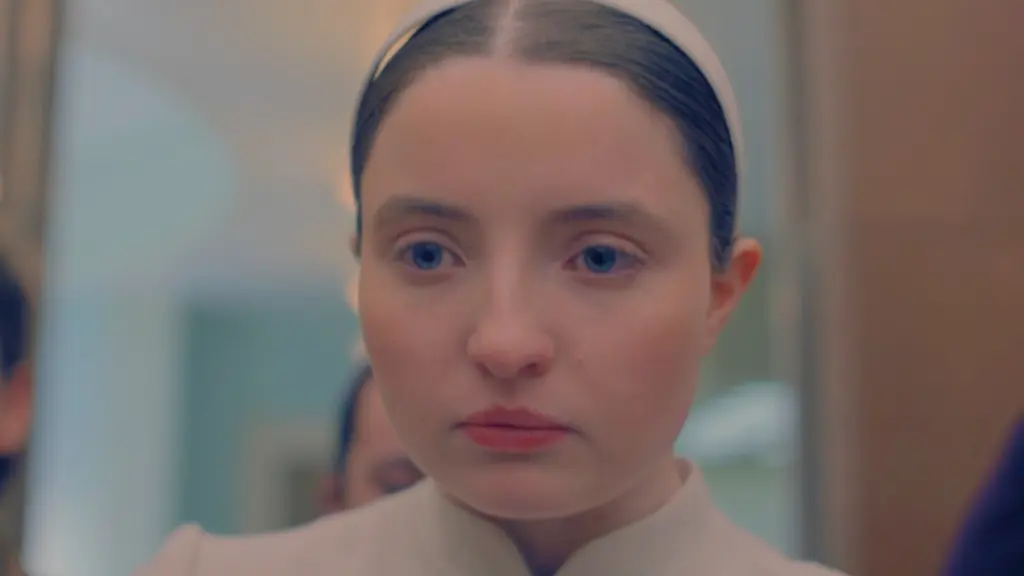

Hulu’s ‘The Testaments’ has spent its first season carefully unspooling the mystery at the heart of its newest protagonist, and Daisy’s parents have become the question fans cannot stop chasing. The teenage Pearl girl, played by Lucy Halliday, arrives in Gilead with a fake name, a tragic backstory, and a family history that hits very differently for anyone who has read Margaret Atwood’s source novel.
The series has now confirmed who raised Daisy, who killed them, and what happened to the biological mother and father who got her out of Gilead in the first place. The answers are emotionally brutal, and they also represent the single biggest divergence from the book. Here is everything ‘The Testaments’ has officially revealed about Daisy’s family tree.
Neil And Melanie Are Daisy’s Adoptive Parents In ‘The Testaments’
Long before Daisy ever set foot in Gilead, she was just a teenager living in Toronto with the only mother and father she had ever known. Her adoptive parents were Neil and Melanie, a couple in Toronto whose secondhand clothing store doubled as a Mayday front used to smuggle women out of Gilead.
That cover story ultimately got them killed. Both Neil and Melanie were killed inside their own shop in Canada by Gilead operatives, leaving Daisy alone and entirely unaware that the people who raised her had been quietly running an underground railroad her whole life.
In Atwood’s novel, the same couple owns a similar storefront called The Clothes Hound, and the two of them are killed by undercover Gilead operatives just as their daughter turns sixteen. The show keeps the spirit of that tragedy intact while shifting some of the mechanics, but the takeaway is the same. Everything Daisy thought she knew about her family was a story constructed to keep her alive.
What ‘The Testaments’ Reveals About Daisy’s Biological Parents
The seventh episode finally addresses the question Daisy has been quietly carrying around since the season premiere. Rita, played by returning ‘Handmaid’s Tale’ favorite Amanda Brugel, sits Daisy down for a meal and gently confirms what the audience already suspected. Her real parents are dead.
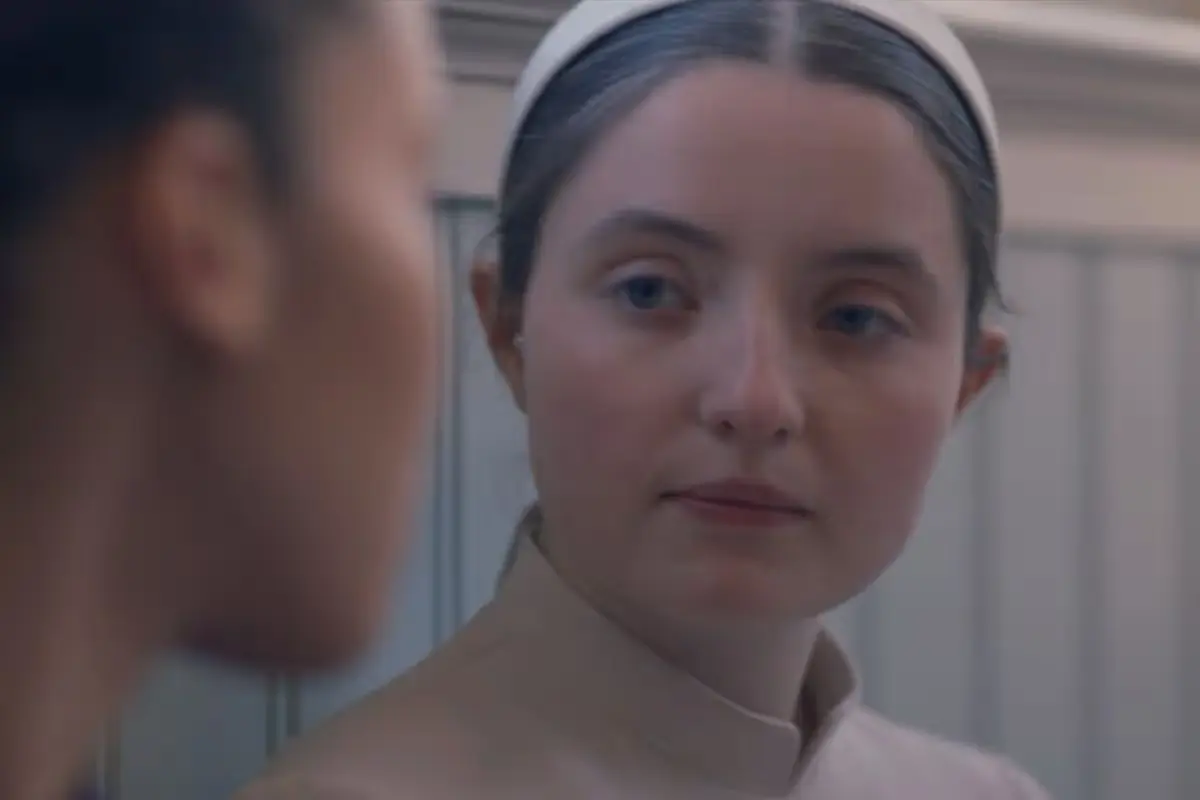
Rita explains that all she knows is that Daisy’s birth parents got her out of Gilead so she could have a better life, treating her like their “Moses.” The framing is heartbreaking, and it doubles as a deliberate fan theory shutdown. The reveal effectively closes the door on speculation that June Osborne could turn out to be Daisy’s biological mother in the Hulu version of the story.
It is also Rita who eventually steps in to prepare Daisy for life as a Pearl Girl, taking over from Neil and Melanie as a kind of substitute guardian. From there, the original plan to quietly smuggle Daisy to Colombia falls apart and she decides she has nothing left to lose. Gilead has now killed two sets of her parents, and she signs up to walk straight back into the regime as a Mayday informant.
How The Hulu Version Of Daisy’s Family Departs From Atwood’s Book
Anyone who read Atwood’s sequel walked into the show waiting for the same gut punch reveal. In the novel, Daisy is eventually revealed to be the daughter of June and Nick, the grown version of Baby Nicole who was smuggled out of Gilead in ‘The Handmaid’s Tale’.
That parentage makes her Agnes’s half-sister, and the emotional climax of the book hinges on the two girls realizing they share a mother and finding their way out of Gilead together as sisters. The closing inscription Atwood gave the novel even ties them to the same family, which makes the sibling connection essentially canonical on the page.
The Hulu version pulls the rug out from under that entire setup. Daisy is not Nichole, also known as Holly, in ‘The Testaments’ series, and Holly is still a young child being raised by June. Daisy is instead a separate Toronto teenager whose biological mother and father are never named on screen.
Whatever bond Daisy and Agnes build inside Aunt Lydia’s preparatory school is therefore going to rest on something other than shared DNA. That choice fundamentally rewires the emotional core that Atwood designed, and it leaves room for the show to surprise even the readers who walked in convinced they already knew the ending.
Why Bruce Miller Rewired Daisy’s Parents For Television
The architect of all this is showrunner Bruce Miller, who has been candid about why the Daisy of the page could not survive the jump to screen. The series picks up roughly four years after the ‘Handmaid’s Tale’ finale rather than fifteen years like the book, which would have left baby Holly as a small child rather than a teenager during this timeline.
In an interview with The Hollywood Reporter, Miller explained that he wanted Daisy and Agnes to be close in age and physically together at school, which forced him to detach Daisy from the Nichole identity altogether. He told the publication he leaned on casting and performance to keep the essence of Nichole intact, finding an actor who could echo June and folding some of those qualities into the new Daisy while still letting her stand as her own person.
That is why Halliday’s Daisy still feels like a piece of June even though they share no blood relation in the show. Miller also reframed June as the closest thing Daisy has to a real mother on the series, an absent presence Daisy knows about and quietly orbits, with Elisabeth Moss returning in a cameo to anchor that emotional handoff between the two shows.
It is a gamble that has split the fanbase in real time, because Atwood’s reveal that Baby Nicole was Offred’s smuggled daughter has long stood as one of the most cherished payoffs in the entire Gilead saga. The bigger question now is whether ‘The Testaments’ will eventually pull back the curtain on exactly who Daisy’s biological mother and father were inside Gilead, and the comments are the place to plant your flag on which name you most want waiting at the end of that thread.