‘The Testaments’: Aunt Lydia Is Back, But She’s Not the Same Woman Who Tortured the Handmaids

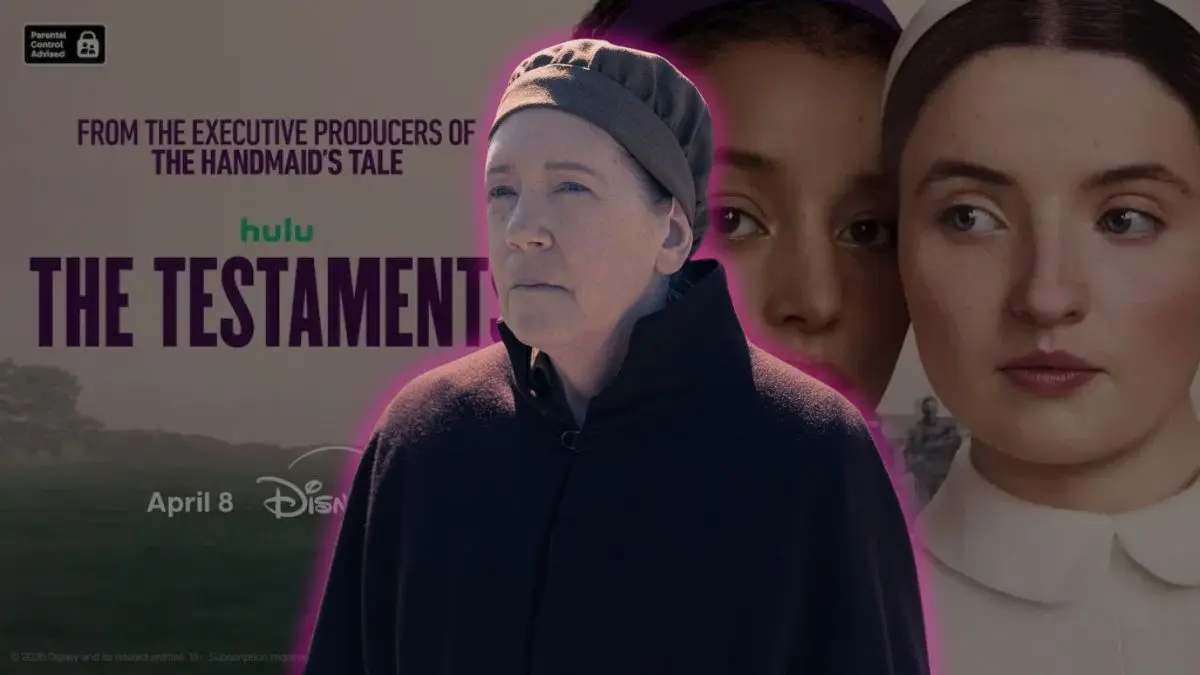

For six seasons, ‘The Handmaid’s Tale’ asked viewers to reckon with Aunt Lydia, one of television’s most morally complicated figures. Cruel, relentless, and devoted to the machinery of Gilead, she was a character audiences loved to hate and occasionally, unsettlingly, found themselves pitying. When the original series concluded in May 2025, it felt like a chapter had finally closed. Then came ‘The Testaments’, and with it, a version of Lydia that nobody expected.
‘The Testaments’ takes place approximately four years after the end of ‘The Handmaid’s Tale’, returning to the oppressive world of Gilead through a new generation of young women who have known nothing else. The sequel series, based on Margaret Atwood’s 2019 novel of the same name, premiered on Hulu in April 2026, launching with a three-episode drop before settling into a weekly release schedule. And while the show introduces fresh faces and a coming-of-age tone quite unlike its predecessor, one figure looms largest over the entire enterprise.
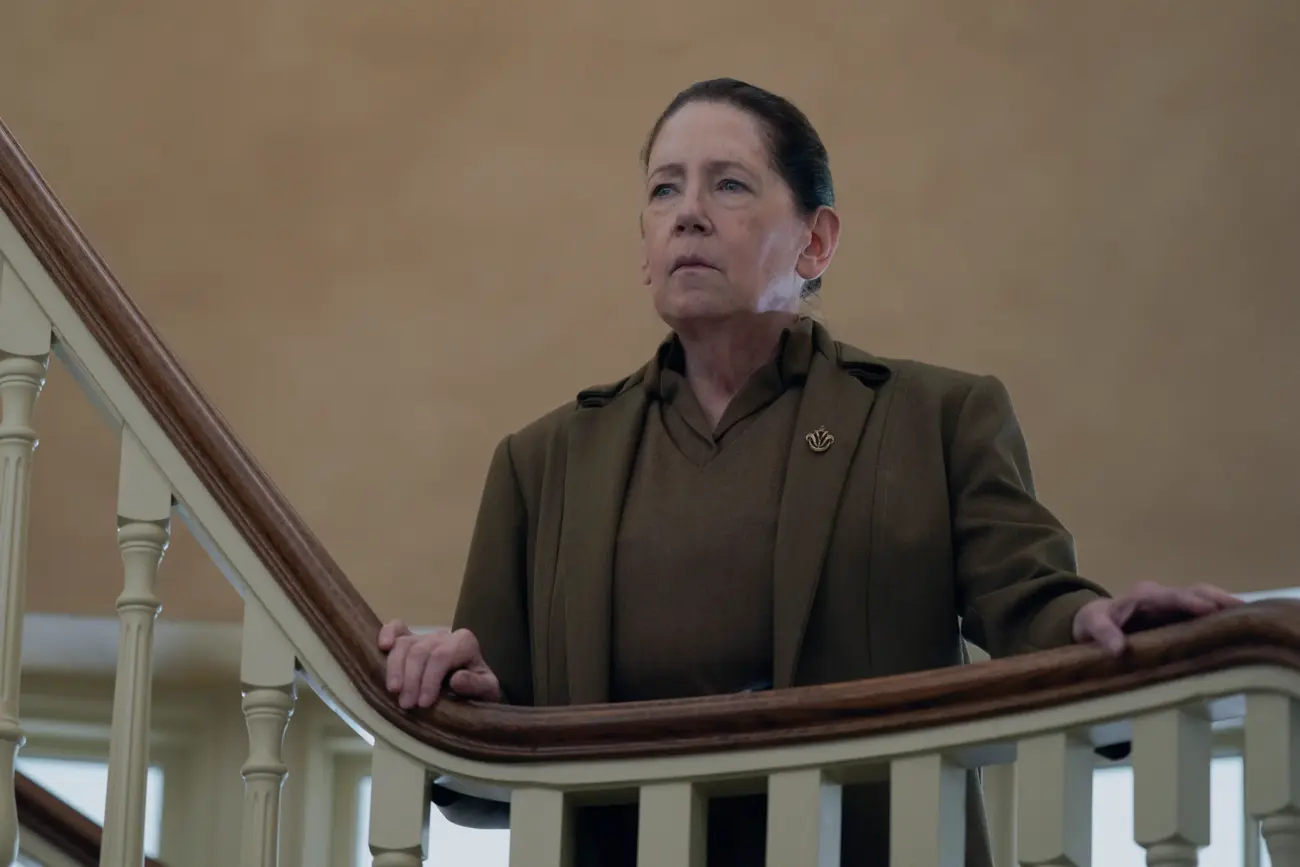
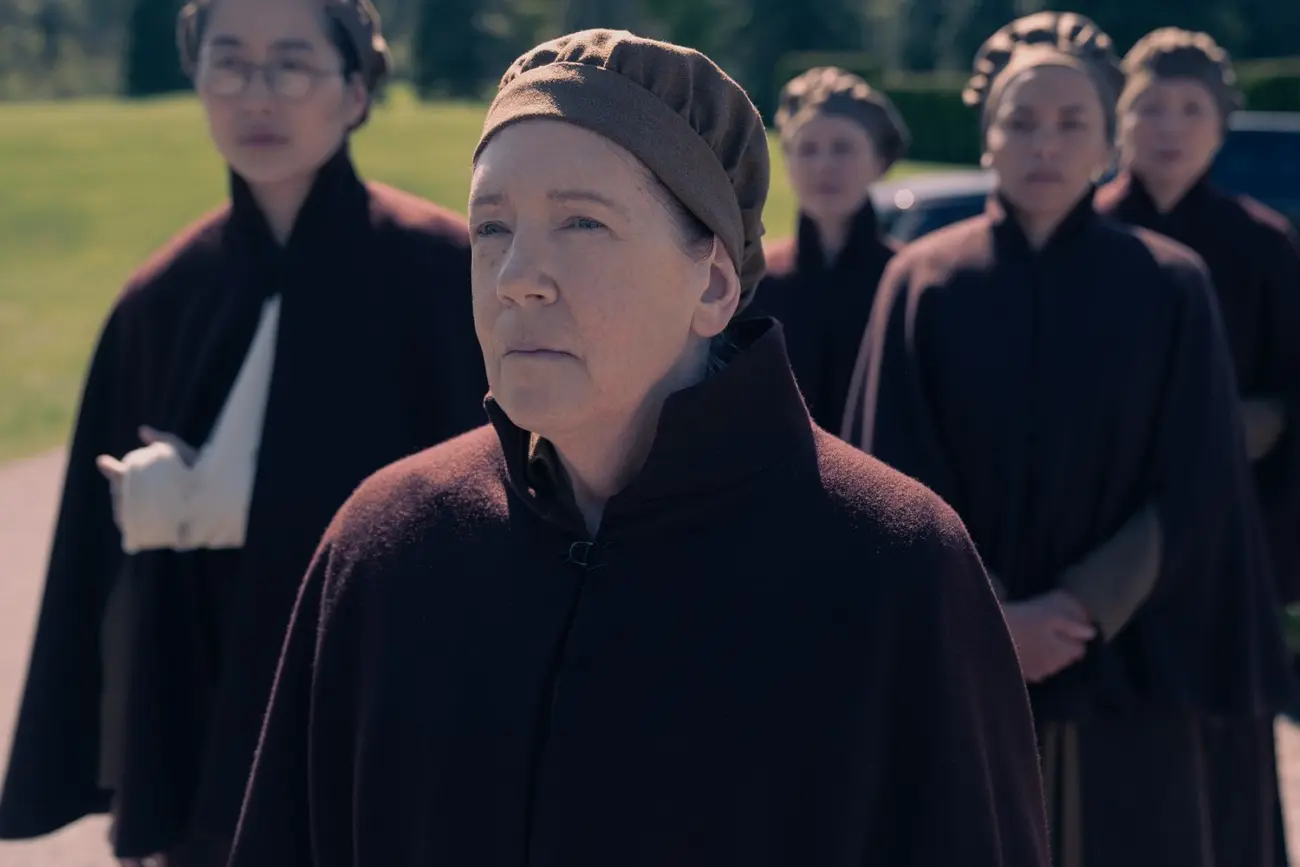
Emmy winner Ann Dowd returns as Aunt Lydia, but this is not the Aunt Lydia that viewers remember. Far from the enforcer who wielded punishment like a sacrament, she now presides over a preparatory school bearing her own name, a place where Gilead’s most privileged daughters are groomed for their futures as obedient wives. There is even a statue of her on the grounds. Yet beneath this strange elevation to martyr and symbol lies something far more destabilizing for anyone familiar with her history.
A Softer Tyrant, With Secrets
In an interview with CBR, Dowd reflects on how much the character has shifted since the events of the original series. “I think it’s Lydia’s softer, gentler approach. That’s very evident in ‘The Testaments’, that she is a changed person. From the end of ‘The Handmaid’s Tale’, the shape she was in then of deep remorse, begging for forgiveness, going through changes in the period between ‘The Handmaid’s Tale’ and ‘The Testaments’, making decisions about who she wanted to be, when the shame dissipated finally of her past life.”
Dowd describes the morally complex Aunt Lydia as “a complete gift,” noting that at the conclusion of ‘The Handmaid’s Tale’, the character “was brought to her knees, deeply remorseful, wanting forgiveness” and “had done wrong things and awful things” but had “allowed the walls to break and to come down and she was left with nothing.” That emptiness, it turns out, became the soil for something new.
The sixth episode of ‘The Testaments’, titled “Stadium,” has Lydia questioning the choices she made to save herself by collaborating with an ultra-misogynistic totalitarian movement, ultimately becoming one of the architects of the Aunts as an institution. The episode delivers the most revealing portrait of the character in the franchise’s history, including a bombshell that Dowd herself found staggering.
The Backstory That Changes Everything
In a flashback scene, Lydia offers herself up as an asset to Commander Judd by asking him to set aside her history, which includes the fact that she is unmarried and had an abortion, a detail Judd calls punishable by death, even retroactively, under Gilead law. Lydia vows to enforce Gilead’s religious views and train women on how to become handmaids in exchange for elevation as head Aunt. The scene brings Atwood’s novel to life in brutal detail.
Discussing the episode with Collider, Dowd explains the clearest version of Lydia’s drive. “I think the biggest change was that she’s gentler and kinder. It was very interesting to explore that, and to see what she chooses to do and the clarity with which she does it.” On Lydia’s ruthless ambition during the Gilead takeover, Dowd adds, “Lydia knows that she’s going to survive. She knows, ‘I’m not going to be Aunt No. 5. If Vivian wants to do that, that’s her business. I want to be Aunt No. 1, and I’m going to do whatever it takes to get to that position.'”
Agnes, Daisy, and the New Generation
Lydia’s return is made all the richer by the young women surrounding her. Chase Infiniti plays Agnes, the older version of Hannah, June Osborne’s daughter who was taken from her as the regime solidified its control. Infiniti brings considerable screen presence to the role, and her dynamic with Dowd grounds the show’s more optimistic, coming-of-age energy. Alongside Agnes is Daisy, a new arrival and convert from beyond Gilead’s borders, played by Lucy Halliday.
The show offers a fresh perspective through young women who have no other frame of reference, no alternative view, and no outside material to draw on beyond the world they were handed. That limitation, and what happens when it begins to crack, is where ‘The Testaments’ finds its emotional core. Where the original series felt like a study in endurance and horror, this one is oriented toward something more fragile and perhaps more dangerous, hope.
With new episodes still rolling out weekly through May, ‘The Testaments’ is proving that the most interesting character in Gilead was never June Osborne, but the woman who helped build the cage around her. Let us know in the comments whether you think Aunt Lydia’s transformation feels earned or whether the show is letting her off too easy.