Netflix’s ‘Lord of the Flies’ vs. the Book: The Boldest Changes Jack Thorne Made to a Seven-Decade Classic

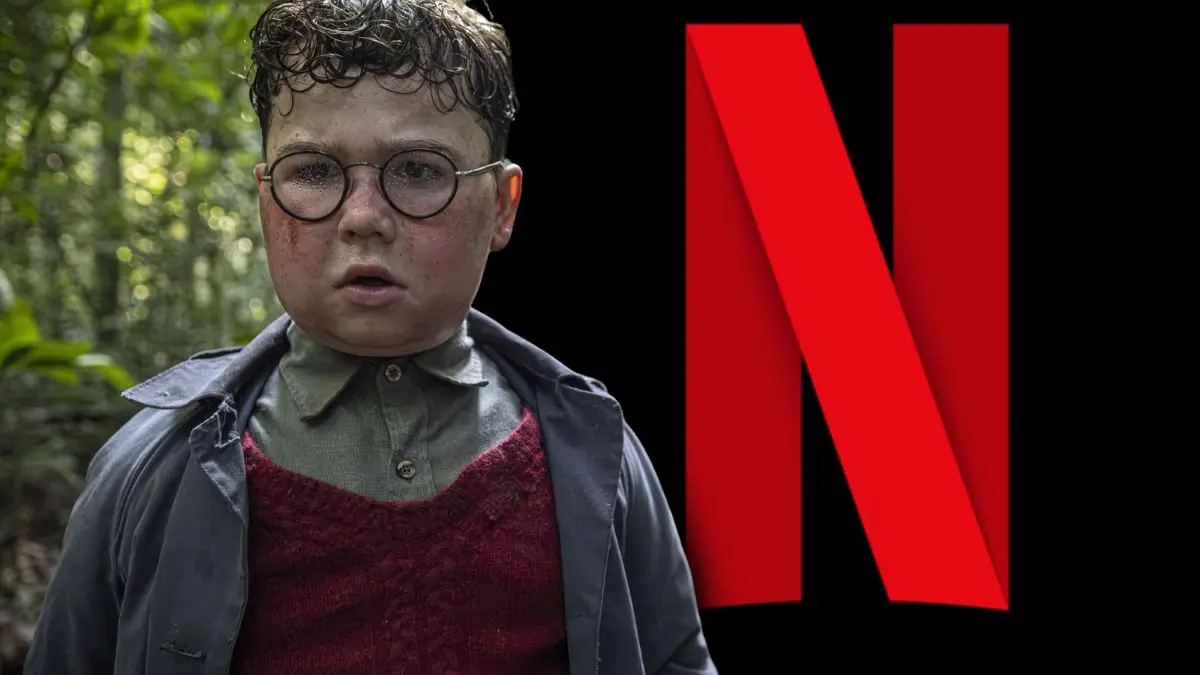

William Golding’s ‘Lord of the Flies’ has haunted school syllabuses since its publication in 1954, but it took more than seventy years to receive its first-ever television adaptation. The four-part miniseries, created and written by Emmy-winning ‘Adolescence’ co-creator Jack Thorne and directed by Marc Munden, follows a group of English schoolboys who become desert island castaways. The series was released on Netflix in May after debuting on BBC iPlayer earlier in the year, and it arrived to overwhelmingly positive reviews from critics.
For fans of Golding’s novel, the central question was always how faithfully the show would mirror its source material. The answer is that Thorne has kept the bones of the story firmly intact while adding layers of character depth, backstory, and emotional nuance that the original book never explored. The result is an adaptation earning widespread praise as something genuinely distinct from everything that came before it.
A Brand-New Structure That Puts Each Boy Center Stage
One of the most immediate and significant departures from Golding’s novel is the structure of the show itself. All the major plot points from the book remain, but the biggest difference is that each of the show’s four episodes follows a different boy, rather than sticking to the novel’s primary focus on Ralph. This is not a cosmetic change. It fundamentally reshapes how the audience experiences the story.
The series is structured so that each episode unfolds from the perspective of one of the four principal characters, covering natural leader Ralph, arrogant bully Jack, vulnerable loner Simon, and the smartest and most frequently teased of the group, Piggy. This approach allows Thorne to draw out new information about who these boys are before the island begins to destroy them.
The camera captures Piggy’s first stumbling steps through the jungle as he sings a small tune to steady himself, with cinematographer Mark Wolf’s well-placed fish-eye lens visualizing his initial disorientation, and there is a ground-level perspective throughout that fills in the quiet moments between the carnage. That granularity of feeling is something Golding’s tightly-wound prose, by its very nature, could never quite deliver.
The Backstory Flashbacks Golding Never Wrote
Perhaps the biggest distinction between the novel and the television adaptation is the use of flashbacks, a storytelling device that Golding’s prose never employed. Through these sequences, viewers learn that Ralph was coping with the loss of his mother and could not face his grieving father, while Jack grappled with feelings of inadequacy and a desperate need to please his own. The boys arrive on the island already carrying weight that the book’s version of them never had.
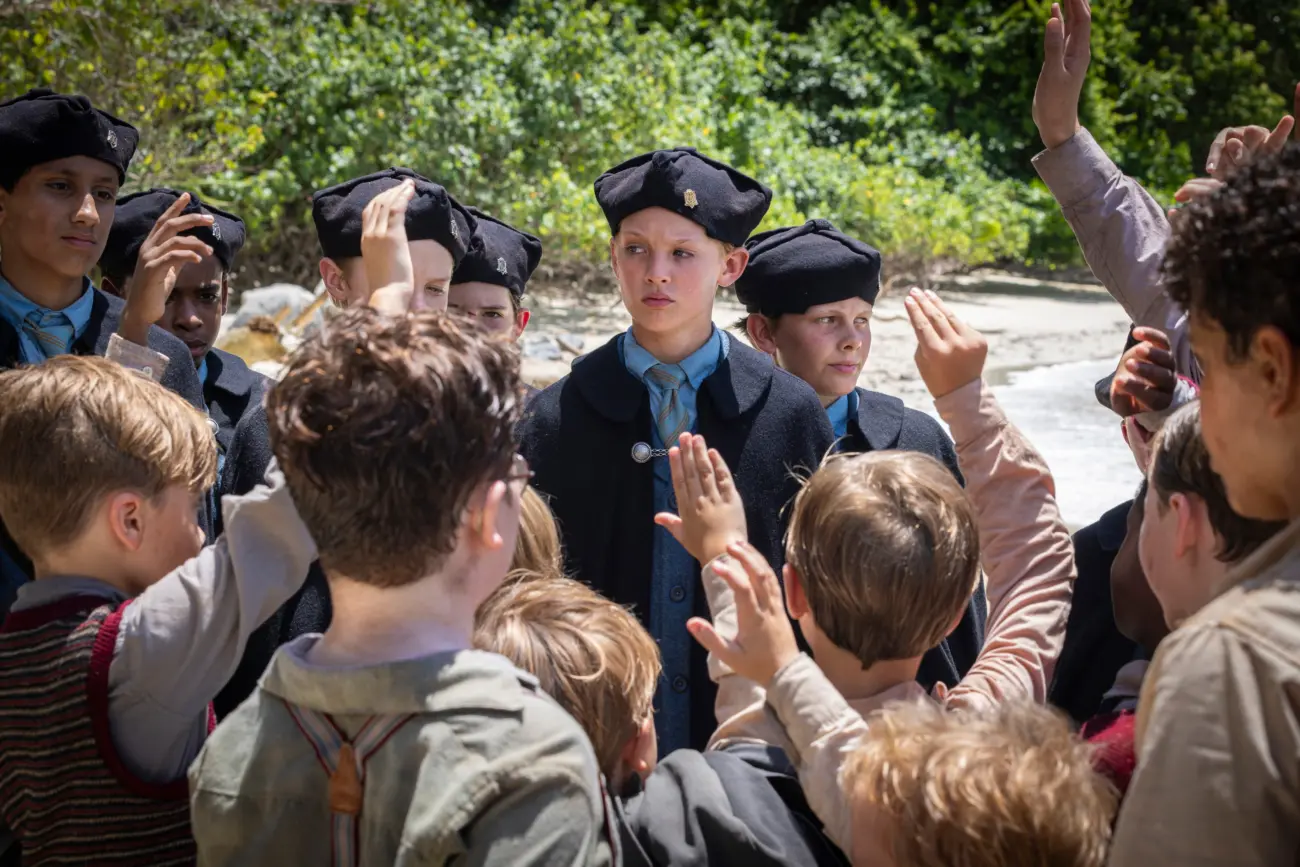
Jack and Simon’s history together in the choir is also rendered more complex in the show, with Simon’s mother apparently having endured physical abuse, adding a shared bond of difficult home lives that meaningfully deepens their friendship on the island. None of this appears in Golding’s novel, where the characters exist almost as archetypes stripped of personal history.
Purists may not appreciate how much Thorne has added to the story, and how these additions dilute the sense of archetype that drove the original work, though there is something in the backstories that softens the dark message of ‘Lord of the Flies’ in a way that suggests these boys broke bad rather than that all of humanity will. Critics have largely argued those additions are precisely what makes this version feel so urgent and emotionally devastating in the current cultural moment.
What Thorne Did With Piggy Changes Everything
No character is handled more differently in the show than Piggy. In Golding’s novel, readers never learn Piggy’s real name. In this miniseries, one of the most deliberate and humanizing choices is that Piggy’s actual name, Nicholas, is finally revealed, something the source material never divulged. It is a small change that carries enormous weight.
The circumstances of Piggy’s death are also significantly altered from the book. In the novel, Piggy is killed almost instantly after a boulder strikes him. In the show, after being hit with a rock and the conch being shattered on the beach, Piggy is still alive, and Ralph carries him into the jungle and tries to nurse his wounds before the head laceration ultimately proves fatal. This extended goodbye transforms one of literature’s most shocking moments into one of its most quietly devastating.
Speaking with Variety, Thorne explained his thinking behind giving Piggy a name. He noted that Ralph’s journey through the island is essentially a movement from seeing Piggy as “Piggy” to seeing him as “Nicky,” and that Ralph’s very first act on the island is to betray his friend by sharing the nickname, driven entirely by a desire to be liked by Jack. That throughline gives the whole show a moral architecture the book never quite articulated so explicitly.
Simon’s Arc and the Adaptation’s Most Daring New Layer
Simon is the character who undergoes perhaps the most quietly radical reworking in Thorne’s adaptation. In one important deviation from the book, Simon’s diary gently suggests that he is queer and harbors romantic feelings for Jack, adding a fascinating new layer to their mercurial relationship throughout the series. The book gives Simon a mystical, almost Christ-like quality but offers no such interiority.
In the adaptation, Jack and Simon bond over their shared experience of being left alone at school during holidays, developing a friendship that is then complicated when Jack abandons Simon as soon as the other boys return, a classic tween betrayal that takes on a far more sinister dimension given what unfolds later on the island. The show uses that friendship as one of its central emotional engines in a way that Golding’s novel simply could not.
Speaking with Rolling Stone, Thorne described one of his favorite scenes as the moment when Jack becomes paralyzed with fear while scaling a cliff, and both Roger and Morris show genuine concern for him. Thorne noted that these are boys capable of monstrous acts, but that in that moment, it is a quiet kind of love between them.
How Critics and Audiences Are Responding to This First TV Adaptation
The ‘Lord of the Flies’ Netflix series has arrived to a strongly positive critical reception. On Rotten Tomatoes, 95% of critics’ reviews are positive, with the site’s consensus describing the retelling as fleshing out Golding’s text with thoughtful observations about boyhood, sharpened by a uniformly terrific group of child actors who command attention throughout. The Metacritic score sits at 83 out of 100, with the site classifying the response as universal acclaim.
Anita Singh of The Telegraph awarded the show five stars, calling it a first-class example of an adaptation done right and praising it as stunningly directed and a tour de force. Audience scores have proven more divided, sitting at 59% on Rotten Tomatoes, a split that reflects the classic tension between critical enthusiasm and viewer expectations when a beloved text is reimagined as boldly as this.
The cinematography for this version of ‘Lord of the Flies’ is considered unmatched by any previous adaptation, not merely because of modern technology but because the project was clearly approached as a work of art, with the performances of the young cast representing the crowning achievement of the entire production. If you have read Golding’s novel and made it through all four episodes, are you in the camp that believes humanizing these boys makes ‘Lord of the Flies’ a richer story, or do you think the flashbacks and backstories chip away at the brutal, unblinking darkness that made the book impossible to forget?