‘Frailty’ Is Not Based on a True Story, But the Real-Life Inspiration Behind It Is Deeply Unsettling

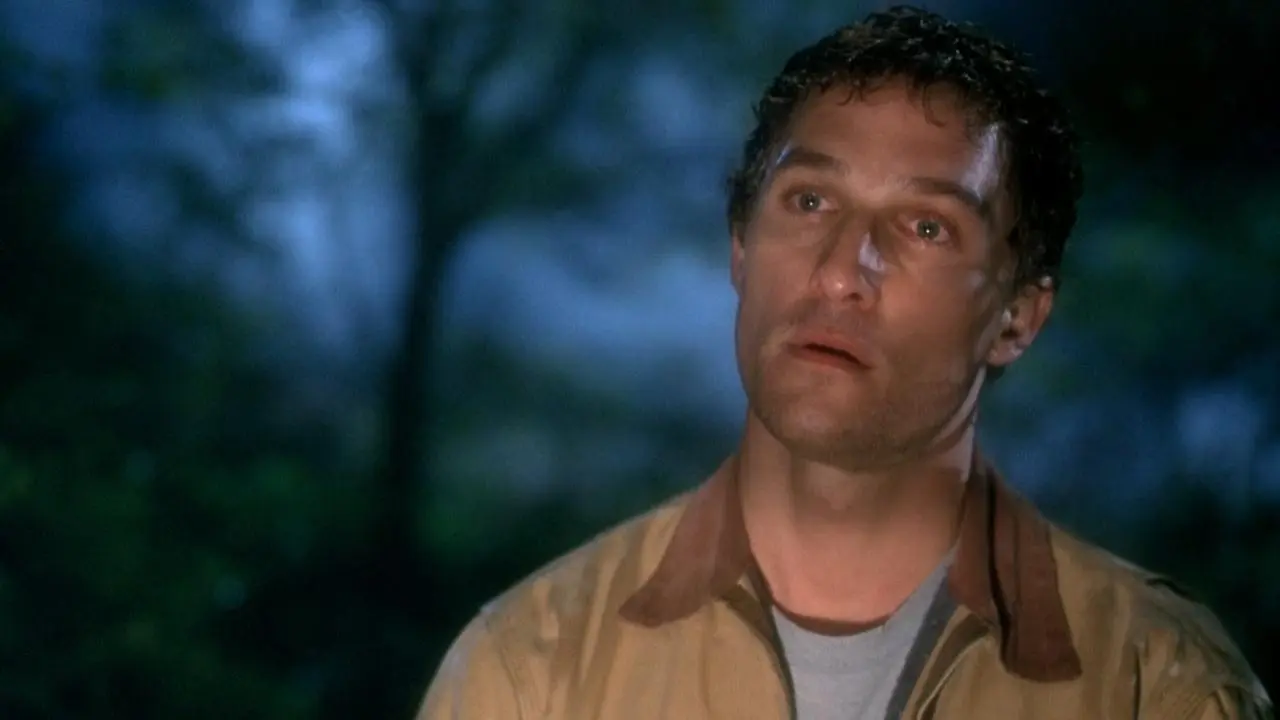

The 2001 psychological horror film ‘Frailty’ has haunted viewers for decades with its portrait of a quietly devout Texas father who murders strangers in the name of God, dragging his two young sons along for what he believes is a divine mission. It is exactly the kind of story that makes audiences lean over to whoever is sitting next to them and whisper, “This can’t be made up.” That instinct is understandable, but the short answer is no, ‘Frailty’ is not based on a true story.
The longer answer, however, is considerably more interesting. The film is a fictional story created by screenwriter Brent Hanley, but the creative seeds that grew into one of the most unsettling horror films of its era were planted in some very real and very dark soil. Understanding where those seeds came from reveals just as much about the film as the story itself.
The Origins of Brent Hanley’s Fictional Screenplay
Hanley began writing the story while attending film school at Emerson, initially calling it “The Ambulance Story.” In its earliest form, it had none of the religious elements at all. It was simply a noir about a man who had kidnapped an ambulance driver while his brother’s dead body was in the back, with a promise to bury him in a rose garden.
After taking a screenwriting class and sitting with the script for about a year, Hanley returned to it with a separate idea about God speaking to a common man, and blended that concept into his original noir framework. The fusion of a gritty crime premise with the terrifying logic of religious fanaticism is what gave ‘Frailty’ its singular, suffocating atmosphere.
Hanley finished the first draft at the tail end of December 1998 and chose the title because it seemed to sum up both the script and how he felt writing it. As he put it, the title was about “the frailty of perception, the frailty of belief, the frailty of man,” a phrase that remains the thematic spine of the entire film.
Hanley himself likes to joke that when people ask where the script came from, he tells them it is 100 percent autobiographical, which reliably produces an uncomfortable stare from whoever is listening. The humor is dark, fitting for a man who built something so deeply psychological out of imagination alone.
The Real-Life Criminal Case That Influenced the Story
Hanley’s script was inspired in part by a real-life criminal case, and the specific reference points are significant. Among the inspirations for ‘Frailty’ was American serial killer Joseph Kallinger, who murdered three people and tortured four families, and who brought his own 12-year-old son along during his crimes.
The Kallinger case carries a haunting parallel to the fictional Meiks family. Hanley also drew from ‘The Night of the Hunter,’ the works of Alfred Hitchcock, his own Southern Baptist upbringing, and Leonard Cohen’s “The Story of Isaac,” the singer’s retelling of the biblical story in which God appears to Abraham and commands him to sacrifice his son.
In many ways, God functions as the quiet villain of ‘Frailty.’ Every murder is carried out in His name. Every time the boys are forced to witness is done in His name. It is God who tells Dad that Fenton is a demon, which leads to the child being starved and abused for refusing to go along with his father’s brutal mission. The film’s refusal to offer easy answers about whether the supernatural is real or whether Dad is simply a mentally ill man is precisely what makes it so enduring.
Bill Paxton’s Directorial Debut and the Film’s Legacy
‘Frailty’ marked Bill Paxton’s directorial debut, and the film premiered at the Deep Ellum Film Festival on November 7, 2001, before being released by Lions Gate Films on April 12, 2002, grossing $17.4 million against an $11 million budget.
The screenplay, written by Brent Hanley, beat ‘The Ring’ and ‘Signs’ to win the 2002 Bram Stoker Award. That is a remarkable achievement for a first-time screenwriter working with material that every major studio in Hollywood had declined to touch. Producer David Kirschner noted that everyone in Hollywood raved about ‘Frailty,’ with even Steven Spielberg wanting to meet with Hanley after seeing the finished product.
According to Hanley himself, the production process was unusually smooth for a Hollywood film. He completed exactly three drafts of the screenplay, and no other writer touched it, which he credits almost entirely to producer David Kirschner’s unwavering faith in both the script and its author. For a story about faith destroying a family, it was a production built on a rare and genuine kind of creative trust.
Why ‘Frailty’ Feels So Hauntingly Real
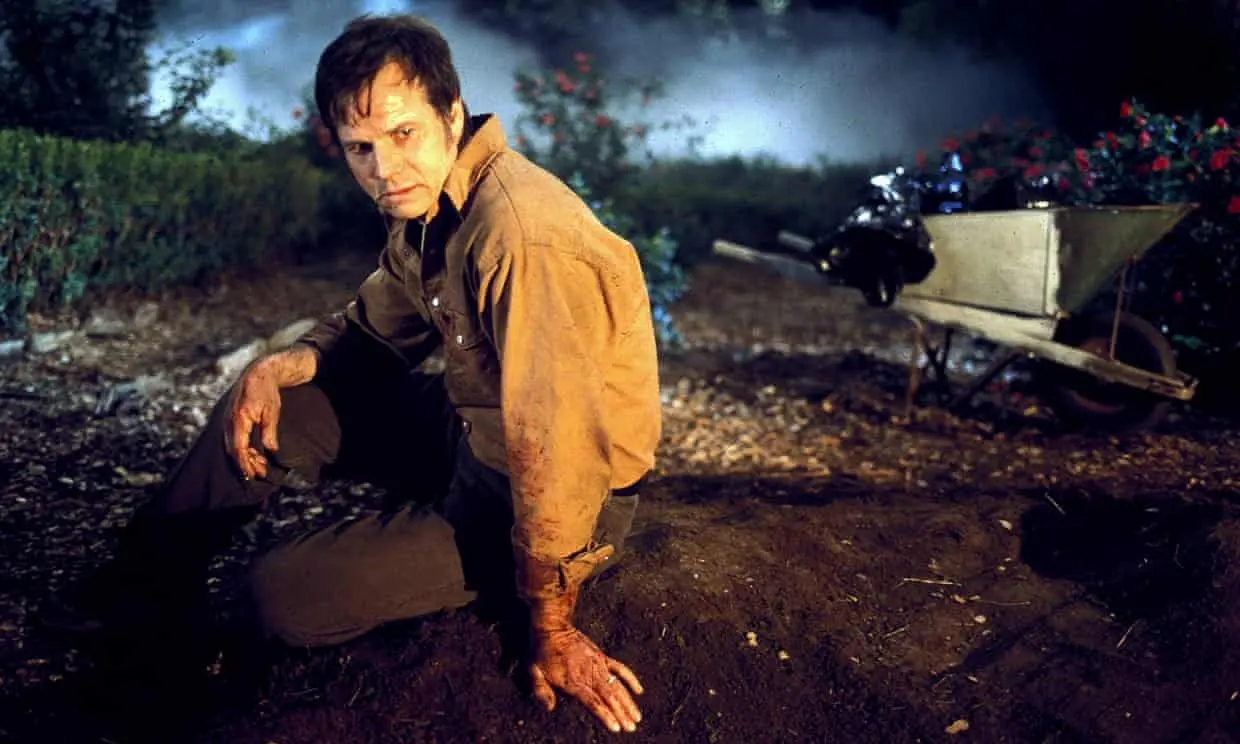
Part of what makes ‘Frailty’ so difficult to shake is that Paxton’s character is not a babbling, frenzied religious extremist but rather a normal, everyday father who has a divine calling he completely believes he must obey. The film lets the audience toy with the idea that the supernatural element might be real, that angels and demons exist hiding among ordinary people.
Much of what viewers take from ‘Frailty’ depends entirely on what they bring to it. Our own convictions about the natural and the supernatural color the viewing, and the film does everything it can not to stand in the way of that, leaving so many possibilities open to the audience and forcing them to examine other perspectives as well as their own.
Because Paxton did not want real-life visitors descending on any actual location, he deliberately set the film in a fictional Texas town rather than a real place, which only deepens the film’s dreamlike, nowhere quality. ‘Frailty’ is not a document of something that happened. It is something rarer and more dangerous: a story so internally consistent, so rooted in recognizable human psychology and real criminal precedent, that it makes you feel like it could.
If you have seen ‘Frailty’ and found yourself genuinely unsure whether Dad was a murderer or a prophet, we would love to hear which side of that ambiguity you landed on after the credits rolled.