How Does Butcher Die in ‘The Boys’ Comics? With Hughie Pulling the Trigger, Here’s What the Show Actually Changed


Billy Butcher has always been the kind of character you root for while quietly dreading what he might become. Across five seasons of ‘The Boys‘, Karl Urban’s portrayal of the supe-hunting vigilante walked a razor’s edge between hero and monster, and the Prime Video series finale finally revealed which side of that line he fell on. For readers of Garth Ennis and Darick Robertson’s source material, the destination was never really a surprise.
The comics version of ‘The Boys’ laid out Butcher’s fate in brutal, unsparing fashion years before the show ever aired. And while the television adaptation took plenty of liberties with the story, the emotional core of how Butcher dies turned out to be one of the most faithful adaptations the series ever produced. That alignment between page and screen is exactly what makes his ending hit as hard as it does.
Butcher’s Death in the Comics Is as Dark as It Gets
In the comic book run of ‘The Boys’, Butcher is ultimately killed by none other than Hughie. The path to that moment is layered with betrayal, violence, and a man who simply cannot stop. After it was discovered that it was Black Noir who had committed the horrific crimes against his wife Becca, and not Homelander, Butcher managed to kill the clone. But it brought him no relief. Rather than finding peace, he felt considerably worse, and decided to take matters even further.
Following an emotional breakdown, Butcher decided to rid the world completely of supes. He sought out Vogelbaum and together they engineered a strain of Compound V that could be dispersed in the atmosphere via remotely detonated explosives, targeting only those with Compound V in their system. The collateral damage would have been enormous, with millions of innocents dying as a result.
To ensure no one could stop him, Butcher killed Frenchie, The Female, and Mother’s Milk, leaving Hughie as the sole surviving member of the Boys. The two then met in a climactic fight atop the Empire State Building. The confrontation was as ugly as you would expect.
In issue 71, Butcher strikes a disturbing smile as Hughie stabs him in the chest. Butcher tricks his former protégé into delivering the killing blow by lying and claiming he had secretly killed both of Hughie’s parents as retaliation. Shocked and enraged, Hughie strikes. But it was all a manipulation, as Butcher had not killed Hughie’s parents at all. He simply wanted Hughie to be the one to end it.
The Show vs Comics Comparison on Butcher’s Final Act
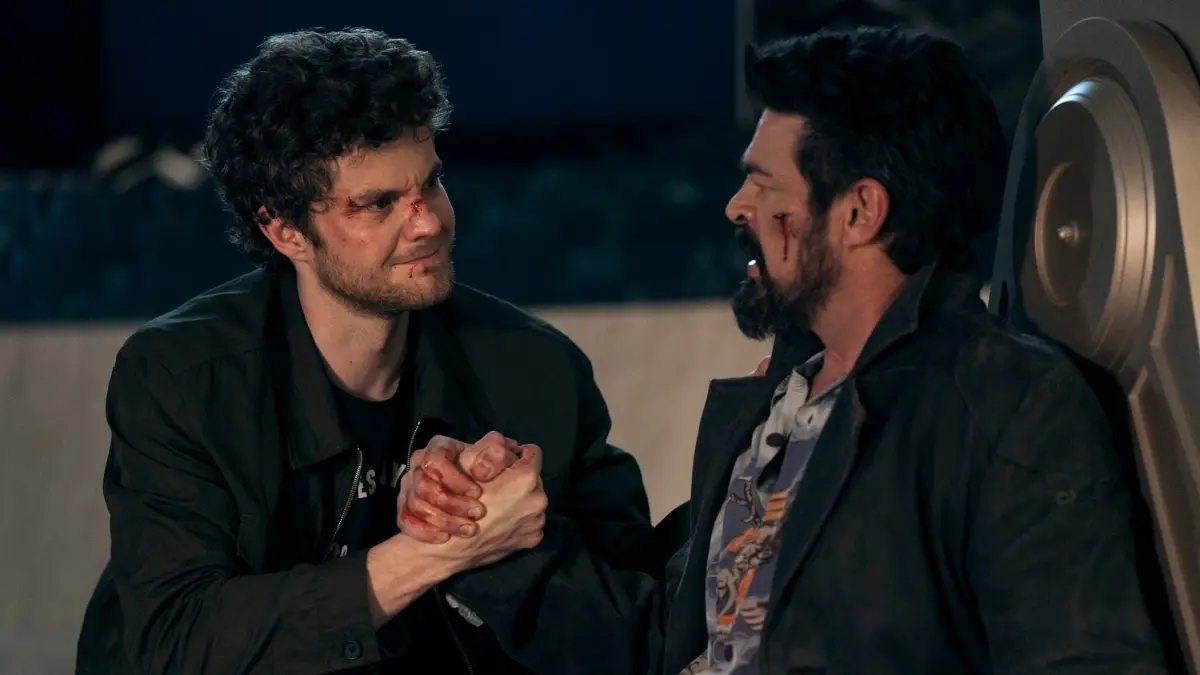
The television version kept the emotional architecture intact while making significant structural changes around it. In ‘The Boys’ TV series, Butcher heads to Vought Tower and prepares to unleash a virus on the world, hoping to wipe out every supe on the planet. Hughie intervenes just as Butcher’s finger slowly moves away from the trigger. Butcher dies in his friend’s arms, admitting he would never have stopped.
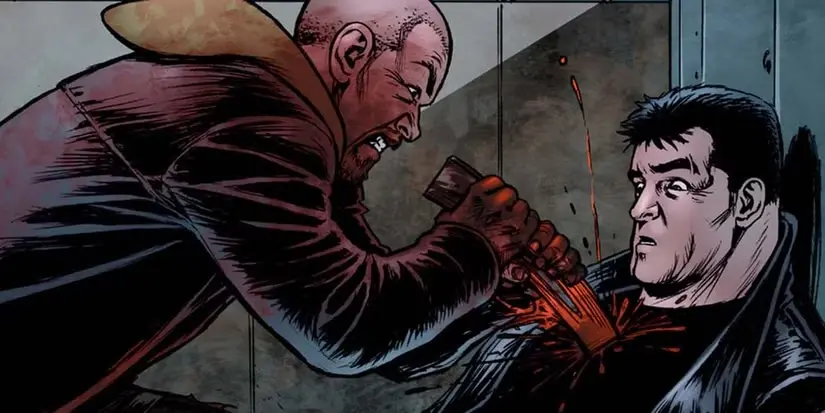
In the comics, Butcher had already killed Frenchie, Mother’s Milk, and The Female during his rampage, all of whom had previously been exposed to Compound V. The show carried over the final twist of Hughie shooting Butcher with considerable faithfulness, and Kripke confirmed the production team used much of the dialogue from those comic panels directly.
The supe-killing weapon also differs between the two versions. In the comics there is no virus in the traditional sense, just a deranged version of Compound V that would need to be dispersed manually over a large area rather than spreading through contact. The show gave its version a far more contagious quality, making the threat feel more immediately catastrophic.
Hughie Kills Butcher: The Secret Heart of the Series
Showrunner Eric Kripke spoke candidly to The Wrap about the inevitability of this ending, saying that he never believed there was a happy ending in the cards for Butcher and that it was really Garth Ennis’ original notion in the comics.
He confirmed it was a story beat he knew from page one of the pilot they were building toward, citing his love for the final Hughie and Butcher interaction in the source material and the secret conflict between the two characters that had been threaded across seven years of storytelling.
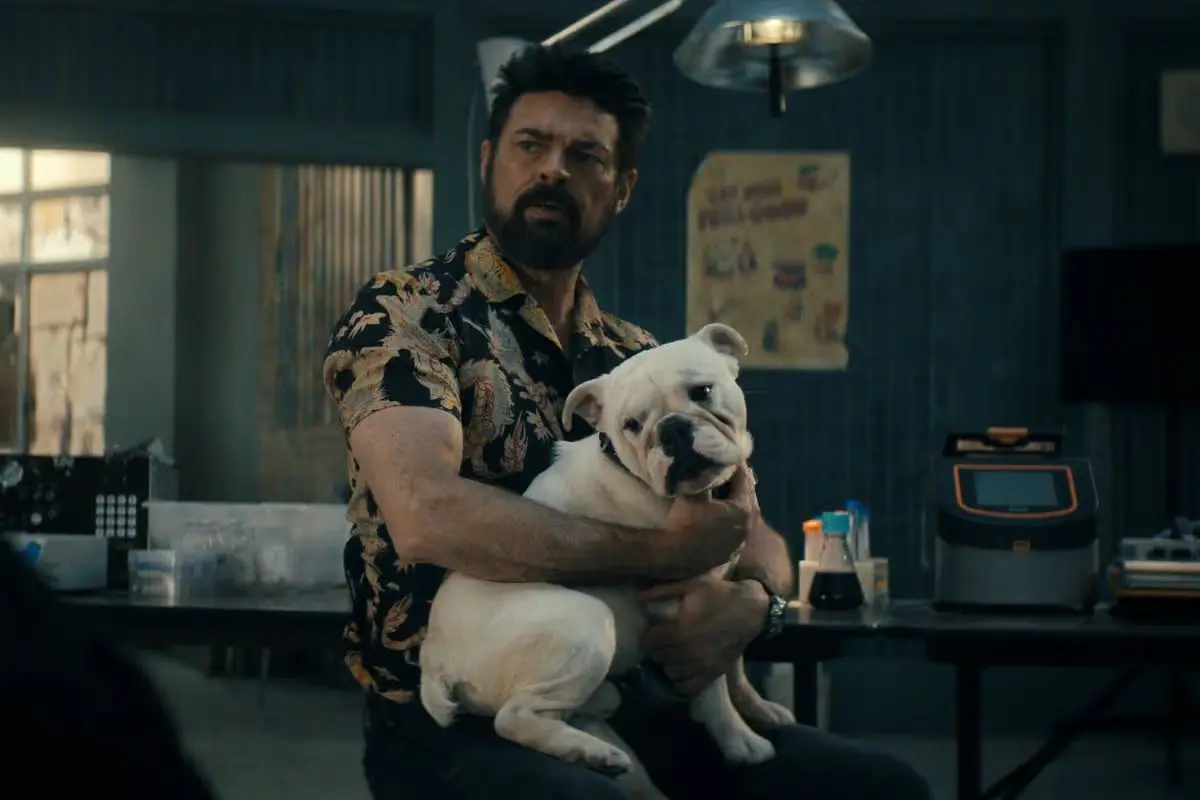
Kripke also told reporters that the final confrontation between Butcher and Hughie was probably the most comics-accurate scene the show ever produced, outside of Robin being run over in the pilot episode. That is a remarkable admission for a show that routinely diverged from its source material.
Butcher dies holding Hughie’s hand, telling him that he looks just like his little brother Lennie. The emotional weight of that moment is very much lifted from the comics, even if the surrounding details were reshaped for television.
Where the Show Chose a Different Path
The largest divergence between page and screen involves the fates of the wider team and the road to the finale. In the show, the death of Butcher arrives after Ryan rejects him and his dog Terror passes away.
Believing the cycle will simply repeat with someone as bad as Homelander taking power, Butcher plants the virus in the Vought Tower sprinklers. Hughie prevents him from triggering it, the confrontation turns violent, and Hughie is forced to shoot his mentor. In his final moments, Butcher tells Hughie that he never had a choice.
The show also chose to end on a note measurably brighter than the comics. Butcher appears to have been making his own decision to abandon the supe genocide just as he pushed Hughie past the point of no return, and he gives his young friend one last gift by lying about whether he would have gone through with it. The comics offered no such mercy.
Meanwhile, Homelander’s death represents a starker contrast to the source material. In the comics, Black Noir, a secret Homelander clone, kills the original after he launches a coup and murders the president. The show dismantled that twist entirely by having Homelander kill Black Noir in an earlier season, forcing the writers to construct an entirely different path to the same destination.
The Tragedy of Butcher’s Legacy
What makes both versions of Butcher’s death linger is not the violence itself but the terrible logic behind it. Butcher’s hatred for supes had become so extreme that he no longer cared whether he lived or died, provided they all died with him. This trajectory was not invented by the writers entirely from scratch. While ‘The Boys’ on Prime Video diverged from the original comics in several ways, it kept true to the spirit of Butcher’s final role in the story.
Kripke noted that if Ryan had stayed with Butcher, or if Terror had lived, things might have gone differently. The death of the dog represented the last surviving spark of Butcher’s humanity, a moment drawn directly from the comics as well.
After the chaos settled, the surviving Boys each found their own way forward. Mother’s Milk reunited with his family, Kimiko headed to Marseille, and Hughie was offered a position at the Bureau of Supe Affairs. Butcher was buried next to Becca. The man who wanted to burn everything down was laid to rest beside the one person who made him feel like the burning wasn’t worth it.
Whether you think the show or the comics landed Butcher’s exit more effectively says a lot about what you wanted from him, so share your take on which version of his death hit harder and whether the television ending was the send-off Billy Butcher deserved.