‘Sullivan’s Crossing’ Books vs. Series: Every Major Way the Show Differs From Robyn Carr’s Books

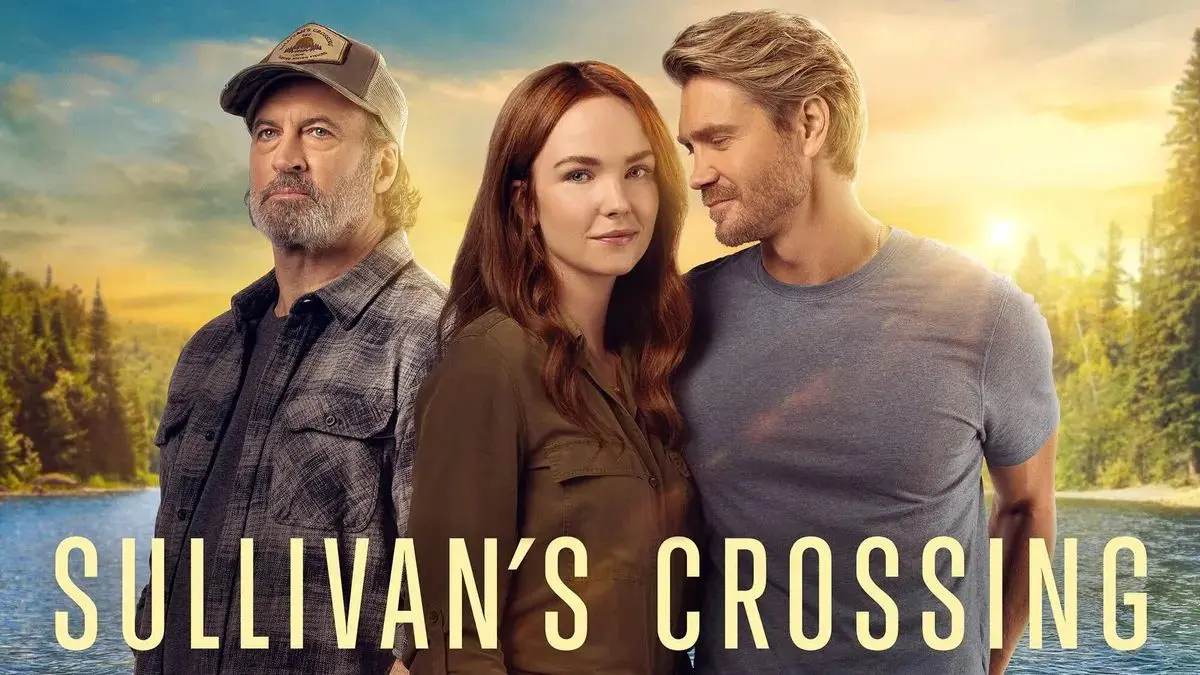

If you discovered ‘Sullivan’s Crossing‘ through Netflix and immediately went searching for the books, you are not alone. The Canadian romance drama follows accomplished neurosurgeon Maggie, played by Morgan Kohan, who is embroiled in unexpected legal trouble and jets to her hometown in Canada to mend her relationship with her father while making a few new friends along the way. The show found its audience in a big way, and naturally, readers wanted to know how faithfully it tracked Robyn Carr’s original work.
The answer is: loosely. While the show is based on Carr’s bestselling book series of the same name, the showrunners took creative liberty and changed different aspects to create more tension and drama. From the geography to the romantic timeline to the gender of key supporting players, the adaptation tells a distinctly different story while preserving the emotional core that made the novels so beloved in the first place.
A Whole New Setting for Robyn Carr’s Adaptation
The most immediately striking difference between the source material and the screen version is where the whole story takes place. In the original book series, Sullivan’s Crossing is set in the picturesque Rocky Mountains of Colorado, a haven for outdoor enthusiasts, while the show relocates the action to the fictional town of Timberlake in Nova Scotia, Canada. It is a significant shift in tone and atmosphere, swapping rugged mountain trails for Atlantic Coast scenery.
The ‘Sullivan’s Crossing’ showrunner Roma Roth explained that they changed the setting in the show because they did not want it to look too similar to ‘Virgin River,’ another hit TV show inspired by Carr’s novels. With ‘Virgin River’ already occupying the Northern California small-town romance niche on Netflix, the creative team needed geographic distance to carve out a separate identity.
Roth also made the choice to add a focus on the Indigenous people of Nova Scotia, while maintaining the storyline of Carr’s book version of ‘Sullivan’s Crossing,’ which she says largely differs from ‘Virgin River’ in that ‘Sullivan’s Crossing’ is about a woman coming home to reconcile who she is now with who she once was.
The series is filmed in Halifax, Nova Scotia, offering stunning East Coast scenery to replace the book’s Colorado setting. For most viewers, the swap is entirely seamless, and the landscape has become as inseparable from the show’s identity as any of its characters.
Maggie and Cal’s Romance Takes a Much Slower Road
Readers of the source material will immediately notice how differently the central love story unfolds between page and screen. The book presents Maggie and Cal as a couple from the start, with Maggie reeling from a breakup with her ex-boyfriend Andrew before moving to Sullivan’s Crossing, where she immediately connects with Cal, their romance beginning relatively smoothly with fewer complications than depicted in the series. By the second book, Maggie and Cal are married and have a child, solidifying their relationship as the series progresses.
Unlike the books, where their love story unfolds more swiftly, the TV adaptation introduces a love triangle involving Maggie’s Boston boyfriend, Andrew Matthews, adding an extra layer of complication. The show leans hard into that slow burn, stretching the tension across multiple seasons.

Three seasons in, Maggie was finally dating love interest Cal, but their romance faced its fair share of ups and downs, including an appearance from her secret husband, Liam, played by Marcus Rosner. That secret husband storyline is a pure invention of the show and does not appear anywhere in Carr’s five-book series.
The on-screen romance between Maggie and Cal faces more obstacles and changes compared to the book series, with additional characters and altered storylines introduced to create more drama. For book fans who sailed through the earlier novels feeling reassured by Maggie and Cal’s relatively steady connection, the show’s constant emotional turbulence can feel like a very different experience entirely.
The Five-Book Structure vs. One Central Couple
One of the most fundamental structural differences between the books and the show comes down to whose story is actually being told. The Sullivan’s Crossing series by Robyn Carr includes five books: ‘What We Find,’ ‘Any Day Now,’ ‘The Family Gathering,’ ‘The Best of Us,’ and ‘The Country Guesthouse,’ published between 2016 and 2020. Each novel centres on a different character and romance.
Similar to ‘Bridgerton,’ which has each season based on a different couple from Julia Quinn’s book series, the book version of ‘Sullivan’s Crossing’ consists of five novels about five different love stories, with Cal’s siblings Sierra and Dakota each getting their own book while Rob is the focus of the third novel.
The TV series, by contrast, keeps Maggie and Cal front and centre season after season, using the supporting ensemble as texture rather than leads. The books follow interconnected characters who arrive at or return to a remote Colorado campground seeking refuge from life’s crises, finding love, family reconnection, and personal renewal amid the stunning Rocky Mountains.
Character Changes and Gender Swaps
Beyond the romantic timeline, the adaptation made some pointed changes to individual characters that will catch book readers off guard. Connie Boyle, in the books, is a male firefighter who has recently broken up with his fiancée and becomes involved with Cal’s sister Sierra, while in the TV adaptation, Connie is reimagined as a female firefighter going through a divorce. It is a meaningful gender swap that reshapes several of the show’s supporting dynamics.
Despite being three seasons in, the romantic drama series only exploded in popularity recently, becoming not only a Top 3 show on The CW by both total audience and the 18-49 demographic but also a surprise hit on Netflix.
That late surge in popularity has brought waves of new viewers to the show, many of whom are now discovering Carr’s books for the first time. The series was produced by Reel World Management in collaboration with Bell Media and Fremantle, with production starting in June 2022 in Nova Scotia.
Season 4 and the Road Ahead for the Show
The offscreen story heading into the latest season has been just as dramatic as anything on screen. Scott Patterson, who played the central role of Sully, spoke out about his exit from ‘Sullivan’s Crossing’ ahead of season four, writing in a Facebook post that the creative differences were becoming untenable and that he sadly realized the show was not something he could agree to continue. Patterson had been a fan favourite since the beginning, making his departure one of the more shocking developments in the show’s run.
Season 4 premiered on March 22, 2026 on CTV and aired on The CW on April 20, 2026, before streaming on Netflix in the summer. While Sully is not physically present in season 4, showrunner Roma Roth confirmed the character remains an important part of the world with the potential to be included in future seasons should that align with the ongoing creative direction. Whether the show continues to drift further from its source material or finds a way back toward Carr’s original vision is now the central question for its next chapter.
While ‘Sullivan’s Crossing’ has stayed true to the spirit of Robyn Carr’s beloved book series, the adaptation takes creative liberties to build additional drama, shift timelines, and focus on character relationships in new ways, with the reimagining of key elements offering a fresh perspective on the story while still honouring the core themes of family, love, and second chances. Whether you think the show improves on the books or loses something essential in translation, we would love to hear which version of Maggie’s journey home has resonated with you more deeply.