Netflix’s Shocking True Crime Doc Reveals a Key Difference Between Millennials and Gen Z



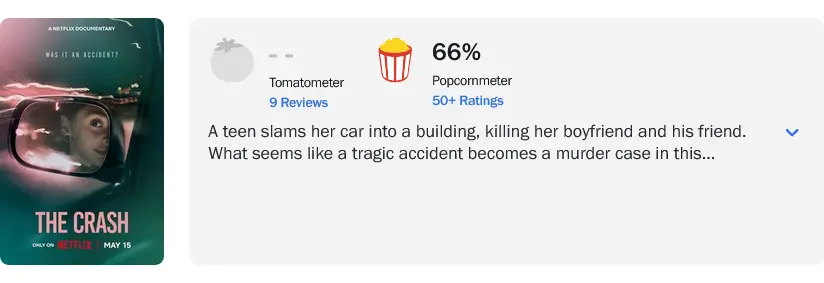
A new Netflix documentary has sparked discussion far beyond the details of a tragic criminal case. The film looks at a fatal car crash in Strongsville, Ohio, that left two teenagers dead and one survivor at the center of a long legal investigation. But while the story begins as a crime reconstruction, it quickly shifts into a wider conversation about how people live their lives online and what that says about them.
The documentary focuses on the events of July 31, 2022, when a car driven by 17-year-old Mackenzie Shirilla crashed into a brick building at high speed. Her boyfriend Dominic “Dom” Russo, 20, and their friend Davion Flanagan, 19, were killed in the crash. Shirilla survived and later became the subject of a murder investigation.
Throughout the film, viewers are asked a direct question: “Was it an accident?” The documentary uses courtroom footage, police interviews, and video evidence to explore how the case developed from a suspected accident into a conviction.
Shirilla was later found guilty in August 2023 and received two concurrent sentences of 15 years to life. According to investigators, evidence from the vehicle and surveillance footage played a key role in the verdict. Data reportedly showed that the car accelerated to full speed before impact, with no attempt to brake.
But the documentary is not only about what happened on the road. A major focus is Shirilla’s online presence, which included videos and posts showing her daily life. The film highlights clips of her partying, sharing lifestyle content, and posting dramatic or attention-grabbing videos, including content filmed shortly after the incident.
These details raise questions in the documentary about how much of a person’s online identity reflects reality. The film suggests that social media can create a version of someone that may not fully match their offline behavior, leaving viewers to interpret what is real and what is performance.
The documentary also explores how different generations view digital life. For many millennials, social media was introduced with strong warnings. Early internet culture emphasized the idea of a “digital footprint,” where old posts could resurface years later and affect jobs or reputation.
In contrast, younger users, especially Gen Z, have grown up in a fully digital environment. They use platforms like TikTok and Instagram as part of everyday communication rather than carefully curated portfolios. Their online presence is often more frequent, casual, and continuous.
The film notes that Gen Z users are among the most active on social media, spending hours each day creating and sharing content. Platforms like TikTok encourage short, spontaneous videos that focus on everyday experiences rather than polished posts. This has created a culture where posting feels less like publishing and more like documenting real life in real time.
However, the documentary makes clear that Shirilla’s social media activity was not what led to her conviction. The legal outcome was based on physical evidence, including surveillance footage and data from the vehicle itself, which showed patterns of acceleration and movement before the crash.
Still, the film leaves viewers with a larger question about how online behavior influences public perception. It suggests that in today’s world, social media does not just reflect life—it can also shape how life stories are understood long after events take place.
Have something to add? Let us know in the comments!