Behind the Scenes: How the World’s Biggest Horror Hit Was Made

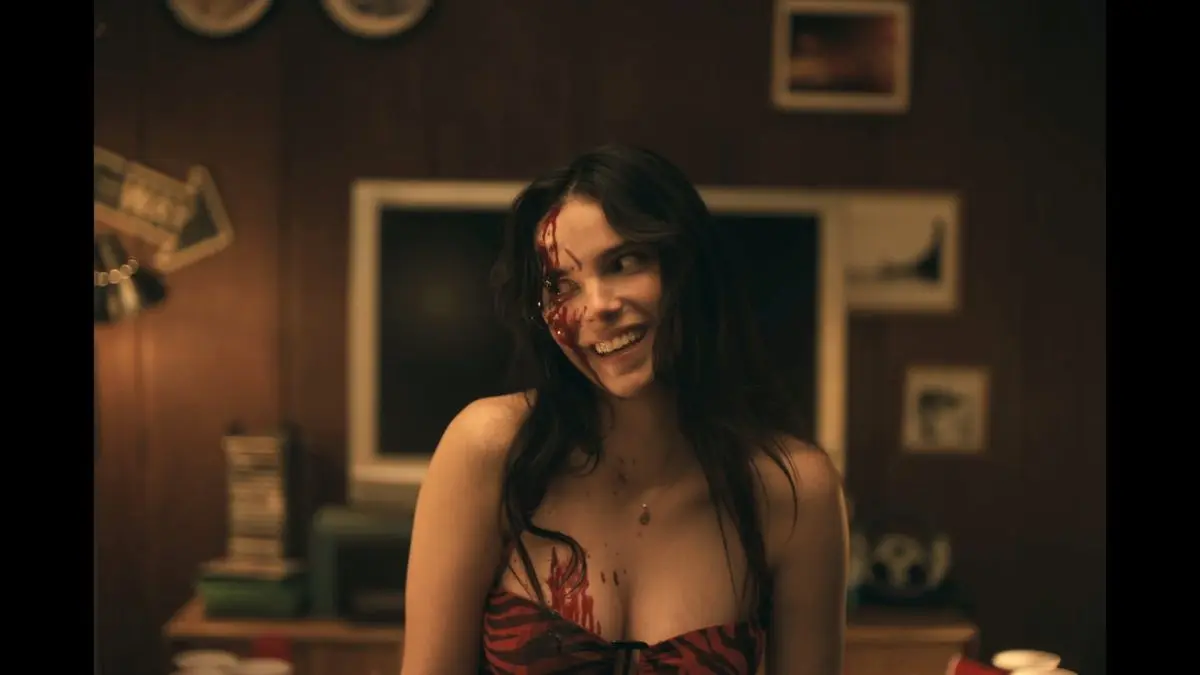

Obsession has quickly become one of the most talked-about horror films in recent months, and now director Curry Barker is opening up about how the movie was actually made. Speaking in multiple interviews with outlets like Variety, IndieWire, The Guardian, Polygon, Entertainment Weekly, The Hollywood Reporter, and Movable Fest, Barker and his cast have shared a wide range of behind-the-scenes details about the film’s development, production, and ending.
At its core, Obsession follows two friends whose relationship turns into a nightmare after one of them makes a dangerous wish for the other to love him “more than anyone in the world.” Barker has described it as a modern cautionary tale about desire and consequences, but he says the idea itself came from something very simple.
Barker told Triple J that the original spark came while he was watching TV with friends. He explained that a reference to a classic Simpsons “Treehouse of Horror” episode made him think differently about wish-based stories.
He said, “Before the episode [aired] there was a Simpsons episode where [Bart] has a monkey paw, and he’s making wishes and stuff.” He added, “I was just excited to see my Always Sunny episode, but it hit me right then and there on the couch that Obsession idea that I had would be perfect if it was a wish movie.”
From there, Barker started shaping the concept into something more specific. In interviews with Variety and IndieWire, he explained that he wanted to avoid obvious magical objects like monkey paws or shooting stars. Instead, he built something original called the One Wish Willow.
He said, “I didn’t want to use the Monkeypaw because it was too recognisable… I went down this rabbit hole of trying to find things that you could make a wish off of.” Eventually, he added, “Screw it. I’m going to make something up.”
That idea eventually became one of the film’s most recognizable elements, designed with help from his mother, who works as a graphic designer. Barker told Moveable Fest, “I told her I wanted it to look kind of timeless, like it’s from the ’50s or the ’80s, and I wanted it to have this very retro feel.”
Family involvement didn’t stop there. Barker also revealed that his father contributed to the screenplay. Speaking to Polygon, he said his dad wrote a disturbing fictional story that appears in the film.
He explained, “My dad had just started his screenwriting journey and I was like, ‘Yeah, if you want to give it a stab’.” He added, “My dad writes novels and stuff, and now he’s a full-time screenwriter. And my dad has a mind that lends itself well to that type of creepy stuff.”
One of the film’s most unsettling scenes also came from this collaboration, tying into a twisted Hansel and Gretel-inspired reading that appears in the story. Barker said in the same interview that the idea was meant to reflect how relationships and emotions can become distorted in the film’s world.
Beyond writing, the production itself was fast and hands-on. Lead actress Inde Navarrette, speaking to The Hollywood Reporter, described how the physical performance of her character was developed directly with Barker during filming.
She said, “Nikki’s movement was something that Curry and I built from scratch.” She also noted, “We filmed it in 26 days… and that created this organic movement for me.”
Navarrette explained that there was no formal choreography, just experimentation on set. She said, “Curry would be on the opposite side of me, mimicking something with his body, and then I would do it in a way.” She added jokingly, “Technically, the choreographer would be Curry Barker.”
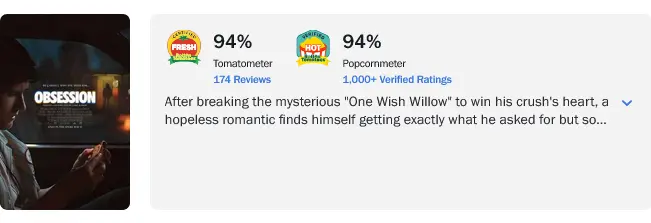
Practical effects were also a key part of the film’s unsettling tone. Barker told Polygon that the team avoided heavy digital effects in favor of makeup and in-camera techniques. He explained, “We wanted her to still look human but not quite human. But also, it was 90% her.”
Some of the film’s most memorable sequences were also built through physical production design. Barker revealed that even complicated set pieces, like a duct-taped door, were designed in a way that made filming easier and more flexible. He said the art department created removable layers so scenes could be shot out of order without rebuilding everything from scratch.
Not everything stayed the same through production. Barker confirmed that several scenes went through multiple versions before the final cut. One of the most violent moments in the film was trimmed after early festival reactions and rating concerns.
He told The Guardian, “Hearing the news that I might have to cut it down was quite devastating at first. But we cut it down and I feel like the integrity of the scene is still there.”
The opening of the film also changed late in production. Barker explained to Movable Fest that the original beginning was very different, starting in a more direct and abrupt way before he decided to restructure it for clarity and tone.
He said they even brought actors back for reshoots to create a new opening sequence that better introduced the story.
The ending of Obsession also went through major changes. Barker told Entertainment Weekly that multiple endings were filmed, including one where the main character dies. In the final version, however, the story takes a different emotional turn.
He said, “We shot both… and I was like, ‘Okay, we’ll do one ending where [she] survives’.” He added that after watching performance takes and getting feedback, “we switched it.”
Inde Navarrette also reflected on this decision in her Hollywood Reporter interview, saying she appreciated the final outcome. She explained that different versions were tested before the team decided on the ending that felt most impactful.
Another small detail Barker revealed to Polygon is that he even made a cameo voice appearance in the film. He confirmed that he recorded a phone operator line himself during post-production at home.
He said simply, “It was me.”
Despite its dark subject matter, Barker has also hinted that Obsession could expand in the future. Speaking to Polygon, he said he would be open to another story set in the same universe, but not necessarily with the same characters.
He explained, “It wouldn’t have these characters, but it would have the One Wish Willow.” He added that the idea would stay focused on the same central theme of desire and unintended consequences.
For now, Obsession stands as a tightly contained horror story built from personal ideas, family collaboration, and a very hands-on production process. As Barker and his cast have described, much of what made the film stand out came from improvisation, experimentation, and constant changes right up until the final cut.
Have something to add? Let us know in the comments!