Otto Hightower’s ‘House of the Dragon’ Death Just Got Way Bloodier in the Books, but Did Rhaenyra Do It?

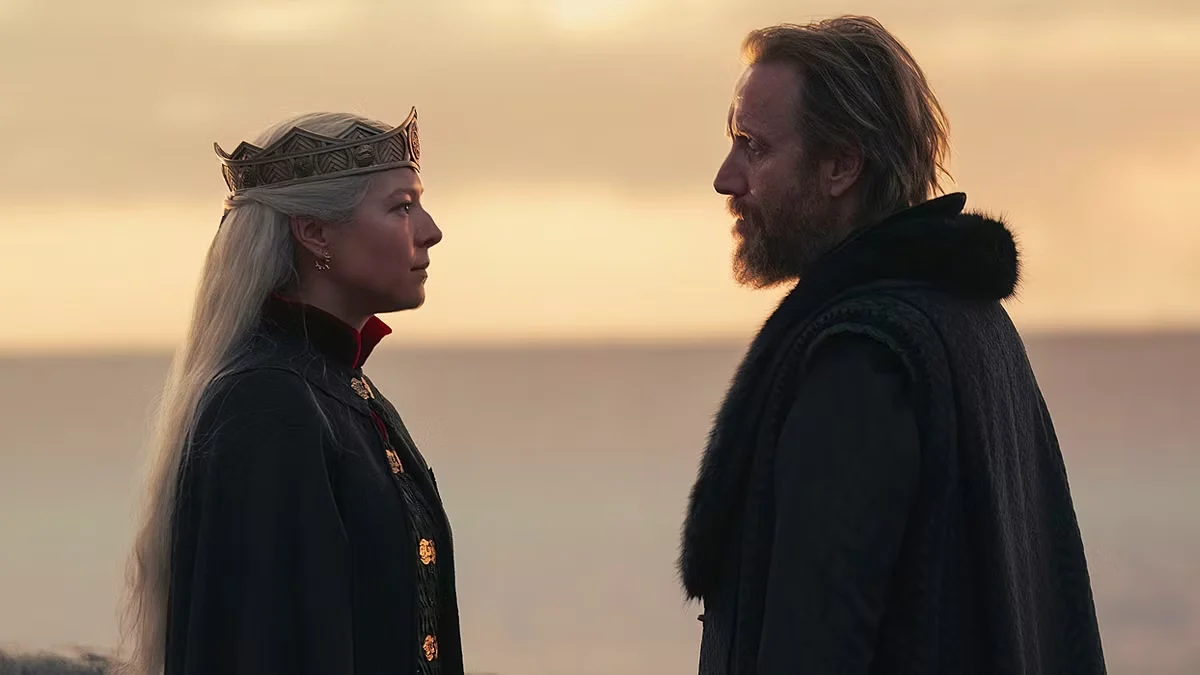

‘House of the Dragon‘ fans finally got the moment book readers had been anticipating for ages, and the show went a lot further than George R.R. Martin ever did on the page. In Season 3 Episode 2, titled ‘Queen’s Landing,’ Rhaenyra Targaryen takes King’s Landing and personally executes Otto Hightower, a scene that hits very differently once you know what actually happens in ‘Fire & Blood.’
The short answer is no, Rhaenyra does not kill Otto herself in the books. Fire & Blood simply states that he is “the first traitor to be beheaded,” with Jasper Wylde following shortly after, and the text never says or implies that Rhaenyra delivered the blow. The show invented that detail entirely for dramatic effect, and it has fans buzzing about why the creative team made that choice.
Rhaenyra’s Otto Hightower Execution On The Show
In the Season 3 premiere’s aftermath, Aemond leaves King’s Landing on Vhagar while Alicent Hightower and Helaena Targaryen convince the city’s guards to stand down, allowing Rhaenyra to fly in on Syrax accompanied by Daemon on Caraxes, plus Hugh the Hammer and Ulf the White on their own dragons. The fall of the city turns out to be swift, leaving Rhaenyra to deal with the traitors to the crown before she can claim the throne.
Otto’s discovery is itself a twist, since he is found imprisoned in the dungeons by Daemon, having been left there by Larys Strong as a parting gift before Larys fled the city. It is later revealed Otto was kept specifically as a gift for Daemon and Rhaenyra, and the pair accept it with relish.
Once Otto is brought before Rhaenyra in the throne room, Daemon expects her to kill him for everything he has done against her, but she is visibly hesitant and quietly admits she does not know if she can go through with it.
She ultimately wields the sword herself, missing Otto’s neck on the first swing before beheading him on the second attempt. It is a deliberate reversal of where things stood back in Season 1, when Otto stood before Rhaenyra on Dragonstone and she refused to let Daemon execute him, partly out of lingering fondness for Alicent and partly because she did not want to spark a civil war. After losing two sons in the conflict, that restraint is long gone by this point in the story.
What Fire and Blood Actually Says About Otto’s Fate
According to the official lore, after Rhaenyra and the blacks took King’s Landing in 130 AC, Otto was the first to be beheaded as a traitor, just as he had predicted he would be. George R.R. Martin’s text describes the moment with clinical detachment, noting only that Otto Hightower, who had served three kings as Hand, was the first to be beheaded, before quickly moving on to Jasper Wylde’s fate.
That brevity fits how ‘Fire & Blood’ is structured overall, since Martin often presents events as collected testimony and political record rather than as a conventional dramatized novel.
The mention of “the block” in the text suggests an execution by an actual headsman rather than a sudden act of violence in a throne room, and book readers have pointed out that if Rhaenyra truly delivered the killing blow in the source material, it likely would have been explicitly mentioned. In the book, Rhaenyra actually takes several other Green loyalists prisoner too, including Alicent, Tyland Lannister, and Jasper Wylde, alongside Otto.
How the Show Changed the Scene for Maximum Drama
The adaptation needed Rhaenyra’s revenge to feel personal, public, and politically irreversible rather than just another procedural beheading buried in a chronicle. After three seasons of Rhys Ifans playing Otto as a cold strategist who helped position Alicent against Rhaenyra and shaped Aegon’s claim to the throne, the show could not simply move him offscreen to a headsman’s block and expect viewers to feel satisfied.
Showrunners leaned into the idea that whoever passes the sentence must swing the sword themselves, an echo of Ned Stark’s old code from ‘Game of Thrones,’ which also happened to fulfill Emma D’Arcy’s wish to finally see Rhaenyra wield a blade onscreen.
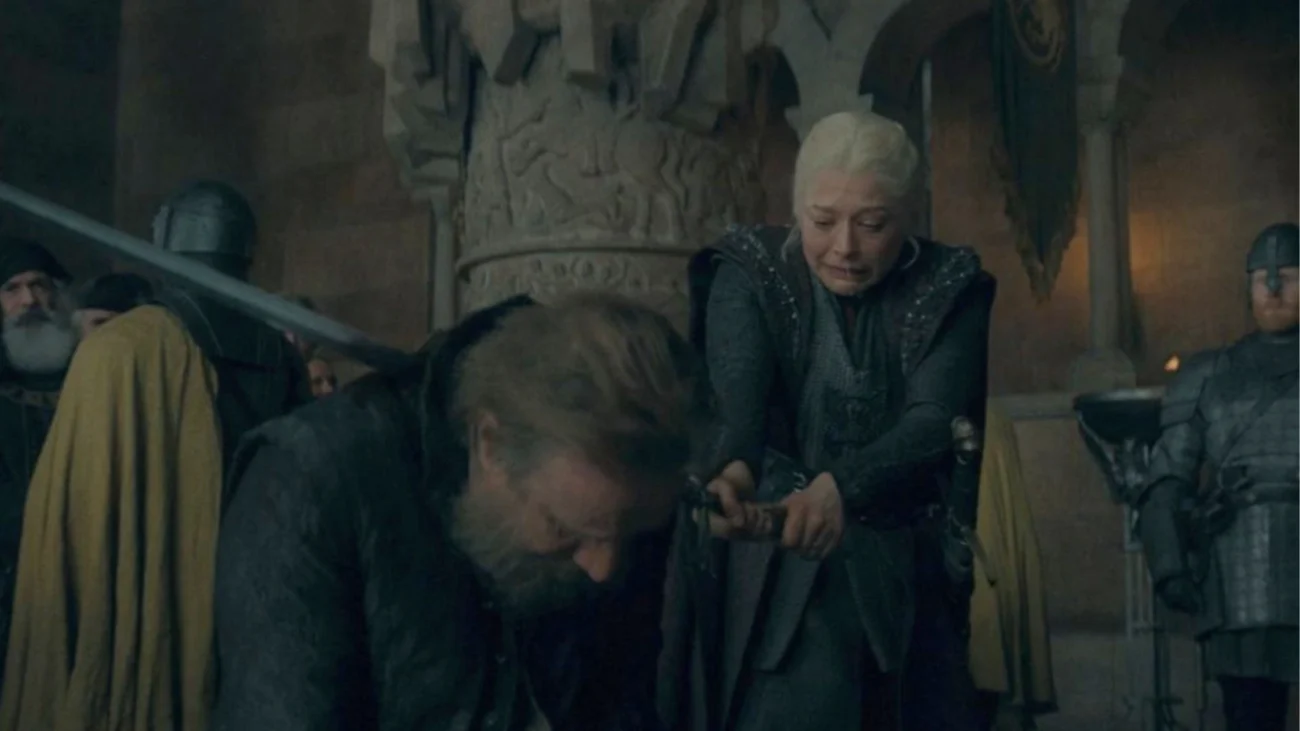
The clunky, two swing execution deliberately calls back to Theon Greyjoy’s botched beheading of Rodrik Cassel earlier in the franchise, which served as a bad omen for how Theon’s rule over Winterfell would eventually unravel.
The show does leave out one specific book detail tied to Rhaenyra’s reign, since in ‘Fire & Blood’ she famously cuts herself on the Iron Throne the first time she sits on it, with cuts later noted on her legs and the palm of her left hand as drops of blood fell to the floor, a moment widely read by characters in universe as an ill omen for how short her time on the throne would be. On the show, Otto’s bloody execution seems to be standing in as that same kind of ominous sign for Rhaenyra’s reign instead.
Why This Change Matters For Rhaenyra’s Arc
The fallout extends beyond Otto himself, since Alicent reportedly comes to believe that Otto had simply been held as Rhaenyra’s prisoner, framing his death as a fresh betrayal and deepening the already irreparable rift between the two former friends. Her grief over Jacaerys does not stay private in this version of events, since it becomes governance, punishment, and the first visible language of her rule as queen.
The change also corrects what could have felt like an oddly clean transfer of power, since Alicent’s plan to surrender the city without bloodshed risked making Rhaenyra’s takeover feel strangely neat for a war this devastating. Otto’s execution makes sure that even a bloodless handover of the Red Keep cannot erase the debt built up by years of conspiracy and dead children on both sides of the conflict.
So while the books keep Otto’s death short and almost bureaucratic, the show clearly wanted blood on Rhaenyra’s hands, literally. Do you think a messier, more personal version of Otto’s death actually serves Rhaenyra’s story better than the books’ colder approach, or did the show go too far in making her the one to swing the sword?