Costa Concordia’s Darkest Secrets – What Netflix’s ‘Shipwrecked’ Never Tells You

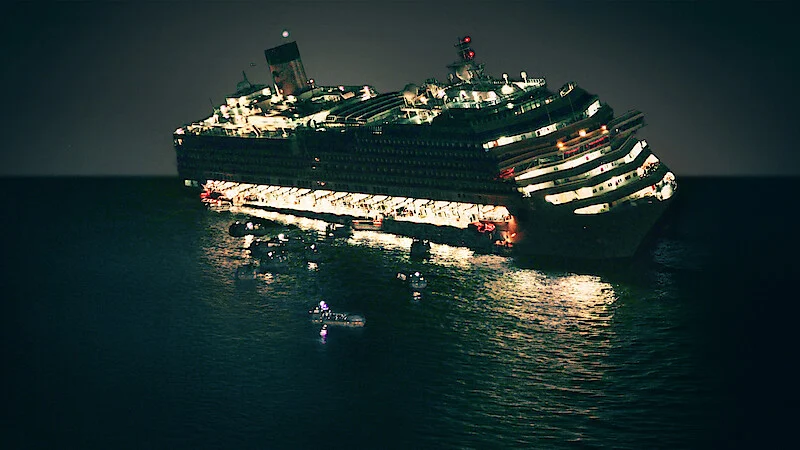

Netflix’s newest true crime hit is already stirring up conversation, but the streamer’s take on one of the deadliest cruise ship disasters in modern history apparently only scratches the surface. Netflix’s new documentary, ‘Shipwrecked’, revisits the 2012 Costa Concordia cruise ship disaster that claimed 32 lives, and while the film leans heavily on survivor testimony and black box audio, several jaw dropping details never made the final cut.
Directed by Chiara Messineo, ‘Shipwrecked: Nightmare at Sea’ retraces the January 13, 2012 disaster through interviews with crew members, passengers, and the rescue and forensics teams who worked the scene. It is a gripping watch, but true crime fans digging deeper into the real story are finding there was far more to the Concordia tragedy than what made it to their screens.
The Costa Concordia Disaster Left Out Key Human Stories
One of the most heartbreaking omissions involves Russel Rebello, a waiter aboard the Concordia who was the last person unaccounted for following the disaster. His body was not identified until November 2014, discovered in a cabin during the ship’s dismantling process after it had already been righted and towed to Genoa.
Rebello’s brother Kevin later shared that the family, living in Mumbai with Russel’s wife and young son, had not yet told the boy what truly happened to his father, a devastating detail the documentary skips entirely.
Rebello was also just one of two bodies from the disaster that took years to locate, with the final victim only found once the ship had been righted. In total, the last body recovered was that of a crew member, not found until November 2014, nearly three years after the ship went down. That kind of drawn out closure for grieving families rarely fits neatly into a two hour runtime, which may explain why ‘Shipwrecked’ glosses over it.
Another figure missing from the narrative entirely is the disaster’s unofficial 33rd casualty. A Spanish diver working to prepare the wreck for salvage in 2014 cut his leg on a metal sheet, and although he was brought to the surface, he later died from his injuries. It is a grim reminder that the Concordia’s toll extended well beyond the night of the actual sinking.
What the Netflix Documentary Skips About Captain Schettino
‘Shipwrecked’ paints Francesco Schettino as a captain in over his head, but the real record tells a more complicated story. Some crew members featured in the documentary suggest Schettino was fairly new to the role, but according to a BBC profile, he had actually been employed by Costa Cruises since 2002 and was promoted to captain back in 2006. Testimony obtained by Reuters revealed Schettino had accumulated three decades at sea, including time on oil tankers and other passenger liners.
A longtime friend of Schettino’s told Reuters that the captain had always been considered a notch above his peers, which only deepens the mystery of how such an experienced seaman made the fatal call to steer so close to Giglio’s rocky coastline.
The documentary largely frames the disaster around confusion and panic, but this added context suggests something more troubling about decision making at the top.
There is also the matter of Domnica Cemortan, a young Moldovan woman who was on the bridge with Schettino at the time of the crash. Speculation swirled that her presence may have distracted the captain, though no evidence ever proved she caused or contributed to the disaster. It is easy to see why ‘Shipwrecked’ left this thread out, since it might have complicated or distracted from the documentary’s central story.
Inside The Massive Costa Concordia Salvage Operation
Perhaps the biggest untold story is what happened to the ship itself after the sinking. The salvage effort involved more than 300 workers and took roughly 1 million hours, ultimately producing 53,000 tons of recycled material along with 8,000 tons of dismantled material. Crews also had to safely remove over 2,300 tons of diesel fuel from the wreck before any of that work could even begin.
The operation required a technique known as parbuckling, essentially the process of righting the massive ship so it could be prepared for towing, and it had genuinely never been attempted at that scale before.
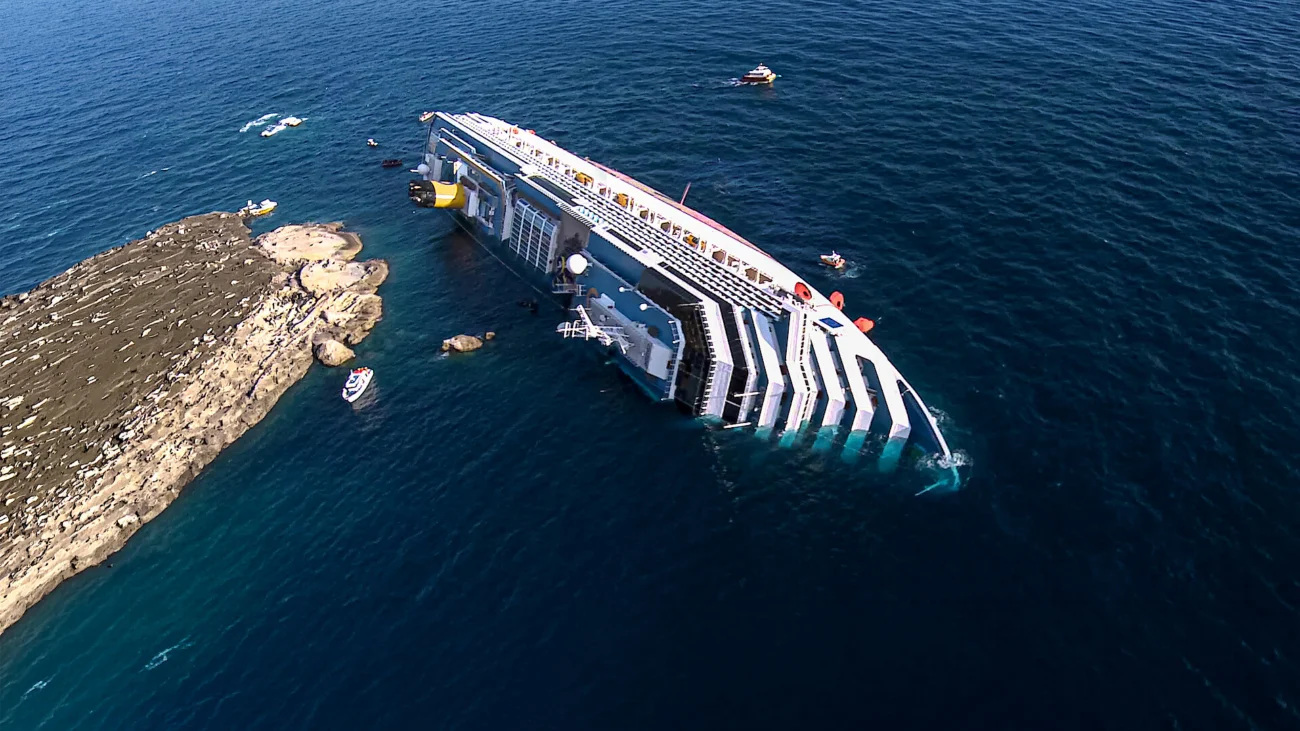
The whole ordeal is now considered the biggest salvage operation in maritime history, yet ‘Shipwrecked’ barely touches on the engineering feat that came after the headlines faded.
Officials in Giglio later honored the response with the Gold Medal of Civil Merit, and the mayor even arranged for a large boulder wedged in the Concordia’s hull to be placed on the island as a permanent memorial to the 32 lives lost. It is a quietly powerful coda to the tragedy that never made it into the Netflix cut.
The Costa Concordia’s Safety Rules That Changed the Cruise Industry
‘Shipwrecked’ also leaves out how the disaster reshaped cruise safety standards worldwide. Prior to the Concordia disaster, cruise ships were required to hold mandatory muster drills for passengers within 24 hours of departure, yet no such drill was ever held for the roughly 600 passengers who boarded shortly before the ship left port.
Following an internal industry review, cruise organizations adopted a new policy in 2012 requiring muster drills to happen before departure rather than after, a change that has since become standard across the industry.
It is a rule most cruisegoers today take for granted, boarding a ship and immediately being funneled into a lifeboat drill, without realizing it exists because of what happened on the Concordia that January night. The documentary’s focus on survivor trauma and courtroom drama makes for gripping television, but it means this legacy of actual policy change gets almost no screen time.
With so many layers to the Costa Concordia story still left unexplored, it makes you wonder just how much more is out there waiting to be uncovered. What detail left out of ‘Shipwrecked’ surprised you the most, and do you think Netflix should revisit this disaster with a follow up special someday?