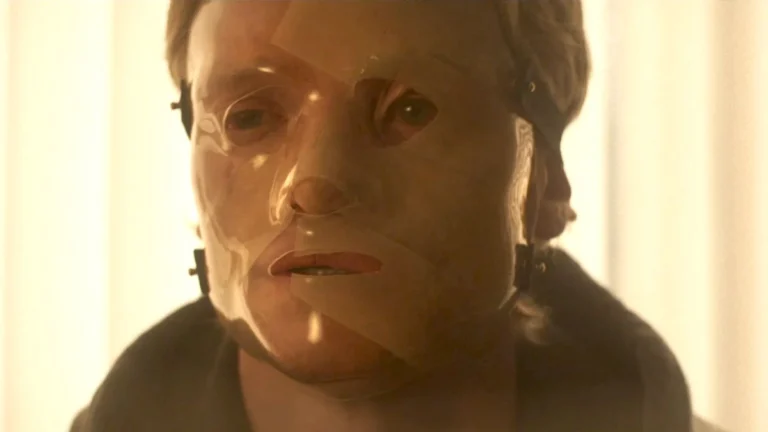
Did Nolan Get It Right? What History Says About Black People in Ancient Greece and ‘The Odyssey’ Casting Firestorm



Christopher Nolan’s ‘The Odyssey‘ has barely hit theaters and it’s already spawned one of the messiest casting debates of the year. At the center of it all is a question that sounds simple but is anything but, were there Black people in ancient Greece, and does that history actually back up Nolan’s vision of Homer’s world.
The backlash exploded once Lupita Nyong’o was confirmed as Helen of Troy, with critics pointing to Homer’s description of the character having “white arms” as proof the casting was historically off base while social media users pointed out that Nyong’o’s African roots and darker complexion contradict that description of the character. But historians who study the actual ancient world tell a far more complicated story than either side of the internet argument wants to admit.
The Historical Record on Africans in Ancient Greece
Serious classical scholarship does not treat this as a fringe question. Frank Snowden’s landmark study “Blacks in Antiquity” compiled extensive evidence of contact between Greeks and Romans with black Africans throughout the classical period, drawing on archaeological and literary sources spanning from the Homeric era to the age of Justinian. Snowden’s research found that while these dark and black skinned peoples came from varied tribal and geographic origins, the Greeks and Romans broadly classified many of them as Ethiopians.
That contact goes back further than most people assume. Africans were already present on the European mainland by the time Herodotus wrote his Histories, and his account describes Aithiopian and Egyptian auxiliaries serving in the armies of the Persian emperor Xerxes at Doriscus and Plataea in 480 BC. Archaeological evidence even points to an African figure portrayed on a mask found in a Bronze Age tomb in Cyprus, showing Greeks encountered Africans very early in their history.
There’s also a detail directly tied to ‘The Odyssey’ itself that rarely gets mentioned in the casting debate. Homer describes Eurybates, Odysseus’s own herald, as woolly haired and dark skinned, and notes that Odysseus honored him above his other companions. That’s not a side character invented for modern relevance, it’s in the original text.
Separating Scholarship From Fringe Theory
Where things get murkier is in how far some corners of the internet stretch this evidence. Mainstream historians generally argue for a genuinely multicultural ancient Mediterranean where African traders, soldiers, and diplomats moved through Greek city states, not a wholesale reimagining of Greek identity itself.
More fringe strands of scholarship go much further, with some Afrocentric writers concluding that the ancient Greeks themselves were Black and that Europeans learned the liberal arts from black ancestors who first settled Greece and Egypt.
That theory is not accepted by mainstream classicists and shouldn’t be confused with the more measured, evidence based work on African presence and trade contact.
Interestingly, even some of those fringe writers have pointed directly at Helen of Troy. One Afrocentric researcher argued decades ago that Helen, the cause of the Trojan War, should be understood as a beautiful brown skinned woman, a claim that predates Nyong’o’s casting by more than a century and complicates the idea that this is purely a “modern woke” invention.
‘The Odyssey’ Casting Backlash Explained
None of that nuance made it into most of the online outrage. One X user summed up the criticism by accusing Nolan of making bizarre, anachronistic choices including comic book style armor, Viking ships, and a diverse cast, and questioning whether he was also monkeying with the myth itself. Others went further, accusing Nolan of caving to what they called diversity mandates.
The controversy didn’t stay contained to casting either. Some audiences also took issue with a Viking longship appearing in the trailer, since that type of vessel would not have existed until roughly two millennia after the events described in ‘The Odyssey’.
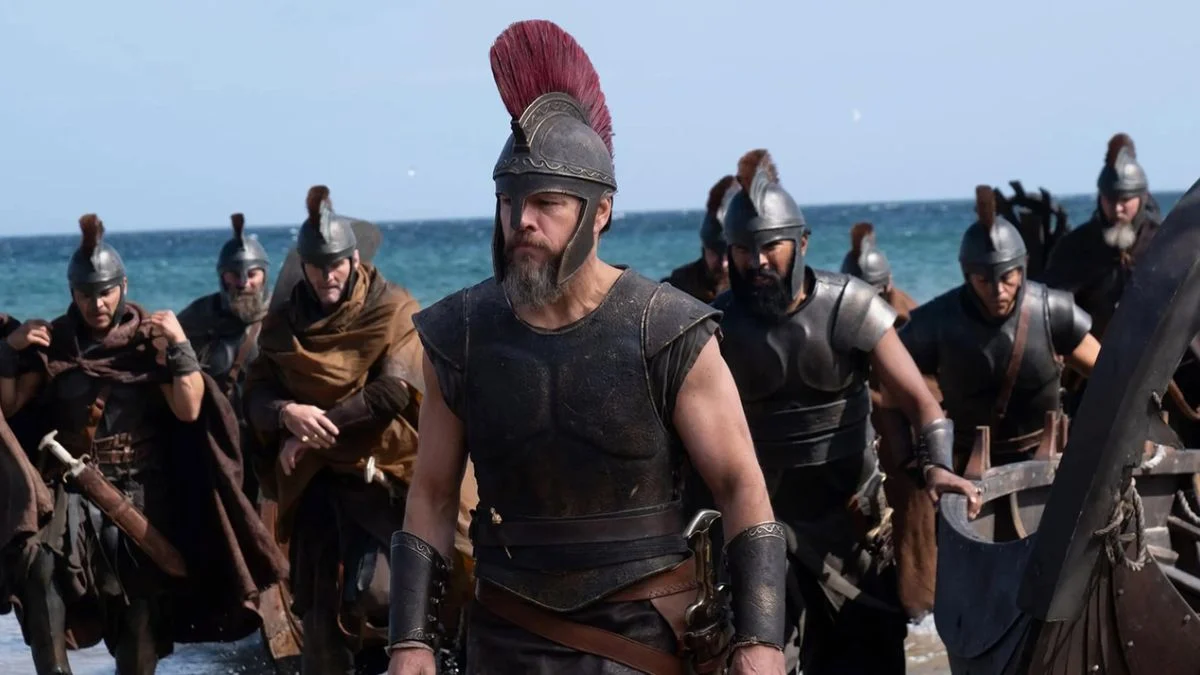
Tom Holland’s character Telemachus referring to his father Odysseus as “dad” became another flashpoint for viewers upset about modern dialogue creeping into an ancient setting.
Nolan has addressed some of the choices directly rather than staying silent. He told Time magazine he cast Travis Scott as a bard to pay tribute to the idea that the story was handed down as oral poetry, something he views as analogous to rap. Speaking on Amy Poehler’s podcast “Good Hang,” Nolan said he learned while making his Batman trilogy that audiences want a filmmaker’s most sincere attempt to honor the source material, while also making it his own interpretation.
Where the Debate Goes from Here
Not everyone piling on the casting has been consistent about it either. One conservative commentary piece pointed out that Nolan defied typical Hollywood diversity expectations for ‘Oppenheimer,’ casting Florence Pugh rather than a Black actress as Jean Tatlock, which the writer argued makes the Helen of Troy casting choice look inconsistent by comparison.
Others have leaned on the fact that Helen was never a historical figure to begin with. Many defenders of the casting argue Helen of Troy is a mythical rather than historical character, making arguments about strict historical accuracy somewhat beside the point, with Jimmy Kimmel joking on his show that since Helen was mythically the daughter of Zeus after he transformed into a swan, it doesn’t really matter what color a myth is.
Whether any of this actually dents the film’s box office remains an open question. Similar casting controversies surrounded Disney’s ‘The Little Mermaid,’ ‘Snow White,’ and Amazon’s ‘The Lord of the Rings: The Rings of Power,’ and there is little evidence these online debates significantly affect ticket sales, though ‘The Odyssey’s’ final trailer reportedly racked up more than 542,000 dislikes as audiences reacted to the casting choices.
So does Nolan’s ‘Odyssey’ get the history right, get it wrong, or land somewhere in the messy middle where myth, archaeology, and modern politics all collide? Now that you’ve seen what the actual historical record says about Africans in ancient Greece, does that change how you’ll watch Nyong’o’s Helen of Troy when you finally see the film for yourself?