‘The East Palace’ Review: A Haunted Throne Room Where the Living Are the Real Monsters

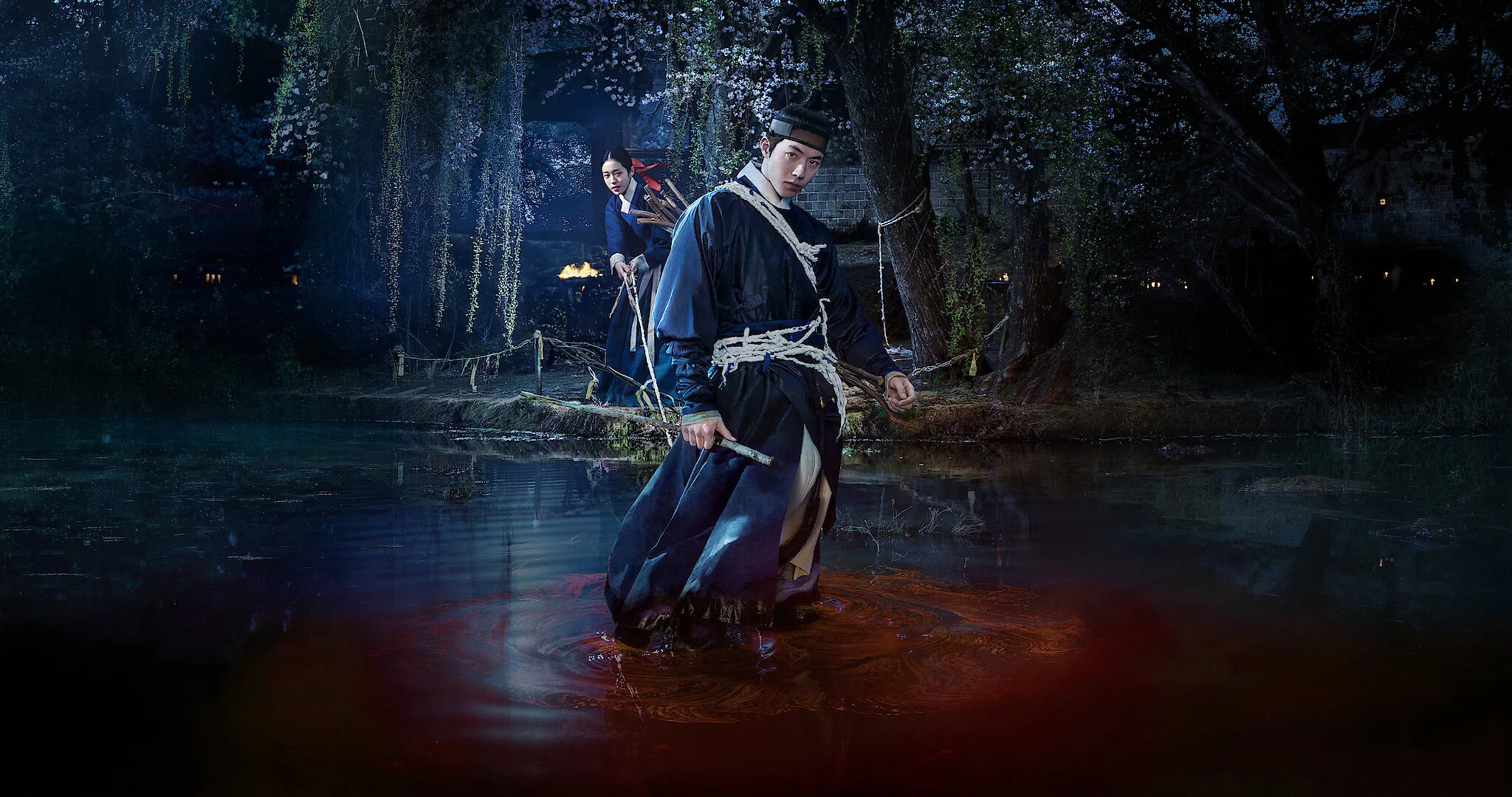

‘The East Palace’ arrives on Netflix as one of the summer’s most anticipated Korean genre bets, built around a premise that sounds simple on paper and turns knottier with every hour. A monarch watches his heirs die in the same eerie pattern that plagued the palace three decades earlier, and rather than face the truth of what happened back then, he reaches for a weapon instead of an explanation.
That weapon is Gu-cheon, a scruffy, checked-out spirit hunter dragged out of exile and forced back into a world of curses and grudges he has spent years trying to outrun. Nam Joo-hyuk plays him with the tired shoulders of a man who has already lost everything once, which makes his reluctant heroics land harder than they have any right to.
What struck me almost immediately is how little interest this show has in being a tidy ghost story. The hauntings are the surface. The real rot is dynastic, generational, and entirely human, and the show is smart enough to let its supernatural elements serve that theme rather than distract from it.
Roh Yoon-seo, playing the court lady Saeng-gang, ends up stealing scenes out from under her more famous co-star. She has spent much of her career playing variations on the same wide-eyed ingenue, so watching her dig into something prickly, guarded, and quietly devastated feels like a genuine reintroduction. Her chemistry with Nam skews closer to a bickering, protective sibling bond than a slow-burn romance, and that choice keeps the show from collapsing into the genre’s usual shorthand.
Cho Seung-woo’s king is where the season’s ambition really shows. He is never simply a villain or simply a victim of circumstance, he is a man who has convinced himself that cruelty is the price of stability, and Cho plays every scene with the coiled tension of someone who knows exactly what he has sacrificed to sit on that throne.
Where the season wobbles is in its plotting. The mythology around the pond spirit and the thirty-year-old tragedy gets layered on thick, and there are stretches where the show seems more interested in accumulating twists than clarifying them. A handful of the mid-season reveals feel telegraphed well before the characters catch up, which softens their impact considerably.
The pacing is a genuine double-edged sword across eight episodes. It rarely drags, and there is a real momentum to how briskly each hour moves, but that same speed occasionally shortchanges quieter character beats that could have used another minute to breathe before the next crisis kicks in.
Visually, this is a lush, confident production. The palace interiors have real weight and texture, the spirit realm sequences have a distinct, almost illustrated quality that separates them from the living world without ever feeling like a gimmick, and the production clearly spent its budget where it counts.
I also appreciated that the show trusts silence. Some of its most unsettling moments come not from jump scares but from stillness, a hallway that is too quiet, a look exchanged between courtiers who both know more than they are saying. That restraint suggests a creative team that understands dread is built, not just triggered.
Where it falls short of greatness is originality. The bones of this story, a spirit-slaying outsider paired with a court that hides its sins behind ceremony, will feel familiar to anyone who has spent time in this corner of Korean genre television, and the show never quite finds a hook sharp enough to fully distinguish itself from its influences.
Still, familiarity is not the same as failure, and what ‘The East Palace’ does with its inherited pieces, particularly through Nam and Roh’s performances, gives it enough personality to stand on its own by the finale. The ending resolves its central mystery with real emotional weight rather than a cheap twist, and that alone puts it ahead of a lot of its peers.
Taken as a whole, this is a handsomely made, emotionally grounded supernatural drama that trips over its own mythology more than once but never loses its grip on what actually makes it compelling, its people. I walked away entertained, occasionally moved, and only mildly frustrated by the excess plotting. That balance earns ‘The East Palace’ a solid 8 out of 10.
How did you like 'The East Palace'?
Have you started ‘The East Palace’ yet, and does its ending stick the landing for you the way it did for me? Let me know in the comments.