Matt Damon Reveals the Wild Practical Effects Trick Behind ‘The Odyssey’s’ Scylla Monster Attack

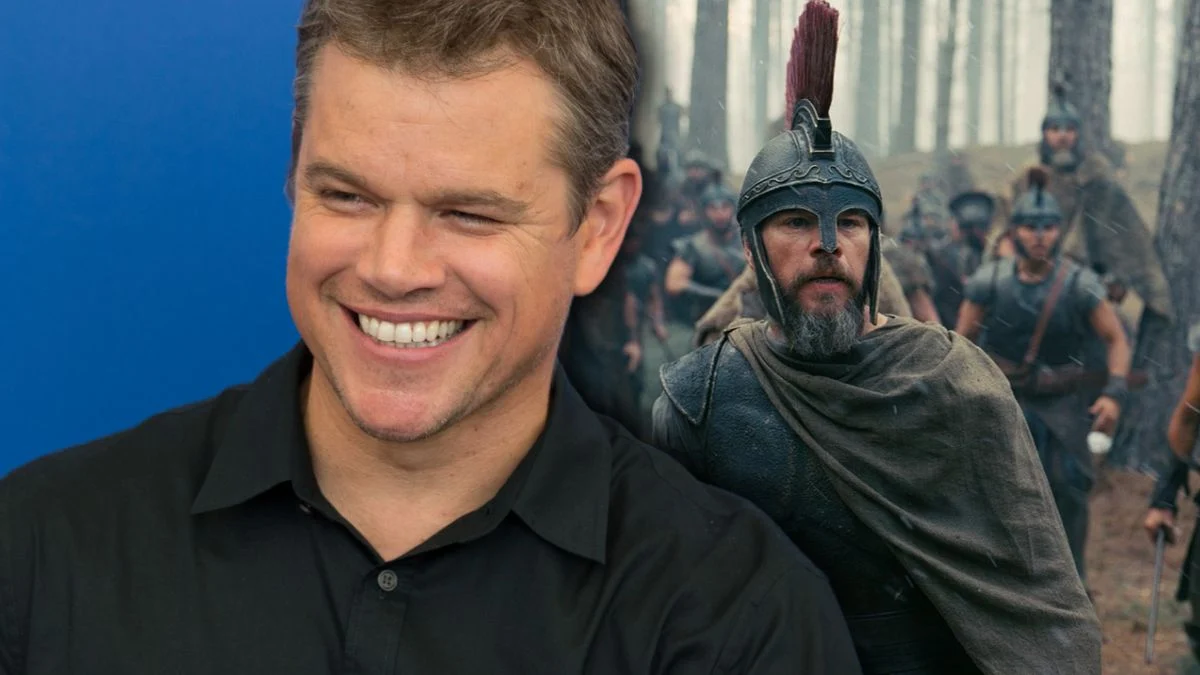

Christopher Nolan has built an entire directing philosophy around avoiding shortcuts, and ‘The Odyssey’ has become the clearest example yet of just how far he is willing to take that commitment.
Rather than leaning on digital tools to fake his way through Homer’s most fantastical sequences, Nolan spent much of production finding ways to physically recreate moments that most modern blockbusters would simply generate on a computer.
That approach extended all the way to the Strait of Messina, home to two of the story’s most infamous threats, the six-headed monster Scylla and the massive whirlpool Charybdis. In Homer’s original poem, Odysseus is forced to steer his ship through the narrow passage between them, losing several of his men to Scylla’s grasping heads in the process, a sequence critics have already flagged as one of the film’s more visually demanding set pieces.
Matt Damon, who leads the film as Odysseus, has now opened up about exactly how that harrowing passage was brought to life on set. Speaking to Wired, Damon explained that the production took an actual boat directly through a real passage of water, while a crew member on jet skis performed doughnuts alongside the vessel to physically generate a small whirlpool the visual effects team could then use as a reference point for the finished sequence.
That kind of practical groundwork lines up with everything else that has come out about the film’s production. Nolan has been open about his preference for physical effects over relying on generative tools, and stunt performer James Newman, who trained both Damon and Tom Holland for the film, has spoken about the sheer intensity of the choreography Nolan demanded throughout the shoot.
Damon also detailed a separate, even more elaborate rigging setup used to sell the terror of Scylla’s attack itself. According to Damon, the production built a racket system that could physically pull stunt performers up and off the deck of the boat, simulating the moment where the monster’s heads snatch crew members straight from the ship. Damon described watching the effect in action as one of the most incredible things he witnessed during the entire shoot.

This is far from the only grueling practical sequence Damon has discussed from the production. He has separately described the film’s final stretch of shooting as feeling more like an expedition than a traditional movie, recalling a moment in a water tank at Universal Studios where two powerful jet engines, comparable in size to those on a commercial airliner, blasted water directly at him and the crew to simulate open ocean conditions.
That same conversation saw Damon joke about the sheer intensity of those final days, recalling a moment where Nolan poured water directly over his face while he was lying down for a close-up shot, prompting Damon to compare the experience to waterboarding. Despite the difficulty, Damon has said the process helped him work through long-standing fears, including a bout of claustrophobia triggered by earlier scenes involving the Trojan Horse and a pursuit by a Cyclops.
Do you prefer practical effects over CGI in big blockbuster movies?
With reviews already praising how seamlessly the film blends puppetry, stunt work, and digital effects into a cohesive whole, it is clear that sequences like Scylla’s attack owe much of their impact to exactly this kind of hands-on problem-solving.
Have something to add? Let us know in the comments!