‘Onslaught’ Ending Explained: How Adam Wingard’s A24 Horror Twist Reframes Celeste’s Entire Fight

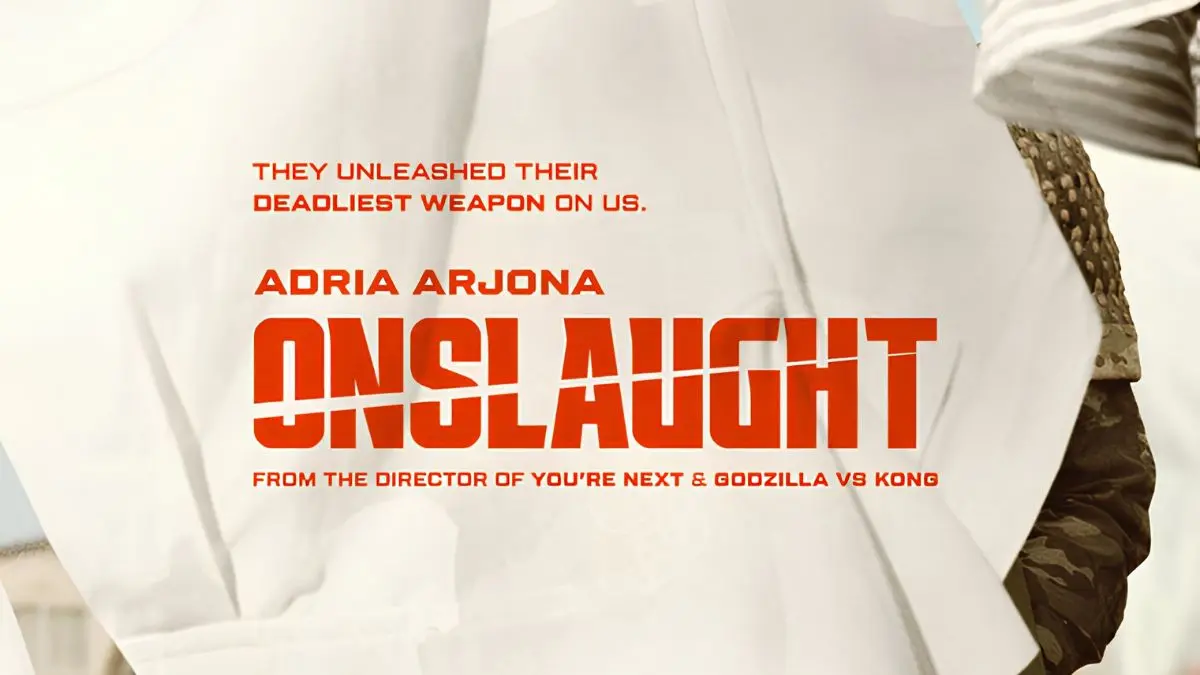

Adam Wingard’s latest A24 offering has landed in theaters, and audiences are already buzzing about the film’s final act reveal. ‘Onslaught‘ comes from director Adam Wingard and writer Simon Barrett, marking a new entry in their shared genre universe. The movie follows a trailer park mother forced to defend her family from a very unnatural threat, and its closing minutes have quickly become the most talked about part of the whole experience.
The story centers on a rogue squad of genetically engineered super soldiers that break loose in the desert, forcing a hardened Army sniper to unleash hell to protect her young daughter. That sniper is Celeste, played by Adria Arjona, and by the time the credits roll her connection to the film’s monstrous villains turns out to be far more personal than anyone expects.
‘Onslaught’s’ Twist Connects Celeste to the Soldiers
The film’s biggest swing comes late, when the story stops treating Celeste as a bystander caught in someone else’s nightmare. A late in the game twist connects Celeste more directly to the assailants and gestures toward the film having something broader to say about the military. It reframes everything that came before it, turning what looked like a random home invasion into something closer to a reckoning.
Critics have pointed out that this reveal is baked into the film’s structure from the start, even if it takes a while to surface. As Celeste fights the soldiers, she repeatedly loses herself in black and white flashbacks to her military service, building toward a full circle reveal meant to tie her past directly to the threat at her door. That device is meant to make her final stand feel inevitable rather than coincidental.
Not every reviewer felt the payoff landed cleanly. Several outlets noted the reveal does not quite stick the landing the way the filmmakers intended, with the character’s closure feeling patched together rather than fully earned. It is a rare moment where ‘Onslaught’ reaches for emotional weight after spending most of its runtime as pure genre spectacle.
Still, the choice fits squarely within Wingard’s ongoing preoccupations. Like Dan Stevens’ crazed sergeant turned slasher villain in ‘The Guest’, the veterans and soldiers in Wingard’s newest film are shown being exploited and experimented on by their own government, stripped of the autonomy they once had. Celeste’s arc becomes the human face of that idea.
The Truck Stop Massacre Sets Up the Film’s Real Horror
Before the final confrontation, ‘Onslaught’ delivers what many consider its most effective sequence, and it is not the finale. When the soldiers descend on a truck stop, the well lit, plain sight slaughter plays out as genuinely chilling, subverting the expectation that Celeste’s stockpile of weapons will simply fuel a straightforward good guy with a gun narrative. It is the moment where the movie’s horror instincts overtake its action instincts.
That sequence has resonated with viewers for reasons beyond genre thrills. Wingard himself has pointed to the massacre sequence as tapping into a very real, modern fear rather than an homage to 80s slasher tropes, describing it as the scene that scares him the most. It is a rare instance where the film’s political subtext becomes impossible to ignore.
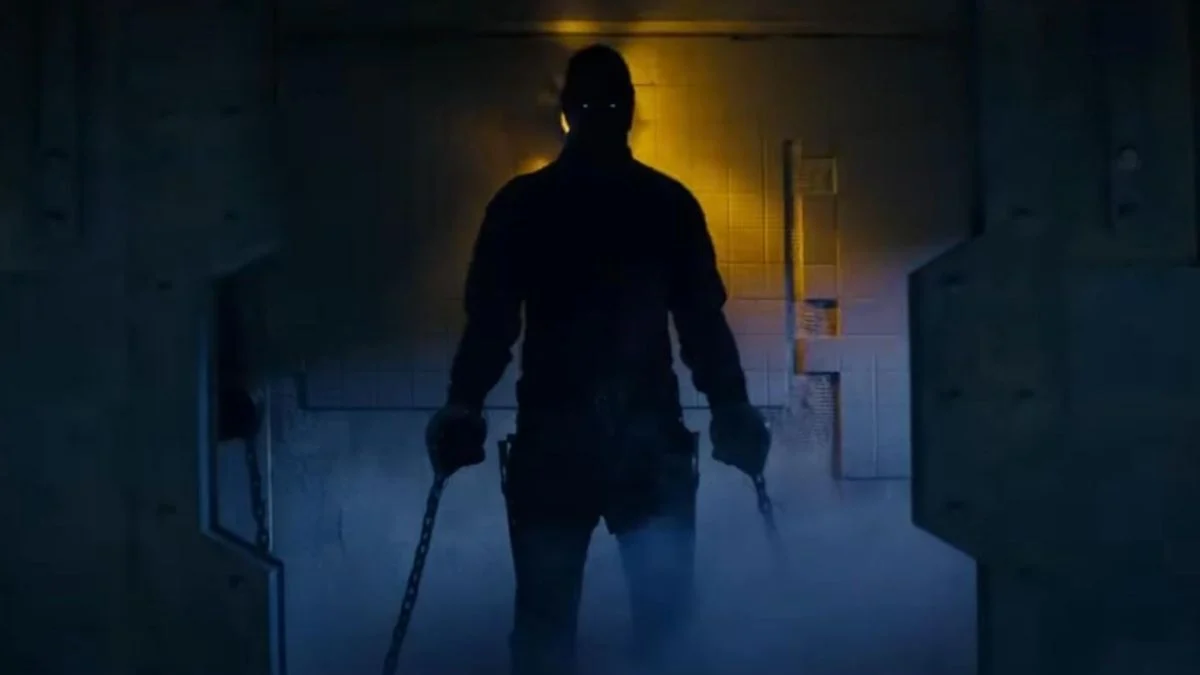
The three killers themselves are designed to blur the line between soldier and monster. These enhanced soldiers are meant to be highly intelligent, but that characterization often falls away so they can adopt the lumbering, relentless cadence of a classic horror slasher. Wingard clearly wants them to read as both a military product and a supernatural threat at once.
That duality is intentional according to the filmmaker’s own comments on the project. Wingard told Den of Geek that he wanted to essentially run a classic slasher archetype through a military filter, which explains why the soldiers feel like an update of a familiar horror figure rather than something entirely new.
What ‘Onslaught’s’ Final Standoff Actually Resolves
The climax strips away the firepower that defines most of the movie, forcing a more primal confrontation. The ending becomes more satisfying specifically because Celeste and her tormentors are deliberately separated from their weapons, leaving a veteran to meet her enemies on an old fashioned literal field of combat. It is a deliberate choice to strip the spectacle down before the credits roll.
Even so, ‘Onslaught’ does not tie up every thread it introduces along the way. The film’s ending arrives briskly, and by that point it has not fully paid off all the chaotic setup from earlier in the story, though the filmmakers stop short of an outright cliffhanger. Some ambiguity is clearly left on the table.
That said, there are hints the door remains open for more. A handful of end credits stills suggest how the story could spin off into its own 80s style sequel down the line. Whether that ever materializes depends heavily on how audiences respond in the coming weeks.
Wingard has also been upfront about how ‘Onslaught’ fits into his larger body of work. He has described the film as the final chapter of a loose trilogy alongside ‘You’re Next’ and ‘The Guest’, sharing the same world and expanding on ideas first introduced in the earlier film even though it is not a direct sequel following the same characters. That context adds another layer to Celeste’s arc for longtime fans of his filmography.
Fans and Critics Are Split on Whether the Ending Works
Reaction to the film’s climax has been notably divided since early screenings began. Several reviewers have compared the film’s slow build to a promise that never fully pays off, describing a movie that keeps teasing chaos without ever fully delivering on it. That criticism has followed ‘Onslaught’ through much of its critical rollout.
Other outlets have been more forgiving, framing the anticlimactic finish as a minor stumble in an otherwise confident throwback. One review noted that almost all of its problems arrive specifically in the final act, with the first two thirds of the film promising an epic finish that the movie ultimately is not able to deliver. The consensus seems to be that ‘Onslaught’ is strongest before its own ending arrives.
Given how much the film leans on Arjona’s performance to carry that final stretch, her work has become the through line critics keep returning to. Arjona strikes a careful balance between vulnerability and toughness in her portrayal of Celeste, a woman shown to be somewhat absent as a parent with little keeping her grounded besides her records, her whiskey, and an arsenal she is not legally supposed to own. It is that grounded messiness that makes the character’s late reveal land emotionally for some viewers even when the plot mechanics wobble.
Now that ‘Onslaught’ has finally unleashed its ending on audiences, the real debate begins over whether Celeste’s fate earns the buildup or short changes it, so which side of that trailer park standoff are you on?