Andrew Garfield’s Medieval Rebellion Epic ‘The Uprising’ Is Splitting Critics Right Down the Middle on Rotten Tomatoes


Robin Hood has become one of Hollywood’s most persistent obsessions, with studios repeatedly trying to find fresh angles on a legend that’s been told and retold for centuries. This fall alone has brought two very different takes on that mythology to theaters within weeks of each other, both circling the same medieval unrest that inspired the folklore in the first place.
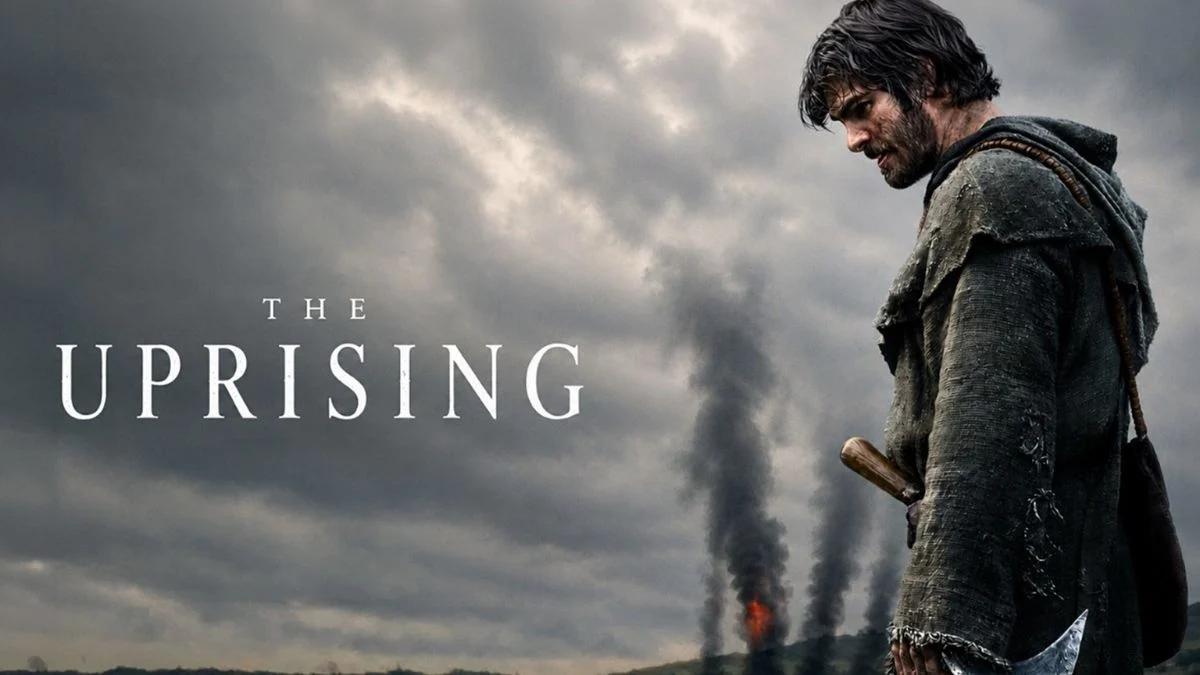
Paul Greengrass’s latest film, ‘The Uprising,’ arrives as the second of those attempts, following this summer’s more somber ‘The Death of Robin Hood’ starring Hugh Jackman. Rather than centering on the famous archer himself, Greengrass’s film focuses on the historical Peasants’ Revolt of 1381, following Andrew Garfield as a grieving farmer known only as Ploughman who becomes an unlikely leader of rebellion against the corrupt regime surrounding teenage King Richard II.
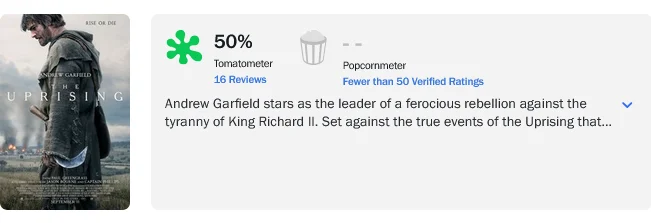
With reviews now rolling in ahead of its September 11 release, ‘The Uprising’ has landed a fairly divisive 50% score on Rotten Tomatoes, reflecting a split critical response to Greengrass’s latest foray into politically charged, docudrama-style filmmaking.
The film is set in plague-ravaged 14th-century England, where a population still recovering from the Black Death is pushed to its breaking point by a fresh round of taxes imposed by the boy king’s scheming council of advisors. That council includes Treasurer Robert Hales, played by Tom Hollander, Archbishop Simon Sudbury, played by Stephen Dillane, and London Mayor William Walworth, played by Jonny Lee Miller, all of whom exploit the power vacuum left by their overwhelmed teenage ruler.
Garfield’s Ploughman becomes swept up in the growing unrest alongside Jamie Bell’s radical priest John Ball and Thomasin McKenzie’s fellow rebel Alyce, eventually marching with fellow peasants from Essex all the way to London to confront the crown directly.
Much of the praise for the film centers on its central performances rather than its broader structure. Reviewers have singled out Garfield’s ability to fill in the sketchier, largely nonverbal aspects of his role, with his scenes alongside McKenzie drawing particular attention for their emotional intensity.
Woody Norman’s take on the young king has also generated discussion, functioning as a distorted mirror image of Garfield’s Ploughman, a contrast between two very different kinds of leadership emerging under crisis. Katherine Waterston’s smaller role as the wary Countess Joan of Kent has likewise stood out to several critics despite limited screen time.
Not everyone has been won over by Greengrass’s approach. Some reviewers have described the film as an uneven, panoramic mosaic that struggles to fully justify its docudrama treatment of medieval material, with the director’s signature handheld camera work and frenetic editing style feeling exhausting at times rather than immersive.
Other critiques have focused on how thin Ploughman’s character remains throughout much of the runtime, with his defining traits largely limited to grief and a determination to do what’s right, leaving the film’s emotional core more reactive than fully realized.
Garfield has been vocal about the parallels he sees between the film’s medieval setting and modern wealth inequality. During the film’s press tour, he told The Hollywood Reporter he hopes that if any billionaires watch it, they come away genuinely rattled by what they see on screen.
With its R rating, 2-hour-and-7-minute runtime, and a starry ensemble supporting Garfield’s lead performance, ‘The Uprising’ looks set to spark plenty of debate among audiences drawn to its blend of historical drama and pointed social commentary, even as critics remain split on whether Greengrass’s execution matches his ambitions.
How interested are you in watching The Uprising?
Have something to add? Let us know in the comments.