Did Lizzie Borden Really Get Away with Murder Before ‘Monster’ Put Her Back on Trial?



Few true crime stories have refused to fade like the case of Lizzie Borden. Her father Andrew and stepmother Abby were killed with a hatchet inside the family home in Fall River, Massachusetts, on August 4, 1892. More than a century later, the mystery has a fresh audience thanks to Netflix’s ‘Monster: The Lizzie Borden Story.’
The show has viewers asking two questions again. Was Lizzie Borden found guilty, and how did she get away with it if she did it? The real history is stranger and more frustrating than the schoolyard rhyme suggests.
Was Lizzie Borden Found Guilty at Her Trial?
No, she was not. On June 20, 1893, Lizzie was acquitted by an all male jury after roughly 90 minutes of deliberation. The trial had run from June 5 to June 20 in 1893, and it ended with a not guilty verdict.
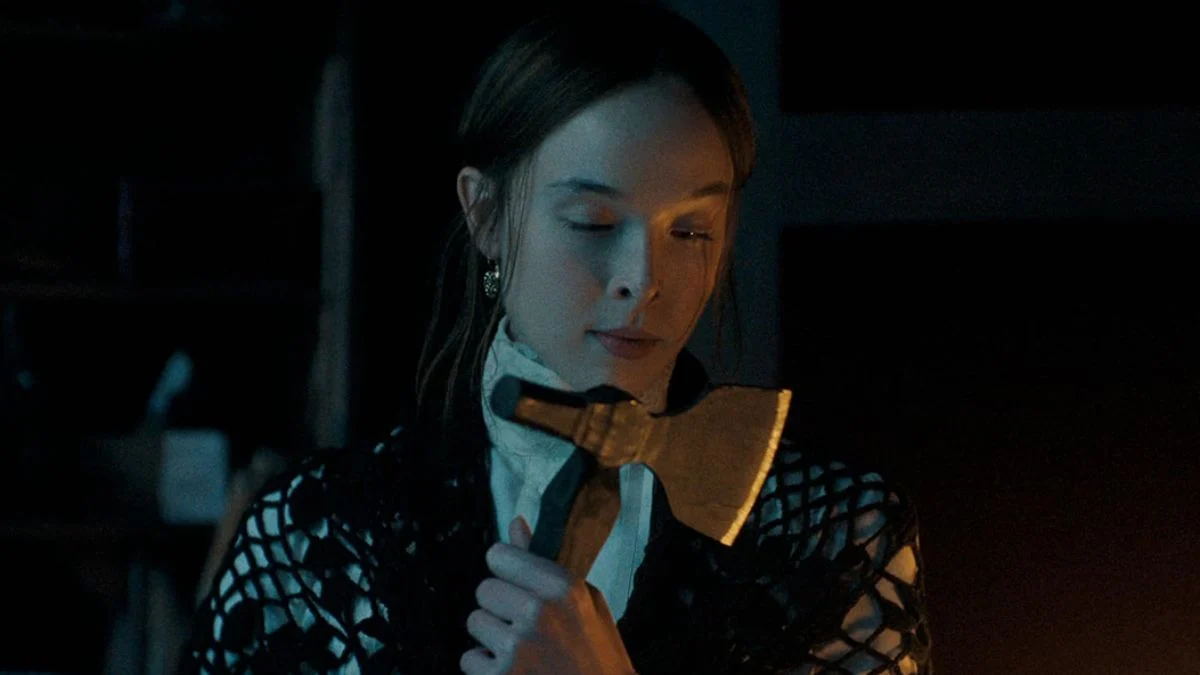
The trial was a national sensation long before anyone had a streaming queue. Investigators had questioned Lizzie’s account of her movements and learned of serious tensions inside the family. Newspapers across the country followed the case in extraordinary detail and turned her into one of the era’s most famous defendants.
Still, a not guilty verdict is not the same as a declaration of innocence. Jurors only had to decide that prosecutors had failed to prove guilt beyond a reasonable doubt, and they did not have to name another killer. That distinction is the key to why the case still sparks arguments.
How Did Lizzie Borden Get Away With It?
The biggest problem for the prosecution was the lack of hard proof. Prosecutors had plenty of suspicious circumstances but little physical evidence showing Lizzie had swung the murder weapon. Andrew’s killing happened in a narrow window of about 15 minutes, yet Lizzie had no blood on her and the weapon was never conclusively identified.
The courtroom rules did her favors too. The judges refused to allow her inquest testimony to be used at trial, even though her answers there had been contradictory and confusing, and she had given them without a lawyer present. That decision removed some of the most damaging material the state might have used.
Then there was the matter of who she was. She was well liked in her community and active in her church, and later observers suggested attitudes about gender and class made it hard for jurors to picture a woman of her standing committing such brutality. Prosecutors leaned on stereotypes about the slyness of women to make up for their lack of direct evidence, and the jury still did not convict.
The judge may have tipped the scales as well. Justice Justin Dewey’s closing summary drew controversy because he seemed to favor her innocence while praising her character and church involvement.
What Happened to Lizzie After the Verdict?
Freedom did not bring peace. She had spent about ten months behind bars before returning to Fall River, and the suspicion never lifted. She grew isolated, took the name Lizbeth, and settled with her sister Emma in a large home.
The famous rhyme did more than almost anything to keep the case alive. It got nearly every detail wrong, from Abby’s relationship to Lizzie to the number of blows, and it effectively declared her guilty in popular memory despite the verdict. That folklore is a big reason the story keeps returning to screens.
No one else was ever charged, and the killings remain officially unsolved. That open ending is exactly what makes the case such fertile ground for a dramatic retelling.
Netflix’s ‘Monster’ Takes Its Own Swing at the Case
The fourth season of the Ryan Murphy and Ian Brennan anthology arrived on Netflix on September 17, 2026, with all eight episodes at once, and it hands the title of Monster to a woman for the first time. Ella Beatty stars as Lizzie, with Rebecca Hall as Abby, Vicky Krieps as maid Bridget Sullivan, Charlie Hunnam as Andrew, Billie Lourd as sister Emma and Jessica Barden as actress friend Nance O’Neill.
The series is not a documentary, and it does not pretend to be. Netflix itself notes that the show is a fictionalized interpretation that changes the historical record. The trailer portrays Lizzie as a repressed young woman who conspires with her rebellious maid to kill her abusive parents, and it even features Sarah Paulson as serial killer Aileen Wuornos.
That Wuornos connection is a dramatic invention, and Netflix Tudum says there is no evidence the real Wuornos was fixated on the Borden murders. Murphy has said her appearance ties into the season’s focus on female rage. Critics have not been unanimous either. Rotten Tomatoes reported a 50 percent approval rating from 12 reviews, while Metacritic landed on mixed or average.
So did Lizzie Borden get away with it? Legally, she walked free and no other suspect was ever charged, but history has never fully let her off the hook. If the show’s version of Lizzie has you rethinking the verdict, which piece of evidence or courtroom decision do you think should have tipped the jury the other way?