New Look at ‘Narnia: The Magician’s Nephew’ Reveals Greta Gerwig’s Boldest Swing Yet

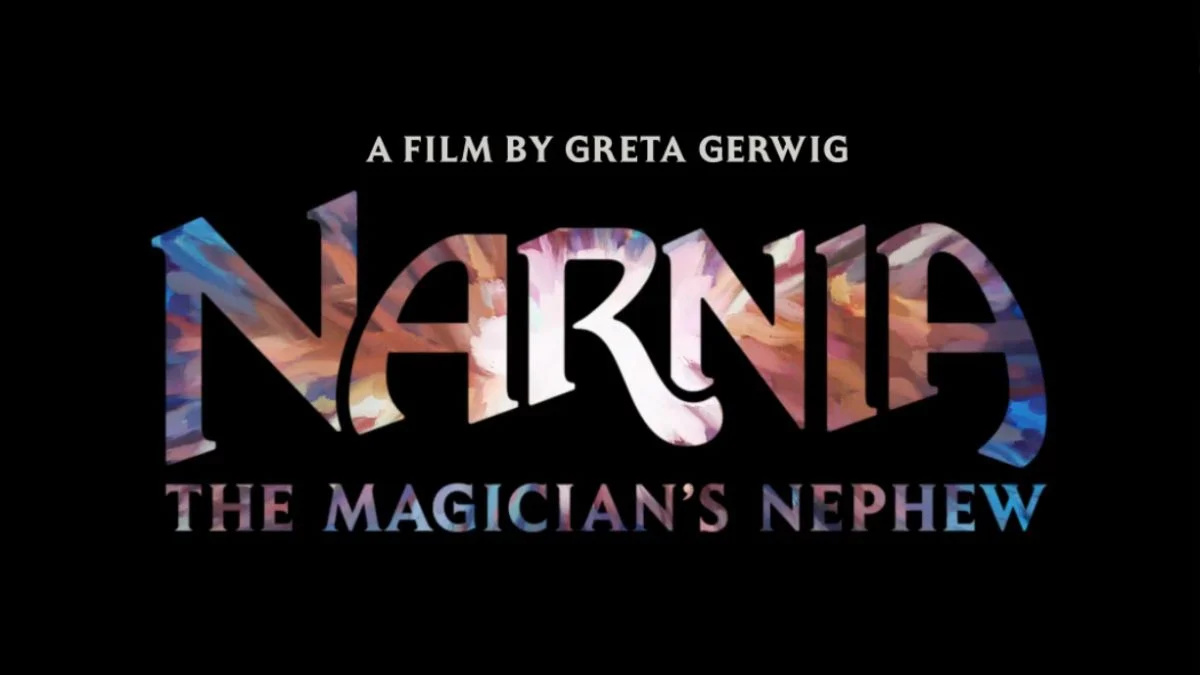

Greta Gerwig has spent her career reworking familiar stories into something distinctly her own, from reshaping the coming-of-age drama in ‘Lady Bird’ to reimagining a century-old doll brand as cultural commentary in ‘Barbie.’ Her next project asks whether that same instinct can work on one of literature’s most beloved fantasy worlds.
Netflix’s ‘Narnia: The Magician’s Nephew‘ has been shrouded in curiosity since it was first announced, largely because Gerwig has been characteristically tight-lipped about what her version of C.S. Lewis’s story would actually look like. That changed this week with the release of new first-look images and details via Empire magazine, shared widely online by accounts like Pop Base.
The images offer the clearest sense yet of Gerwig’s approach, and the biggest reveal centers on Aslan himself. Meryl Streep has been confirmed to voice the great lion, a casting choice Gerwig said required someone with “gravitas but not morose self-seriousness,” someone over 70 with “wisdom of experience” paired with “fresh wonder, like a child.” Aslan’s design leans into that spirit visually, incorporating mismatched eyes and bold red markings as a deliberate nod to David Bowie.
New look at Greta Gerwig’s ‘NARNIA: THE MAGICIAN’S NEPHEW’.
— Pop Base (@PopBase) September 21, 2026
(Via: @empiremagazine) pic.twitter.com/Tcvoen7WRE
That Bowie influence is not incidental. Gerwig described her vision for the film as a “rock opera,” explaining that while it is not a literal musical, it draws heavily from 1960s and ’70s British rock icons including Bowie, Paul McCartney, David Gilmour, Pete Townshend, Jimmy Page, and Robert Plant. She tied that sensibility directly back to Lewis’s own mythology, noting that Narnia is “a world sung to life by Aslan,” which made a “world made out of music” feel like the natural creative lens.
To support that vision, the story itself has been shifted forward in time, relocating Digory and Polly from the early 20th century Lewis originally wrote into postwar 1950s Britain, a period closely tied to the generation that would go on to revolutionize British music. Mark Ronson and Andrew Wyatt are composing the score, reinforcing just how central music is to this adaptation’s identity.
The first images also gave fans a look at Emma Mackey’s take on Jadis, the character who eventually becomes the White Witch. Her version has been described elsewhere as “pure punk,” a sharp departure from Tilda Swinton’s icy, regal performance in the earlier film series, and one that captures Jadis while she is still trapped among the ruins of Charn, before her descent into full villainy.
Reaction from longtime Narnia fans has been split. Some are intrigued by the ambition of reframing Lewis’s Christian allegory through a rock-and-roll lens, while others have voiced concern that the tonal shift strays too far from the source material’s spirit, particularly given Aslan’s symbolic role in the books.
The film carries a reported $200 million budget and features a stacked supporting cast that includes Daniel Craig as Andrew Ketterley and Carey Mulligan as Mabel Kirke, alongside newcomers David McKenna and Beatrice Campbell as Digory and Polly. Netflix will release the film theatrically worldwide on February 12, 2027, ahead of its streaming debut on April 2.
With months still to go before release, these first images are likely just the beginning of a rollout designed to slowly win over skeptics. Whether Gerwig’s rock opera take on Narnia becomes a bold reinvention or a divisive misstep may depend entirely on how much of that music-driven ambition survives the transition from page to screen.
What do you think of Greta Gerwig’s bold new take on Narnia?
Have something to add? Let us know in the comments.