‘Unabomber’ Review: Netflix Turns a Harvard Prodigy Into a Domestic Terrorist, and Loses Its Nerve Along the Way

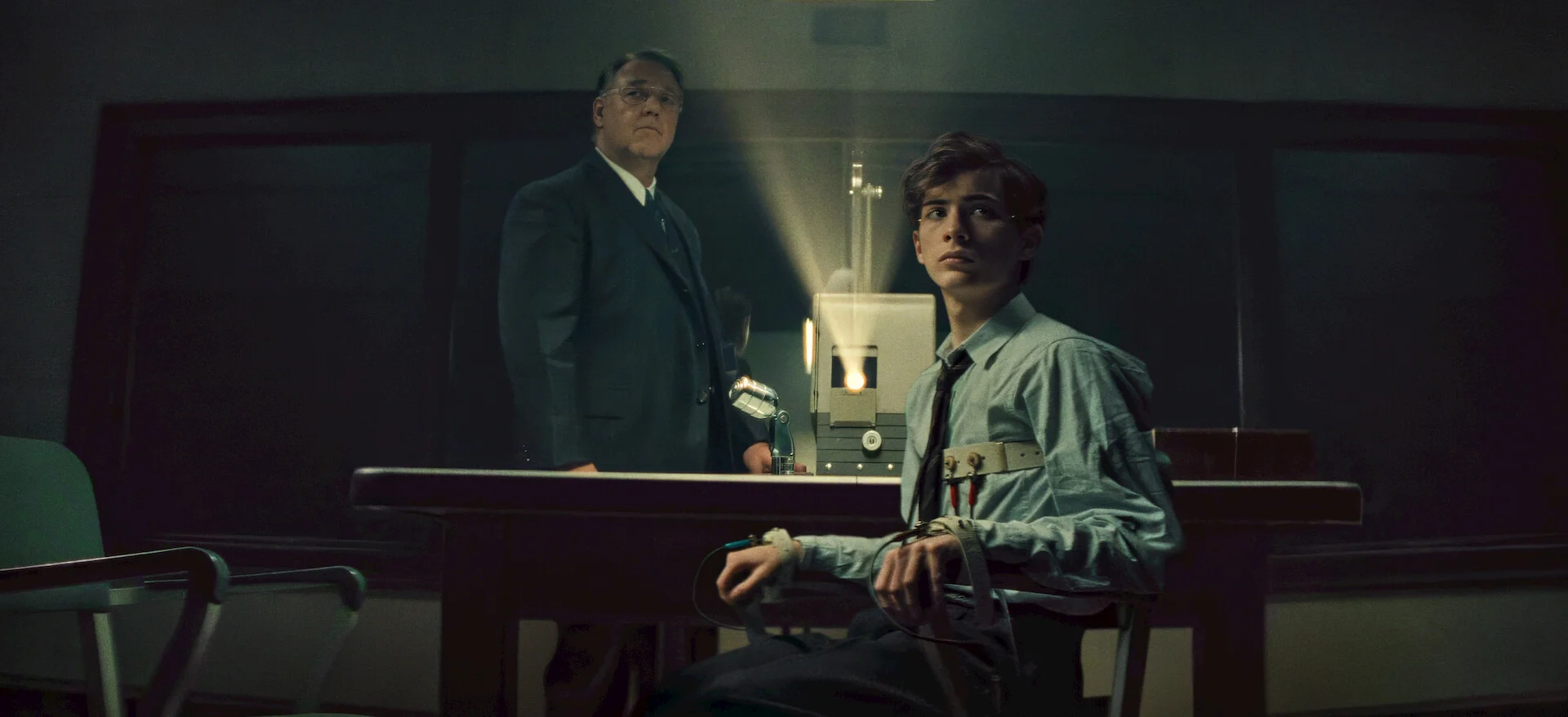

Ted Kaczynski has been public property for three decades now, a name that gets tossed around online as shorthand for anti technology rage long before most people who say it could tell you a single fact about the man. Netflix’s ‘Unabomber’ wants to correct that, tracing Kaczynski from a sixteen year old math prodigy at Harvard to the recluse the FBI spent nearly twenty years hunting down. Jacob Tremblay plays him young, Russell Crowe plays the professor who studies him, and Shailene Woodley plays the agent closing in decades later, and the film splits its runtime almost evenly between the two eras.
That structure is the whole gamble the movie makes, and it is worth sitting with before getting into whether the gamble pays off. This is not a straight biopic and it is not a straight manhunt thriller either, it is trying to be both at once, cutting between a campus and a cabin as if the two timelines are in conversation with each other.
They mostly are not, and that is where my patience for ‘Unabomber’ started to fray. The Harvard sections are the film’s actual reason for existing, built around a young man being quietly dismantled by a controlling mentor, and Tremblay plays that unraveling with a stillness that is genuinely unsettling to watch. Crowe matches him scene for scene, all warmth on the surface and something colder underneath, and whenever the film stays in this timeline it has real tension and something to say about how institutions can shape a mind without anyone involved feeling responsible for the outcome.
The manhunt half never earns the same attention. Woodley is a capable performer stuck playing a composite investigator whose scenes exist mainly to remind the audience that a hunt is happening somewhere off screen, and every time the film cuts away from the Harvard story to check in on her, the momentum resets to zero. I kept waiting for the two timelines to start actively feeding each other, for a piece of information in one era to reframe something in the other, and that friction never really arrives. Instead the film alternates between them out of obligation, like it made a structural promise early on and felt bound to keep it even after the story stopped needing it.
Director Janus Metz has a clear handle on mood, and the cinematography leans into cold blues and clinical framing whenever the experiments are on screen, which does a lot of work to make the psychological material land even when the script is being cautious. There is a real hesitancy here about what exactly turned Kaczynski into a killer, and the film seems to want it both ways, gesturing at the professor’s influence without ever fully committing to that as an explanation. As someone who watched this expecting a hard argument about causes and consequences, I found that reluctance frustrating more than it felt responsible.
I did leave the film with something, mostly thanks to Tremblay, who plays a teenager capable of brilliance and cruelty within the same breath without ever tipping into caricature. On casting him, Metz told Tudum that Tremblay had a sensitivity that fit his vision of Kaczynski as a young student, and that read is exactly what shows up on screen, a performance built on quiet discomfort rather than obvious menace. It is a shame the film built around that performance does not trust its own better half enough to lean all the way in.
‘Unabomber‘ works best as a character study wearing a thriller’s clothing, strongest in the moments it seems least interested in being a thriller at all. The dual timeline structure drags down material that would have hit much harder as a single focused descent, and by the time the film reaches its inevitable ending, the manhunt half has added atmosphere without adding much insight. I’m landing on 7 out of 10, a film carried by a genuinely disquieting lead performance and a director with real visual instincts, held back by a structure that keeps interrupting its own best ideas.
What did you think of Netflix's 'Unabomber'?
Watch it for Tremblay and Crowe circling each other in that Harvard lab, then tell me in the comments whether you think ‘Unabomber’ should have ditched the manhunt timeline entirely.