Netflix’s ‘Unabomber’ Traces Ted Kaczynski’s First Bomb and Victim Back to a Chilling Real-Life Detail Most Viewers Missed


Netflix’s new true crime thriller ‘Unabomber‘ has viewers rewinding straight to the beginning of one of America’s most infamous manhunts. The film, starring Russell Crowe and Jacob Tremblay, follows Ted Kaczynski’s real life journey from a 16 year old mathematical prodigy at Harvard to one of America’s most notorious killers, and it has reignited curiosity about how his campaign of terror actually began.
That origin story matters because the real first bomb, and the man who unknowingly triggered it, set the tone for a manhunt that would stretch on for nearly two decades. ‘Unabomber’ leans hard into that psychological setup, and understanding the true events behind it makes the film’s central mystery hit even harder.
The Unabomber’s First Bomb Targeted a Northwestern Professor Who Never Sent It
The first bomb attributed to the Unabomber was found on May 25, 1978, left as a mail parcel on the campus of the University of Illinois at Chicago and wrapped in a plain brown paper bag. The return address on the parcel belonged to a professor at Northwestern University, so school officials simply mailed the package back to him. It exploded once it reached campus, and the case that would eventually consume the FBI for seventeen years had officially begun.
That professor was Buckley Crist, a materials engineering instructor at Northwestern, and he knew immediately that something was wrong because he had never mailed a package to the address listed as its destination.
He alerted campus police, setting off a chain of events nobody at Northwestern could have predicted. Crist later discussed the bomb and its aftermath decades later, reflecting on how the incident marked the start of Kaczynski’s nearly eighteen year bombing campaign.
What makes the story even stranger is how ordinary the trigger was. A returned package, a suspicious professor, and a campus officer just doing his job combined to create the opening chapter of one of the most exhaustive investigations in FBI history. It is exactly the kind of slow burn dread that ‘Unabomber’ tries to recreate on screen.
Terry Marker Became an Unwitting First Victim in a Case That Would Define a Decade
Kaczynski’s first victim on that day in 1978 was Terry Marker, a campus police officer who was investigating the suspicious package when it detonated. Marker suffered injuries to his left hand that sent him to the hospital, though he ultimately made a full recovery. He had no connection to Kaczynski, no history with the case, and no idea he was about to become a footnote in criminal history.
Investigators would later count sixteen documented bombings carried out by Kaczynski under the FBI code name UNABOM, a combination of University And Airline Bomber, and Marker’s injury was the very first entry on that list.
The attacks escalated from there, moving from university mailrooms to airline cargo holds. A second bomb followed less than a year later, disguised as a cigarette box and left at Northwestern again, injuring graduate student John Harris with minor cuts and burns.
It would take years before the pattern connecting these seemingly random attacks became clear to law enforcement. The Unabomber targeted an engineering professor whose return address had been used on that first package, and that detail became one of the only tangible leads authorities had for years afterward. The randomness of Marker’s involvement is part of what made the case so difficult to crack for so long.
How Netflix’s ‘Unabomber’ Reimagines Kaczynski’s Path to Radicalization
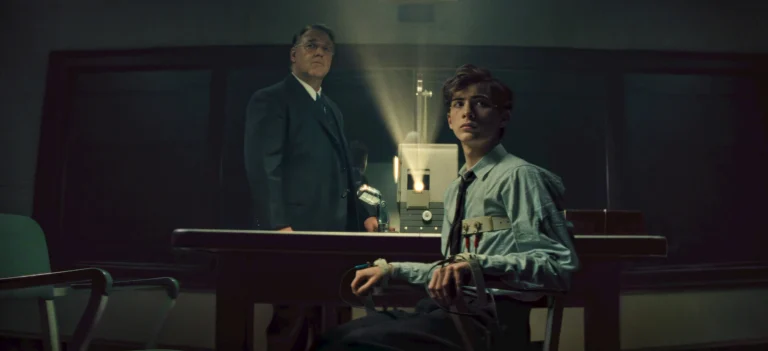
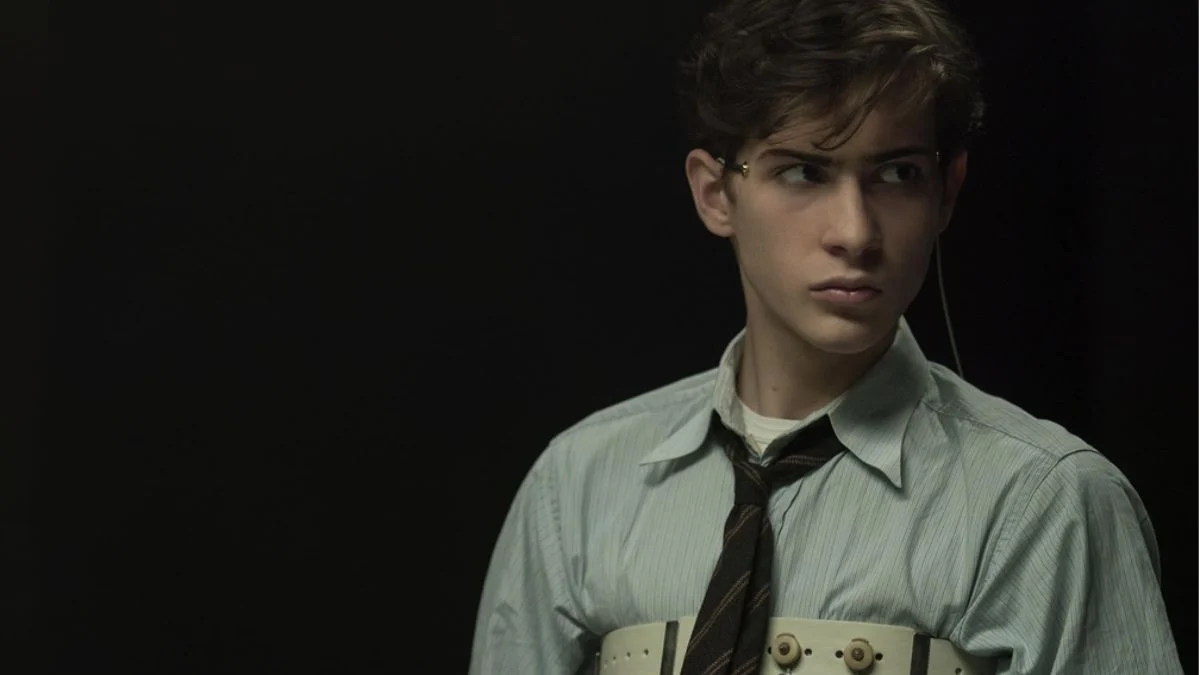
Rather than opening with the bombings themselves, ‘Unabomber’ rewinds even further into Kaczynski’s past. The film follows Ted Kaczynski’s transformation from a 16 year old Harvard prodigy, subjected to controversial psychological experiments by Professor Henry Murray, into the man whose eventual manhunt exposed the chilling consequences of ambition and isolation. That framing puts the emphasis on what shaped Kaczynski long before his first bomb ever left his hands.
The film shifts back to 1958, when Kaczynski attended Harvard as a bright but socially aloof 16 year old student who quickly fell under the influence of psychology professor Henry Murray, played by Crowe, and Murray’s partner Christiana Morgan, played by Annabelle Wallis. The story then jumps forward to the 1990s, covering the days leading up to Kaczynski’s eventual capture in Montana. That structure lets the movie treat the Harvard years as the true starting point of the story rather than a footnote.
Critics have been split on whether that structure actually works. The Hollywood Reporter described the film as offering only the most basic version of Kaczynski’s psychological unraveling, comparing it to a student paper that got the dates right but missed the deeper meaning. Screen Rant called the thriller fragmented and at times problematic, while The Telegraph gave it two stars and labeled it lazy.
Russell Crowe and Jacob Tremblay Anchor a Divisive True Crime Drama
‘Unabomber’ stars Russell Crowe, Jacob Tremblay, Annabelle Wallis and Shailene Woodley, with Tremblay taking on the difficult task of portraying Kaczynski himself while Crowe plays the controversial Harvard professor who ran the psychological experiments on him. Director Janus Metz, known for Borg vs McEnroe, split the roughly one hundred minute runtime between Kaczynski’s disturbing Harvard years and the FBI hunt that eventually brought him down.
Reception has not been kind across the board, but the performances have earned some praise even from harsher reviews. Roger Ebert’s review called Metz’s take on Kaczynski a hackneyed blend of true crime drama and biopic tropes, though it singled out sly work from Crowe and a temperamental performance from Tremblay as the few things that push the film forward. Irish Independent called the movie gripping, while other outlets found it watchable without matching the depth of other true crime dramas.
‘Unabomber’ began streaming on Netflix on September 25, 2026, arriving right as renewed interest in Kaczynski’s case has been building online. Whether or not critics warmed to the finished film, it has clearly succeeded in sending viewers back to the real history behind the headlines. The gap between Terry Marker’s ordinary Tuesday in 1978 and the myth that grew around the Unabomber over the following seventeen years is exactly the kind of true crime rabbit hole that keeps people talking long after the credits roll.
Now that you know how the real story behind Kaczynski’s first bomb compares to what ‘Unabomber’ puts on screen, do you think Netflix got the balance between the Harvard psychology and the manhunt right, or should Terry Marker’s story have gotten more than a footnote in the film?