‘Black Phones 2’ Star Ethan Hawke Says Low-Budget Indie ‘Tape’ Changed His Life

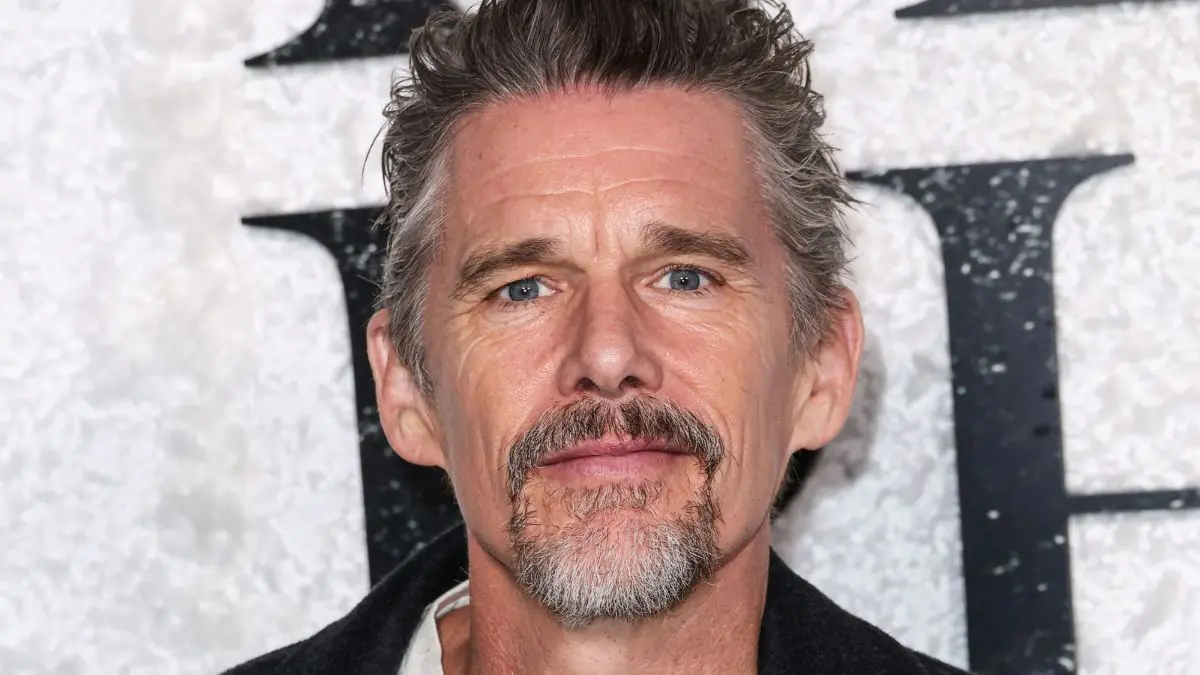

Ask fans which Ethan Hawke role changed his life, and the guesses come fast. He has spent years talking about performances that pushed him to his limit, and he has openly praised the stars he has shared a screen with. In 2021, he even credited Denzel Washington with changing his life, according to a Far Out Magazine roundup of his past interviews.
That history makes the latest answer a genuine surprise. The role Hawke now points to is not an awards-season heavyweight or a studio blockbuster. It is a tiny movie that most casual viewers would never guess.
In a recent interview with the BBC, as reported by multiple outlets, Hawke said the indie drama ‘Tape’ shaped his career. He described it as his entrance into adult acting, a project that arrived right as he was approaching 30. People’s headline on the story framed it as a role that changed his life, with a nod to the fact that it is not the film readers might expect.
For an actor with such a long career, it is a revealing choice. Instead of pointing to prestige or box office, Hawke pointed to a small, experimental production that gave him confidence at a pivotal moment.
Released in 2001, ‘Tape’ was directed by Richard Linklater and adapted by Stephen Belber from his own one-act play. The story unfolds in real time inside a single motel room, with Hawke as Vince, Robert Sean Leonard as Jon and Uma Thurman as Amy. A reunion between old friends turns tense as a hidden tape recorder and a disputed encounter from their past force a confrontation.
The film runs 86 minutes and was shot on digital video, a format Variety noted the filmmakers made no attempt to hide. It premiered at the Sundance Film Festival on January 26, 2001, before reaching a wider release on November 2 of that year.
Hawke has said he and Linklater were excited about how the new digital format might change movies. He also noted that a film set in 1 room was a tough sell, but the constraint demanded total commitment from everyone involved. According to reports on his BBC comments, the production was shot in just 6 days.
That fits what he said back in 2001, when he explained that the project grew out of conversations with Linklater about experimenting with digital filmmaking. ‘Tape’ was their 4th collaboration, and Hawke described a trust between them that made the experiment feel safe. With a 7-person crew and a single location, the production was about as stripped down as a feature can get.
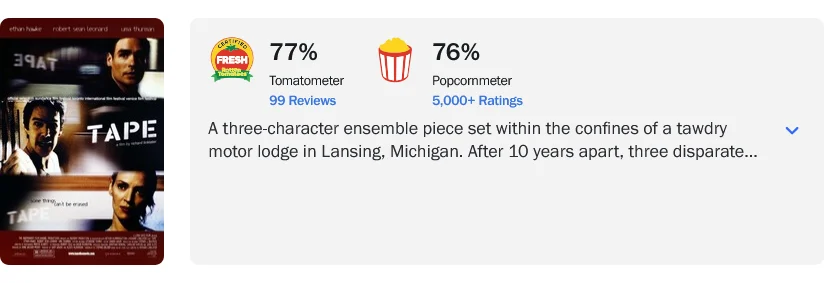
The reviews were strong. The film holds a 77% score on Rotten Tomatoes based on 100 reviews and a 71 on Metacritic. Roger Ebert praised Hawke’s performance as brilliant, highlighting how physically and verbally commanding he was as he moved around the room.
Variety called the film entertaining and said Hawke reached a new level as the spectacular screwup at the center of the story. The same review praised Leonard for charting the slow erosion of his character’s confidence, and it called Thurman one of the screen’s most skillful performers.
The timing adds another layer. In 2001, ‘Tape’ was in theaters at the same time as ‘Training Day’, the project on which Hawke worked with Washington and has since credited with transforming his career. Seeing both titles in the same moment shows just how wide his range was becoming.
It also helps explain why Hawke’s answer lands the way it does. One film put him opposite Washington, while the other put him in a room with 2 friends and handheld digital cameras.
There is something fitting about an actor choosing a small, risky experiment over a famous credit. Hawke’s comments suggest that the work that shaped him most was the work that demanded the most from him as a performer, with no spectacle to hide behind.
For anyone who has only seen the polished side of his career, ‘Tape’ is a reminder that the roles that change us are not always the loudest ones.
Which Ethan Hawke role do you think changed his career the most?
Have something to add? Let us know in the comments!