The Monster Haunting Chris Hansen at the End of ‘Primetime,’ Explained



Few endings this year have left viewers as rattled as the closing moments of ‘Primetime‘. A24’s psychological crime thriller stars Robert Pattinson as the ‘To Catch a Predator’ host, and it builds toward a final image that has people asking what the dark creature Chris Hansen sees in the end actually means.
The film is directed by Lance Oppenheim, and it blends archival reality TV and news footage with an increasingly dark fictional drama. That mix of documentary texture and nightmare imagery is exactly why the creature lands so hard. Here is what it represents and why it never leaves.
What the Dark Creature in ‘Primetime’ Really Represents
At the film’s darkest moments, a strange monster looms in the background, watching Chris but never acting. It is a presence that feels more like a conscience than a threat, and that unsettling stillness is a big part of its power.
The movie also gives the creature a backstory. Chris recalls a local girl who told him she saw a monstrous creature in a cave that had taken the children, and that memory pushes him toward a calling. It emboldened him to create ‘To Catch a Predator’ in order to cleanse the world of this ancient evil.
That framing turns Hansen’s crusade into something mythic, and also something self-serving. The creature is the monster he believes he is hunting, yet it also reflects the hero complex that drives him.
How Chris Hansen’s Ending Unfolds
The story starts on a high. Hansen and his producer Andie, played by Merritt Wever, are overjoyed that the show is moving into the primetime slot to compete against ‘Lost’. That pressure to win ratings is what sends the production down a reckless path.
The climax centers on a real tragedy. In November of 2006, Rockwall County assistant district attorney Bill Conradt took his own life when Texas police and the production team entered his home with search and arrest warrants. The film treats this moment as the point where the whole machine collapses.
After that, Hansen comes apart. As the pressure to maintain ratings grows, he starts losing his mind, and he ends up standing in a yard mumbling to himself about what he planned to say in his interview with Bill. It is a hollow, disturbing image of a man who cannot process what his show has done.
Why the Creature Never Disappears
The most important detail is that the monster stays. In the lead-up to the climax, the film draws a visual connection between the creature and the specific predator being pursued, but even after Conradt’s death the creature is still there. A lesser movie would have let it vanish to signal victory.
Staying put changes the meaning completely. If the creature had disappeared with Conradt’s death, it could have suggested Hansen finally defeated the evil he was chasing, but instead it shows that the obsession has not gone away. The danger was never just out there in the dark.
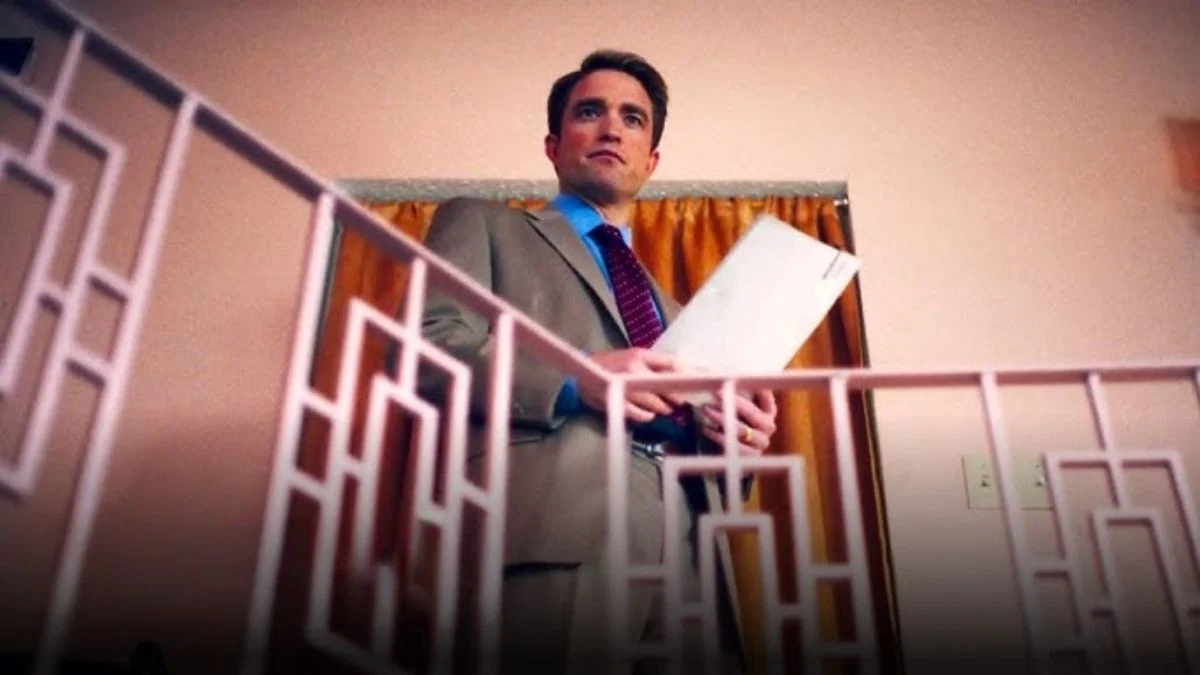
One reading offered by critics is more damning still. Hansen’s mind may simply refuse to register that his own greed contributed to the attorney’s death, and the mechanism he built to fight the monster has been shattered so it now roams free. His repeated catchphrases at the end feel less like confidence and more like a coping mechanism.
The filmmakers frame it as a challenge to viewers too. Producer Garber asks what the cost is of giving in to the things that haunt us. That question hangs over every frame of the final act.
How Much of the ‘Primetime’ Movie Is Based on Real Events?
The film is rooted in fact, though it takes plenty of liberties. It is written by Ajon Singh and based on an article by Luke Dittrich. The creature itself is pure invention, as the demon is a fictional element used to represent Hansen’s psychological state.
Even the staging of the climax was heightened. Oppenheim portrays the sting on a dark and stormy night for drama, but the real event happened early in the morning in daylight. The same goes for Hansen’s reaction, since the real Hansen was present during the raid but was not left a catatonic mess by it.
There is also some blending of events. The film seems to merge two separate investigations into one moment, though Hansen did lead a 2003 investigation in Cambodia into the sex trafficking of underage children. The monster origin story is dramatic license built on a real foundation.
Underneath it all, the movie is asking uncomfortable questions. It is trying to get at the dark heart of how ‘To Catch a Predator’ essentially turned potential sex crimes into entertainment. The creature may be the clearest picture of that guilt, so if Hansen’s monster never left the room, do you think it was ever really a predator he was hunting, or just his own reflection waiting in the dark?