Subscriptions, Streaming and Games: How a Fan of Cinematic Universes Can Control Spending and Choose a Convenient Payment Method

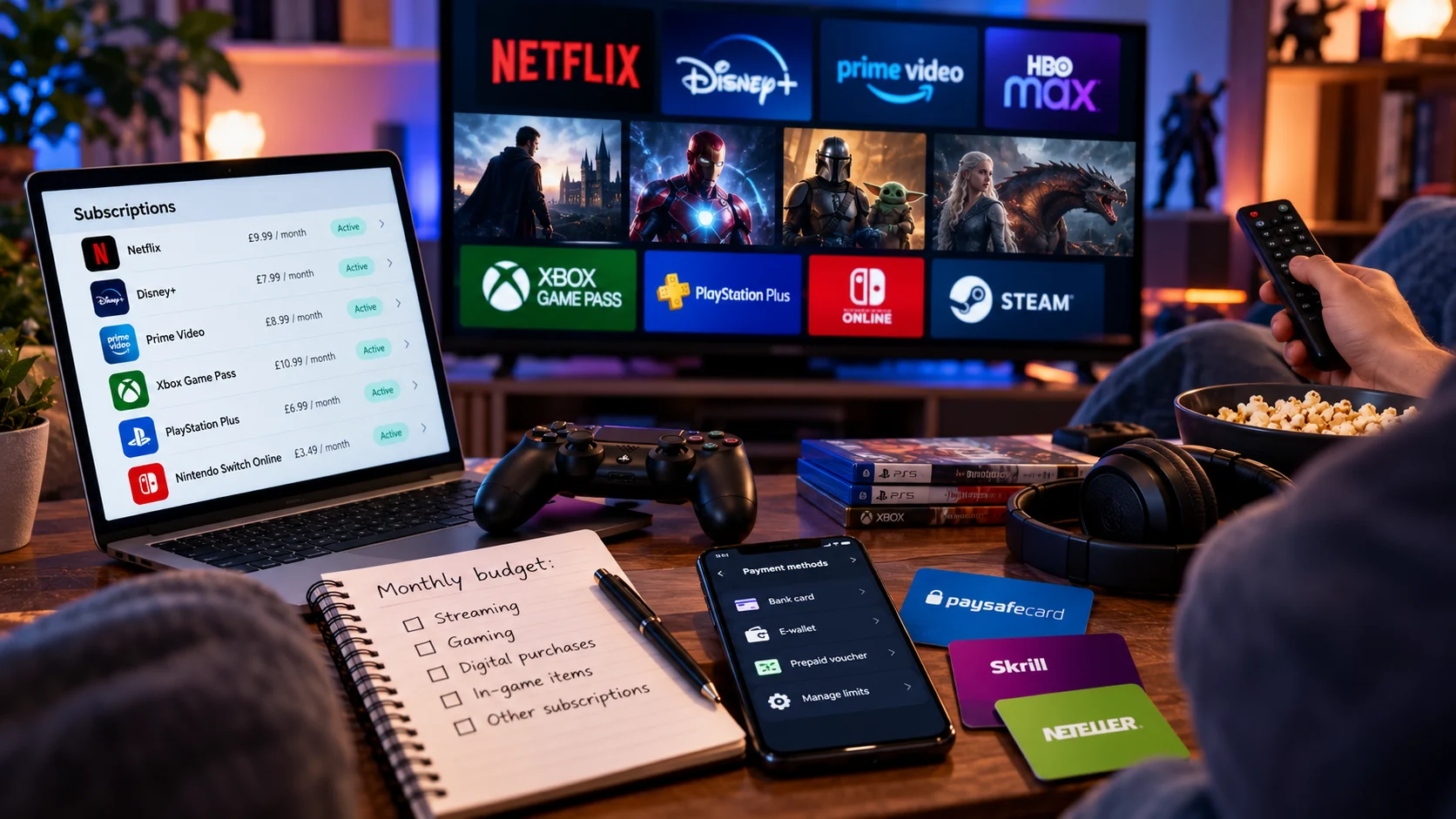

Favourite cinematic universes turn into a set of recurring payments: streaming, gaming subscriptions, digital purchases and in-game items. Each payment is small on its own, but together they add up noticeably, and many renew automatically. Controlling spending starts with keeping track of subscriptions and consciously choosing a payment method, from a bank card to prepaid vouchers and e-wallets. This also affects the security of your payment data.
How Much a Fan’s Subscription Life Costs
According to Deloitte’s Digital Media Trends survey, a household with a streaming subscription spends around $69 a month on average. Fans, who make up about 80% of consumers, pay $71 for four services, while the rest pay $56 for three. The average American consumer spends about six hours a day on media and entertainment, splitting that time between streaming, social media, games, music and live events.
About 70% of Americans surveyed are annoyed by price increases, and 22% of consumers cancelled a subscription and then returned to the same service within six months. Among millennials, 51% cancelled at least one service within six months.
Gaming services are getting more expensive in the same way. In October 2025, Xbox Game Pass Ultimate rose from $19.99 to $29.99 a month, which comes to roughly $360 a year. It is therefore advisable to calculate the overall budget by annual cost rather than monthly payment: the yearly total shows the real size of the spending.
A Case from Online Casinos: How the Payment Method Affects Spending Control
Online casinos are a convenient example of recurring payments, because the deposit method there is directly tied to limits, checks and terms. If the payments section of an online casino lists Paysafe, it refers to a payment group that owns a prepaid voucher and the Skrill and Neteller e-wallets, that is, different payment models under one brand.
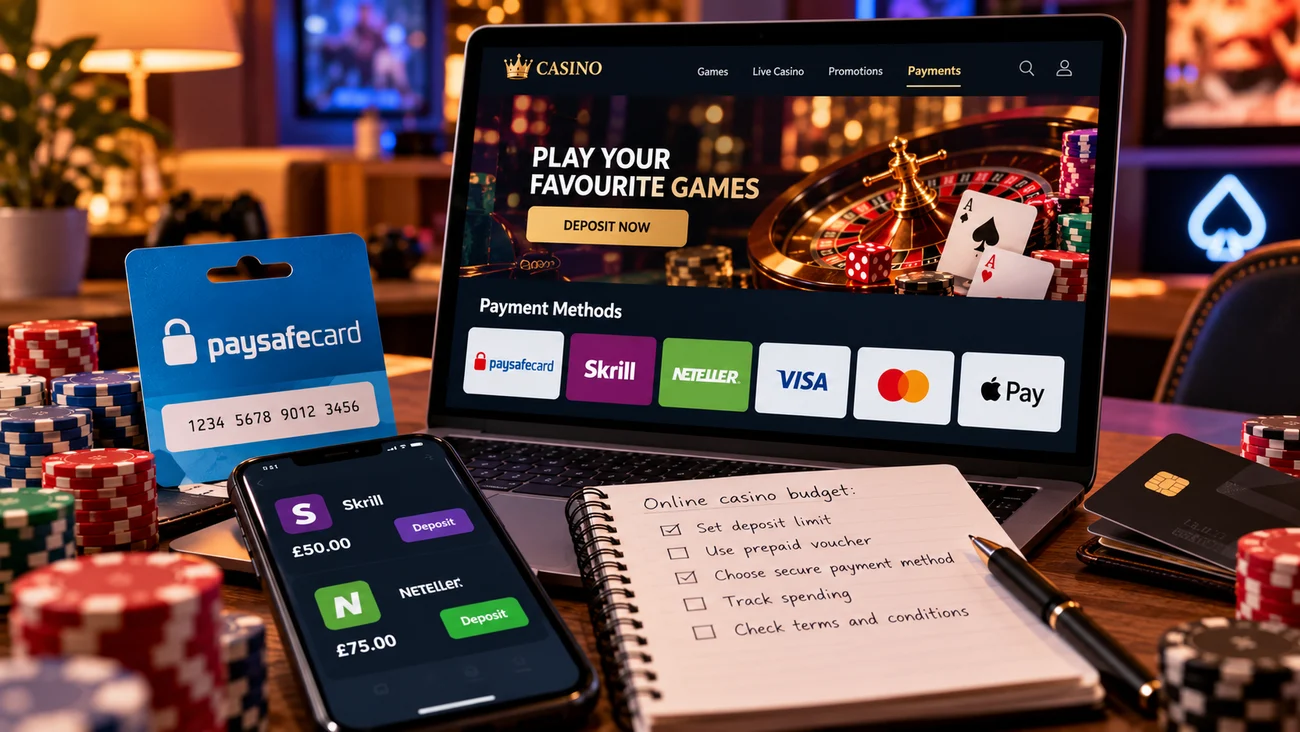
Such a voucher is bought at retail points for cash or from online distributors and is paid with a 16-digit PIN; no bank account is needed. The amount is limited by the face value, so the voucher itself sets a spending ceiling. In some regions, a monthly fee begins to be deducted from the remaining balance 30 days after purchase, so it is advisable not to accumulate large denominations.
Credit card payments for gambling have been banned in the UK since 14 April 2020. The ban also extends to wallets: an operator may accept payments through them only if funding by credit card is excluded. The then head of the Gambling Commission, Neil McArthur, explained the decision this way: “gambling with credit cards can lead to significant financial harm”.
Operators with a UK licence also have additional tools: deposit limits, breaks and self-exclusion, and the stake on online slots is capped at £5 per spin for players aged 25 and over and £2 for ages 18-24. The customer’s age and identity are verified before play.
The table below compares the main ways of funding an online casino account.
| Method | How it works | What matters for spending control |
| Prepaid voucher | A 16-digit code bought in advance; no bank account needed | The amount is limited by the face value; withdrawing winnings usually requires a different method |
| E-wallet | An account with a balance from which the deposit is paid | Permitted in the UK if funding by credit card is excluded |
| Debit card | Payment directly from a bank account | Spending is visible on the statement; the limit is determined by the balance and the bank’s settings |
| Credit card | Payment from a credit limit | Banned for gambling in the UK since 14 April 2020 |
The main takeaway from the case: the payment method determines not only convenience but also control over spending. A prepaid voucher caps the amount at its face value, but payouts usually cannot be returned to it, while a card and a wallet require limits of their own. The same reasoning applies to subscriptions: the stricter the ceiling set in advance, the easier it is to hold the budget.
Subscriptions and Automatic Renewal
The main source of unnoticed spending is automatic renewal. About 40% of American consumers cancelled at least one streaming service within six months, and 22% cancelled a subscription and came back to it. In the UK, the government estimated the number of unwanted subscriptions at 9.7 million, costing around £1.6 billion a year.
The new regime for subscriptions under the DMCC Act provides for reminders before renewal and two 14-day cancellation periods, but according to the government’s April 2026 response, it will take effect only from the start of 2027. A free trial often turns into a paid subscription automatically, so before starting, check when and for how much the first charge will be made.
What it makes sense to do with subscriptions:
- make a list of all paid services with their renewal dates;
- calculate the annual cost of each service;
- switch to an ad-supported plan if you do not need the ad-free one;
- cancel a service after watching the season you wanted;
- set a reminder a few days before renewal.
Ad-supported services are widespread: at least one is present in 66% of households with a paid subscription. In a 2024 survey, the ad-supported version cost $9 on average versus $16 for the ad-free version.
Games and In-Game Purchases
Gaming costs are made up of the subscription, the games themselves, add-ons and in-game items. Players spend about eight hours a week on games on average, so small purchases are easily lost in the overall budget. In October 2025, Game Pass tiers cost $9.99, $14.99 and $29.99 a month.
For control, it is advisable to set a monthly limit on games and choose a payment method that supports it. A prepaid voucher or a card with a separate balance lets you cap the amount in advance, whereas a linked main card offers no such protection.
Typical items of gaming spending:
- a subscription to a game catalogue;
- purchases of new releases;
- add-ons and season passes;
- in-game currency and items;
- accessories and collector’s editions.
It is advisable to buy vouchers and digital codes only at official retail points and from authorised online distributors, and not to share the PIN with strangers.
To compare plans, it is useful to calculate the price per hour of play: an expensive subscription pays off only with regular use of the catalogue. The comparison should be based on how often you actually play, not on the number of games available. Gaming subscriptions often renew automatically, so it is advisable to put the renewal date in your calendar and compare it with the release dates of the games you want.
How to Choose a Convenient Payment Method
The convenience of a payment method depends on several factors: buyer protection, the ability to set a limit, fees and data privacy. There is no single best method, so the choice depends on the type of payment.
In the UK, a credit card provides protection under Section 75 of the Consumer Credit Act for purchases costing more than £100 and up to £30,000, a debit card allows you to file a chargeback, and a credit card purchase made through PayPal does not receive Section 75 cover, except in cases involving PayPal Credit.
Criteria for choosing a payment method:
- buyer protection and the ability to dispute a payment;
- the availability of a limit on the amount or the period;
- fees, including monthly charges on an unused balance;
- the amount of data the seller receives;
- the ability to get money back to the same method.
A voucher gives control over the amount and does not require handing bank card details to the seller. A card and a wallet are more convenient for regular payments but require careful monitoring of charges. Registering an account with the voucher issuer allows higher payment limits, keeps codes in a single balance and avoids the monthly fee.
For monthly payments, it is convenient to use a separate debit card or an account with a limit, to which only a predetermined amount is transferred. For large purchases such as collector’s editions, buyer protection matters, while for small regular payments, the limit does.
A Step-by-Step Plan for Controlling Spending
The plan takes one evening and is then maintained once a month. It consists of tracking, limits and regular checks.
The order of actions:
- list all subscriptions, gaming and digital payments for the last three months;
- determine the overall monthly and annual budget;
- cancel services you have not used in the last month;
- choose a method with a suitable limit for each payment;
- once a month, check the statement and adjust the limits.
If spending has grown, first review services with overlapping content, then the plans, and only after that the payment method. Controlling spending does not require giving up your favourite universes. It is enough to decide the amount in advance, choose a suitable payment method and check charges regularly, so that subscriptions remain a pleasure rather than a source of unexpected payments.