‘Clayface’ Director James Watkins Says He Built the Villain’s Debut as a Standalone, Not a Setup for More

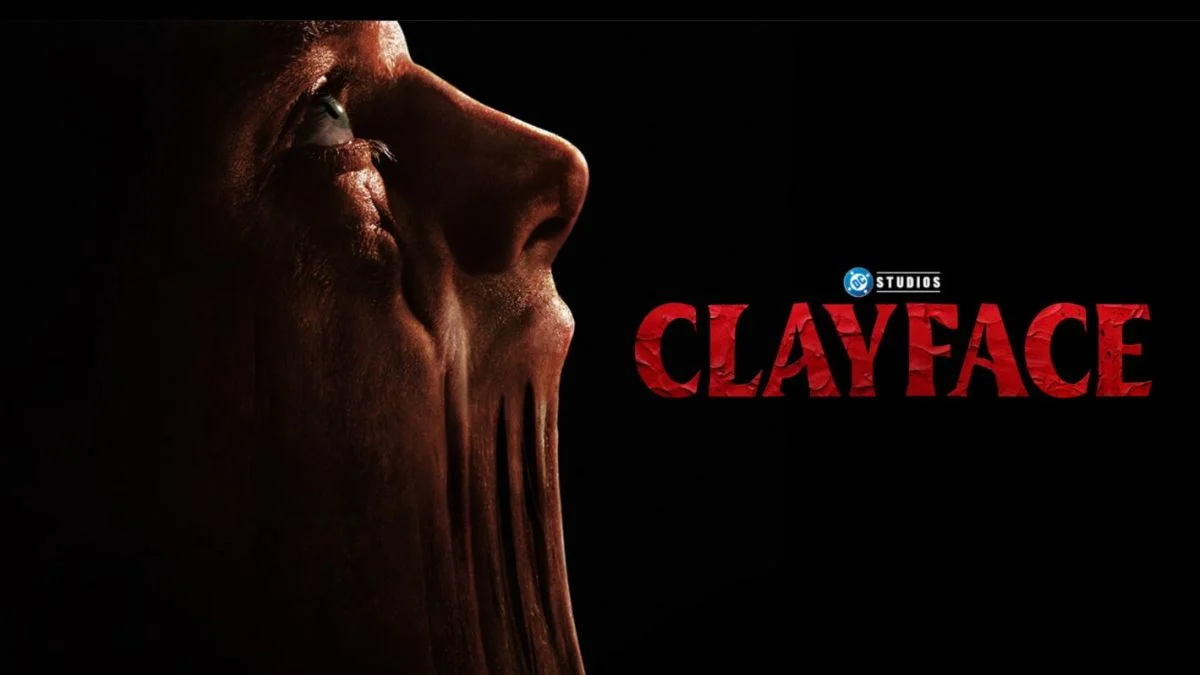

Superhero movies have taught audiences to look for the next step. Every new character arrives with a post-credits tease, a hint of a crossover or a promise that the story is only beginning. ‘Clayface’ has taken a different approach, and its director is explaining why.
The R-rated body horror follows the shape-shifting Batman foe in his first standalone live-action film. Directed by James Watkins from a script by Mike Flanagan and Hossein Amini, it is the third film in the DC Universe after ‘Superman’ and ‘Supergirl.’ It opened in theaters on October 23 and took the top spot at the box office.
Now that audiences have seen it, one question keeps coming up: will there be a sequel? Watkins has given a clear answer about his intentions, and it sounds like he never planned for one.
In an interview with Variety, Watkins said he liked the standalone nature of the story and how it felt like it introduced a character. He added that he was not trying to introduce Clayface in order to ask what comes next. Instead, he wanted to present him as “a full meal in itself.”
He also said that trying to crowbar something in that wasn’t merited by the narrative would have felt gimmicky. It’s a refreshing stance in an era when so many films are built around franchise setups.
The standalone approach goes back to the project’s origins. Flanagan first floated the idea of a standalone Clayface movie in 2021, describing it as a horror, thriller and tragedy. He pitched it to DC Studios in March 2023, and Watkins was hired in February 2025.
The story centers on Matt Hagen, played by Tom Rhys Harries, a Hollywood actor whose face is disfigured after an attack by a mob boss. In desperation, he turns to an experimental medical procedure, and his body transforms into a clay-like material that can reshape itself. Naomi Ackie, David Dencik, Max Minghella and Eddie Marsan also star.
Asked whether Clayface might eventually face Batman, Watkins deferred to James Gunn, the DC Studios co-head. He suggested that was a question for Gunn rather than for him. The film is set in Gotham but includes only a few references to the Caped Crusader.
Watkins noted that he thinks the film contains plenty of Easter eggs, including some he may not even know about, since the graphics department kept adding posters and other background details. The Variety conversation also covered the monster’s final look, a surprise cameo and the creation of Gotham City for the DC Universe.
The box office results back up the idea that the film works on its own terms. ‘Clayface’ opened at No. 1 with about $24 million domestically from 3,458 theaters, and an estimated $43 million worldwide against a reported $44 million budget. That is on the lower end of the studio’s expectations, but it’s a more promising result than the summer’s ‘Supergirl,’ which opened to $37.1 million on a $170 million budget.
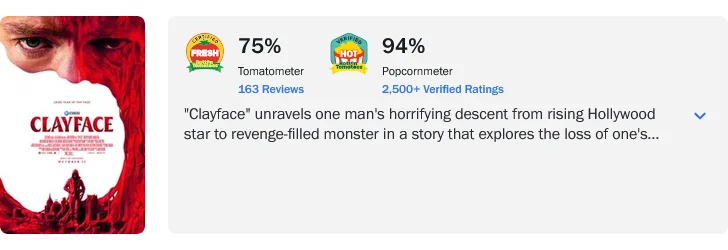
Audiences responded well, too. Gunn pointed out on Threads that ‘Clayface’ earned an A- CinemaScore, putting it in rare company with ‘Obsession,’ ‘Weapons’ and ‘Get Out’ among horror films, while ‘Sinners’ is the only horror film to have earned an A. The film also holds a 75% critics score and 94% audience score on Rotten Tomatoes.
No sequel has been announced, and Watkins hasn’t suggested one is in the works. Still, the film’s reception and low budget could keep the door open. With Halloween next weekend, good word of mouth gives the film a reasonable chance at a decent second frame.
For now, the creative team seems comfortable letting the film stand on its own. In a crowded superhero landscape, there is something appealing about a villain story that isn’t asking viewers to commit to anything beyond the credits.
Watch the first trailer for #Clayface. The new DC horror film is in theaters October 23. https://t.co/gqrrtJSou5
— Rotten Tomatoes 🍅 (@RottenTomatoes) April 22, 2026
The film’s modest, genre-driven approach reflects DC’s wider ambition to expand beyond standard superhero fare. Smaller budgets and horror sensibilities give filmmakers room to take risks. If audiences keep supporting that strategy, more projects like it could follow.
Watkins’ answer suggests that the story was never meant to be a launchpad. If you liked it, that may be exactly why.
Would you like to see a sequel to ‘Clayface’?
Have something to add? Let us know in the comments!