‘Victorian Psycho’ Ending Explained: What Drusilla’s Final Smile Really Means

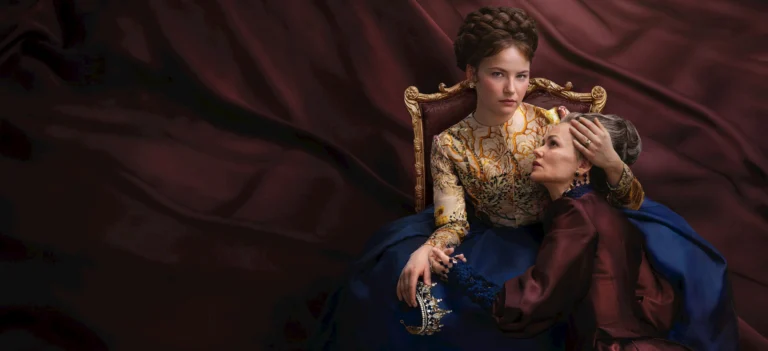
Set in 1858 England, ‘Victorian Psycho‘ trades the haunted restraint of traditional gothic cinema for blood-soaked satire from its opening scene. Directed by Zachary Wigon following ‘Sanctuary’, the 102-minute horror-thriller premiered at the Cannes Film Festival on May 21, 2026, before arriving in U.S. theaters on November 13, 2026. Rather than casting Maika Monroe (‘It Follows’, ‘Longlegs’) as another hunted victim, the film positions her as Winifred Notty, an unsettling governess hired at the isolated estate Ensor House.
Screenwriter Virginia Feito adapted her own 2025 novel after a notable behind-the-scenes shakeup. Monroe replaced Margaret Qualley following Qualley and A24’s departure, shortly before Deadline confirmed that Bleecker Street acquired U.S. distribution rights. Filmed in Ireland at Dunsany Castle, the ensemble also features Jason Isaacs, Ruth Wilson, Thomasin McKenzie, Evie Templeton, and Jacobi Jupe.
Winifred’s Secret Mission and the Ensor House Massacre
Beneath Winifred’s opening claim that “I’m the sanest person I’ve ever met” lies a personal vendetta against her employer. ‘Victorian Psycho’ reveals that Winifred is the illegitimate daughter of Mr. Pounds, the cruel patriarch of Ensor House. When he summons her for dismissal and a phrenological exam, she presents a wax-sealed letter he once wrote urging her mother to kill the child, only for him to burn it and deny their blood tie.
Before that confrontation, Winifred’s polite facade repeatedly cracks under violent compulsions. She snacks on a severed ear, axes a blackmailer before feeding him to the pigs, and slashes nursemaid Ms. Lamb’s throat upon discovery. The movie also implies she murders an infant and swaps in another baby, while Mr. Pounds shoots Drusilla’s sketchbook during lunch and forces Winifred to sleep in a doghouse.
Crucially, Feito shifts the climactic massacre away from the novel’s Christmas Day setting. After her dismissal, Winifred returns with a bayonet-fitted rifle and hallucinates warm applause in the dining room until a spoon’s reflection exposes reality. Wigon reinforced these fractures through Dan Kenyon’s sound design, pairing chimes with Winifred’s rising darkness and static as reality unravels.
Who Is Fred and What Happens at the Gallows
The third act centers on Fred, whom Winifred describes to young Andrew as “the demon that lives inside me”. During the slaughter, the film frames Winifred like a passenger in her own body as she wields a sword and musket, killing Mrs. Pounds and dispatching Andrew with a pineapple — paying off its motif linking pineapples to wealth. When Mr. Pounds chokes Winifred, neglected daughter Drusilla stabs her father in the back, leaving the pair as Ensor House’s sole survivors.
Drusilla tells police that Winifred committed every murder, turning the tragedy into a public circus. In the town square, pamphlets are sold and a puppet show stages the bloodshed for an excited crowd awaiting the hanging. Standing at the gallows while onlookers chant “monster”, Winifred offers no spoken repentance, though the film closes by echoing her opening line — declaring herself “the sanest person I’d ever met” — before cutting away without showing the execution or any post-credits scene.
What Drusilla’s Smile Means in ‘Victorian Psycho’
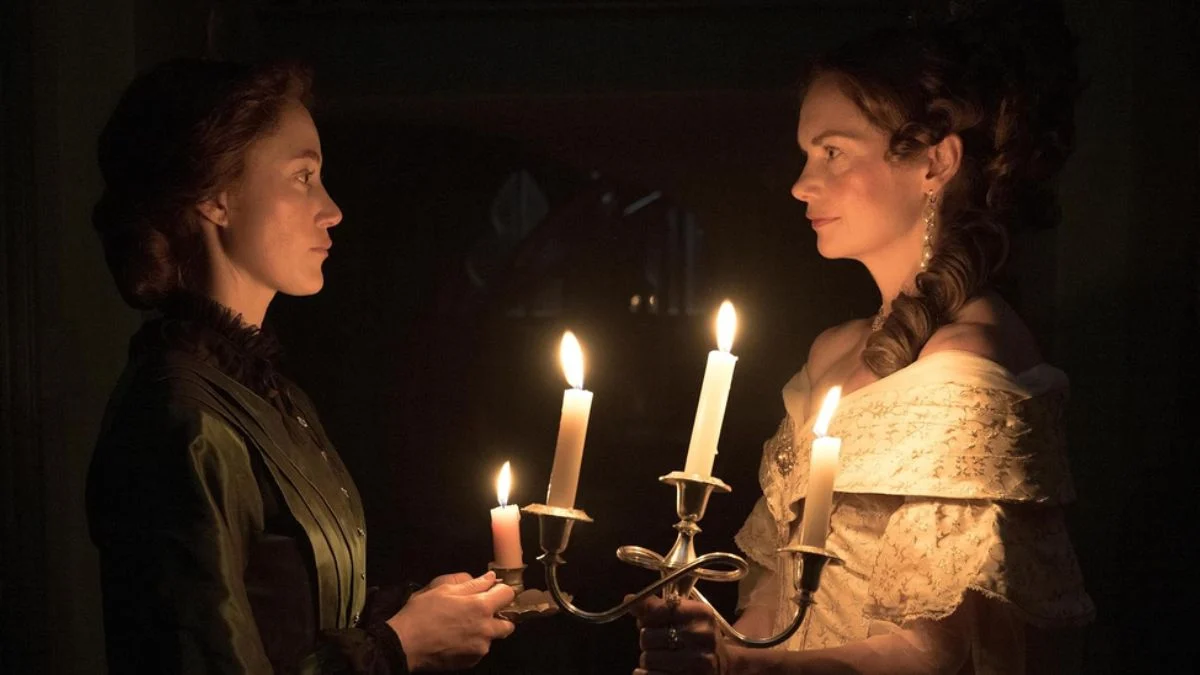
The ending becomes what Gizmodo called “a coda that somehow allows our favorite new ghoul to have something resembling a happy ending” when Winifred spots Drusilla in the crowd. Seeing Drusilla wearing a crooked smile, Winifred smiles slyly back from the scaffold. Whether Fred is a literal demon or shared trauma born of abuse, the exchange confirms the cycle continues — echoing Wigon’s description to Gizmodo of “putting one character’s madness into conversation with the accepted madness of a society.”
That blend of dark humor and social critique was present from the title onward. Discussing comparisons to ‘American Psycho’, Feito told The Hollywood Reporter, “I didn’t think of any connection beyond the fact that it’s narrated by a psychopath. It was basically a fun wink to my favorite literary psychopath, and how that book just really affected me in the best way. That’s one of my favorite novels.” Combined with Wigon and Monroe studying Ted Bundy interview footage to sharpen Winifred’s unsettling composure, ‘Victorian Psycho’ leaves the audience as implicated as the gawking townsfolk.
Let us know in the comments whether you read Drusilla’s final smile as a literal passing of Fred or a chilling product of Victorian cruelty.