David Fincher Explains Why He Could Never Run DC Studios Like James Gunn

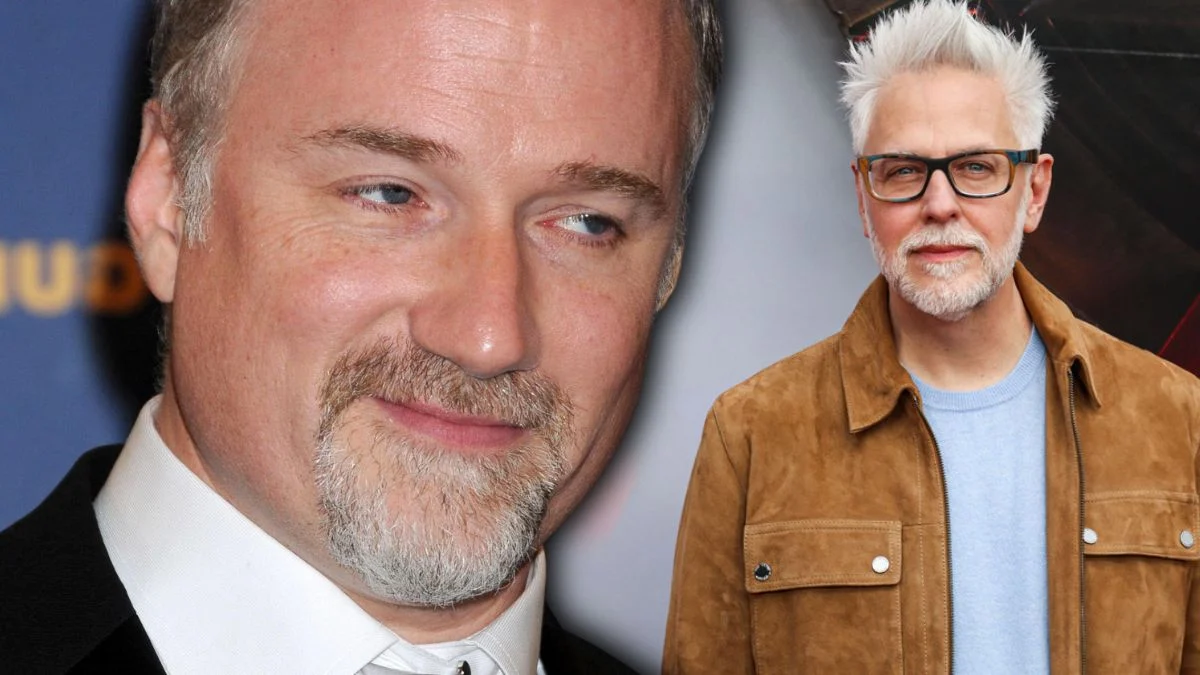
David Fincher’s comments on James Gunn and DC Studios land at a moment when the studio is in the middle of a very public shake-up. The filmmaker behind ‘The Social Network’ and ‘Fight Club’ offered his take during a long conversation about corporate filmmaking, and it was not a flattering portrait of the company.
The timing is hard to ignore. Gunn and Safran are to step down as co-chairmen and co-chief executives of DC Studios after 4 years, with former Marvel Studios executive Jeremy Latcham appointed president and chief creative officer. The announcement came after Paramount Skydance completed its $111 billion acquisition of Warner Bros Discovery in October.
Speaking on Josh Horowitz’s ‘Happy Sad Confused’ podcast, Fincher said he once declined an offer to showrun ‘The Lord of the Rings: The Rings of Power’ before it moved to Amazon. He called the idea an extension of a corporate interest. From there, he turned to Gunn as a point of comparison.
Fincher said he looks at Gunn and sees someone with far more nerve than he has, and that he would not want to take on DC and everything that comes with it. When Horowitz mentioned the fiduciary responsibilities of running DC Studios, Fincher added dysfunction to the list. He went further, describing the company’s innate DNA as dysfunctional.
Gunn has described the job in similar terms. In his own statement, he wrote that his time at DC Studios has been trying, to say the least, and that he dislikes the at-times corporate nature of the job. He also said he is relieved and excited to get back to pure filmmaking.
The record he leaves behind is mixed. Under his leadership, DC Studios released ‘Superman,’ which brought in more than $618 million worldwide, and ‘Clayface,’ which has so far earned $109 million on a $44 million budget. ‘Supergirl,’ released earlier this year, struggled.
It is still unclear how the exit came about. It is unknown whether Gunn and Safran really left on their own, since Skydance might have let them step down rather than fire them. Fincher’s remarks do not settle that question, but they do show how at least one major director views the job itself. Skydance leaders David Ellison and Ynon Kreiz said Gunn and Safran launched a new era for DC Studios and led it through a period of real transformation, which stands in contrast to Fincher’s blunt assessment.
Fincher’s frustration was not limited to DC. He described a horrible constricting of the business, naming Paramount and Warner Bros. among the companies involved. He said it is becoming more and more difficult to protect the individual voice in cinema.
That context helps explain why the Rings of Power offer left him cold. His reaction to Gunn’s role reads less like a jab at one executive and more like a comment on the structure around the job.
The conversation also touched on Fincher’s own history with DC. He reportedly revealed that a rejected ‘Batman’ pitch of his resembled the film Matt Reeves later made.
The same discussion criticized Hollywood’s corporate dysfunction more broadly. Taken together, his remarks on Gunn’s job and the Rings of Power offer both point toward wariness of corporate control.
Fincher is out promoting ‘The Further Mis-Adventures of Cliff Booth’. The film arrives in IMAX theaters globally for an exclusive 2-week run starting Nov. 25, before debuting on Netflix on Dec. 23. Brad Pitt returns as Cliff Booth, with a screenplay by Quentin Tarantino.
This time it’s 1977 and it’s a very different Hollywood. A Bloomberg report says the film will be the last Fincher makes for Netflix, completing a 3-picture contract that began in 2020. Bloomberg also reported that he chose not to renew his long-term overall deal with Netflix. With that chapter closing, his frank comments about DC now read as part of a larger conversation about how much freedom filmmakers have left.
Do you agree with David Fincher that DC Studios is too dysfunctional for a filmmaker to run?
Have something to add? Let us know in the comments!