Here Is When Hollywood Had Its Golden Age, According to George Clooney


What defines a “golden age” for an art form is often a topic of passionate debate. For Hollywood, many point to the era of grand studio musicals and epic dramas. However, for actor and director George Clooney, the pinnacle of filmmaking occurred during a more turbulent and transformative period in American history. He suggests a specific 12-year span that produced what he considers the greatest films.
Clooney, a filmmaker whose work often carries a political conscience, sees the movies of his youth as the high-water mark for the industry. His perspective is shaped by the social and cultural upheavals of the time, which he believes fueled a more profound and impactful kind of storytelling. These weren’t just movies; they were reflections of a society in flux, capturing the anxieties and aspirations of a generation.
The period George Clooney identifies as the “greatest time in filmmaking by far” is from 1964 to 1976. In an interview, he explained his admiration for this era, stating, “I’m a product of the ’70s filmmakers. I grew up with that. I believe from, like, 1964 to 1976 was the greatest time in filmmaking by far.” He holds this period in such high regard that he once gifted 100 films from these years to his friends for Christmas.
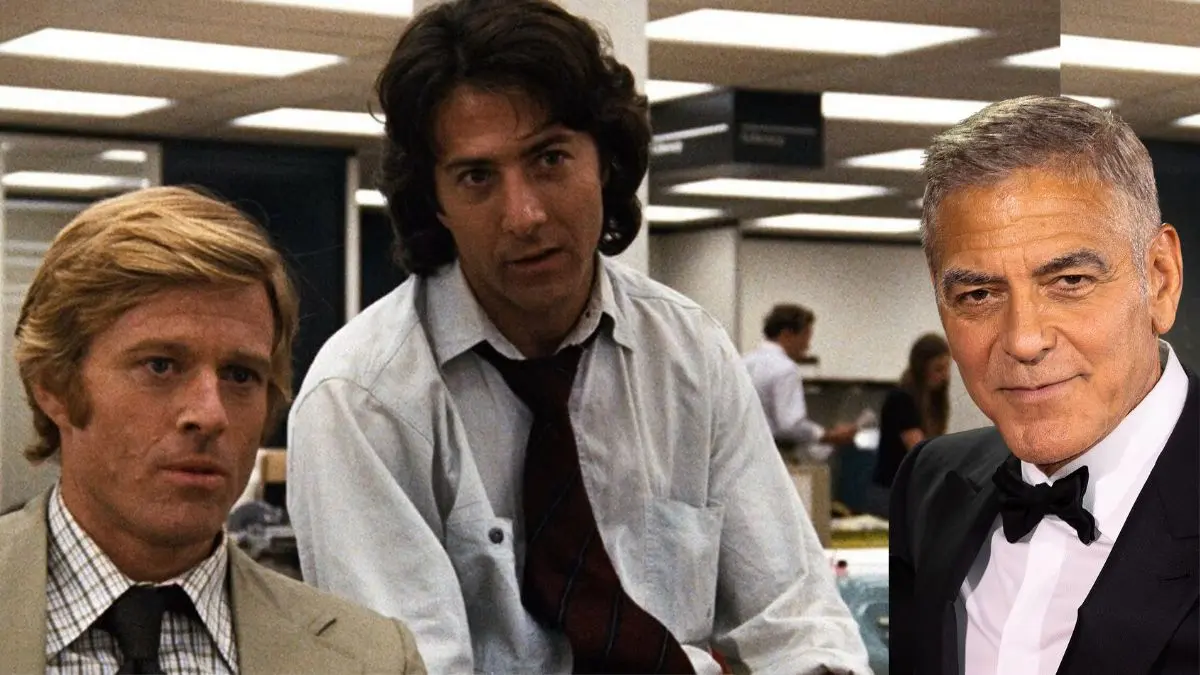
Among the seminal films he cites from this period are Dr. Strangelove (1964), Bonnie and Clyde (1967), and All the President’s Men (1976), describing them as “movies that were really changing the face of filmmaking.” These films broke new ground in their respective genres. Dr. Strangelove is a sharp political satire on Cold War fears.
Bonnie and Clyde pioneered a new level of realism in its depiction of violence and sexuality, helping to usher in the “New Hollywood” era. All the President’s Men offered a gripping, factual account of the Watergate scandal that led to a presidential resignation.
Clooney argues that the power of these films came from their connection to the real world. “That era [1964 to 1976] was a reflection of the antiwar movement, the civil rights movement, the women’s rights movement, the sexual revolution, the drug counterculture,” he stated.
This period saw a surge in films that directly addressed social and political issues, a departure from the more sanitized productions of Hollywood’s earlier “Golden Age,” which is often cited as running from the 1920s to the early 1960s. The movies from Clooney’s favored era tackled themes of rebellion, anti-establishment sentiment, and generational conflict, resonating with a younger, more socially aware audience.
He believes that cinema is at its best when it serves as a mirror to society’s psyche. “All those things were exploding at the same time. And these films were reflections of it,” Clooney explained.
“Movies are really good when they do that. They give us a sense of what was going on in our psyche.” This perspective highlights a shift from filmmaking as pure entertainment to a more artistically ambitious and culturally significant medium.