


Best Forgotten Horrors from the 1990s (that Require an Immediate Rewatch)

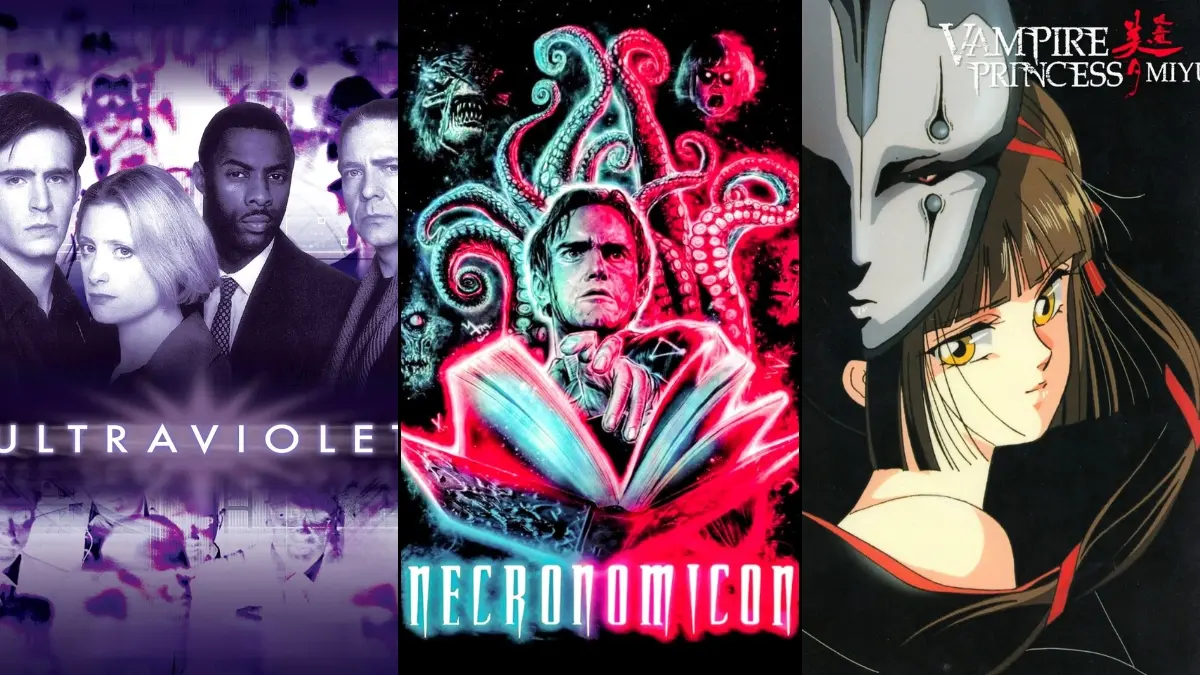


The decade delivered a wild mix of studio chillers, daring independents, international sleepers, and boundary-pushing TV—projects that slipped through the cracks but left memorable monsters, moods, and ideas behind. This list gathers twenty-five of those works and spotlights the concrete details: who made them, who starred in them, what they’re about, how they were produced, and how they fit into the era’s larger horror landscape.
You’ll find films and series from the United States, the United Kingdom, Japan, Mexico, Italy, Spain, Denmark, and New Zealand, alongside a few titles that zigzag between crime, thriller, fantasy, and psychological drama. Each entry focuses on verifiable information—credits, formats, adaptations, settings, and release specifics—so you can quickly pinpoint what to queue up next and why it matters historically and stylistically.
‘The Resurrected’ (1991)
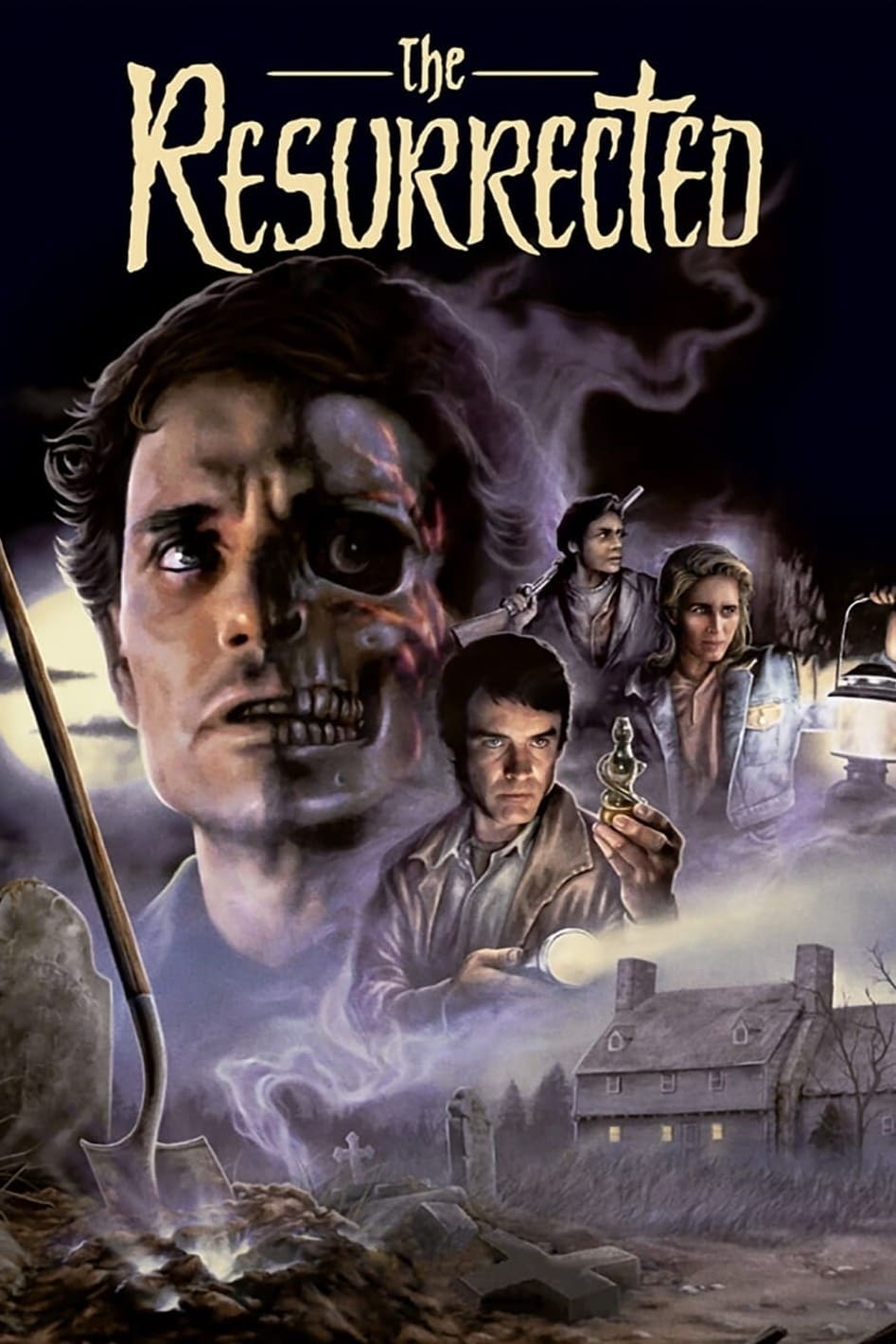
Dan O’Bannon directed ‘The Resurrected’, adapting H. P. Lovecraft’s novella ‘The Case of Charles Dexter Ward’ with a screenplay by Brent V. Friedman and O’Bannon. The film stars John Terry, Jane Sibbett, and Chris Sarandon, and follows a private investigator hired to look into a chemical researcher whose clandestine experiments involve grave-robbing and reanimation. Production used a mix of practical creature effects and prosthetics to visualize the story’s necromantic procedures and laboratory set pieces.
Originally produced for a theatrical release and later issued to the home-video market, the movie circulated under alternate titles including ‘Shatterbrain’. Its provenance is notable within Lovecraft adaptations for closely tracking the source’s dual timelines, and for situating key sequences in hidden chambers and catacombs designed to mirror the story’s underground laboratories.
‘Body Parts’ (1991)
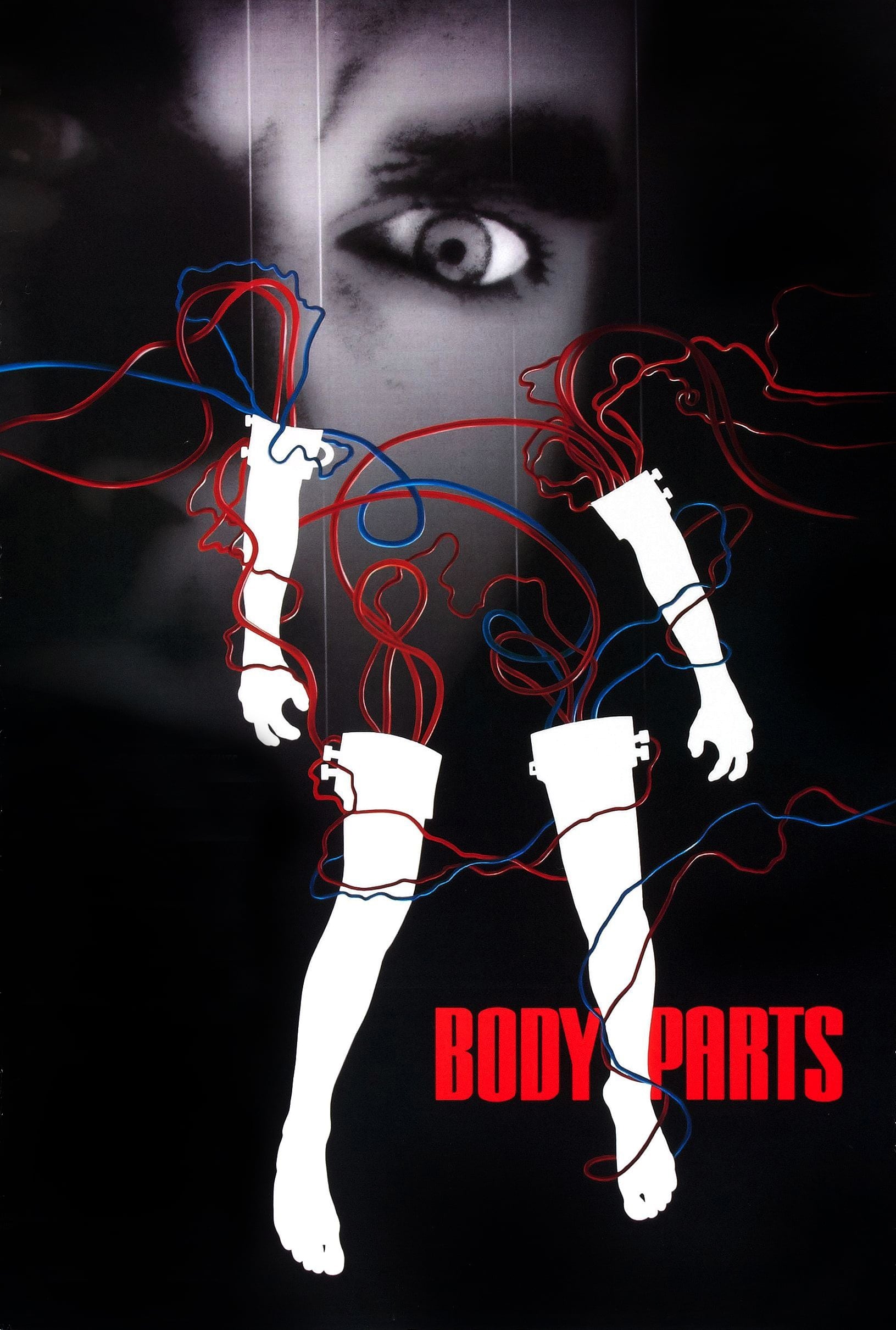
Directed by Eric Red and produced through Paramount, ‘Body Parts’ stars Jeff Fahey, Brad Dourif, and Kim Delaney. The plot centers on an experimental transplant program led by a neurologist whose donor limb grafts seem to carry over the impulses of a violent criminal. Cinematographer Theo Van de Sande framed chase scenes and clinical interiors with tight coverage to emphasize the physicality of the grafts and their autonomy within the narrative.
Special effects supervisor Gordon J. Smith coordinated mechanical rigs and makeup appliances to match stunt work with close-ups of the prosthetic arm. Marketing materials highlighted car-stunt sequences and the courtroom-meets-operating-room premise, and later home-video editions restored trims from earlier cuts.
‘The Sect’ (1991)
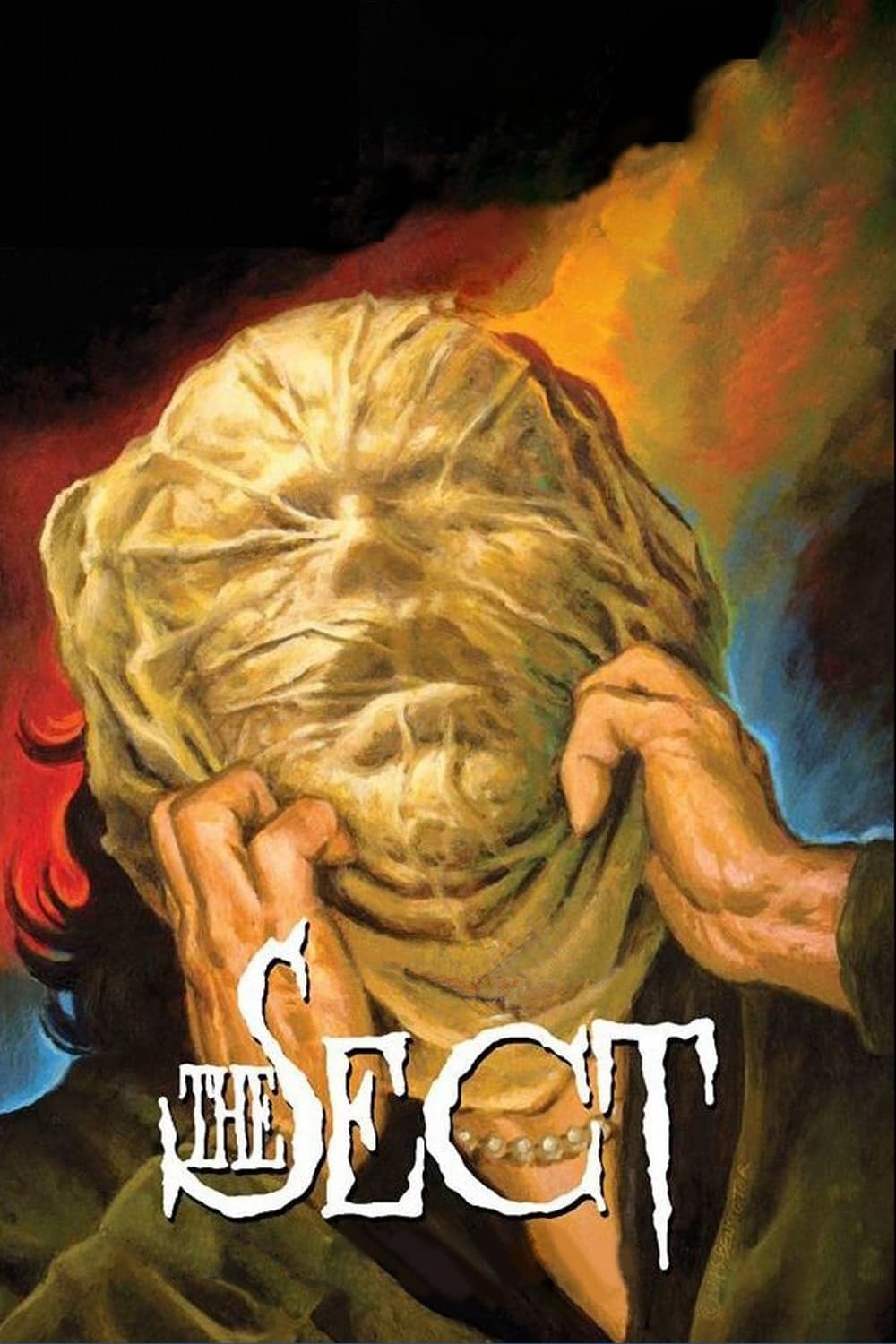
‘The Sect’ (also released as ‘La setta’) pairs director Michele Soavi with co-writer/producer Dario Argento. Kelly Curtis plays a schoolteacher targeted by a secretive cult as part of an occult ritual, with Herbert Lom and Tomas Arana in supporting roles. The film’s production design combines subterranean wells, occult paraphernalia, and domestic interiors to move the action between ordinary spaces and ritual sites.
Composer Pino Donaggio provided the score, blending choral elements with electronic textures. The project was photographed in and around northern Italian locations, and international prints circulated under alternate English-language titles, contributing to a patchwork release history across territories.
‘Ghostwatch’ (1992)
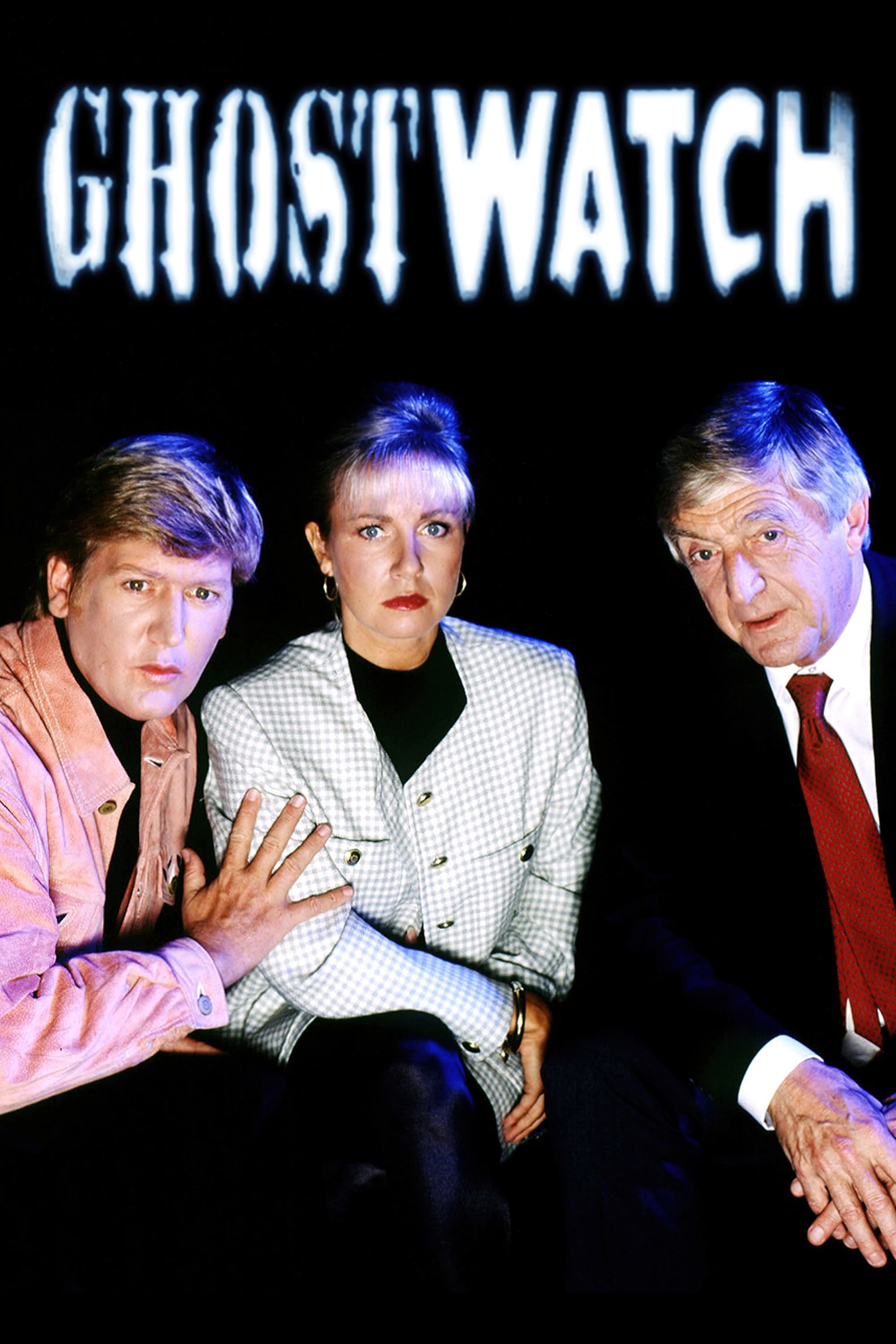
Made by the BBC as a single-night broadcast, ‘Ghostwatch’ was written by Stephen Volk and directed by Lesley Manning. It used real television presenters—Michael Parkinson, Sarah Greene, Mike Smith, and Craig Charles—playing themselves in a live-investigation format inside a suburban house reportedly haunted by an entity nicknamed “Pipes.” The production incorporated pre-recorded material, studio segments, and on-location footage to simulate a rolling live special.
Studio design teams configured the set to intercut with actual domestic interiors, and sound engineers layered subtle audio cues to seed repeated viewings with background details. The program’s one-off structure led to limited repeats, and subsequent home-media releases contextualized the broadcast within the evolution of faux-live horror and reality-adjacent TV.
‘Dark Waters’ (1993)

Mariano Baino’s ‘Dark Waters’ (also known as ‘Temnye Vody’) follows a young woman who travels to a remote convent on an isolated island to investigate a personal history connected to an esoteric order. Louise Salter leads the cast, with the story unfolding through labyrinthine corridors, catacombs, and cliffside exteriors chosen for their weather-carved textures and stark architecture.
The production relied on practical lighting and candlelit compositions, with the crew building subterranean sets that integrate with coastal locations. International festival play and specialized home-video runs expanded the film’s reach, and restored editions later emphasized the negative’s grain structure and hand-crafted creature work.
‘Necronomicon’ (1993)
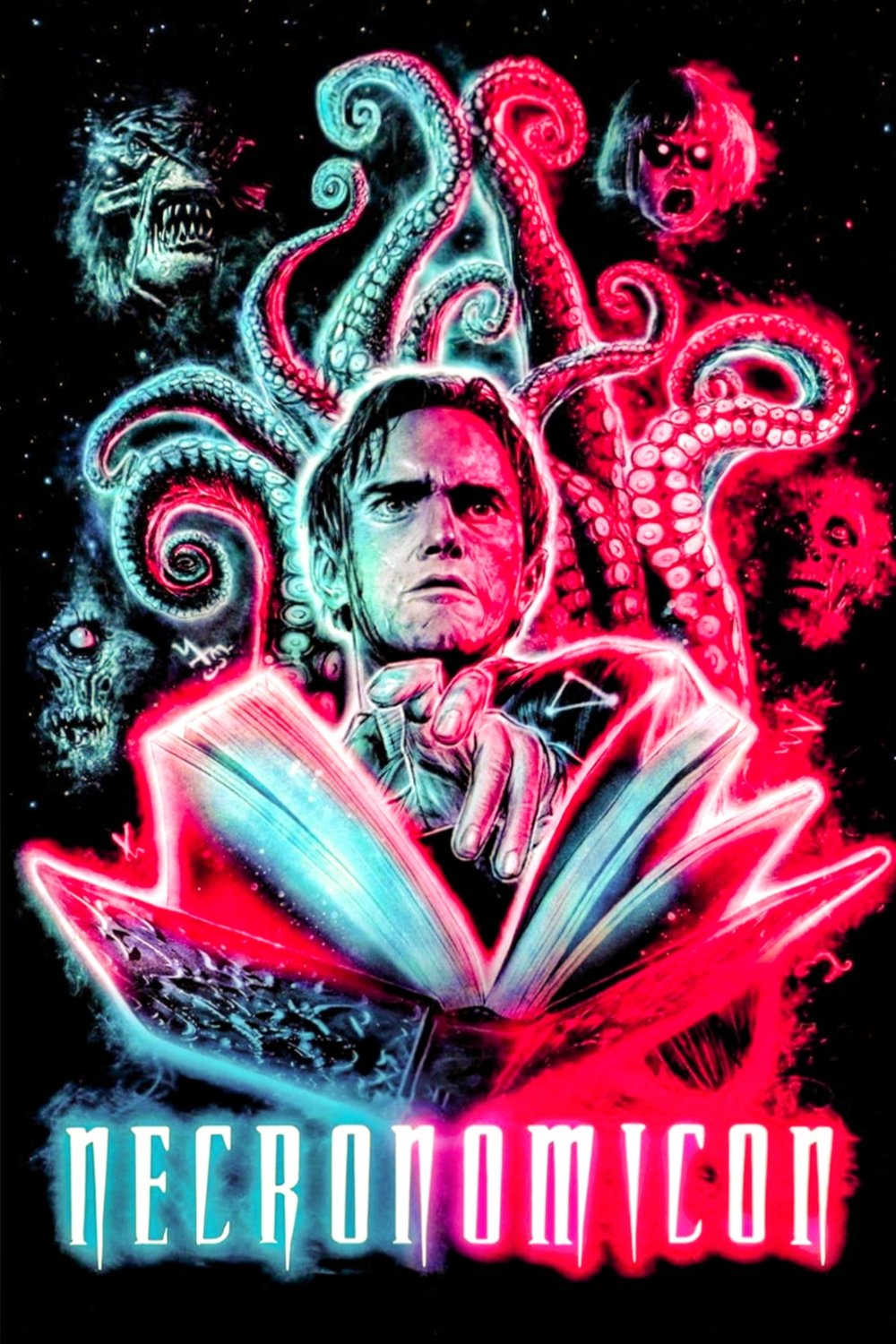
‘Necronomicon’ is an anthology feature inspired by H. P. Lovecraft, produced with international partners and a wraparound segment featuring Jeffrey Combs as the author. The film comprises three episodes—directed by Christophe Gans, Shusuke Kaneko, and Brian Yuzna—that explore sea-bound creatures, flesh-warping science, and urban nightmares respectively.
Makeup effects teams coordinated across segments to present consistent interpretations of eldritch organisms and forbidden texts. The omnibus format allowed for multilingual casts and a split-shoot approach across different countries, with distribution handled through genre-focused festivals and home-video labels.
‘The Dark Half’ (1993)
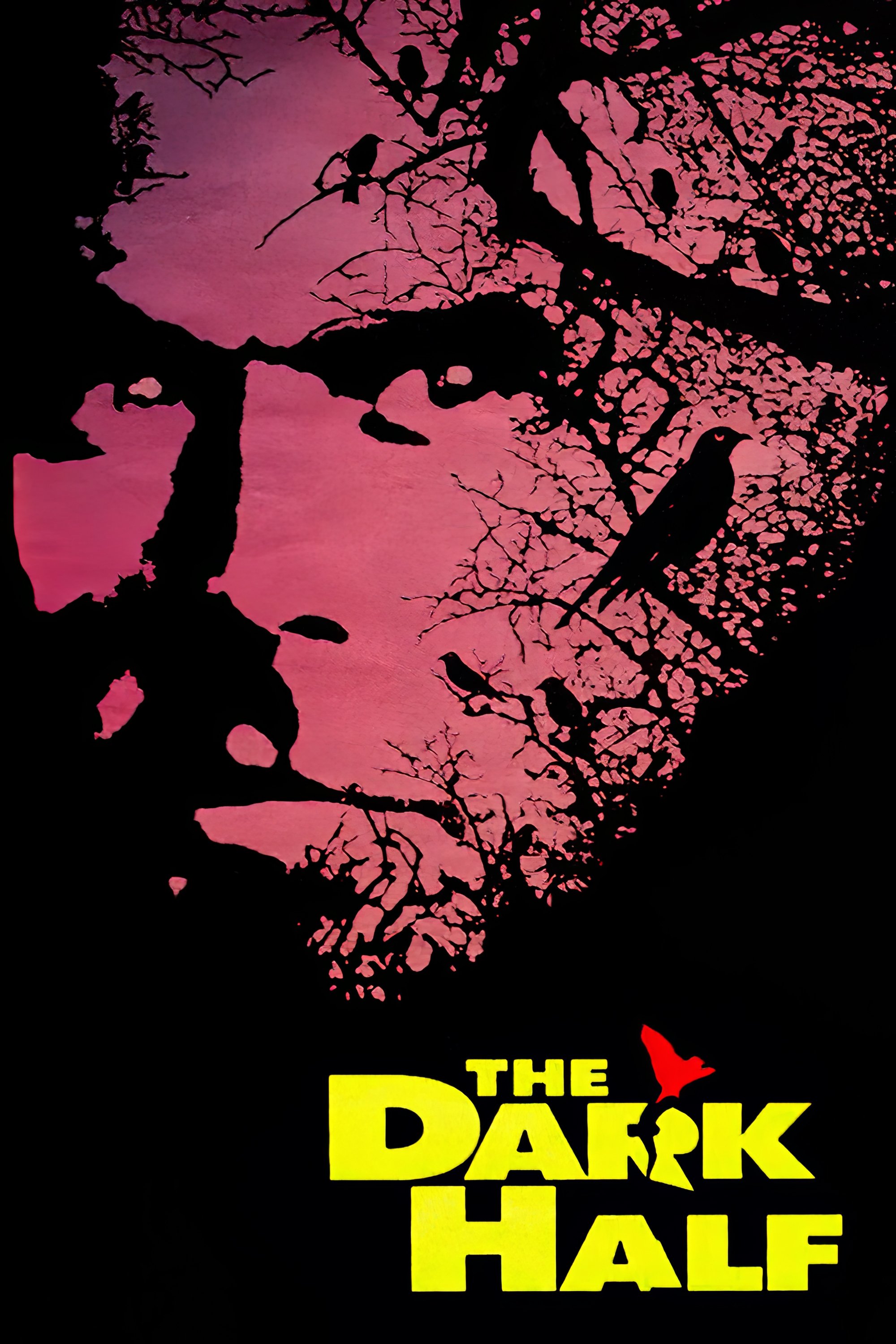
Directed by George A. Romero from Stephen King’s novel, ‘The Dark Half’ stars Timothy Hutton in dual roles, with Amy Madigan and Michael Rooker in supporting parts. The story centers on a literary pseudonym that manifests as a violent doppelgänger, investigated by a small-town sheriff as a series of murders mirrors the author’s own fiction.
Principal photography utilized upstate locations to capture rural campuses, houses, and graveyards central to the setting. Special makeup effects created transitional imagery for the twin personas, while the release followed a studio distribution pattern with subsequent cable and home-video circulation.
‘Cemetery Man’ (1994)
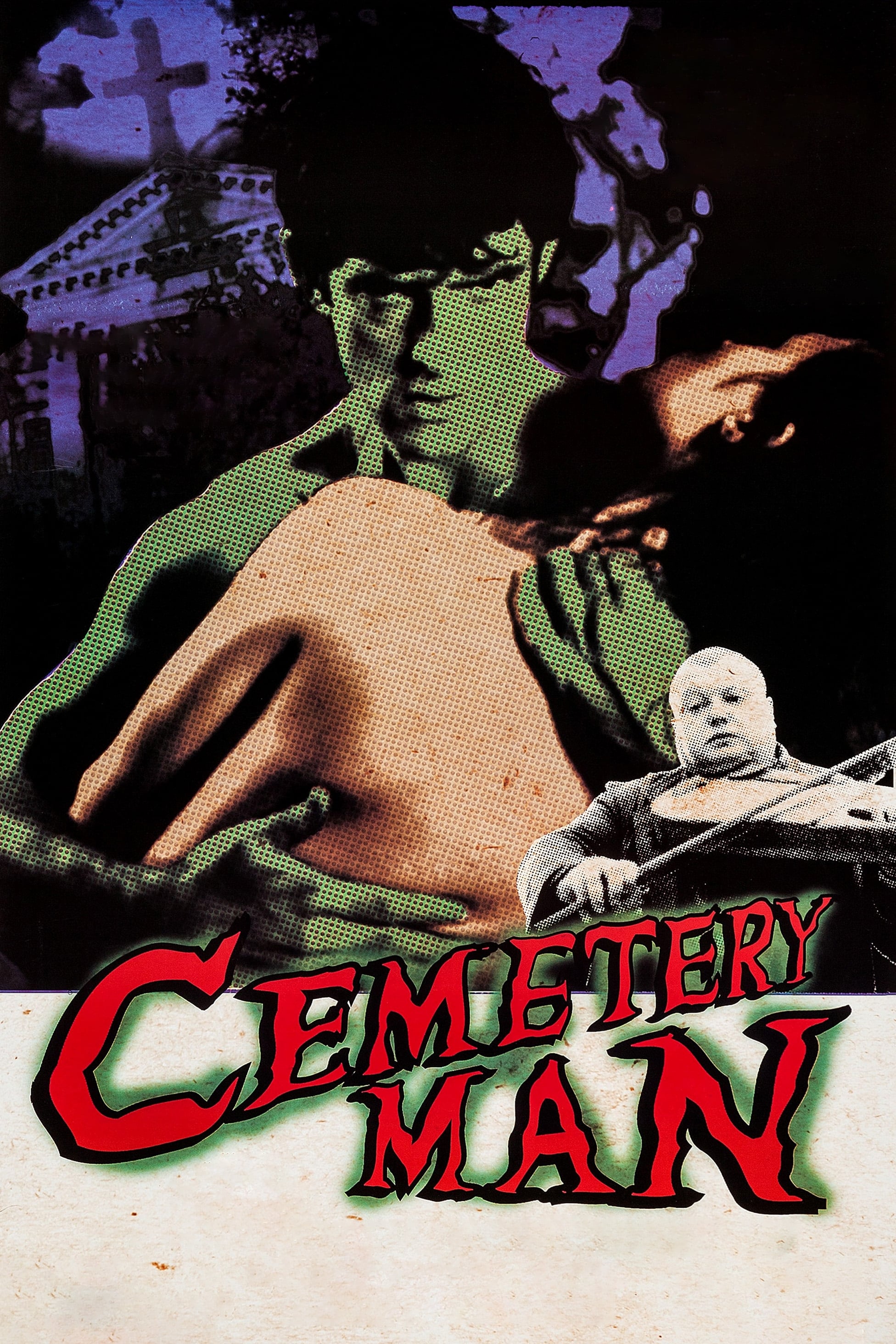
Michele Soavi directed ‘Cemetery Man’ (original title ‘Dellamorte Dellamore’), adapted from Tiziano Sclavi’s novel linked to the ‘Dylan Dog’ comics. Rupert Everett plays a cemetery groundskeeper dealing with the recently deceased who refuse to stay buried, with François Hadji-Lazaro and Anna Falchi co-starring. The narrative stages incidents amid mausoleums, ossuaries, and municipal offices.
Production combined Italian locations with stylized sets, and the art department emphasized stone textures, fog, and statuary. The film’s international distribution involved alternate language tracks and varying cuts, and later restorations highlighted cinematographer Mauro Marchetti’s soft-focus imagery.
‘Nadja’ (1994)
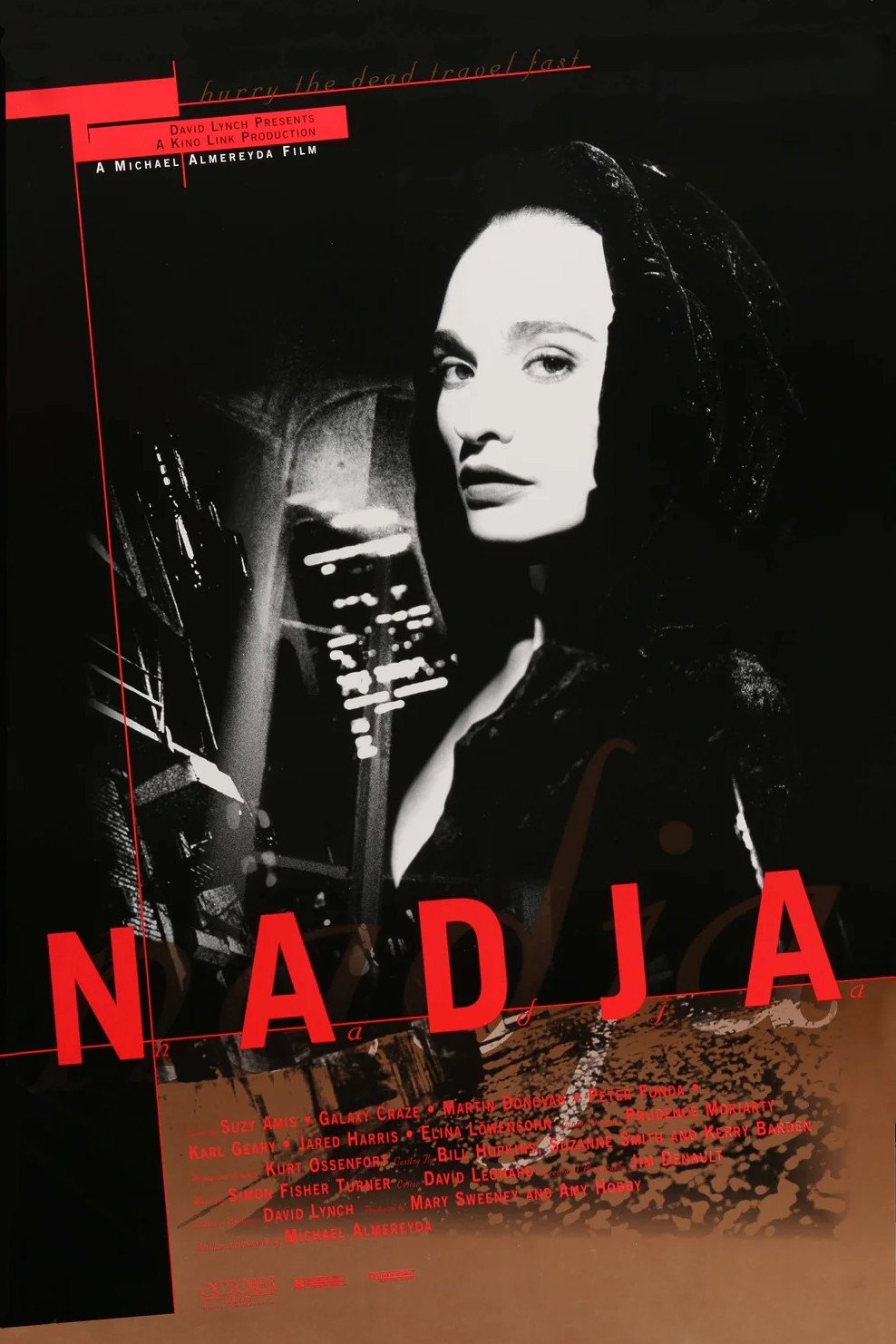
Michael Almereyda’s ‘Nadja’ reimagines the Dracula myth through the title character and her twin brother, with Elina Löwensohn, Peter Fonda, and Martin Donovan headlining. The film interweaves Manhattan nocturnes with vampire family drama, shot on both 35mm and a Fisher-Price PXL-2000 pixelvision camera to create distinct visual textures.
The production secured locations in downtown galleries, apartments, and parks, and integrated archival footage for narrative flashbacks. Distributed by independent outfits, the film features a soundtrack of minimalist cues and dream-pop tracks, positioning its aesthetic between art-house experimentation and genre narrative.
‘Mute Witness’ (1995)

Anthony Waller wrote and directed ‘Mute Witness’, a thriller about a non-speaking special-effects artist who accidentally records a murder inside a closed soundstage. Marina Zudina leads the cast, joined by Fay Ripley, Evan Richards, and appearances by Alec Guinness filmed under scheduling arrangements that involved a brief shoot window.
The production shot largely on location in Moscow with English-language dialogue, integrating behind-the-scenes makeup labs, prop rooms, and studio corridors. Crafted around restricted-access spaces and timed rehearsals, the film leveraged practical gore effects and diegetic filmmaking tools to align the plot with the mechanics of genre production.
‘The Addiction’ (1995)
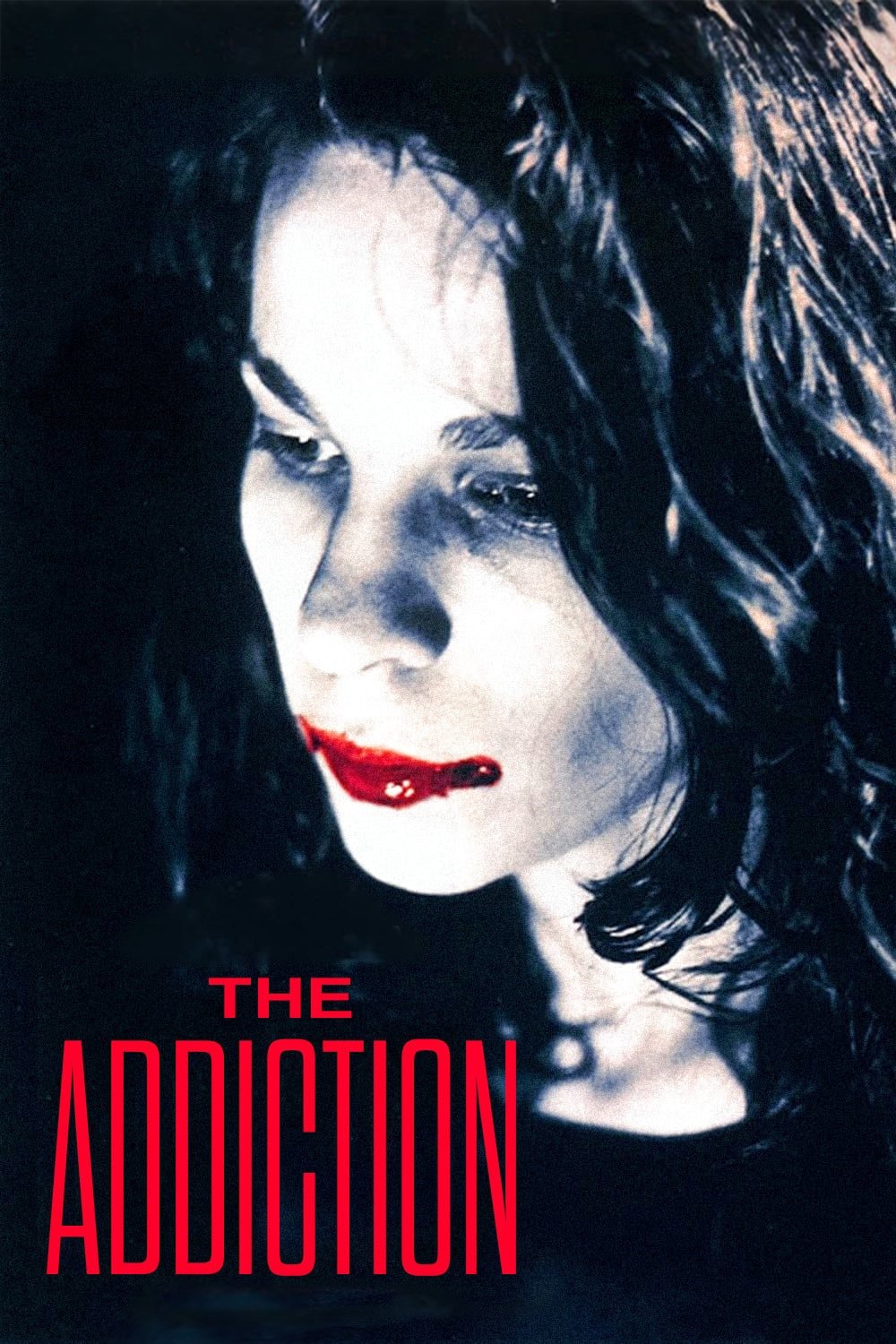
Abel Ferrara’s ‘The Addiction’, written by Nicholas St. John, stars Lili Taylor as a philosophy student whose encounter with a vampire reshapes her studies and habits. Christopher Walken and Annabella Sciorra appear in supporting roles, and the film is photographed in black-and-white to match its academic and nocturnal settings.
The story’s university lectures, street encounters, and apartment interiors were shot across New York City, with locations in the East Village and the Lower East Side. The production premiered at festivals and moved through art-house distribution, and the soundtrack incorporates minimalist cues underscoring classroom debates and urban scenes.
‘Castle Freak’ (1995)
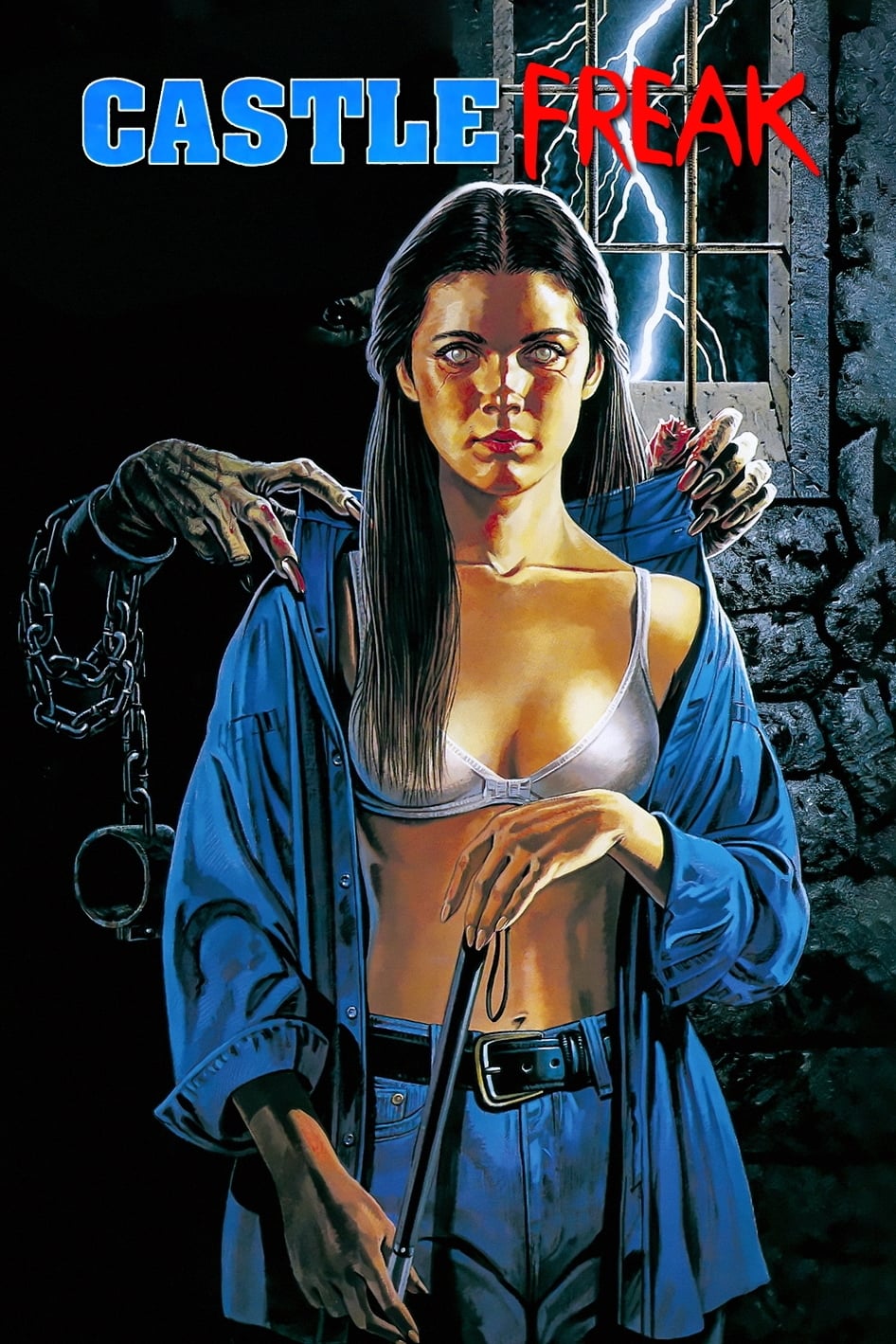
Produced by Full Moon and directed by Stuart Gordon, ‘Castle Freak’ reunites Gordon with Jeffrey Combs and Barbara Crampton. The story follows an American family inheriting an Italian castle that conceals a brutalized survivor within its walls, with events unfolding through wine cellars, stone corridors, and locked rooms.
The film used an actual castle location for principal photography, minimizing the need for constructed sets and enabling extensive use of natural stone textures. Mechanical effects and makeup appliances realized the captive’s injuries and mask-like visage, while distribution focused on the direct-to-video market with multiple cover artworks and later remasters.
‘Eko Eko Azarak: Wizard of Darkness’ (1995)
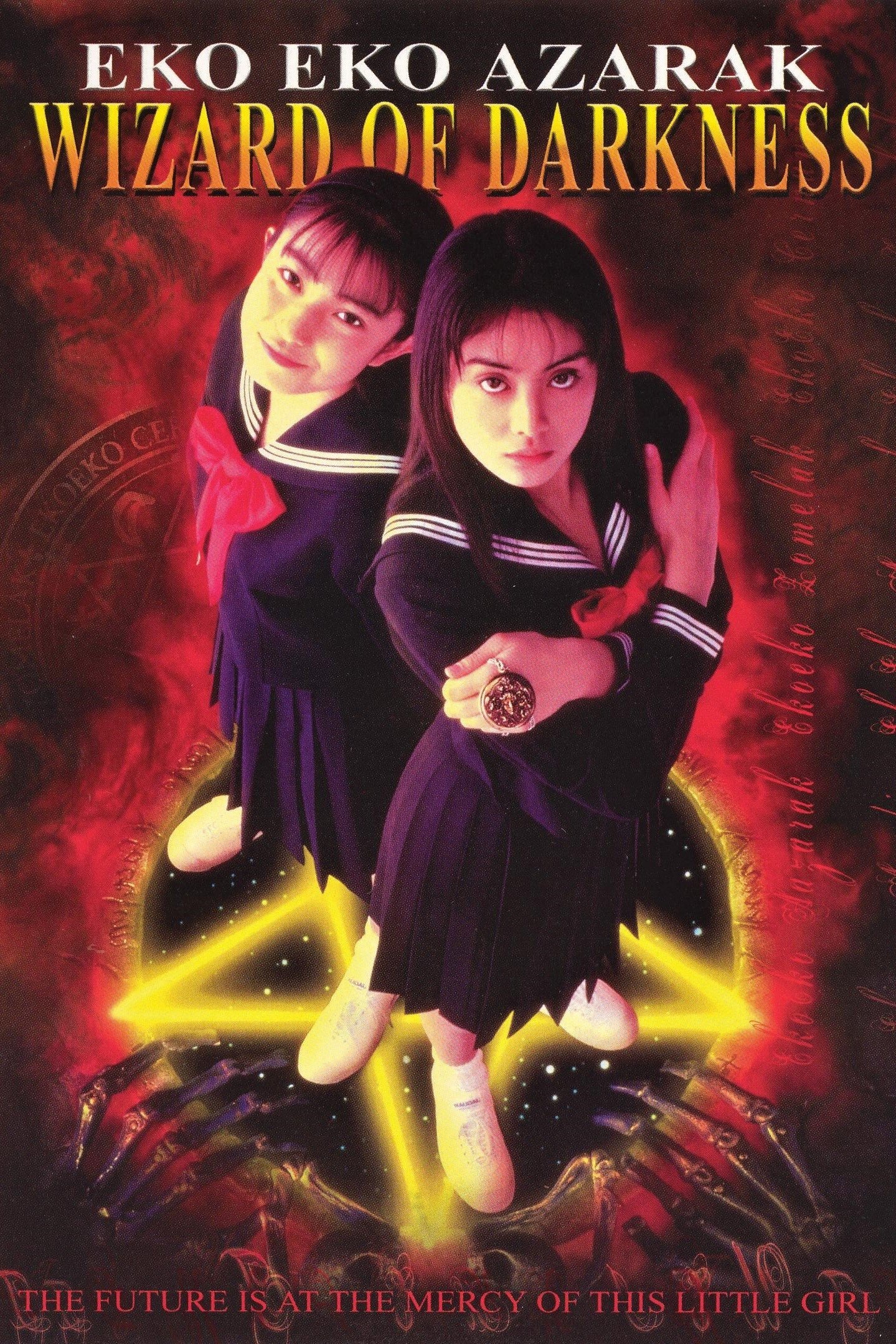
Directed by Shimako Satō, ‘Eko Eko Azarak: Wizard of Darkness’ adapts Shinichi Koga’s manga about teenage witch Misa Kuroi investigating occult incidents at a high school. The film blends school corridors, gymnasiums, and rooftops with ritual spaces and sigil-covered classrooms, aligning the structure to mystery-driven storytelling within a single feature.
The production led to follow-ups across film and television, establishing recurring iconography such as the pentagram emblem and Misa’s incantations. Its release through Japanese distributors and international genre circuits helped introduce audiences to on-campus occult narratives in a modern setting.
‘Millennium’ (1996–1999)
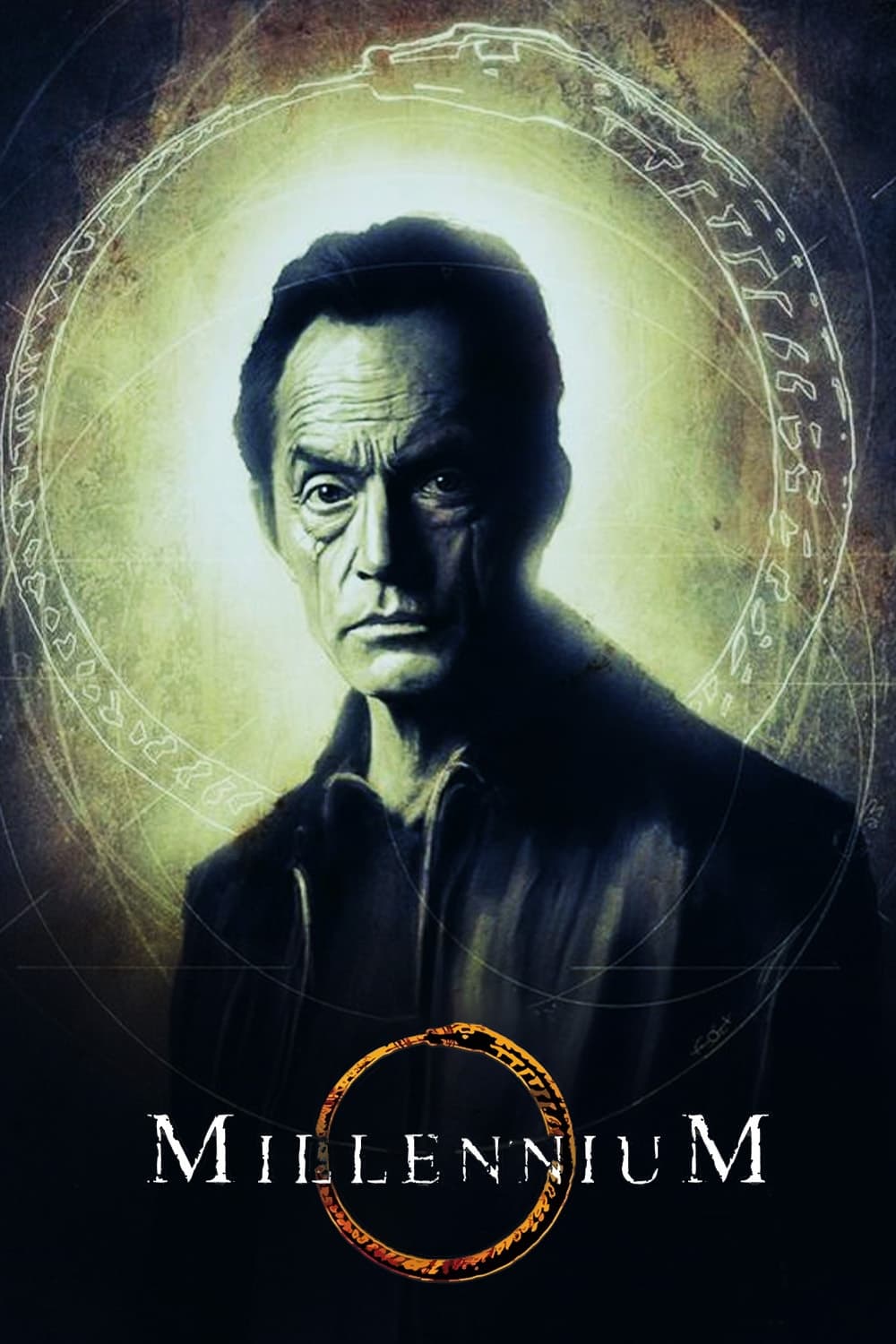
Created by Chris Carter for Fox, ‘Millennium’ stars Lance Henriksen as former FBI profiler Frank Black, whose ability to read violent offenders is leveraged by a private organization called the Millennium Group. Megan Gallagher and Brittany Tiplady co-star, with a rotating roster of writers and directors shaping case-file episodes and mythology arcs.
The series was shot primarily in Vancouver, employing rain-slicked streets, suburban homes, and wooded outskirts to establish its atmosphere. Across multiple seasons, the show combined standalone investigations with ongoing conspiracy threads, and later home-media sets organized episodes with commentary tracks and archival featurettes.
‘The Dentist’ (1996)
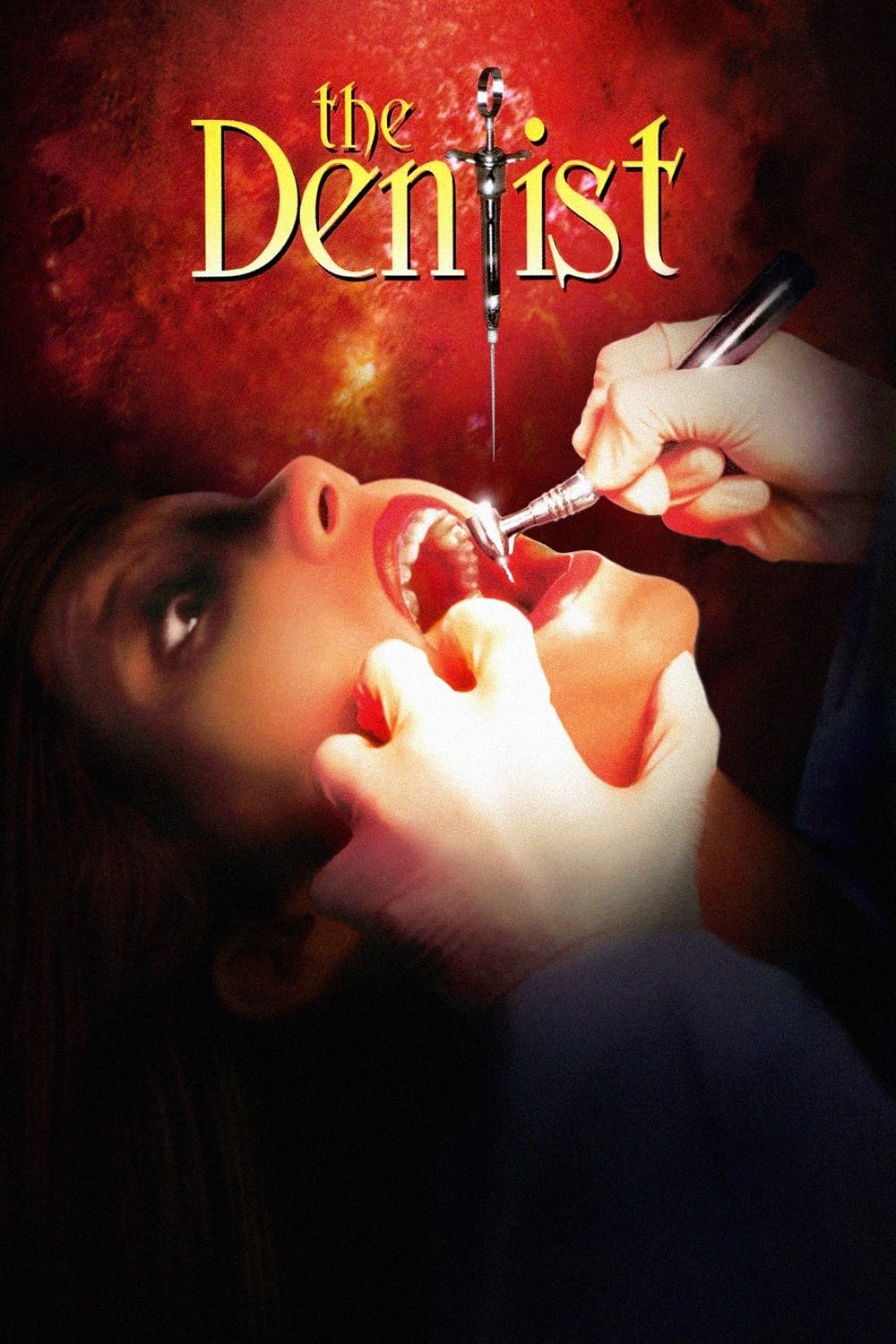
Brian Yuzna directed ‘The Dentist’, starring Corbin Bernsen as Dr. Alan Feinstone, a cosmetic dentist whose personal crisis spirals into violent control over his practice. The production uses clinical lighting, dental equipment close-ups, and office floorplans to stage procedures and confrontations, with supporting performances from Linda Hoffman and Ken Foree.
Prop fabrication emphasized realistic instruments, impression molds, and chair mechanisms to anchor scenes in recognizable dental settings. The film’s distribution favored cable and video outlets, and a sequel expanded the character’s arc while maintaining continuity with the original’s practice-based locations.
‘The Ugly’ (1997)
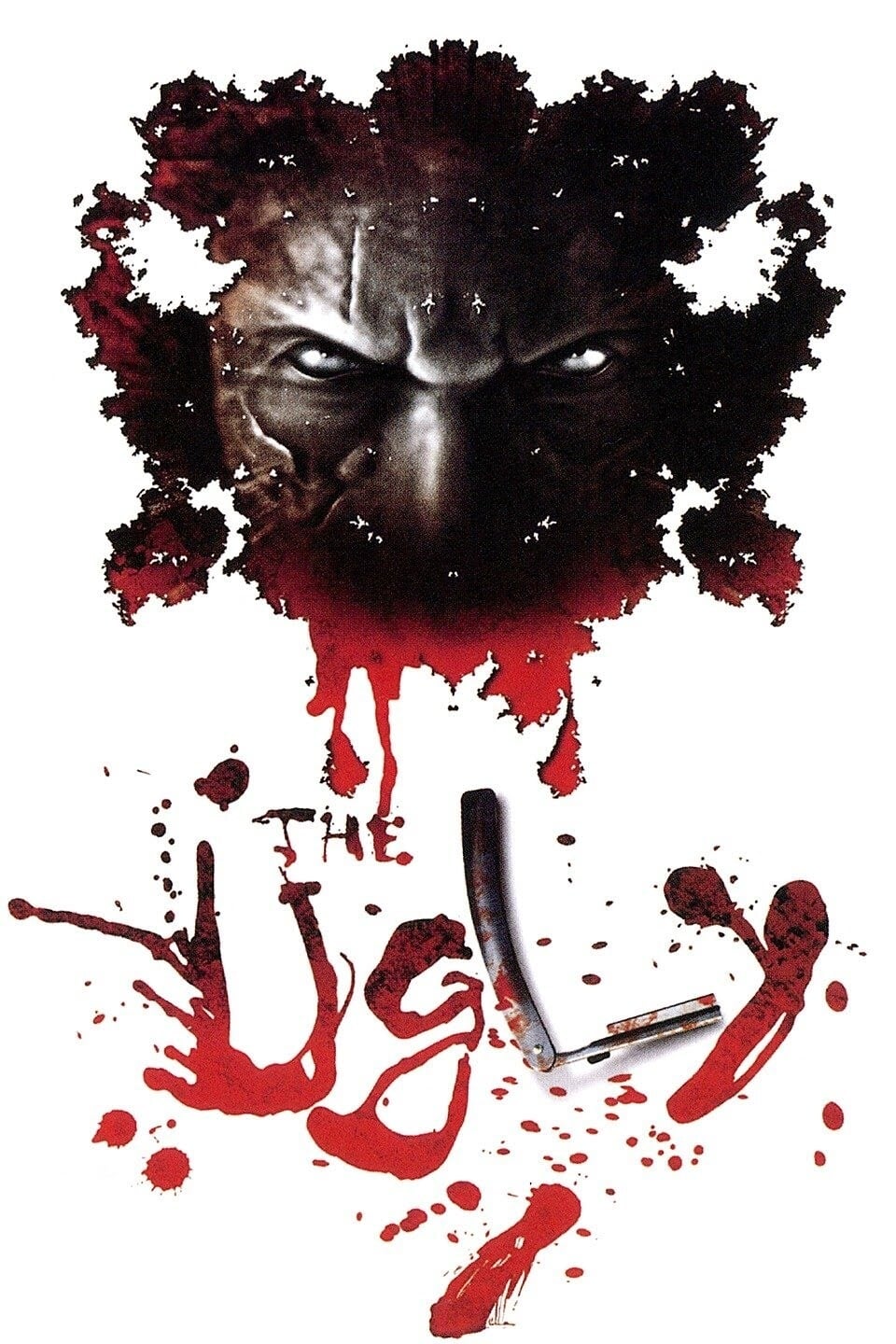
From New Zealand writer-director Scott Reynolds, ‘The Ugly’ features Paolo Rotondo as a convicted killer undergoing evaluation by a psychiatrist played by Rebecca Hobbs. Structured around interviews inside a secure facility, the narrative unfolds through flashbacks staged in boarding houses, service corridors, and urban backstreets.
Cinematography uses high-contrast lighting and carefully framed close-ups to shift between clinical observation rooms and memory fragments. The film circulated via festival slots and regional distribution, drawing attention to New Zealand’s growing infrastructure for genre production and post-production.
‘The Night Flier’ (1997)
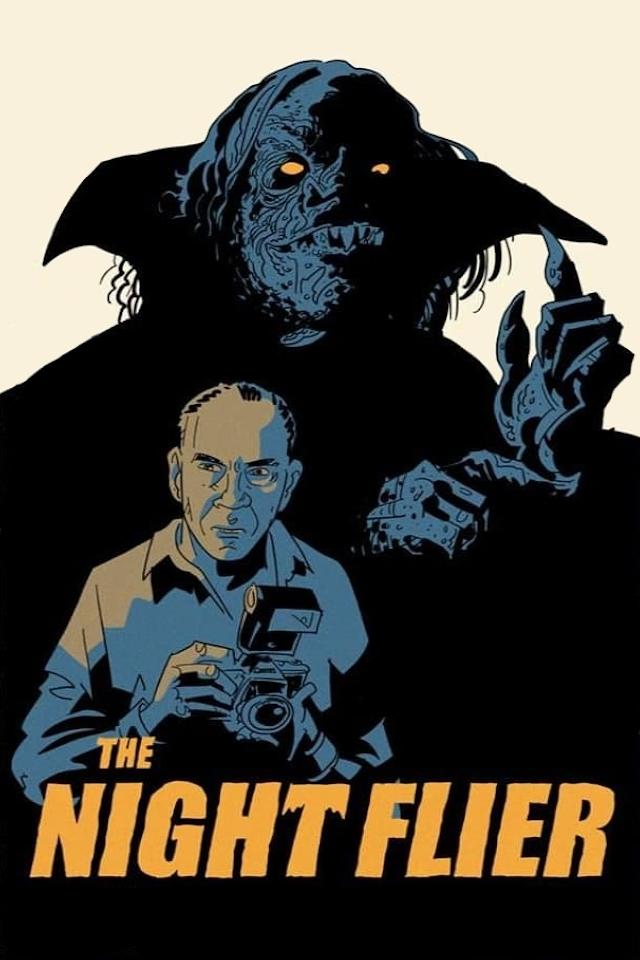
Based on Stephen King’s short story, ‘The Night Flier’ stars Miguel Ferrer as a tabloid reporter tracking a suspected vampire pilot who lands at small airports after dark. Mark Pavia directed, with Julie Entwisle and Dan Monahan in supporting roles. Aviation settings include hangars, runways, and rural terminals, with production securing access to light aircraft and control towers for on-site filming.
Makeup effects teams designed the antagonist’s facial features for climactic reveals, while the narrative uses trade-paper press clippings and airfield logs as investigative breadcrumbs. The release followed a limited theatrical pattern and a strong cable and home-video life, with later discs collecting commentary and behind-the-scenes materials.
‘Ultraviolet’ (1998)
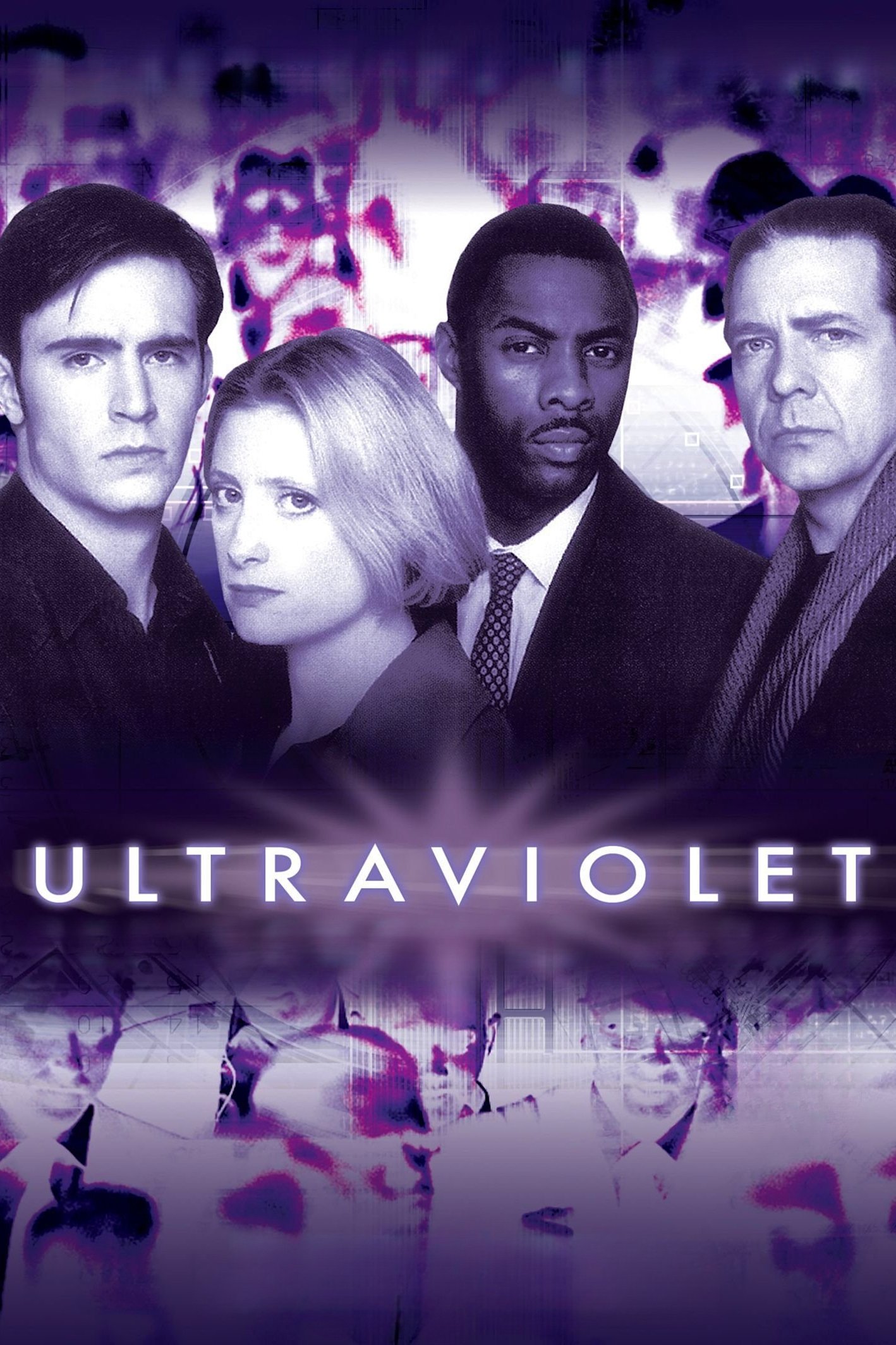
The UK miniseries ‘Ultraviolet’, created and written by Joe Ahearne, follows a covert government-backed unit combating vampires under the euphemism “Code V.” Jack Davenport, Susannah Harker, Idris Elba, and Stephen Moyer lead the cast across six episodes that approach vampirism through surveillance, forensics, and counter-terror tactics.
Shot on London locations with a cool, clinical aesthetic, the series features specialized gear—carbon-round weapons, video-only mirrors, and high-intensity UV rigs—developed as in-world technology. Broadcast on Channel 4 with later international airings, the show received DVD releases containing commentary and episode guides.
‘Phantoms’ (1998)
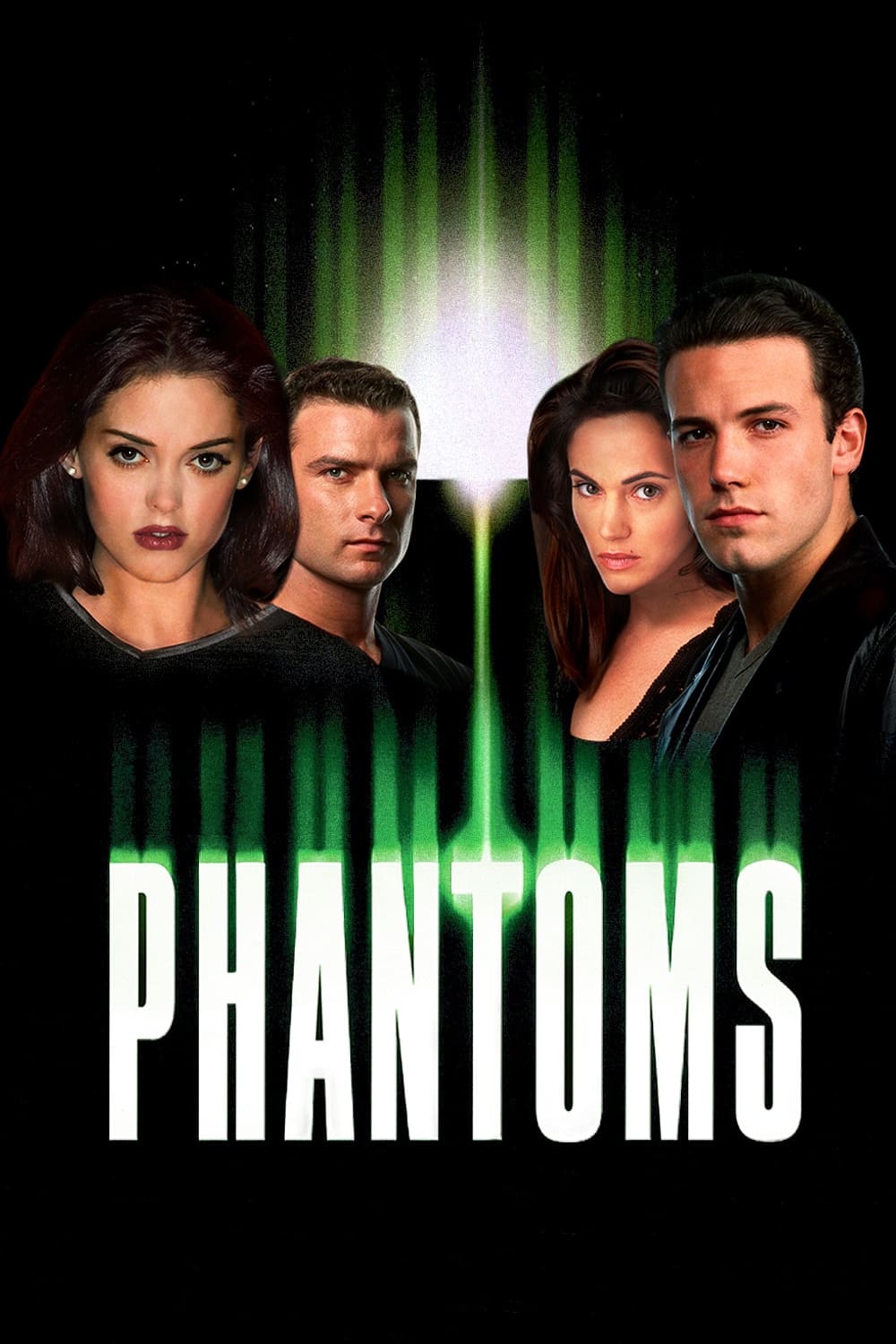
Adapted from Dean Koontz’s novel, ‘Phantoms’ was directed by Joe Chappelle and stars Rose McGowan, Joanna Going, Liev Schreiber, Peter O’Toole, and Ben Affleck. The plot centers on a Colorado town where the population has vanished, with a small group uncovering evidence pointing to an ancient, protean organism responsible for disappearances across history.
Production design created empty streets, cordoned-off civic buildings, and makeshift labs for the investigative team. Practical slime effects and miniature work combined with optical elements to depict the entity’s shifting forms, and the film moved through studio distribution to cable and home-video windows.
‘The Nameless’ (1999)
Jaume Balagueró’s ‘The Nameless’ (original title ‘Los sin nombre’) adapts Ramsey Campbell’s novel about a mother who receives a phone call from someone claiming to be her dead daughter, drawing her toward a cult operating on the outskirts of the city. Emma Vilarasau, Karra Elejalde, and Tristán Ulloa head the cast, with the narrative unfolding through police files, hospital archives, and rural compounds.
The production combines urban Spanish locations with derelict industrial sites to stage searches and confrontations. Distributed through European genre circuits and later home-video labels, the film contributed to the broader visibility of Spanish horror internationally.
‘Lord of Illusions’ (1995)
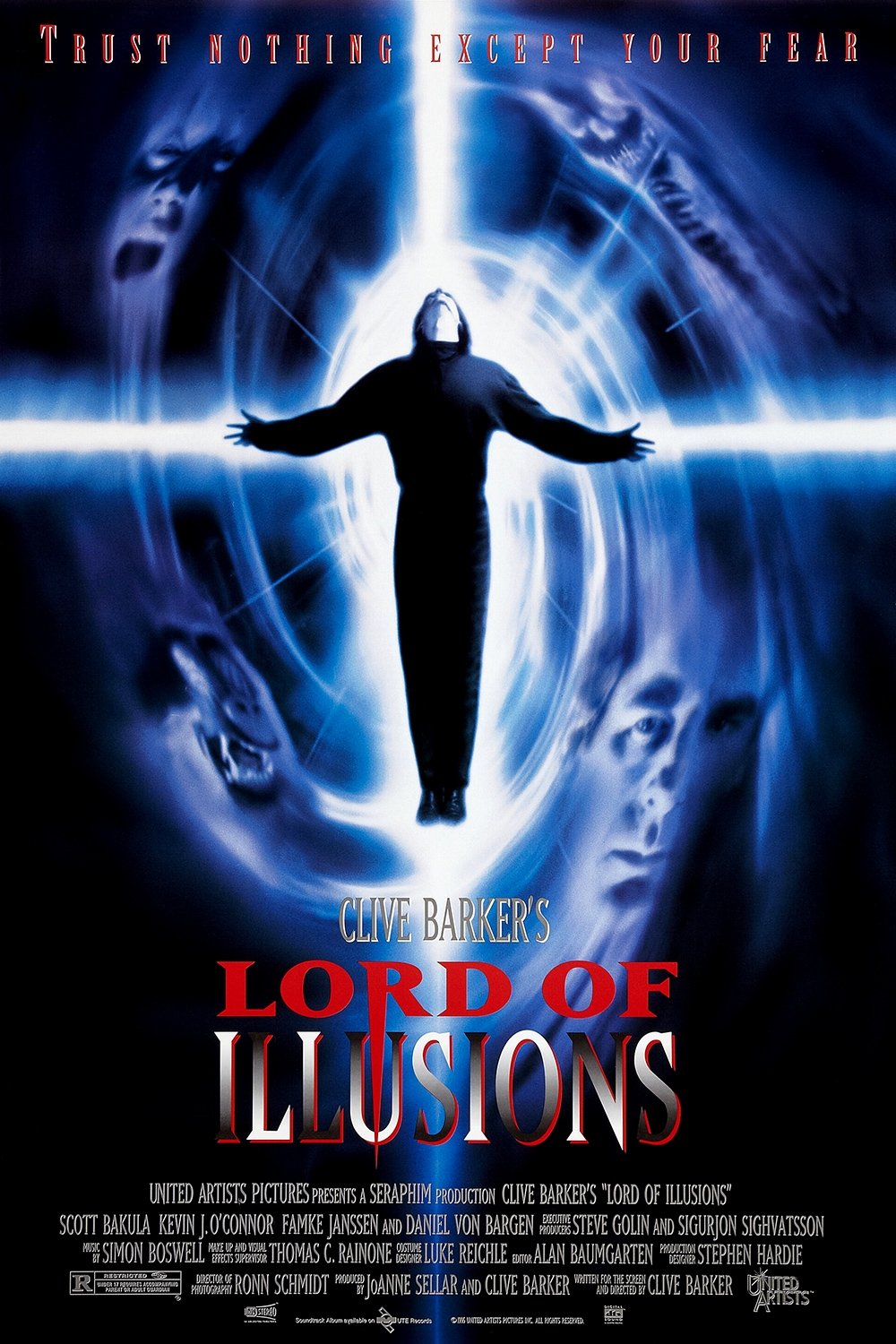
Written and directed by Clive Barker from his short story ‘The Last Illusion’, ‘Lord of Illusions’ stars Scott Bakula as private detective Harry D’Amour and Famke Janssen as the widow of a celebrity magician entangled with a doomsday cult. Kevin J. O’Connor and Daniel von Bargen play key figures within the illusionist world and the cult hierarchy.
The production juxtaposes stage magic with ritual magic, coordinating stunt illusions with practical gore and pyrotechnics. Two principal cuts exist—theatrical and a later director’s cut—with home-media releases presenting different editorial choices, additional scenes, and alternate soundtrack mixes.
‘The Guardian’ (1990)
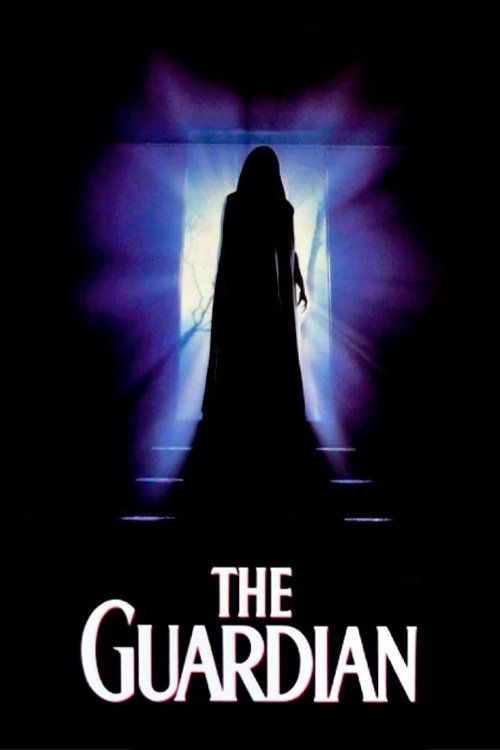
William Friedkin directed ‘The Guardian’, starring Jenny Seagrove as a mysterious nanny linked to a druidic tree-worshiping sect. Carey Lowell and Dwier Brown play the parents who hire her, with the story moving between an upscale Los Angeles home, wooded parks, and an ancient grove that anchors the film’s supernatural elements.
The effects team built full-scale tree limbs and root systems for on-set interaction, integrating them with puppetry and wind rigs. Universal handled distribution, and television airings and video releases introduced content edits tailored to broadcast standards.
‘American Gothic’ (1995–1996)
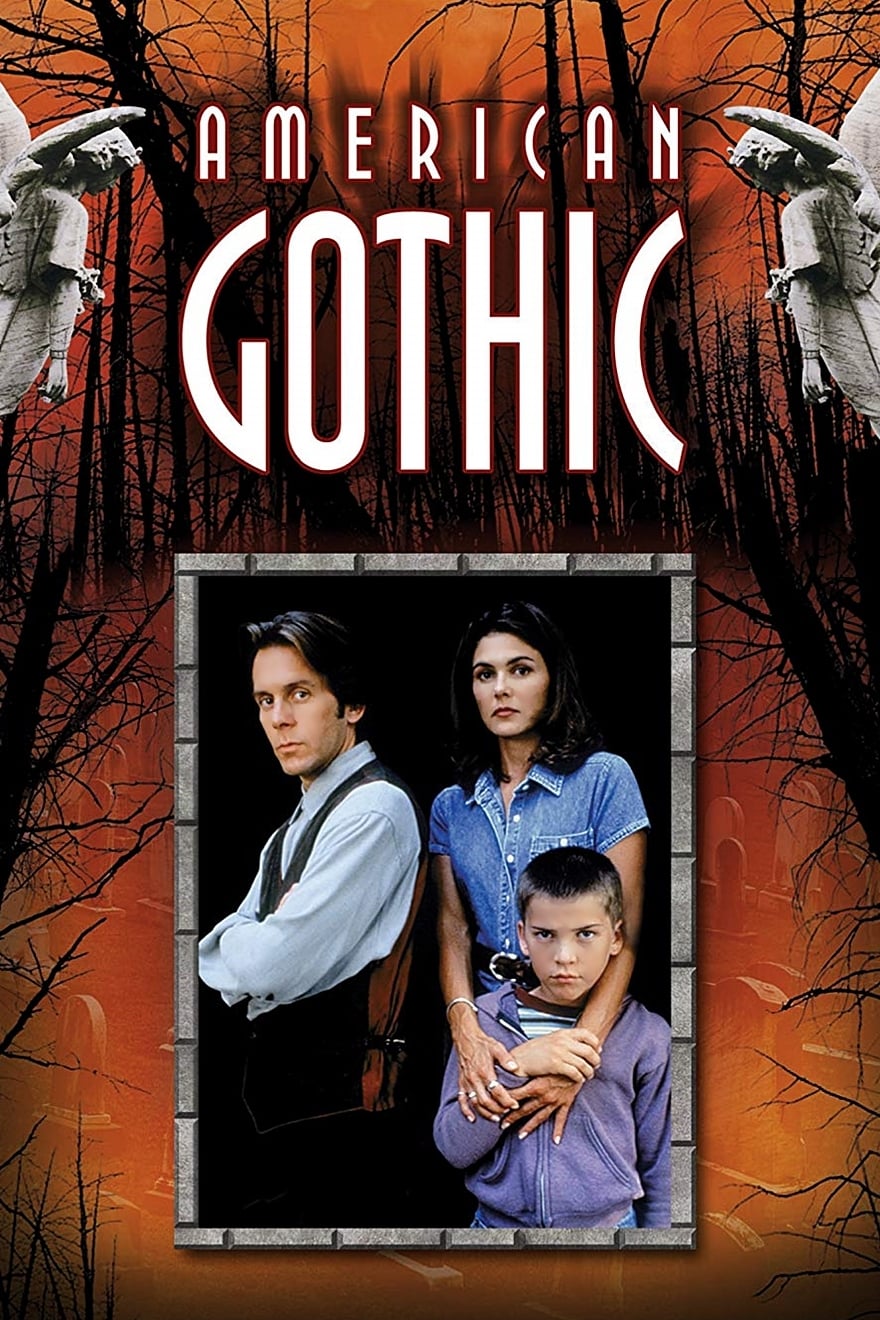
Created by Shaun Cassidy for CBS and executive-produced with Sam Raimi, ‘American Gothic’ stars Gary Cole as Sheriff Lucas Buck and Lucas Black as Caleb Temple in a Southern town where the sheriff’s influence touches local institutions. The series mixes crime-story structures with supernatural elements, placing doctors, teachers, and clergy inside the sheriff’s orbit.
Episodes were produced on backlot streets and regional locations, with an emphasis on courthouse steps, schoolrooms, and clapboard houses. Broadcast order and story order differed in initial airings, and later home-media releases restored intended sequencing and included unaired episodes.
‘Pet Shop of Horrors’ (1999)
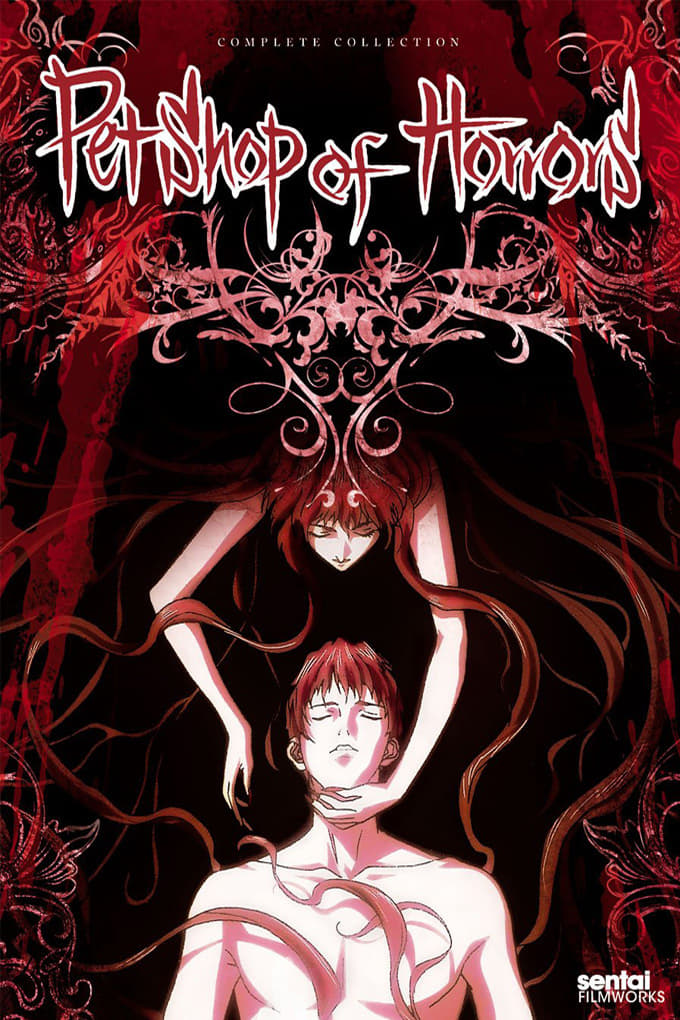
‘Pet Shop of Horrors’ is a four-episode OVA based on Matsuri Akino’s manga, centered on Count D’s exotic pet shop in Los Angeles’s Chinatown. Each episode features a client who purchases a rare creature under strict contract terms, with Detective Leon Orcot investigating when conditions are broken.
Produced by Madhouse with direction by Toshio Hirata and Noriyuki Abe across episodes, the OVA uses standalone stories tied by recurring leads. Character designs remain faithful to the manga’s style, and international releases offered subtitled and dubbed options across VHS and disc formats.
‘Vampire Princess Miyu’ (1997–1998)
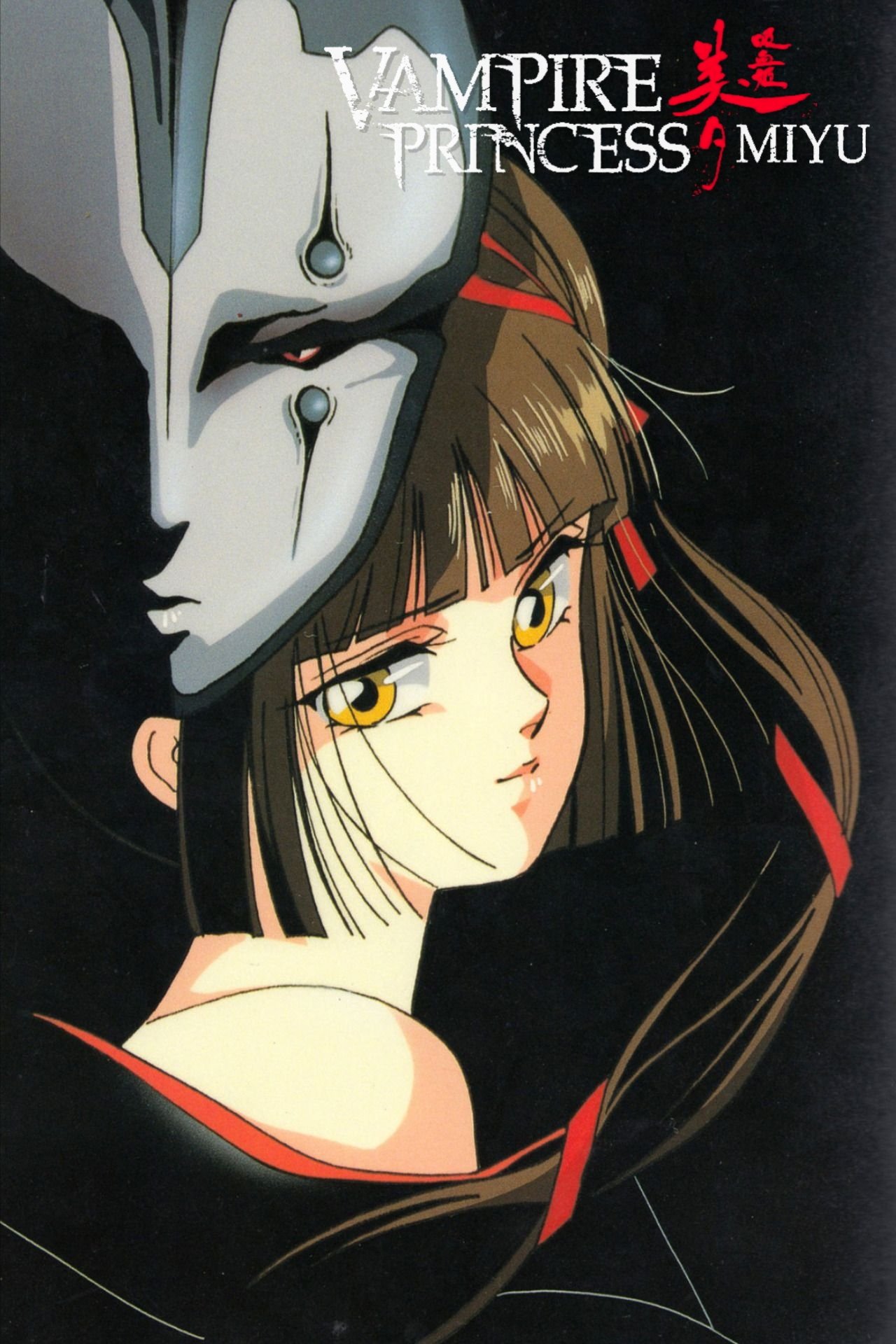
The television adaptation of ‘Vampire Princess Miyu’ (distinct from the earlier OVA) follows the title character and her guardian Larva as they return demonic shinma to their realm. Episodes combine school settings, shrines, and fog-shrouded alleys, establishing a monster-of-the-week rhythm within an overarching mythos.
TV Tokyo broadcast the series domestically, with production by AIC and soundtracks featuring vocals and instrumental interludes. International licensing brought the show to English-speaking markets with collected volumes, art cards, and liner notes detailing character histories and episode credits.
Share the forgotten ’90s horror gems you’d add to the list in the comments!

