


Clint Eastwood Revealed the Only Time in His Career He Wanted to Stop Filming a Movie

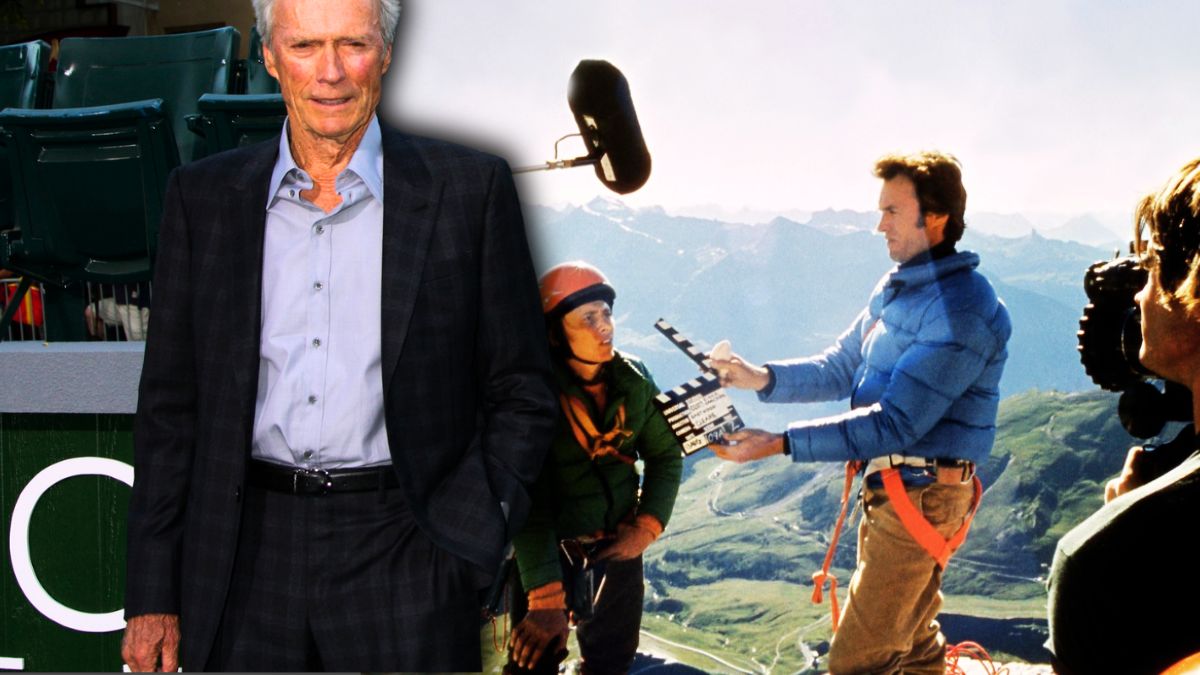


Clint Eastwood once seriously considered stopping the filming of one of his movies. This was a surprising moment for someone known for being tough and reliable both as an actor and a director.
The film was The Eiger Sanction, released in 1975, and the experience during production was so tough that Eastwood questioned if it was worth continuing.
The movie follows Eastwood’s character, Jonathan Hemlock, a former assassin who returns to action for one final mission.
The story takes place mostly on the dangerous Eiger mountain in Switzerland, where Hemlock must climb and find a traitor in his group. While it sounds like a typical action film, the making of it was anything but easy.
Eastwood was never fully happy with the script and agreed to do the film mainly to finish his contract with Universal Pictures so he could move on to Warner Bros.
He also took on the challenge of doing his own climbing and stunts during filming, which made the process even more risky. The mountaineering scenes were especially difficult, and Eastwood said, “It was a very difficult picture to make. And the mountaineering sequences, especially, posed enormous problems.”
During the first two days of filming, Eastwood chose to handle the most dangerous scenes himself. On the afternoon of August 13, as daylight was fading, the crew finished shooting a rock-slide sequence and prepared to leave the north face by helicopter.
However, Hoover realized they still needed footage from the climbers’ perspective showing the boulders falling. So, with his handheld camera, Hoover and 26-year-old British climber David Knowles rappelled down to a ledge to capture the shots.
Tragically, while packing up their equipment, a large rock suddenly broke loose and struck them. Knowles was killed instantly, and Hoover suffered a fractured pelvis and severe bruising. After a spontaneous memorial for Knowles, Eastwood thought about stopping the entire shoot.
But the other climbers convinced him to keep going, explaining that they were all aware of the dangers involved and that stopping would dishonor Knowles’ sacrifice.
This deeply affected Eastwood, who said, “On the seventh day of filming, we lost one of our mountaineers. And believe me, I asked myself repeatedly if it was worth it.” After the accident, Eastwood seriously thought about stopping the whole production, a decision he had the power to make as the lead actor and producer.
Despite this, the other climbers insisted they understood the risks and that the movie should be finished to honor Knowles. Eastwood agreed to continue, marking the closest he ever came to quitting a film during his career.
The Eiger Sanction was based on a 1972 novel by Trevanian, a pen name for Rodney William Whitaker, a film professor. The story was a mix of spy thriller and mountain climbing adventure. Universal bought the rights quickly after the book came out and first offered the lead role to Paul Newman, who turned it down because he felt the script was too violent.
Eastwood found many problems with the novel and the script, which had already been revised three times and rewritten before he saw it. He wasn’t really interested in spy stories or the espionage genre in general.
However, two main reasons drew him to the project. First, he was unhappy with how Universal handled his earlier directing jobs, Play Misty for Me (1971) and Breezy (1973), and he wanted to move to Warner Bros, where studio head Frank Wells had invited him.
Taking on The Eiger Sanction was a way to finish his contract with Universal. More importantly, the film gave Eastwood a chance to work quietly in Switzerland, away from studio distractions. He also appreciated working with a small, efficient group of cast and crew members.
Eastwood stepped in and took charge, even rewriting parts of the script to give the story more motivation and emotional weight. He wanted the film to feel authentic, especially the climbing scenes, so filming took place in real locations, including the Eiger mountain in Switzerland and several places in the US, like Monument Valley and California.
Eastwood’s goal was to shoot the mountain scenes on actual mountains, not on studio sets, something rarely done before.
Although The Eiger Sanction received mixed reviews when it came out, with some critics pointing out flaws in the story but praising the action and climbing sequences, it still managed to make more money than its budget.
In the end, the making of The Eiger Sanction was a difficult chapter for Eastwood, testing his limits both physically and emotionally. But it also showed his dedication to his craft and his willingness to push through challenges.
Have something to add? Let us know in the comments below!

