‘Delusion’ Recap and Ending Explained: The Family Secret Behind Netflix’s Chilling Thai Mystery



‘Delusion’ is a six episode Netflix Thai series directed by Chayan Laoyodtrakool, and it begins as a supernatural village mystery before revealing something far closer to home. Set in Chiang Khan, Loei Province, it follows a town that hunts for someone to blame after a child disappears, and suspicion lands on an elderly man with worsening dementia. That man is Narong, and his daughter Wan is the one who has to fight for him.
The ‘Delusion’ ending is a gut punch because it overturns almost everything the show has taught viewers to believe. What looks like a supernatural puzzle slowly turns out to be a story about buried family sins. Here is what really happens in the finale and why it hits so hard.
Is Narong the Killer in ‘Delusion’?
Narong’s dementia makes him impossible to defend and hard for even his own family to trust, which forces Wan, a high school teacher, to push back against the town’s rumours. The series makes sure viewers doubt him too. In the opening stretch, a confused Narong attacks his wife Pannee because he believes she is the demon Phii Pong.
His attempt to drown his grandson Aim in the river doesn’t help his case. By that point, plenty of viewers were probably ready to convict him. That is exactly what the writers want.
The truth is that Narong is not the killer, but he knows more than he lets on. His character deliberately blurs the line between forgetting and hiding something. It makes his every confused moment feel loaded.
The answers turn out to be natural rather than supernatural, and they sit deep within Wan’s own family.
Who Is the Real Killer Behind the Murders?
The real killer is Wat, Wan’s brother. Wat left the family home to seek a better life and became a doctor. It is a brutal irony that the respectable son is the one behind the bloodshed.
After being bullied in his youth, Wat became mentally disturbed and came to believe he had to punish people who did not deserve to live. Sak later began blackmailing the family for their land and money, and he too ended up murdered for his greed.
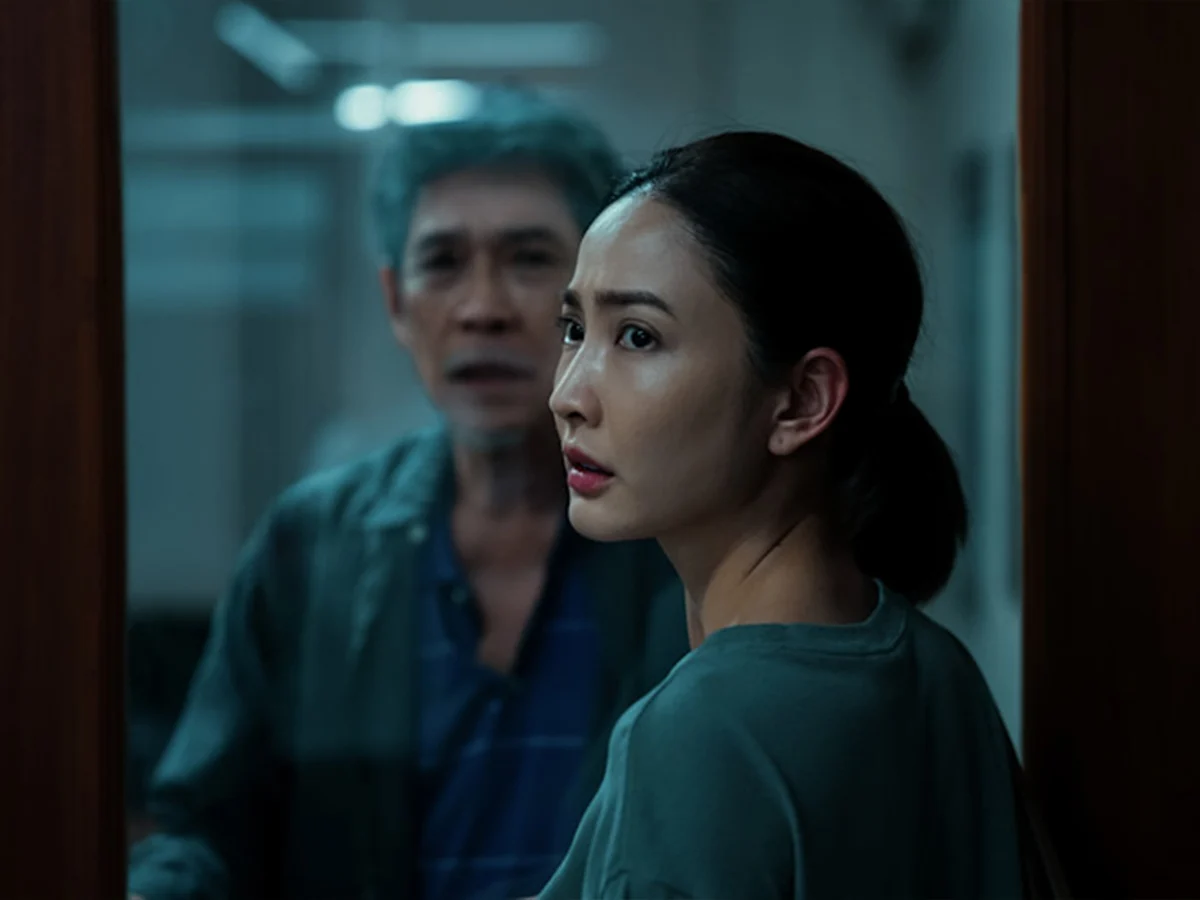
Wat nearly kills Wan to protect himself, but instead tells her to act like a sister this time, pointing out that she was there when the bullying first happened. It is a haunting moment that reframes Wan’s guilt. She has spent the whole series defending her father, and now she has to face her own part in the family’s history.
The cabin holds the evidence of Wat’s crimes, including the body of the first boy he killed. Pannee burns it to the ground, and police officer Pete arrests her after realising the family is hiding something. Pannee even claims to be the main culprit, though the finale suggests that is not the whole truth. Pete had already linked the current killings to similar cases in other provinces.
Is Phii Pong Real in ‘Delusion’?
The most surprising reveal may be that the Phii Pong of the show was invented by Sak to squeeze money out of the villagers. The monster that terrified the whole district was really a con.
After the first murder, Sak killed another boy and blamed it on Phii Pong, then presented himself as a shaman to profit from the villagers’ fear. That success made him hungrier, and he demanded more and more from Wan’s family, leaving them poor.
The folklore itself is not made up, though. Phii Pong is a real figure in Thai folklore, said to be created when someone practising dark magic fails to control their sorcery. The show borrows a genuine legend and turns it into a tool for human greed.
The wider message is that superstition can blind a community to reality, and that mental health struggles remain widely misunderstood. That theme runs through Narong’s storyline most of all.
What Happens to Wat and What Does the Ending Mean?
The finale does not deliver a clean punishment. Wat walks free because Wan and her family refuse to say anything in order to protect him. It is an ending that will frustrate viewers who wanted a courtroom moment.
Pete has evidence that every murder happened where Wat was present, but he cannot follow through because nothing is irrefutable. He is transferred again, and he urges Wan to stop shielding her brother and end the cycle of violence.
The ending suggests that perception shapes everything, and that parents will go to extreme lengths to protect their children. Wan also confronts her own role in her brother’s descent, though the show never reveals whether stepping in earlier would have changed anything.
Not everyone is convinced the journey is worth it. One critic argued the plot is unnecessarily convoluted, which weakens the points the series is trying to make. Still, the open ending has fans talking. One writer predicts that a second season, if it happens, could centre on a rivalry between Wat and Wan. If you were in Wan’s shoes, would you keep protecting Wat, or finally hand him over to Pete?