[Exclusive] J. Anthony Crane Talks Chandler Groff’s ‘Outer Banks’ Season 5 Intense Moment & Marvel Role He Would Love to Play in the Future


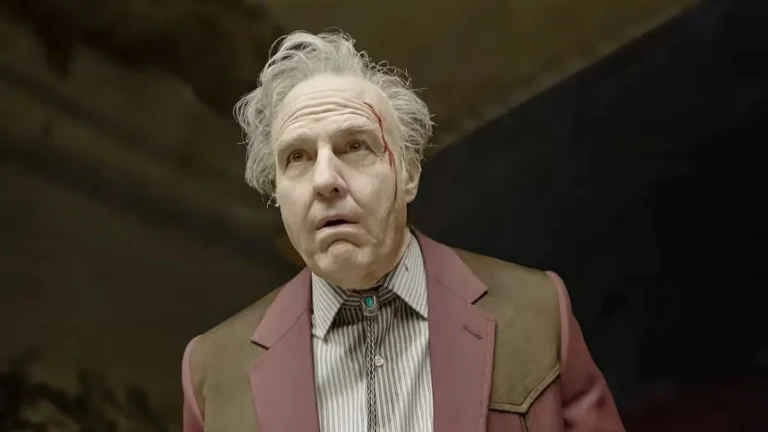
J. Anthony Crane has a particular gift for making dangerous characters impossible to look away from. As Chandler Groff in Outer Banks, he has embraced one of the series’ darkest figures, bringing a volatile mix of menace, charm, and psychological complexity to a character audiences love to hate. But Crane’s career stretches far beyond the Outer Banks, with memorable turns across television, film, and theater, including FBI, Chicago P.D., CSI, and the stage production of Les Misérables.
In this exclusive interview, Crane takes us behind the scenes of Outer Banks, revealing a Season 4 moment that never made it to the screen and discussing how he approached Groff’s fractured psychology. He also opens up about the realities of working on fast-paced procedural television, the art of playing villains without falling into familiar stereotypes, and the role that once terrified him before becoming a major success.
Crane also looks toward the future, revealing the comic book and genre characters he would love to tackle next, from the morally complicated Magneto to the swaggering Gambit, and sharing his enthusiasm for the Hernandez Brothers’ Love and Rockets. Candid, thoughtful, and refreshingly enthusiastic about his craft, Crane offers a fascinating look at what makes a great villain, and why the most compelling ones are rarely as simple as they first appear.
CB: The Outer Banks fandom dissects every frame of the show. Can you exclusively reveal one intense or revealing moment involving Groff from Season 4 that was left on the cutting room floor, but you feel would have completely altered how audiences perceive him?
My first scene shooting on set was a scene in Shoupe’s office, the sheriff. I’m supposed to be broken up about finding Wes Genrette, my father-in-law’s body. I had been working up a full head of steam to go into that scene, and by the time we were shooting, I was bawling. They couldn’t use any of it.
But it definitely affirmed to this new show, these new friends, these new collaborators, that I was ten toes in for this journey.
CB: Having appeared in massive procedural hits like FBI, Chicago P.D., and CSI, you’ve seen how network television operates from the inside. What is the biggest misconception audiences have about how those iconic, fast-paced shows are actually put together behind the scenes?
I think the biggest misconception is that the decisions are cranked out without care. The reality is that these creators have spent so much time with their roles, in the milieu of the show, that they are nearly experts, in analysis, in knowing how their characters are motivated. And they really understand how the scenes should go.
You walk onto set, and there’s such an innate language all around you that you have to kind of hit the ground running.
When I worked on a police show many years ago, I dove in. I did ride-alongs with police officers. I went to crime scenes. I drank beers with the commander of the homicide division. I’m not advising actors start running around with badges, but the deeper you can understand the environment, the better the work will get.

CB: Audiences clearly love you as the antagonist, but it’s easy for the industry to pigeonhole actors into that specific box. Do you ever actively reject villain roles now to avoid being typecast, or do you fully embrace being the guy everyone loves to hate?
Yes, some. There are some authority figures in film that are simply playing roles—just deep patriarchal tropes that are definitely present in the mythology of society. The danger, of course, is that you don’t add to the story beyond being some immovable, unreasonable force.
By contrast, the obvious example is Richard III. He is our perfect villain: he wanted something specific, told you how he was going to get it, and then gloated about it afterward to the audience while sharing the story. That’s when villainy becomes delicious: intimacy and charm.
Part of the trick of playing villains is that, while you understand their deep motivations, you have to come prepared with tools to get what you want. They are overcoming obstacles. They are manipulating. They are dissembling, putting on roles. It’s deception.
And so your head has to be in two places while you’re working, to make the conflict really get electricity. I find it exhilarating.
CB: Looking back at your wide-ranging career, what is the one role you accepted that genuinely terrified you at the time—where you thought, “This might actually backfire if I get it wrong”—but ended up being a massive success?
I played one of the villains in Les Misérables for a couple of years on stage. The character of Thénardier, who everyone knows as the scrounging innkeeper, really is the voice of chaos in the show.
When I started rehearsals, I was sure my mission was simply to get laughs—to be a clown. And I was tied in knots, thinking I was going to flop.
But when I discovered who he is at heart—that he’s a survivor, with no bottom to his shame and no God, really, either—it freed me up to find out what was truly darkly comical about the guy.
A bit like Chandler Groff, really. A parasite.
CB: Given the focus of our site, our readers always want to know about genre properties. If you could officially put it out into the universe right now, which iconic comic book villain or sci-fi franchise are you secretly hoping to tackle next?
I’ve always been keenly attracted to Magneto. He’s a twisted product of very grotesque and cruel circumstances. But his power gives him confidence, charm, and a sense of justice.
But if you’re gonna have some real fun, obviously Remy LeBeau is the guy. Gambit is the ultimate daredevil. He’s Doc Holliday with a staff.
Meanwhile, when people ask me what comics should be made into movies, I’d really just like to see the Hernandez Brothers’ Love and Rockets series be made into a TV show. It’s simply the best thing I’ve ever read. The characters, the everyday neighborhood adventures interlaced with this outlandish surrealism.
Have something to add? Let us know in the comments!