‘Heel’ Ending Explained, And Why Tommy’s Final Choice Lands Like A Gut Punch

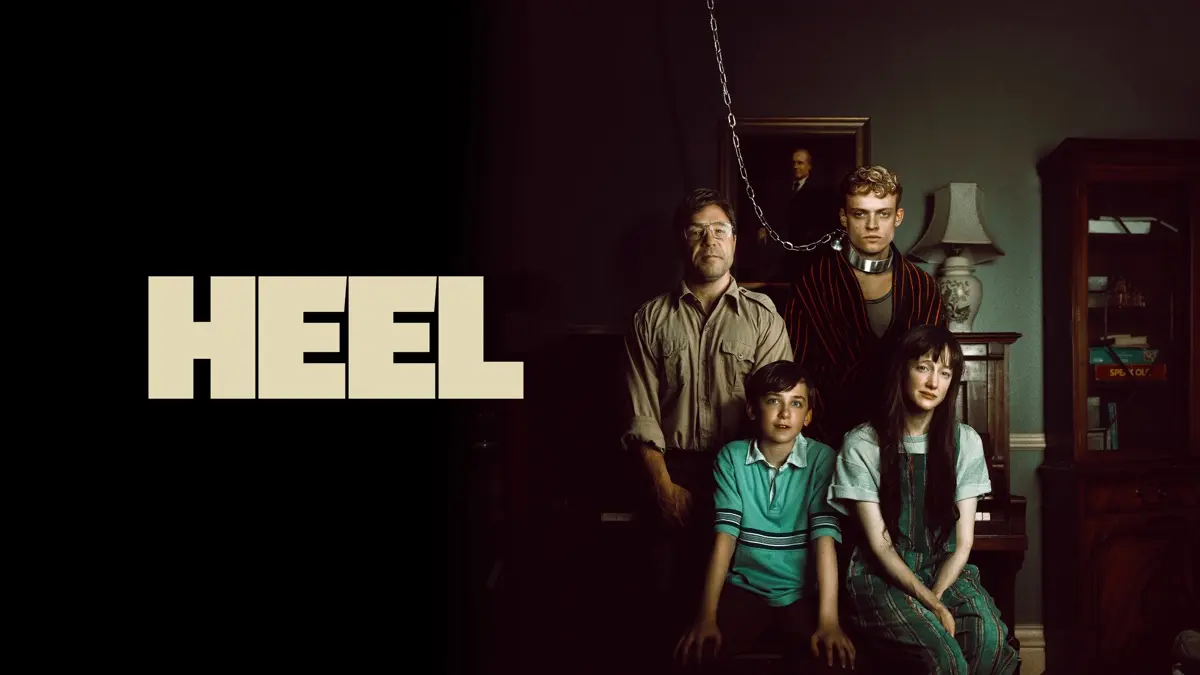

After a long festival run, Jan Komasa’s twisted thriller has finally arrived in wide release with a new title and a finale that audiences cannot stop dissecting. ‘Heel’, originally screened as ‘Good Boy’, follows a feral 19-year-old hooligan who is kidnapped by a polite suburban family and chained up in their basement like a household pet, and the Heel movie ending takes that premise into territory far darker and more emotional than the trailers ever hinted.
Viewers who walked in expecting a straight torture thriller have walked out unsettled for an entirely different reason. The final act is a slow, haunting reversal that forces the audience to ask whether reform is possible, whether trauma rewires identity, and whether a chain can ever start to feel like home. Here is exactly what happens in those last scenes, and why everyone is still arguing about that doorbell.
Inside The Twisted Premise Of The ‘Heel’ Movie
The film opens with a chaotic montage of Tommy, played by Anson Boon, doing lines in club bathrooms, picking fights, cheating on his girlfriend Gabby, and uploading his worst behaviour to his Instagram. During a night out with Gabby, Tommy becomes heavily intoxicated, is separated from his friends, and is abducted on the street by an unknown assailant. He wakes up chained by the neck in the soundproofed basement of an isolated countryside home.
His captors are Chris, played by Stephen Graham, and his wife Kathryn, played by Andrea Riseborough, who live with their unsettlingly polite young son Jonathan. Chris, speaking in measured, almost paternal tones, explains that Tommy has been “saved” because conventional society fails people like him. Their plan is to forcibly rehabilitate him through routine, classical music, books, and forced viewings of his own bullying clips.
The film had its world premiere at the 50th Toronto International Film Festival on 5 September 2025, and the screenplay, originally written in Polish and set in Warsaw, was adapted into English and set in Yorkshire to appeal to a wider audience, marking Komasa’s first English-language film. The title was reportedly changed from “Good Boy” so the film would no longer be confused with Ben Leonberg’s 2025 horror movie of the same name.
Breaking Down The ‘Heel’ Ending Beat By Beat
As weeks pass, Tommy slowly softens. Kathryn begins giving him books to read, the family allows him to watch movies with them, and Chris constructs a ceiling-mounted track system that lets him move throughout the house with combination locks installed to control his movement. He bonds especially with Jonathan and even helps arrange a romantic garden dinner for Kathryn.
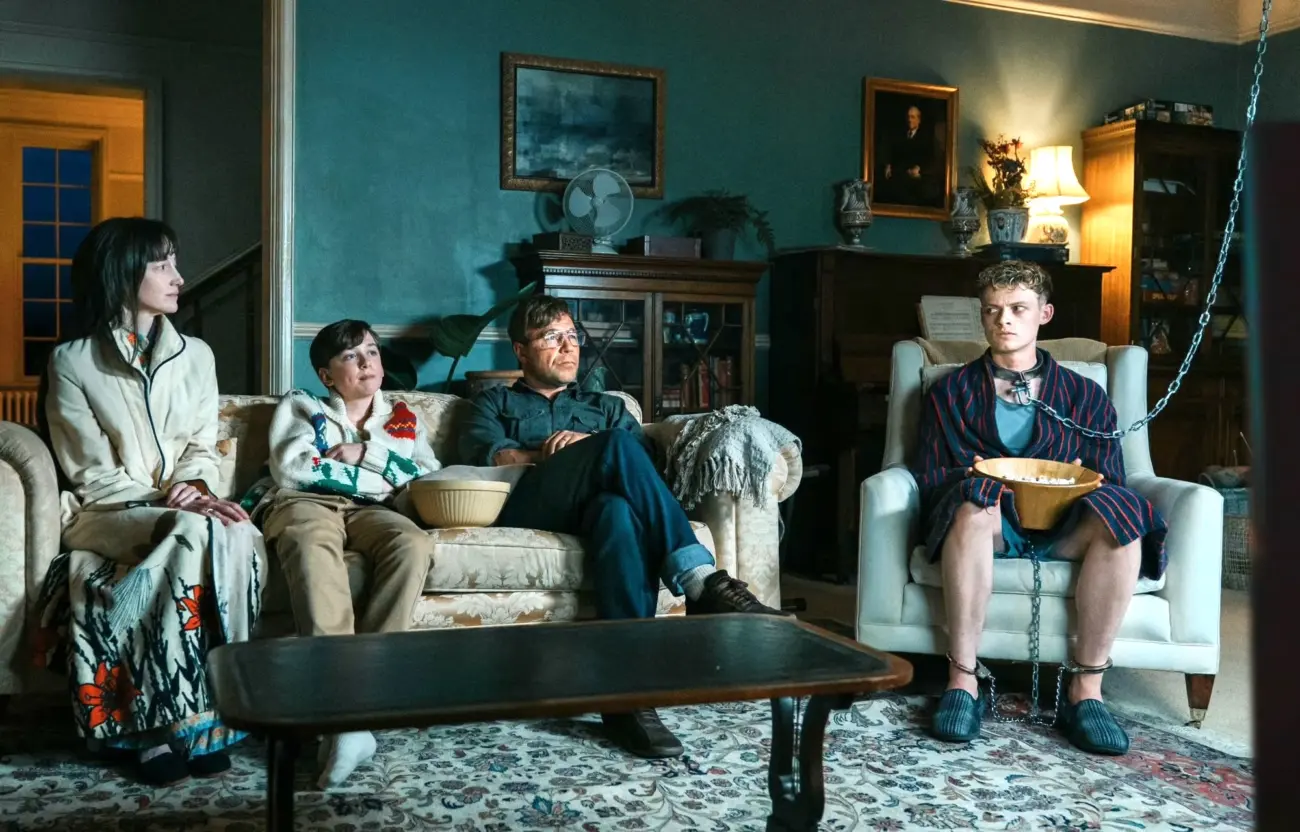
The housekeeper Rina, before her family forces her to leave, slips Tommy a lock code and a hidden skewer. Using the skewer and stacked books, Tommy breaks free, confronts an armed Chris in the living room, and disarms him after a struggle, but cannot pull the trigger. Kathryn, in panic, nearly turns the gun on herself just to keep Tommy from walking out the door.
The family ultimately releases him to avoid escalation, and back in London, Tommy is hospitalised after being found on the roadside. He initially tells police about the kidnapping but later retracts the statement, and he learns his mother never even reported him missing while only Gabby had filed the complaint.
The ‘Heel’ Movie Ending Explained And What Tommy’s Return Really Means
Free at last, Tommy finds the outside world hollow. The emptiness of his old life crashes in, with no structure, no care, just indifference, and the Heel ending hinges on this slow realisation that he has been changed in a way he cannot undo.
After watching Gabby spiral into the same destructive partying he once lived in, Tommy decides to “save” her the way Chris saved him. He chloroforms her, burns his car to erase traces, drives to the mansion wearing his old collar, rings the bell at the gate, and is joyfully welcomed inside by Chris, Kathryn, and Jonathan. The camera lingers on his calm, almost serene face as the door closes.
The ending implies Tommy has fully internalised the ideology of coercive reform and may now help enforce it on Gabby, closing the cycle, and the film deliberately leaves the line between genuine personal growth and Stockholm syndrome blurred. Tommy had even burned the car he drove to the mansion because he didn’t want Gabby to ever leave.
The mystery of Charlie, the unseen boy whose comic books still sit in Jonathan’s room, never receives a clean answer. It is left unclear whether Charlie was a biological brother or another hostage, whether he died, took his own life, or simply ran away, and that absence is precisely what fuels Chris and Kathryn’s ongoing project.
Stephen Graham, Anson Boon, And The Heart Of A Disturbing Thriller
Reviews for the film have skewed positive overall. Metacritic assigned it a score of 63 out of 100 based on 17 critics, indicating “generally favorable” reviews, and critics have repeatedly invoked ‘A Clockwork Orange’ and Yorgos Lanthimos when describing the tone. Damon Wise of Deadline wrote that the strangeness of the premise does a lot of heavy lifting, but the performers literally bring character to what might easily have been a one-note movie.
Speaking to Dazed, Graham broke down his approach to Chris in detail. He explained that Chris is from Birkenhead, met his wife at university, joined the police force, and had aspirations to be part of her well-educated, affluent world, leaving him feeling out of place but willing to do anything for her. Graham added that Tommy comes from a supposedly good home where his mum is more interested in yoga than her missing son, which is the dysfunction the two characters secretly share.
Anson Boon, who previously played Johnny Rotten in Danny Boyle’s miniseries ‘Pistol’, has been singled out for a transformative performance that swings from feral menace to something gentler by the final act. Roger Ebert’s review compared the household to a preppy, British Addams Family with the sinister vibes of Christian fundamentalists, which is probably the cleanest summary of the strange spell the film casts.
So when Tommy stood at that gate with Gabby in his arms and rang the bell that Kathryn had gifted him, what did you read in his face, peace, surrender, or the first frame of a horror story Gabby is about to live through.