‘Klara and the Sun’ Ending Explained: Does Josie Survive Taika Waititi’s Sci-Fi Drama?



With contemporary cinema continually probing the boundary between artificial intelligence and human vulnerability, science fiction adaptations have embraced increasingly reflective, character-driven narratives. Director Taika Waititi stepped into this delicate cinematic landscape with his feature adaptation of Nobel laureate Kazuo Ishiguro’s acclaimed novel ‘Klara and the Sun‘. Starring Jenna Ortega and Amy Adams, the dystopian drama arrived in theaters following its world premiere at the BFI London Film Festival.
Anticipation for the ambitious literary project expanded when Deadline reported that young actors Mia Tharia and Aran Murphy had joined the production alongside Steve Buscemi and Natasha Lyonne. Working alongside co-screenwriter Dahvi Waller, the filmmaker sought to capture the melancholic fable of an empathetic, solar-powered companion navigating an emotionally detached society. Yet, the quiet final moments of the film have prompted viewers to unpack the fate of its robotic protagonist.
The Dark Contingency Behind Klara’s Adoption
At the core of the narrative is Klara, an older-generation B1 model Artificial Friend whose exceptional observational skills allow her to process human behavior with profound curiosity. Chosen from a storefront by a sick 14-year-old girl named Josie, Klara integrates into a household plagued by chronic sickness and lingering sorrow. Josie suffers from severe physical deterioration caused by complications from “lifting,” an expensive genetic enhancement process that previously claimed the life of her older sister, Sal.
While Klara initially believes her singular mission is to relieve Josie’s loneliness, Josie’s mother, Chrissie, conceals a chilling secondary motive. Chrissie routinely brings Josie to the studio of Mr. Capaldi, an eccentric engineer who is secretly constructing an exact prosthetic replica of the young girl. Devastated by the prospect of losing another daughter, Chrissie intends to map Klara’s downloaded consciousness into the synthetic body to replace Josie if she dies.
Rather than viewing the arrangement as an act of deceit, Klara approaches her role with selfless devotion. Because she depends entirely on solar rays for power, the android views the sun as a benevolent deity capable of performing miraculous healing. Refusing to resign herself to becoming a manufactured substitute child, Klara embarks on a desperate spiritual quest to earn the sun’s favor and heal her ailing companion.
The Sun’s Miracle and Josie’s Recovery
Convinced that industrial smog is obstructing the sun’s benevolent gaze, Klara sneaks away to sabotage a polluting machine across the rural landscape. To disable the mechanism, Klara pierces her own cognitive casing and sacrifices a measure of the specialized PEG nine fluid that powers her artificial mind. The physical sacrifice permanently damages her processing unit, leaving her sensory perception distorted and glitchy.
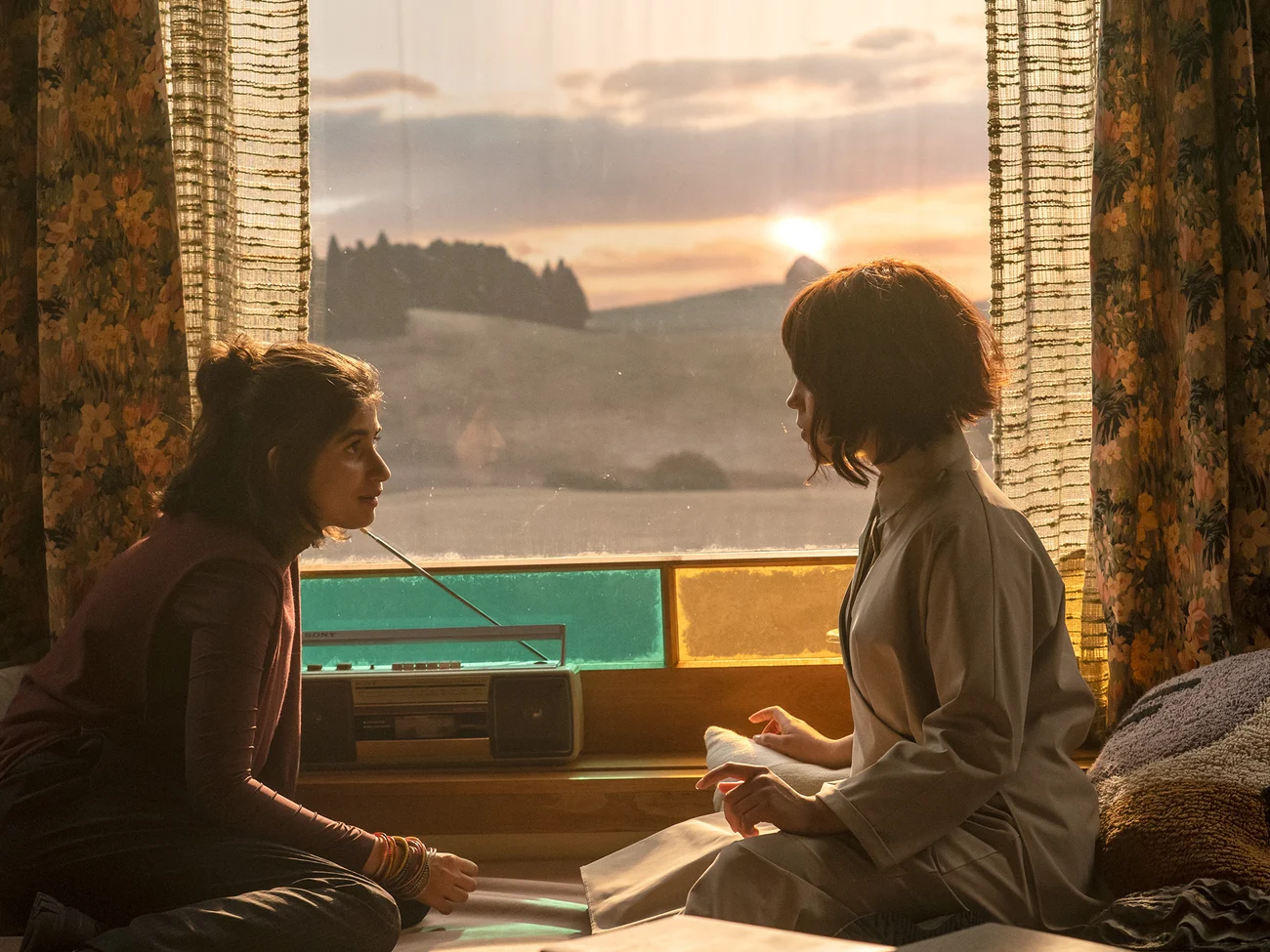
Josie plunges into a critical state shortly after, leading Klara to make one final, heartfelt pilgrimage to a nearby hilltop barn. There, Klara pleads for divine intervention, reminding the sun of the genuine, enduring love shared between Josie and her unlifted childhood friend, Rick. During the girl’s darkest hour, the clouds suddenly part, pouring a brilliant beam of morning light into Josie’s bedroom that miraculously stabilizes her failing body.
Josie steadily regains her strength over the following years, outgrowing the terminal illness that once defined her adolescence. As Josie prepares to leave home for college, her youthful connection with Rick naturally fades, and her reliance on an Artificial Friend ends. Josie offers a gentle, emotional farewell to Klara, acknowledging that she must step out into the wider world on her own.
The Yard and the Essence of the Human Heart
Having fulfilled her purpose, an obsolete and structurally degraded Klara is retired to the Yard, a tranquil junkyard for discontinued artificial companions. Her former Store Manager visits her among the scrap, discovering that Klara harbors no resentment toward the human family that discarded her. Klara reflects that Capaldi was wrong to assume a human being could ever be replicated, because a person’s soul does not exist within the individual alone, but inside the people who love them.
The creative team weighed this emotional complexity while speaking to The Guardian, where Ishiguro noted, “The thing we call love, for example, is incredibly noisy and multifaceted.” While her internal battery slowly depletes under the evening glow, Klara sits in peaceful contemplation, content with the life she protected.
How did you interpret the bittersweet ending of ‘Klara and the Sun’, and do you think Klara received the closure she deserved?