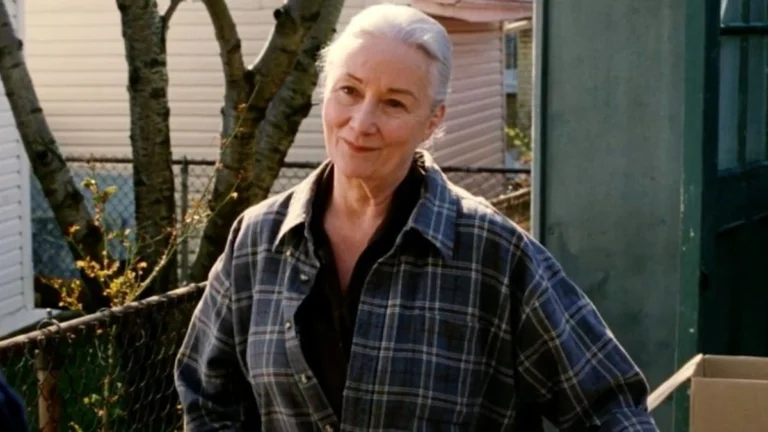
Olivia Wilde’s ‘I Want Your Sex’ Ending Explained: The Fans Are Debating What Really Happened Between Erika and Elliot


Olivia Wilde’s latest film is not the kind of movie people quietly forget once the credits roll. The erotic thriller has become one of the more talked about films of the year, with much of the conversation centered on how the story actually concludes.
Directed by Gregg Araki, the film follows a character named Elliot, who lands a job working for artist Erika Tracy and becomes her sexual muse. That setup alone tells you this is not a typical romance, and the way it wraps up has only made viewers more curious about what the story is actually trying to say.
The Setup Behind the ‘I Want Your Sex’ Ending
The film frames its entire plot around a mystery. As the movie opens, Elliot stumbles out of Erika’s posh mansion in a blood-splattered pink bra and panties, only to discover his boss floating face down in the pool. That grim discovery kicks off the rest of the story as a flashback, with Elliot initially considered a suspect in Erika’s death.

Erika Tracy is played by Olivia Wilde as a once successful and swaggering artist whose primary interest is what happens in the bedroom. The relationship that develops between her and her assistant is the emotional and narrative engine of the entire film, and it is what everyone walks away wanting to unpack.
Olivia Wilde plays Erika as an artist whose work is erotically charged and outrageous, so outrageous that it is hard to tell if Araki is celebrating her or satirizing her. That ambiguity is baked into the character from the start, and it colors everything that follows once Elliot enters her orbit.
Erika Tracya and Elliot’s Relationship at the Center of the Story
As Erika enters into a complicated and hilarious sexual relationship with her younger assistant Elliot, her motives and actions become even more provocative. Viewers are left asking whether she is a predator abusing her power, a mentor offering hard-won experience, both, or neither.
One of the pleasures of the film is the way it inspires thought and debate regarding both the sexual relationship and Erika’s stances on art, whether she is getting at anything genuinely profound or is simply a poseur. That question is never fully answered, and that appears to be intentional.
Wilde’s performance is extremely specific, with every gesture and expression timed for maximum comic effect, yet she also acts as a kind of Rorschach test for the audience. How a viewer ultimately feels about Erika and her dynamic with Elliot depends heavily on their own age, background, and personal history.
Reviewers have also pointed out how the relationship escalates beyond the physical. As Elliot becomes consumed by his fantasies, sex slowly stops being something he experiences and instead becomes his entire personality, with the film treating it almost like an addiction that damages friendships and relationships around him.
What the Final Scene and Song Choice Reveal
The film closes on a specific musical note that several viewers have pointed to as its final statement, with the choice to end on Jessie Ware’s ‘Free Yourself’ functioning as the finishing touch on the entire ride. That song choice reinforces the film’s broader argument, that Elliot’s ordeal with Erika was ultimately about liberation rather than pure victimization.
Other reviewers landed on a similar read of that closing needle drop. One writeup called the choice to end the film with Jessie Ware’s ‘Free Yourself’ simply the cherry on top of a colourful, funny, incredibly sexual, and visually pleasing ride.
Not every critic is convinced there is a deeper thesis buried underneath the chaos. One review argued there is no important message or perceptive social insight to be gleaned from the film beyond Araki giving young viewers enthusiastic permission to test their own boundaries. That same review went further, noting that once you get past the shock, the plot falls apart, but that hardly matters since Araki achieves his main goal of getting a repressed generation to loosen up about sex.
Gregg Araki’s Twisted Love Story and Its Critical Reception
Reviews out of the film’s festival run have generally been favorable, with 90 percent of 38 critics’ reviews positive on Rotten Tomatoes and an average rating of 7.3 out of 10. That score places ‘I Want Your Sex’ among the better received entries in Araki’s recent filmography.
Trade coverage has framed the movie as something of a comeback moment for its director. Variety critic Peter Debruge described the film as an unconventional rom-com that feels like a natural extension of Araki’s sex-positive sensibility even as it pushes into new territory.
Araki himself has been candid about why he wanted to make the film in the first place. Speaking with Variety at the opening night of OutfestNEXT, Araki said sex is a huge part of his life and that his journey as a person and an artist is all tied to sex, sexual experiences, and relationships, adding that all his movies are about that. Not every response has been glowing, however. One review argued the film is the most visually stilted of the director’s work and, in what it called a more damning commentary on the film industry than on Araki’s own ability to defy it, the first of his films that fails to make its cheapness feel like a feature instead of a bug.
Wilde herself has spoken about why she signed on for a role this exposed. Speaking with Variety at the film’s Sundance premiere, Wilde called the movie an incredibly irreverent, playful take on showing this part of the sexual revolution of a young person, adding that sex is used as a metaphor for something applicable to everybody’s experience.
‘I Want Your Sex’ clearly wants its audience walking out of the theater still arguing about what they just watched, and given how split the reactions already are, that mission seems accomplished. So now that the pool, the blood, and that closing needle drop have all had time to sink in, was Elliot’s journey with Erika Tracy a liberation worth celebrating, or something far messier than the ending wants you to believe?