


Project Hail Mary First Clip Released as Director Explains ‘No Green Screen’ Confusion

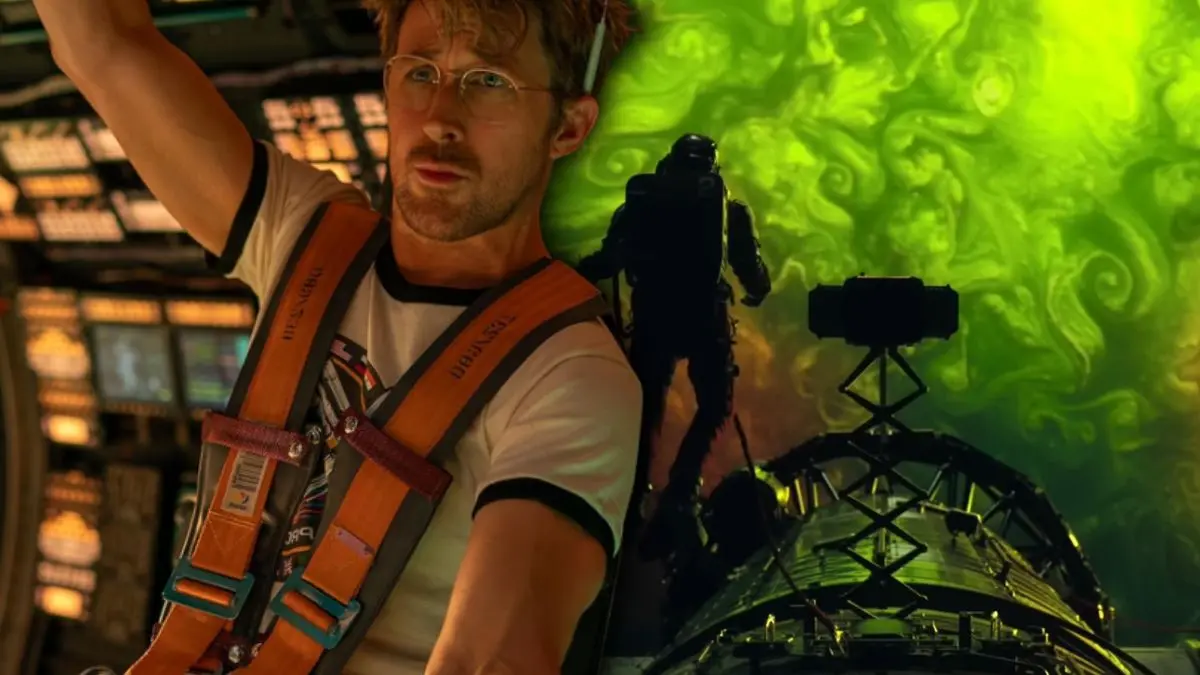


The new sci-fi movie Project Hail Mary is getting attention after its first clip was released online. Along with the footage, co-director Chris Miller spoke about how the movie was filmed and addressed confusion around earlier comments about the production not using green screens.
Miller explained on X that the movie did avoid green screens during filming, but that does not mean visual effects were absent from the project. According to him, the film still contains a very large number of VFX shots.
“Some clarification here: ‘no green screen’ doesn’t mean ‘no VFX’. There were, in fact, thousands of VFX shots in the film (2018!),” Miller wrote.
Some clarification here: "no green screen" doesn’t mean "no VFX”.
— Christopher Miller (@chrizmillr) March 4, 2026
There were, in fact, thousands of VFX shots in the film (2018!)
Green screen is sometimes used in lieu of building sets or figuring out locations/lighting in advance, which can be noticeable if not done carefully,… pic.twitter.com/m5LWzuhTT7
The director said the team simply wanted to rely more on real environments instead of replacing them later with digital backgrounds. Because of that approach, the production built the entire interior of the spacecraft where most of the story takes place.
“Green screen is sometimes used in lieu of building sets or figuring out locations/lighting in advance, which can be noticeable if not done carefully, and is something we didn’t want to do. We built the entire interior of the Hail Mary ship – but within the ship, there were still wire and puppeteer removals and ceiling replacements, etc.”
The story of Project Hail Mary comes from the novel by Andy Weir, who is also known for writing The Martian. In the film, Ryan Gosling plays Ryland Grace, a man who wakes up alone on a spaceship without remembering how he got there or what mission he is supposed to complete. During the journey, he eventually encounters an alien named Rocky, who is also far away from his own world.
Miller also explained how some of the space scenes were filmed. When Gosling’s character appears outside the ship, the production used special backgrounds instead of a typical green screen so the lighting on the actor would look more natural.
Knock, knock, knock. The first #ProjectHailMary clip just dropped — only in theaters & IMAX March 20. Get tickets at link in bio. pic.twitter.com/zoxXRBP7pm
— Project Hail Mary (@projecthailmary) March 6, 2026
“When Ryan is outside on the hull of the ship, we shot him in front of a black background for space and a shifting hue background when he was up against the aurora of a planet which allowed for truer interactive light on him than a green screen would.”
Even with the focus on practical sets, digital work still played a big role in creating the finished visuals. Space environments and exterior shots of the ship were created with computer graphics by Industrial Light & Magic. The alien character Rocky was created through a mix of puppetry and animation by Framestore.
“The wide space exteriors and spaceship shots were entirely digital and beautifully done by ILM. Rocky was a seamless blend of puppetry and animation from Framestore. And other great work from many more. It really does take a village and we had the best of the best on our side.”
Miller directed the movie together with Phil Lord. The pair are known for films like The Lego Movie and 21 Jump Street. They also worked as writers and producers on the animated Spider-Verse films, including Spider-Man: Across the Spider-Verse and the upcoming Spider-Man: Beyond the Spider-Verse.
Project Hail Mary is scheduled to open in theaters on March 20. Early reactions to the film have been very positive, and the newly released clip gives audiences their first look at how the practical spaceship set appears on screen.
It is always interesting to see big productions try to balance real sets with digital work. Practical environments often help actors perform better and can make scenes feel more real for viewers. At the same time, modern visual effects are still essential for large science-fiction stories set in space. What do you think about this approach to filmmaking? Do you prefer movies that rely more on practical sets or those that use heavy CGI? Share your thoughts in the comments.

