‘Rick and Morty’ Season 9 Episode 6 Review: When Rick Goes to War With Himself

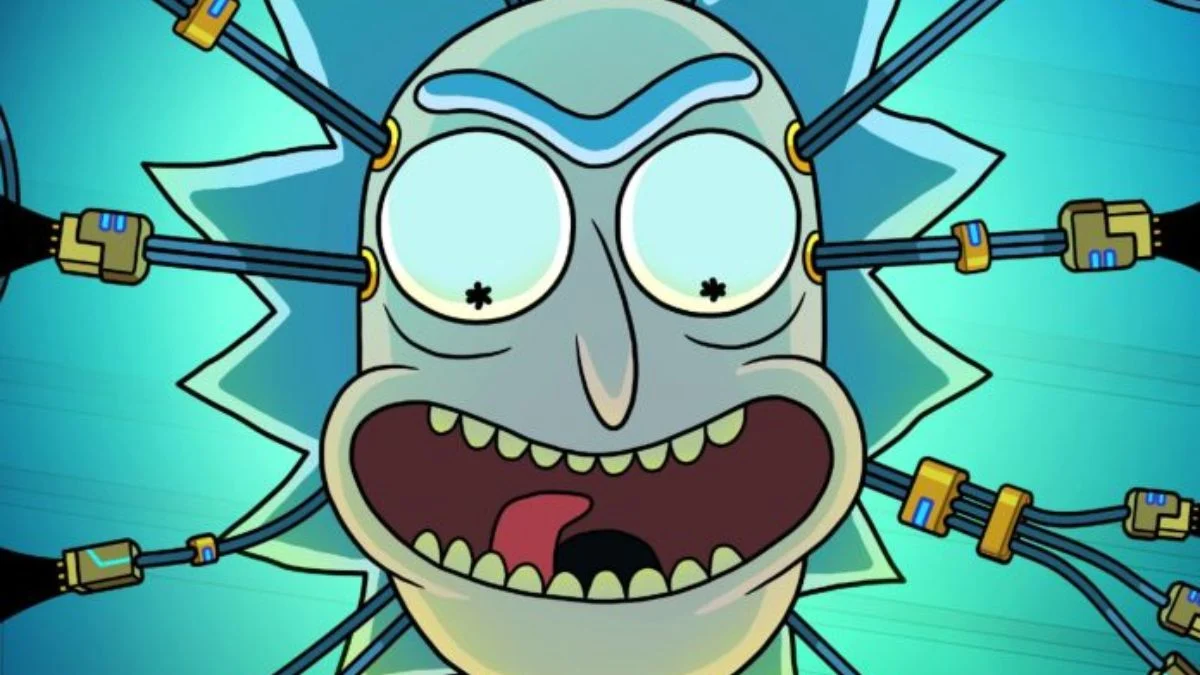

There is a particular kind of confidence required to title your episode after a David Lynch film and then actually deliver something worthy of that conceptual ambition. “Erickerhead,” the sixth installment of ‘Rick and Morty‘ Season 9, arrives at the exact midpoint of the season’s ten-episode run, and it lands with the energy of a show that has quietly been building toward something stranger and more introspective than its reputation might suggest.
The setup begins, as so many great ‘Rick and Morty’ adventures do, with a deceptively mundane disaster. Rick, Morty, and Summer are at an alien tavern where Rick is binge eating and binge drinking, before stumbling through a portal that closes violently on his neck, separating his head from his body on opposite sides of the planet.
What follows is a dual-track chase episode: Morty takes Rick’s head to a hospital while Summer takes Rick’s headless body to a mechanic named Seb, who naturally sells them out almost immediately, because trust, as this season keeps reminding us, is something Rick has never been able to sustain with anyone.
The episode’s genuine stroke of genius is what it does with that separation. Rick’s body, freed from his mind’s interference, hands Summer a letter revealing how it personally feels about her without Rick’s brain buffering in, expressing a wish for her to have a perfect life away from her parents’ shackles. That moment reframes the entire premise.
The physical comedy and the action sequences, which are genuinely spectacular this season, are really just the wrapping paper around a question the show has been circling for years: which part of Rick is actually capable of love? By the time his two halves reunite, the episode has become a touching and sobering examination of how Rick’s mind and body impact one another, and why they’ve decided to go to war with one another, because they’re enjoying the status quo a little too much and have no interest in trusting each other.
Season 9 has been built around a sustained, season-wide self-reflexive exploration of Rick’s character and mental health, making it more strangely cohesive than any season prior. “Erickerhead” is the purest expression of that ambition so far.
Written by Albro Lundy and showrunner Scott Marder, and directed by Eugene Huang, the episode manages to pack a genuine emotional arc, two parallel action storylines, and a meta end-credits gag about Warner Bros. into roughly twenty-two minutes without ever feeling stuffed. The pacing is airtight in a way that the show’s lesser episodes this season have not always been, and the animation, particularly during the fight sequences, has a loose, expressive quality that feels genuinely evolved from what came before.

Spencer Grammer’s Summer is the episode’s quiet MVP. She has been underserved for most of Season 9, and the show earns no small amount of goodwill here by giving her something real to do, and by connecting her to a version of Rick that is genuinely, wordlessly tender toward her.
The headless body’s emotional honesty works precisely because it is so unexpected from a franchise that has built its identity around nihilism and deflection. The risk of tying every episode back to Rick is that it occasionally undermines the supporting cast, but “Erickerhead” finds a way to use that limitation as the episode’s actual subject matter, making Summer’s marginalization part of the point rather than simply a casualty of the writing.
The ending, in which Rick reconciles his warring halves in a manner the episode deliberately refuses to explain, then promptly quits drinking and leads his grandchildren to an intergalactic Olympic swimming bronze medal, is the kind of absurdist gear-shift that only works when the emotional groundwork has been properly laid. Here, it does work, because the preceding twenty minutes have made the audience genuinely curious about which Rick shows up on the other side of that closed door.
“Erickerhead” is ‘Rick and Morty’ doing what it does best when it bothers to reach for it: using spectacle to smuggle in feeling, and using comedy to make that feeling bearable. It is one of the strongest episodes the ninth season has produced, and a reminder of why this show, now well into its run and navigating the long shadow of its own cultural moment, still has the capacity to surprise.
8 out of 10.
Drop a comment below and let us know whether you think “Erickerhead” is the high point of Season 9 so far, or whether another episode has already claimed that title for you.