‘Star Wars: Visions’ Presents – The Ninth Jedi Recap & Ending Explained: Every Twist From Kara’s Rescue Mission and What That Ending Really Means

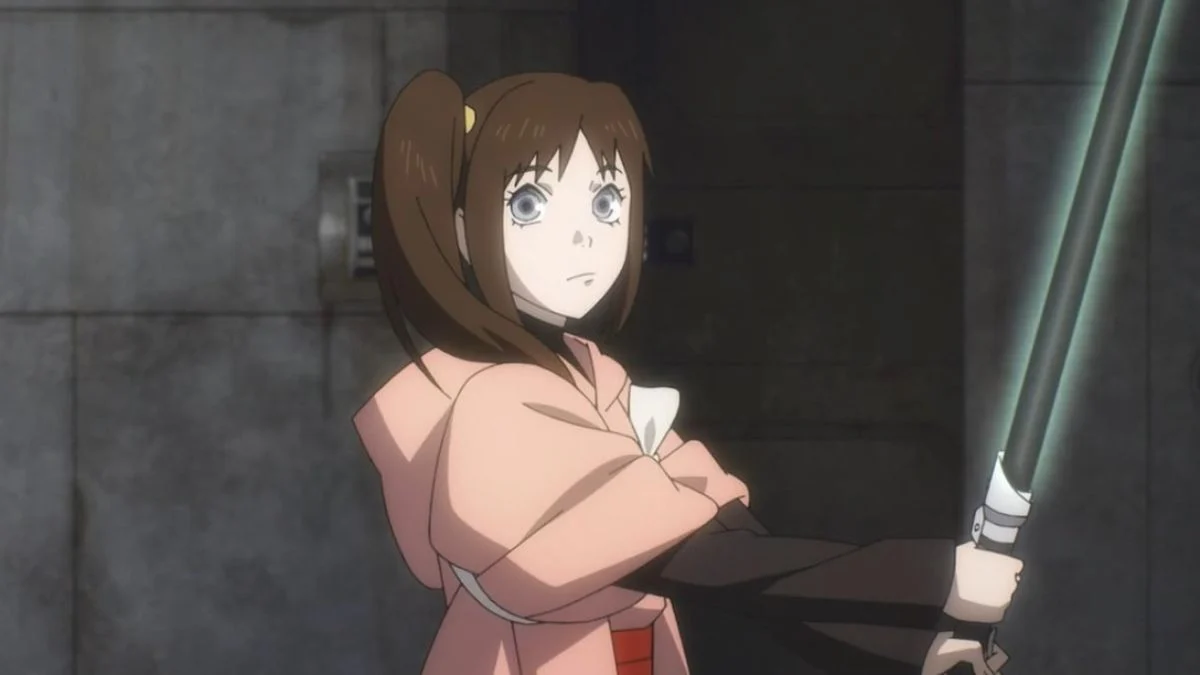

Anime and ‘Star Wars’ have been circling each other for years, but nothing quite prepared fans for what Lucasfilm and Production I.G. just delivered. The partnership traces back to 2021’s beloved ‘Star Wars: Visions‘ anthology, where a single 20-minute short about a girl, her father, and a batch of lightsabers became one of the format’s most requested follow-ups.
That short eventually grew into “The Ninth Jedi: Child of Hope,” and now it has expanded even further into something much bigger. Viewers finally got the full picture of where the story goes next, since every episode dropped at once instead of rolling out weekly.
‘Star Wars: Visions Presents – The Ninth Jedi’ arrived in its entirety on Disney+ and Hulu on August 5, marking the franchise’s first full-length anime series. The eight-episode limited series continues to follow Lah Kara, a Force-sensitive Jedi in training, as she trains under Margrave Juro while racing across the galaxy to rescue her kidnapped father, Lah Zhima, the galaxy’s only known sabersmith.
The stakes kick in early. A bounty hunter named Bee-Toh captures Zhima on the orders of Nawaam, and after the sabersmith finishes building eight lightsabers at Juro’s request, Jedi Hunters seize him and haul him off to Nawaam’s fortress. That single act transforms what had been a quieter training story into a galaxy-spanning search-and-rescue mission.
Nawaam himself functions as the show’s central antagonist, a masked general building an empire out of fear while hunting down anyone connected to the Force. Kara’s fellowship, made up of Juro, Ethan, Homen, and the droid Gramps, gets pulled from one dangerous encounter to the next as the Jedi Hunters close in around them.
The found-family dynamic established in the original shorts carries real weight here, too. Kara’s earlier rescue by the droid Teto, who sacrificed himself so she could keep searching for her father, set an emotional tone that the new series builds directly upon throughout its run.
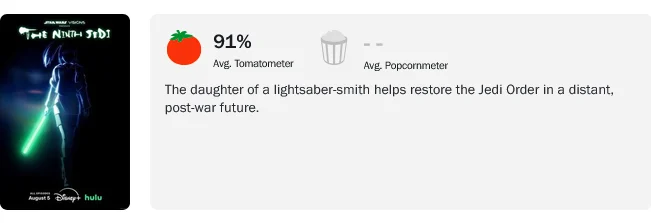
Perhaps the biggest talking point heading into launch was the franchise’s first-ever silver lightsaber, wielded first by Zhima and later ignited by Kara herself during her climactic duel with Nawaam. Because Zhima is the only character in this era who understands how to temper kyber crystals, his connection to the new color hints at something tied to mastery of the Force rather than a simple allegiance to light or dark.
By the finale, that symbolism pays off. Kara’s blade shifts from green to red after she kills a group of enemies without full justification, then settles into silver once she commits to no longer taking a life, while Nawaam’s own blade shifts from blue to silver in the show’s final stretch as his own reckoning plays out.
The blade-color system essentially functions as a mood ring for each character’s relationship with violence and the Force, expanding on the visual language ‘Star Wars: Visions’ established back in 2021. It’s a subtle nod toward the divisive Gray Jedi concept, suggesting killing exists somewhere between purely light and purely dark depending on intent.
Behind the camera, Shunsuke Tada directs the series from a script by Mitsuyasu Sakai, with original short creator Kenji Kamiyama serving as supervising director to keep a direct throughline to 2021. The English dub brings back Kimiko Glenn as Kara, Andrew Kishino as Juro, Masi Oka as Ethan, Patrick Seitz as Homen, and JP Karliak as Gramps, preserving continuity for longtime fans of the anthology.
Early reviews suggest the gamble paid off. The series continues the story of the short films “The Ninth Jedi” from Volume 1 and “The Ninth Jedi: Child of Hope” from Volume 3, which were written by Kenji Kamiyama and produced by Production I.G., and critics have largely praised the expanded format for retaining what made the original short so beloved while introducing genuinely new Force lore.
With all eight episodes now streaming and Kara’s fate settled for now, the door is clearly open for wherever the ‘Visions Presents’ banner goes from here.
What was your favorite part of Star Wars: Visions Presents – The Ninth Jedi?
Have something to add? Let us know in the comments!