‘The Social Reckoning’ Review: Aaron Sorkin Returns to Facebook and Lets Everybody Talk

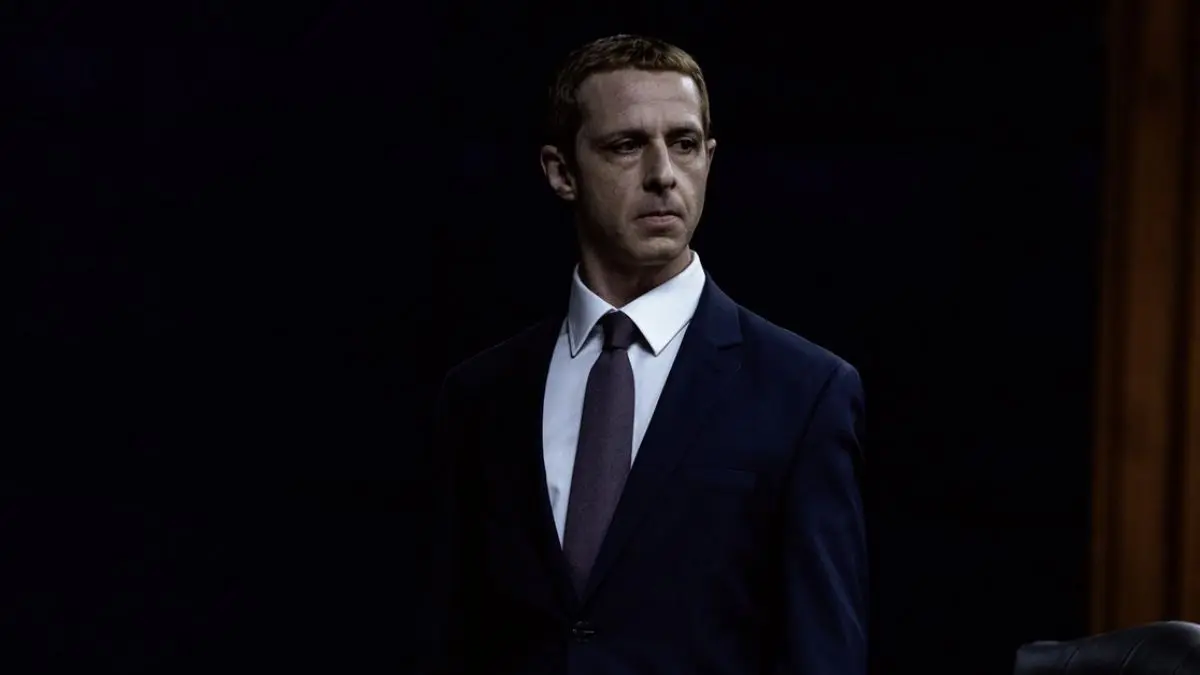

Sixteen years after ‘The Social Network‘, Aaron Sorkin is back in Facebook territory, and this time he both writes and directs. Jeremy Strong takes over as Mark Zuckerberg because Jesse Eisenberg declined to return, which tells you early that this is a companion piece and not a direct continuation.
The story follows Frances Haugen, played by Mikey Madison, a Facebook engineer who brings her troubling discoveries to Wall Street Journal reporter Jeff Horwitz, played by Jeremy Allen White. The film hops between their secretive early meetings and 2021, when Zuckerberg is being coached for a showdown with Congress. It moves along at a brisk 112 minutes, and the pile of unpleasant facts keeps growing.
My reaction to the whole thing is more complicated than I expected. This is a capable, talky and frequently gripping drama, but it is a much plainer machine than the film it follows. It behaves like a procedural about getting a story into print, and the feverish ambition and betrayal that powered the first movie are mostly absent.
Madison is the main reason to buy a ticket. She plays Frances as sharp, guarded and stubbornly principled, and she sells the fear underneath all that competence without ever begging for sympathy. It is a long way from her Oscar winning work in ‘Anora’, and it proves she can carry a film built on conversation.
White makes an ideal partner for her. He spends much of the runtime listening, and he makes that listening active, nudging a nervous source toward bigger risks. Their back and forth has the quick rhythm Sorkin devotees love, even if it occasionally tries too hard to be charming, and a supporting bench including Wunmi Mosaku, Betty Gilpin, Billy Magnussen and Bill Burr keeps the scenes lively.
Strong is cold, rigid and unnervingly controlled as Zuckerberg, yet the character is a secondary presence who disappears for stretches. That leaves the film with a villain defined by his decisions more than by any inner life, which feels like a missed opportunity after the psychological richness of the earlier picture. Burr’s verbal sparring with him over free speech comes closest to recapturing the old Sorkin fire.
Then there are the habits that tend to follow Sorkin everywhere. He explains everything, sometimes twice, and he cannot resist a speech when a glance would do. Intercutting the January 6 attack into the story feels especially heavy handed, and without David Fincher behind the camera the visuals settle for tidy competence where the first film had real menace.
Still, I admire how clearly the script lays out the machinery of outrage. It makes the way engagement driven ranking rewards anger understandable for anyone who has never written a line of code. The film also captures the COVID era and the lead up to that January day with real force, and it left me uneasy about my own scrolling habits.
I came out of ‘The Social Reckoning’ more impressed than moved. It is smart, well acted and often entertaining, but it tells you what to think more than it makes you feel it, and it never approaches the heights of its predecessor. Madison and White alone make it worth seeing, and I give it 7 out of 10.
How did you like 'The Social Reckoning'?
Did Sorkin’s return to Facebook win you over, or do you think ‘The Social Reckoning’ should have stayed in the shadow of ‘The Social Network’, so tell me in the comments?