The ‘Spinning Man’ Ending Finally Explained: Did Evan Birch Actually Kill Anyone?

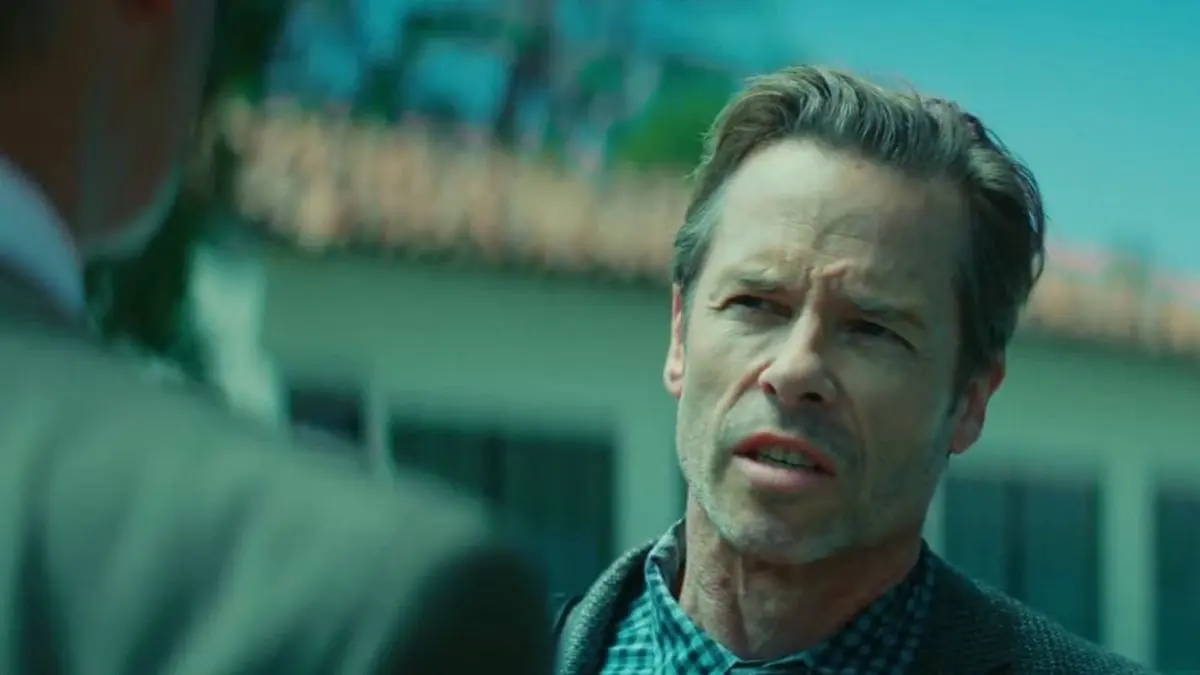

Few thrillers have left audiences scratching their heads quite like ‘Spinning Man,’ the 2018 philosophical mystery that dares to ask not just “whodunit” but whether the suspect even knows what he did. Directed by Simon Kaijser and adapted from George Harrar’s novel by screenwriter Matthew Aldrich, the film stars Guy Pearce, Pierce Brosnan, Minnie Driver, Alexandra Shipp, and Odeya Rush. Years after its release, viewers are still debating what the final act actually means, and for good reason.
The Setup: A Man Who Cannot Trust Himself
The story centers on Evan Birch, a family man and esteemed philosophy professor at a distinguished college, whose previous off-campus dalliances cause his wife Ellen to question his alibi when a high school student named Joyce Bonner goes missing. What makes Evan such an unsettling figure is not just his moral failures, but the gaps in his own memory. Guy Pearce’s facial performance, full of mannerisms and shifty looks, strongly conveys Evan doubting even as he speaks as if he were sure of himself.
Detective Malloy, played with quiet menace by Pierce Brosnan, circles Evan throughout the film in a way that mirrors the philosophical sparring Evan does with his own students. Brosnan’s take on Malloy is almost a more jaded Columbo-esque act of not knowing what he already knows, with all his seemingly unrelated questions being an obvious attempt to build his case against the professor.
The Confession That Changes Everything
By the end of the film, viewers are nearly certain that Malloy has caught the killer. Birch walks into the detective’s office and asks him if he ever has trouble remembering the past. It is a loaded question from a man who has spent the entire film unable to fully trust his own recollections. Evan ultimately confesses, but the moment is far more complicated than it first appears.
Joyce did not die the way Evan remembers. She fell from a cliff on the opposite side of the lake in which she was found dead, a location inconsistent with Evan’s account. This single detail tears the confession apart. Did Evan kill Joyce, or did he confess to something he only believed he did because everyone around him had already decided he was guilty?
The Anna Subplot and What It Reveals
Running alongside the murder investigation is Evan’s ongoing affair with his student Anna, played by Alexandra Shipp. At a staff party, Evan and Ellen argue and she leaves abruptly. Evan begins drinking heavily and hooks up with Anna, during which she tells him she loves him. Many viewers initially believed Anna was harmed by Evan near the film’s conclusion, but that reading is a misdirect. Anna did not die. She drove away, telling Evan to stay away from her. The confusion around her fate mirrors the confusion around Joyce’s death, which is very much the point.
Evan is still guilty of having an affair with Anna and cheating on his wife Ellen, even if his role in Joyce’s death remains genuinely unclear.
The Mouse on the Wheel
Towards the end of the film, Evan wanders up the stairs of his home and a mouse in a spinning wheel cage momentarily captures his eyes. It is an obvious metaphor, but not an unearned one based on the film’s previous 95 minutes. The image of something running endlessly and going nowhere perfectly captures Evan’s situation. He is a man trapped in cycles of deception, self-doubt, and the impossible task of reconstructing a truth he may never have had access to.
Philosophy as the Real Detective
What ‘Spinning Man’ is ultimately exploring is not a murder mystery in the conventional sense. What lies beneath the entire film is the question of memory and how accurate or reliable any single person’s account of anything really is. The philosophical question is raised about whether something becomes the truth if a large enough number of people confirm it. Evan teaches his students that reality is a matter of perception, and the film turns that idea against him entirely.
Less of a police procedural and more of a dry treatise on the nature of logic and truth, ‘Spinning Man’ gains points for trying something clinical wrapped in the usual murder thriller packaging. The chair that Evan uses in class as a philosophical prop, challenging students to prove it exists, becomes a haunting symbol for Evan’s own guilt. What really happened? The film leaves that stubbornly open.
The film concludes on a note of ambiguity, inviting reflection on the nature of guilt and the complexities of human relationships. Whether that ambiguity feels like a rewarding puzzle or an unsatisfying evasion largely depends on the viewer, which may explain why the film remains so divisive years later.
Drop your interpretation of the ending in the comments below, because with ‘Spinning Man,’ there is clearly no single answer.