‘The World to Come’ Ending Explained: What the Movie Really Means With That Devastating Ending

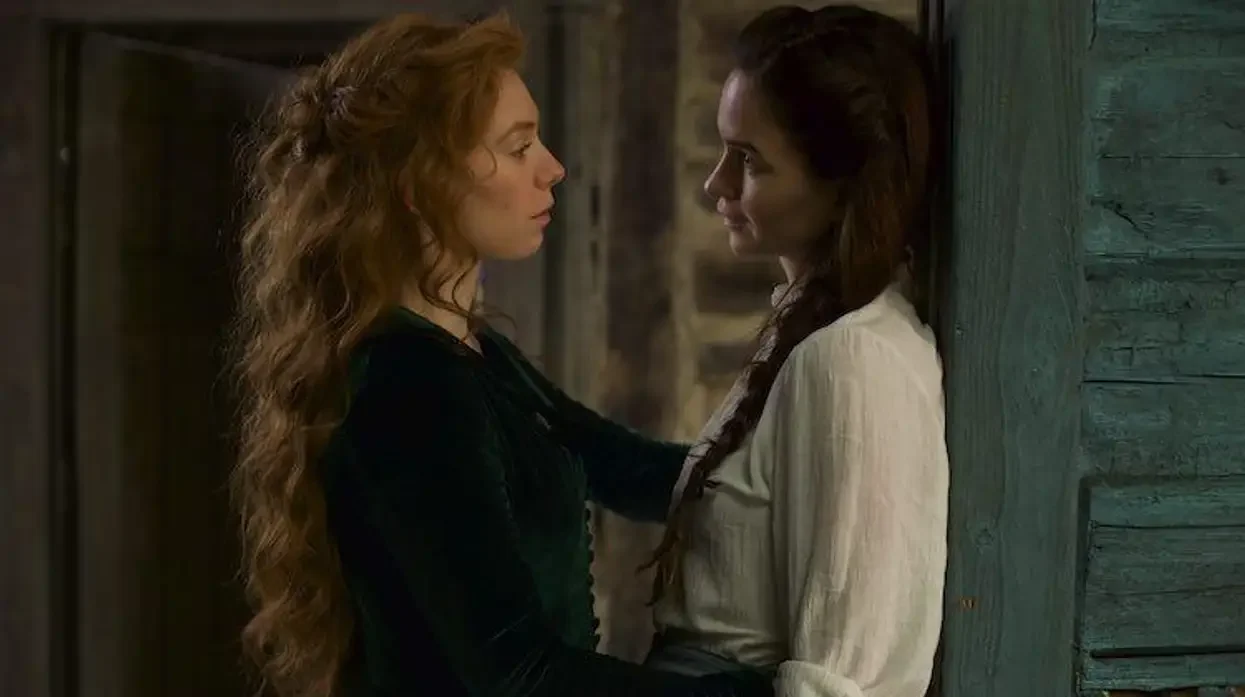

Few films in recent memory have weaponized silence and landscape quite so precisely as Mona Fastvold’s ‘The World to Come.’ Set along the mid-19th century American East Coast frontier, the film follows two neighboring couples battling hardship and isolation, tested physically and psychologically by a splendid yet unforgiving landscape. It is, on the surface, a period romance. But beneath its frost and mud and quiet anguish, it is something far more pointed about what it costs to love the wrong person in the wrong century.
The film opens with a journal entry. Abigail, played by Katherine Waterston, mourns the death of her infant child to diphtheria and reflects on the cruelties of her life, remarking with “little pride, and less hope, we begin the new year.” That opening sets the emotional temperature for everything that follows, and it never really lifts, not entirely, even when the film’s most luminous scenes arrive.
A Love Story Told in Diary Entries and Desperation
In 1856 in Schoharie County, Abigail and her husband Dyer live an isolated life working as farmers, both devastated by the recent loss of their young daughter Nellie. A new, similarly childless couple moves in beside them, and Abigail is immediately entranced by Tallie, the wife, with whom she forms a quick and deep friendship. Abigail confides that her marriage is built on practicality rather than feeling. Tallie, for her part, lives under the thumb of the possessive Finney, played with coiled menace by Christopher Abbott.
The film is delivered in careful, spare 16mm that echoes, in its artisanal loveliness, the painstaking hand-written calligraphy in which its titles and intertitles appear. This visual language is crucial. Nothing about ‘The World to Come’ is accidental. Every stylistic choice reinforces the sense that this love affair is being preserved in amber, recorded in the margins of a life that barely acknowledged it.
Brief but intimate afternoon hangouts by the fire grow into longer ones, leading to stolen embraces and kisses, as well as time spent in the woods reading poetry to each other, with the acts eventually taking an even braver turn despite the increasing suspicions of their husbands. The affair is rendered with restraint rather than spectacle, which makes its ultimate destruction feel all the more brutal.
What Finney’s Violence Actually Reveals
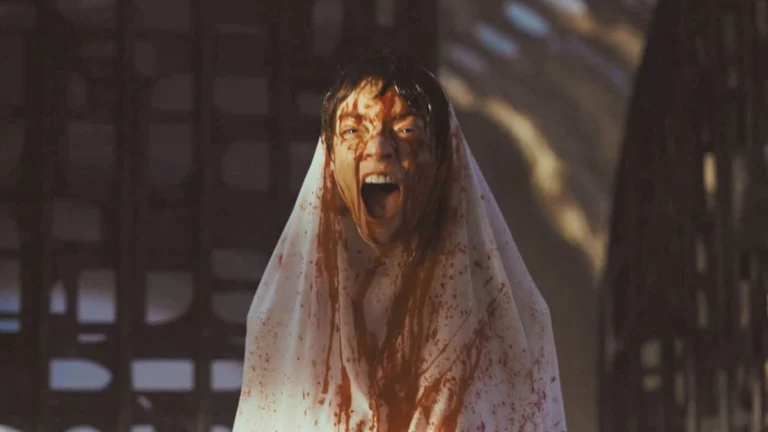
Finney eventually invites Abigail and Dyer to dinner, where he uncomfortably brings up their lost child and Abigail notices bruises on Tallie’s neck. Afterwards, Tallie stops visiting for a week. When Abigail finally searches for her, she finds the rented house empty, with only a bloody kerchief left behind. It is one of the film’s most chilling turns, the violence implied rather than depicted, its horror amplified by what is left unseen.
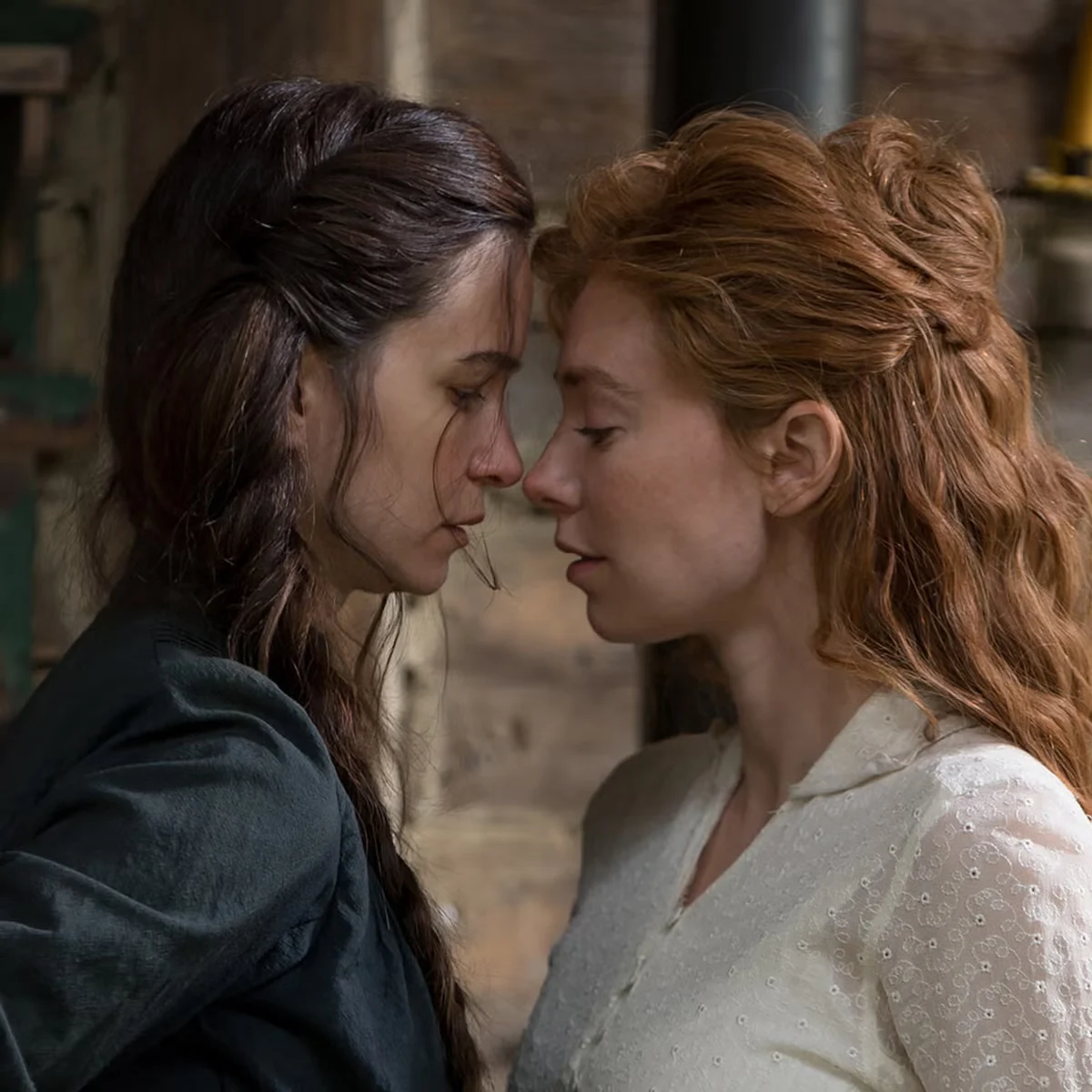
Tallie and Finney suddenly move away, and their empty house contains evidence of violence. When Abigail and Dyer finally track the couple down, Tallie is dead, and Finney claims, unconvincingly, that illness took her. The official cause given is diphtheria, the same disease that already claimed Abigail’s daughter, a detail that feels cruelly symmetrical. No one in the film challenges Finney’s account. No one can.
The film adds narration just before the credits in which Abigail vows to someday exact violent revenge on Finney for what he has done. It is a quietly electrifying moment, one of the few in which Abigail’s inner voice hardens into something closer to fury than grief. Whether or not that revenge ever comes is left entirely to the imagination.
The Roof Scene and the Meaning of the Final Image
The film’s closing coda is a two-minute roof scene in which Abigail lies on the roof tiles with Dyer beside her. With evident fatigue on her face and tears welling up, the body lying alongside her shifts to Tallie’s. Tallie murmurs, “it’s a good thing we remember that our imaginations can always be cultivated,” and the screen angles away from a tranquil image of the two women together. It is a vision, not a reunion. But the film treats Abigail’s imagination as its own form of survival.
Vanessa Kirby describes the film as being about “two women trying to find a way out of their pain,” suggesting that one of the tragedies is that these women had their imagination “snuffed out” and could not see beyond the trees that surrounded their respective homes. The final image, then, becomes the film’s quiet act of defiance. If the physical world offered these women nothing, the mind would have to be the place where they could exist together.
The ‘Bury Your Gays’ Conversation and What the Film Owes Its Audience
Vanessa Kirby, during the press rounds, spoke of feeling like the film’s title was a nod to a brighter future, for women especially, noting that a lot of women today have more freedom and opportunity than Tallie or Abigail ever would have enjoyed. That framing offers some light to hold against the ending, though critics were divided on whether the film earns its bleakness.
Some queer critics expressed deep frustration, noting that a period lesbian love story written by two straight, cisgender men would almost certainly end in tragedy, and that the ending felt like a disappointment after so much that was genuinely beautiful. The debate around the “Bury Your Gays” trope is not trivial, and ‘The World to Come’ sits directly at its center, neither fully condemning nor clearly endorsing the convention it relies upon.
In an interview with Deadline, Kirby spoke about Tallie as “a bright light that gets sort of extinguished,” adding that she was moved by the idea that “you can’t choose who you love and you can’t even choose to do what you like.” That tension, between desire and impossibility, is ultimately what the film is most honestly about.
What the Title Has Always Been Pointing Toward
The film had its world premiere at the 77th Venice International Film Festival, where it won the Queer Lion award for best LGBTQ-themed film. The recognition feels appropriate for a film so invested in the idea that queer love, even when destroyed, refuses to disappear entirely. Abigail’s journal keeps it alive. Her imagination insists on it.
As one analysis puts it, the world to come had not yet arrived for these women, who, in many material ways, could not have survived without their husbands. The title is not ironic. It is genuinely hopeful, just not for the characters inside the story. The world to come is the one the audience already inhabits, a fact the film asks viewers to carry with them past the credits.
Tallie might have been physically gone, but her spirit permeates the film’s final moments like gentle incense, and that is precisely the point. ‘The World to Come’ does not promise its characters a happy ending. It promises them memory, imagination, and the faint possibility that somewhere across the centuries, someone will understand what they lost. Now that you have seen how the film chooses to end Abigail and Tallie’s story, do you think the roof scene gives the film enough grace to justify the tragedy, or does it still feel like a door closed too soon on two women who deserved more?