What Is Quinine in Netflix’s ‘Little House on the Prairie’s’ Fever Storyline


Netflix’s ‘Little House on the Prairie‘ has viewers reaching for the search bar over one very specific word, quinine, and the medicine at the center of the show’s harrowing fever episode turns out to have a rich and dramatic history of its own. The reimagined series, based on Laura Ingalls Wilder’s novels, dives into a storyline where malaria sweeps through Independence, Kansas, and the Ingalls family is forced to confront just how fragile frontier life could be.
As malaria strikes Independence and the Ingalls family falls ill, George desperately searches for quinine to treat the townsfolk, while the Ingallses hallucinate through their illness. It is a gripping sequence that pulls directly from the source material while adding new layers for the Netflix adaptation.
The Fever Storyline in ‘Little House on the Prairie’
The quinine subplot is rooted in one of the most memorable chapters of Wilder’s original book. The doctor who helps the Ingalls family when they fall ill is based on the real life pioneer physician George A. Tann, who was a neighbor of the Ingalls family. In the show, that character becomes Dr. George Tann, and his search for medicine becomes a central thread of the outbreak episode.
Tann was a Black practitioner of eclectic medicine who lived about a mile from the family and administered the quinine that ultimately saved their lives. That detail gives the Netflix version a chance to expand on a figure who, in the books, appears only briefly but plays a lifesaving role.
The show does not shy away from showing how desperate the situation became for the townsfolk. George discovers that a woman has been hoarding a stash of quinine, and she refuses to give it up when he asks for it, adding tension to an already dire situation. That moment of hoarding becomes one of the more talked about beats of the season.
Why Quinine Mattered so Much on the Frontier
Quinine was not some obscure remedy invented for the show, it was genuinely the go to treatment of the era. Quinine was the most prevalent treatment for malaria from the 17th century until the mid 19th century, when it was eventually replaced by other drugs. That historical grounding is part of why the storyline feels so authentic to fans of the books.
The powder itself was famously unpleasant to take. Sulphate of quinia was the bitter powder taken by the Ingalls family, and it was also mixed into a solution, often flavored with orange, and called tincture of quinia. Anyone who has read the chapter know as Fever ‘n’ Ague will recognize the misery of choking down that bitter dose.
Supply issues around quinine were also very real for settlers in that period. As a dry white powder, quinine was always subject to adulteration, which could render it useless as a medicinal treatment, with additions like sugar, starch, magnesia, or gypsum diluting its potency. That scarcity and unreliability is exactly why George’s hunt for a trustworthy supply becomes such a nail biter in the Netflix version.
Netflix’s ‘Little House on the Prairie’ Cast and Character Additions
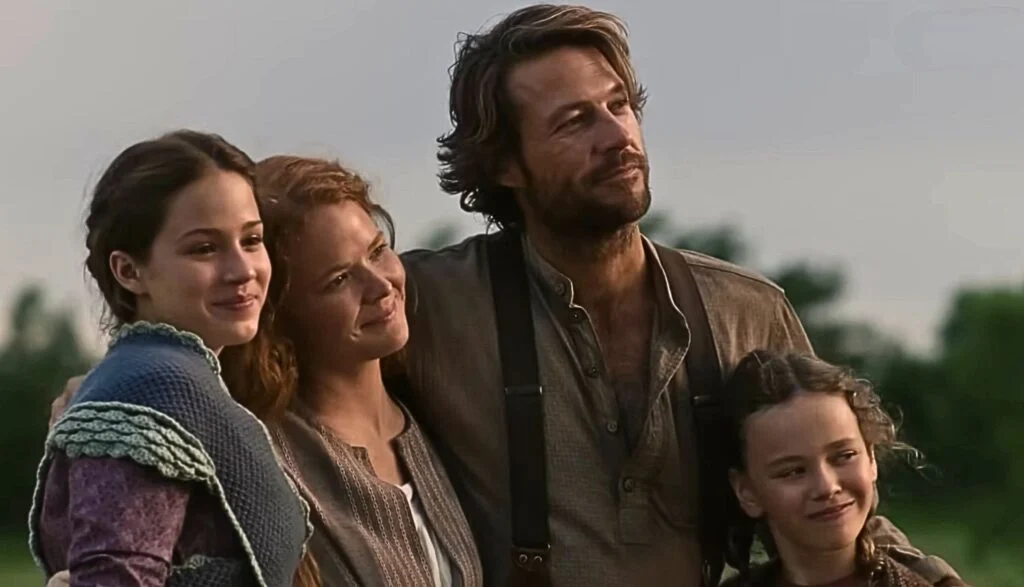
The series stars Alice Halsey as Laura, alongside a new ensemble bringing the Ingalls family and their neighbors to life. The main cast includes Skywalker Hughes as Mary Ingalls, Luke Bracey as Charles Ingalls, Crosby Fitzgerald as Caroline Ingalls, and Jocko Sims as Dr. George Tann. The show also broadens its scope well beyond the original books.
Jocko Sims, who plays Dr. Tann, leaned into research to shape his portrayal for a modern audience. Sims told The Hollywood Reporter that he had not read Wilder’s book before being cast, and that he wanted to understand what mindset his character would carry coming out of the Civil War era, so he began reading Frederick Douglass’s autobiography to prepare.
The adaptation also introduces the Mitchell family and other Osage characters who were largely absent from previous versions of the story. According to Julie O’Keefe, the show’s Osage cultural consultant, an early message from conversations with the Osage Nation was that if the show was going to tell this story, it needed to tell both sides. That expanded perspective has become one of the more praised elements of the reboot.
Season 1 Ending and What Comes Next
Showrunner Rebecca Sonnenshine has been candid about the deeper meaning behind some of the fever episode’s choices. Sonnenshine explained that Gemma’s instinct to hoard quinine during the outbreak was written to reflect modern day pandemic era behavior, balancing good intentions against ingrained social prejudices within the character. It is a rare moment where the frontier setting doubles as commentary on more recent history.
Season 1 wrapped with the Ingalls family deciding to leave Independence behind, and the show has already been renewed for another chapter. Season 2 of ‘Little House on the Prairie’ will be based on the events of Laura Ingalls Wilder’s ‘On the Banks of Plum Creek.’ That means new terrain, new hardships, and presumably a whole new set of frontier dangers for the Ingalls family to survive.
For a show built on Wilder’s deeply personal memories of childhood, it is fitting that a single bitter powder could carry so much weight, both medically and emotionally, across generations of storytelling. With the fever arc behind them and Plum Creek on the horizon, how do you think the Ingalls family’s brush with quinine and mortality will shape the choices they make once Season 2 picks up.