15 Perfect Marvel Castings


Some casting choices do more than fill a role. They anchor entire storylines, launch franchises, or pull scattered universes into a single, connected world. Marvel has a long history across film and television, from early experiments to expansive crossovers, and the right performer in the right part has often been the hinge that made the whole thing work.
This list gathers performers whose roles defined eras, bridged studios, or opened new corners of the Marvel landscape. You will find actors who returned after years away, faces who crossed between separate continuities, and stars who signed multi picture deals that shaped release slates. Every entry focuses on concrete details, from first appearances and training to contracts, crossovers, and awards tied to the projects.
Robert Downey Jr. as Tony Stark
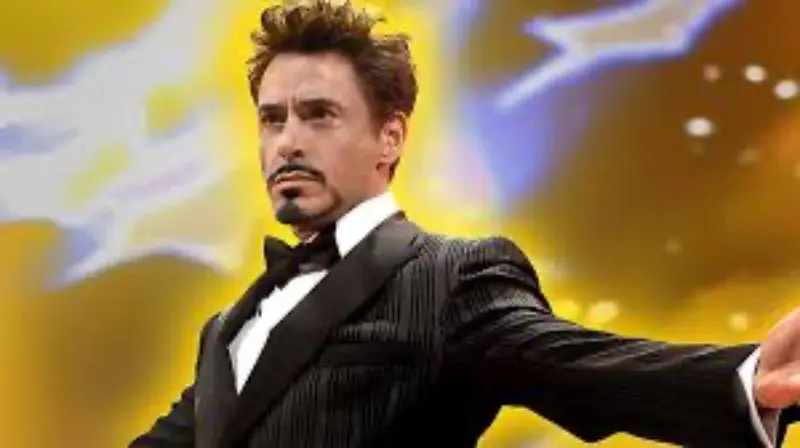
Downey first appeared as Tony Stark in ‘Iron Man’ under director Jon Favreau, with a mid credits cameo in ‘The Incredible Hulk’ that signaled an interconnected plan. He led or co led major ensemble chapters through ‘The Avengers’, ‘Avengers: Age of Ultron’, ‘Avengers: Infinity War’, and ‘Avengers: Endgame’, while also headlining ‘Iron Man 2’ and ‘Iron Man 3’. His Stark tech and S.H.I.E.L.D. ties became narrative glue across early releases.
Marvel structured long term agreements around his availability, including renegotiations that tracked with expanding budgets and ensemble screens. The character’s arc crossed into ‘Captain America: Civil War’ and ‘Spider Man: Homecoming’, where Stark’s mentorship of Peter Parker served both Sony and Marvel Studios storytelling. The role’s finality in ‘Avengers: Endgame’ closed a chapter that began with the very first Marvel Studios film.
Chris Evans as Steve Rogers
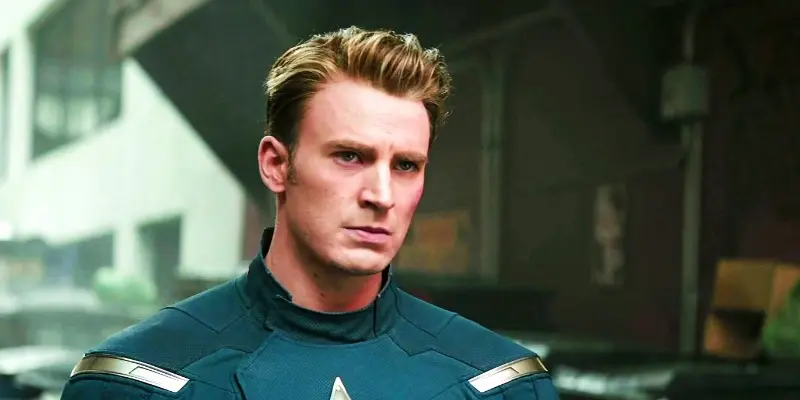
Evans debuted as Steve Rogers in ‘Captain America: The First Avenger’, with Lola VFX delivering the pre serum look by mapping his performance onto a smaller body double. He carried the character through ‘Captain America: The Winter Soldier’ and ‘Captain America: Civil War’, as well as the four core ‘Avengers’ films, and appeared briefly in ‘Thor: The Dark World’ during a Loki illusion and in ‘Spider Man: Homecoming’ through school PSA videos.
His shield work relied on a mix of practical choreography and digital assists for ricochet beats. The trilogy’s shift from wartime period drama to political thriller broadened the character’s range, while the final act in ‘Avengers: Endgame’ concluded his timeline thread. Evans’s final appearance brought closure to the Infinity Saga arc for the original team.
Hugh Jackman as Logan Wolverine
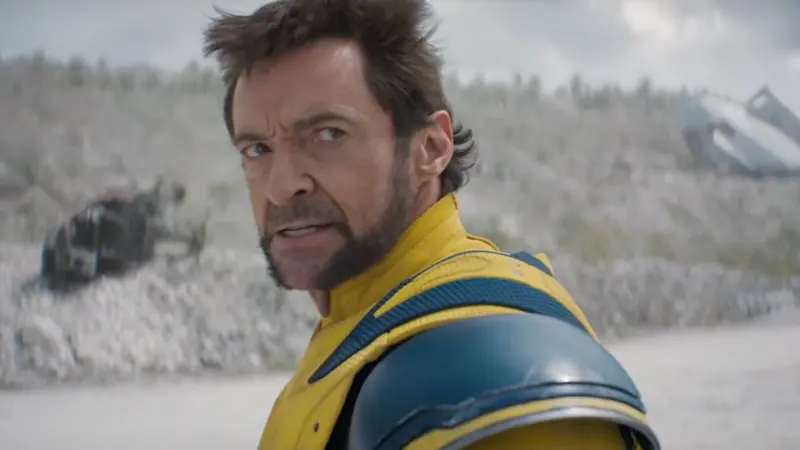
Jackman began as Logan in ‘X Men’ and continued through entries that included ‘X2’, ‘X Men The Last Stand’, ‘The Wolverine’, and ‘Logan’. He made cameos in projects like ‘X Men First Class’ and returned alongside Ryan Reynolds in ‘Deadpool & Wolverine’, linking the character’s Fox era history with newer multiverse storytelling.
The production history covers changes in tone and rating across titles, from team ensemble structures to character driven chapters. Fight choreography emphasized extended claw beats and close quarters movement, while makeup and practical effects handled wounds and regeneration. The role’s longevity spanned multiple directors and studio phases, creating one of the longest continuous runs for a Marvel character on screen.
Ryan Reynolds as Wade Wilson Deadpool
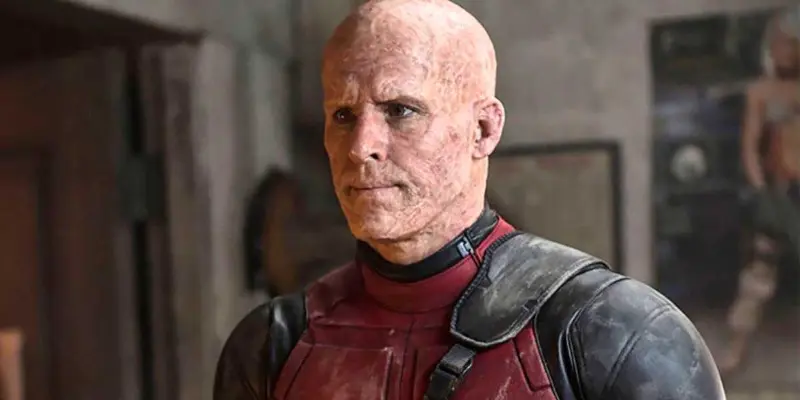
Reynolds first played Wade Wilson in ‘X Men Origins Wolverine’, then shepherded a version closer to the comics with ‘Deadpool’ and ‘Deadpool 2’. Test footage screenings helped secure the green light, and the films established a rated R lane for Marvel related projects outside the core family audience.
‘Deadpool & Wolverine’ expanded cross studio connections, pulling legacy characters into shared narrative space. The series features consistent creative teams across writing and producing, fourth wall humor integrated into action design, and practical suit work alongside digital augmentation for facial expressions. Reynolds’s continued involvement in development shaped the character’s path across multiple releases.
Tobey Maguire as Peter Parker Spider Man
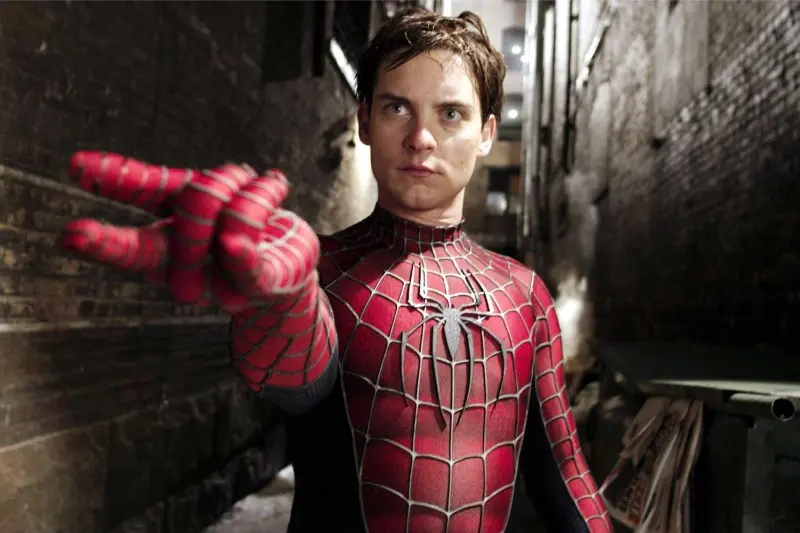
Maguire led Sam Raimi’s trilogy with ‘Spider Man’, ‘Spider Man 2’, and ‘Spider Man 3’, establishing the New York setting, Daily Bugle framework, and organic web shooters unique to that continuity. The films set visual standards for swinging sequences with a combination of practical stunts and digital doubles.
He returned in ‘Spider Man No Way Home’, which integrated characters from different eras into a single story. The production coordinated suit designs, web styles, and shared battles to align multiple versions of Spider Man on screen. That appearance officially linked the Raimi timeline with current continuity in a way that audiences could follow without prior homework.
Tom Holland as Peter Parker Spider Man
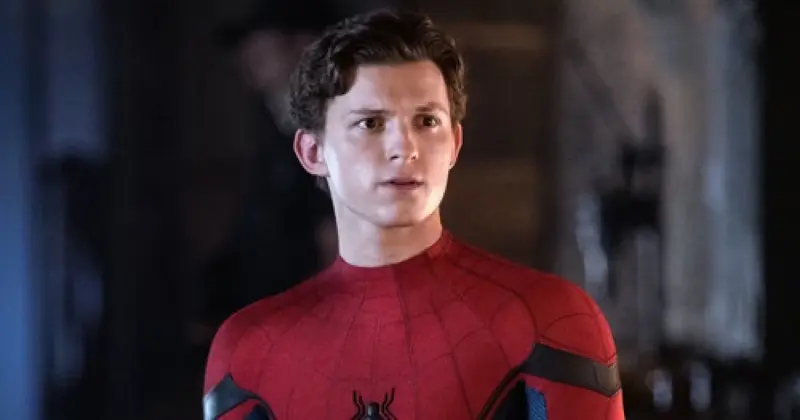
Holland entered the MCU in ‘Captain America: Civil War’ through a partnership with Sony Pictures that allowed the character to appear across studios. He then led ‘Spider Man Homecoming’, ‘Spider Man Far From Home’, and ‘Spider Man No Way Home’, while also joining ‘Avengers: Infinity War’ and ‘Avengers: Endgame’.
Casting combined athletic ability with screen tests opposite Robert Downey Jr. to measure interplay for shared scenes. The films placed Peter in Midtown High settings, Stark tech suits, and Queens grounded storylines, then moved him into international stakes and multiverse plots. The arrangement kept Spider Man active across both solo and ensemble projects under coordinated rights agreements.
J. K. Simmons as J. Jonah Jameson
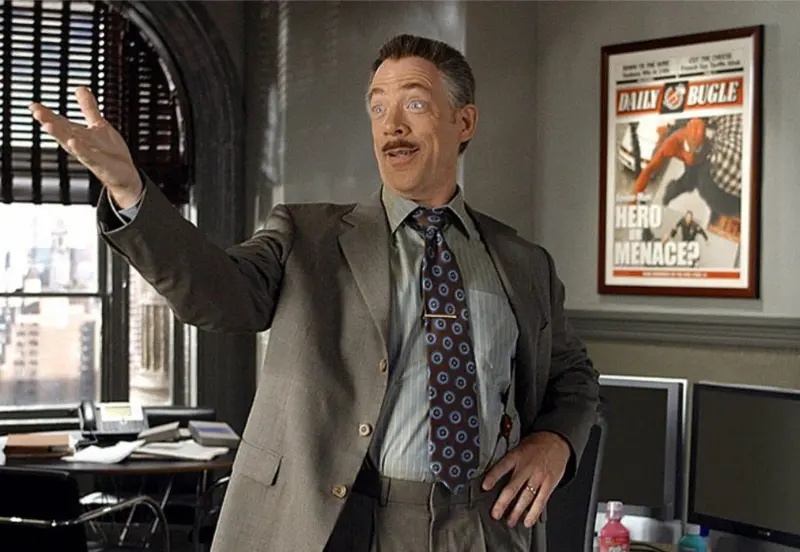
Simmons introduced J. Jonah Jameson in the Raimi trilogy, where the character’s newsroom set pieces provided a recurring counterpoint to Spider Man’s vigilante status. The role returned in the MCU with ‘Spider Man Far From Home’ and ‘Spider Man No Way Home’, reimagined as a digital media figure who broadcasts breaking events to the city.
This casting is one of the few to bridge separate continuities while retaining the same performer. Wardrobe, hair, and performance details were updated to match a different era of news culture, while still anchoring the Bugle identity. The appearance structure used post credits tags and in story broadcasts to bring Jameson back into the narrative at key moments.
Willem Dafoe as Norman Osborn Green Goblin
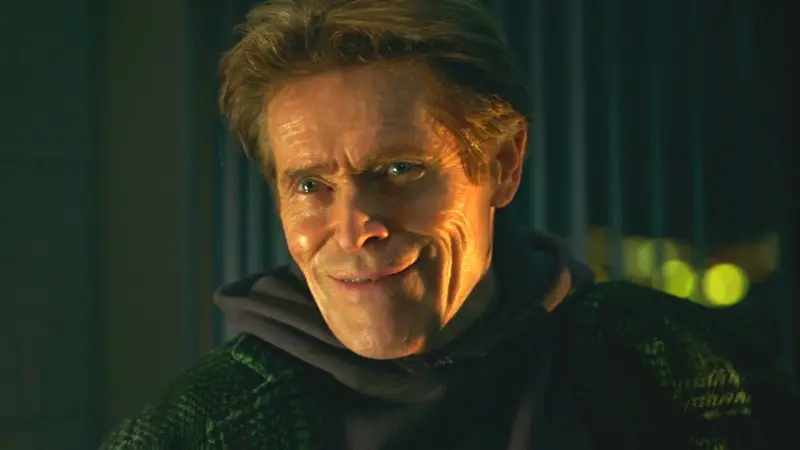
Dafoe’s Norman Osborn began in ‘Spider Man’, establishing Oscorp as a corporate driver for conflicts and technologies. The performance included work in a practical suit with animatronic components that supported facial expression through the helmet lens design of that era.
His return in ‘Spider Man No Way Home’ updated the look by removing the helmet and layering a hooded costume that allowed fuller facial visibility during fights. Dafoe performed extensive action material himself, coordinating with stunt teams for continuous takes that matched modern camera styles. The character’s tech and motives were adapted to fit the MCU’s multiverse rules without discarding core elements.
Chadwick Boseman as T’Challa Black Panther
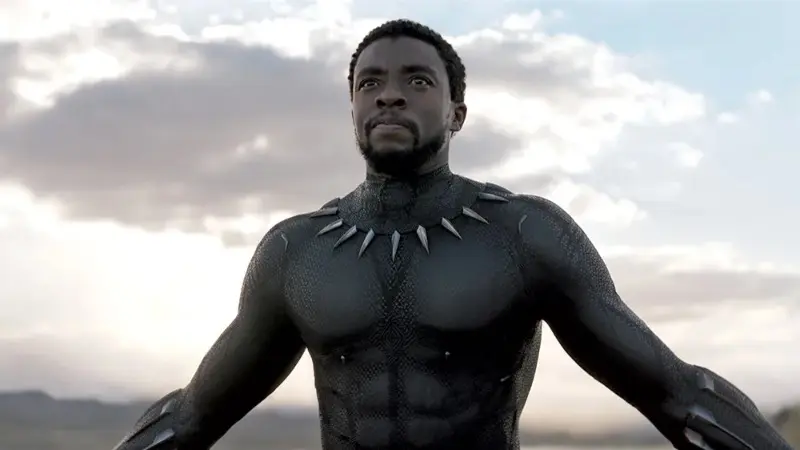
Boseman entered the MCU in ‘Captain America: Civil War’ before leading ‘Black Panther’. The film introduced Wakanda’s five tribes, Dora Milaje command structures, and a design language that combined Afrofuturist elements with real world research. Costume designer Ruth E. Carter and production designer Hannah Beachler received top industry recognition tied to the film.
The Wakandan language track drew on Xhosa, with Boseman collaborating with John Kani to establish speech patterns for T’Challa. He returned in ‘Avengers: Infinity War’ and ‘Avengers: Endgame’, and his passing in 2020 shaped the creative direction of ‘Black Panther Wakanda Forever’. The sequel honored the character while expanding leadership roles within Wakanda.
Tom Hiddleston as Loki
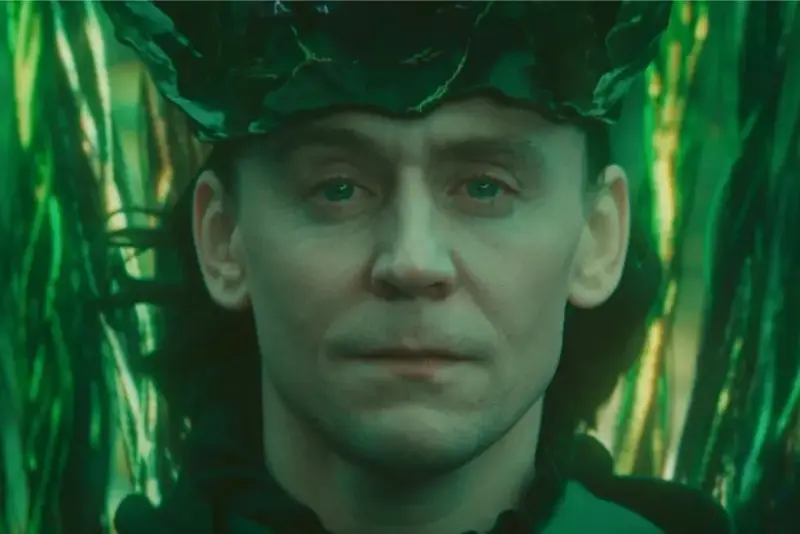
Hiddleston auditioned for Thor during early casting, then was selected for Loki in ‘Thor’. He became a central figure across ‘The Avengers’, ‘Thor The Dark World’, and ‘Thor Ragnarok’, with additional moments in ‘Avengers: Infinity War’ and ‘Avengers: Endgame’. The role’s flexibility allowed both antagonist and ally positions within shared conflicts.
The Disney series ‘Loki’ placed the character inside the Time Variance Authority, introduced variants, and set rules for branching timelines. Seasoned stunt and wire teams supported staff combat and knife work while visual effects managed portal and time door elements. The character’s arc connected directly to multiverse story engines used across other releases.
Samuel L. Jackson as Nick Fury
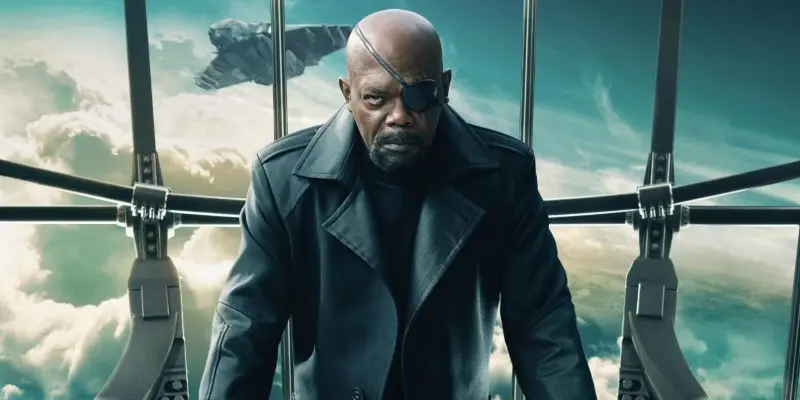
Jackson’s first MCU appearance came in the post credits scene of ‘Iron Man’, announcing the Avengers initiative. Marvel and Jackson agreed to a multi film contract that mapped out recurring roles for the S.H.I.E.L.D. director across ensemble and solo titles, including ‘Captain Marvel’ with a period setting that filled in Fury’s early career.
His recurring presence links espionage threads with superhero plots. Fury appears in ‘The Avengers’ films, ‘Captain America The Winter Soldier’, and ‘Spider Man Far From Home’, along with series work in ‘Secret Invasion’. The character’s design draws from the Ultimate line of comics, which had already modeled its Nick Fury after Jackson’s likeness before the MCU began.
Chris Hemsworth as Thor
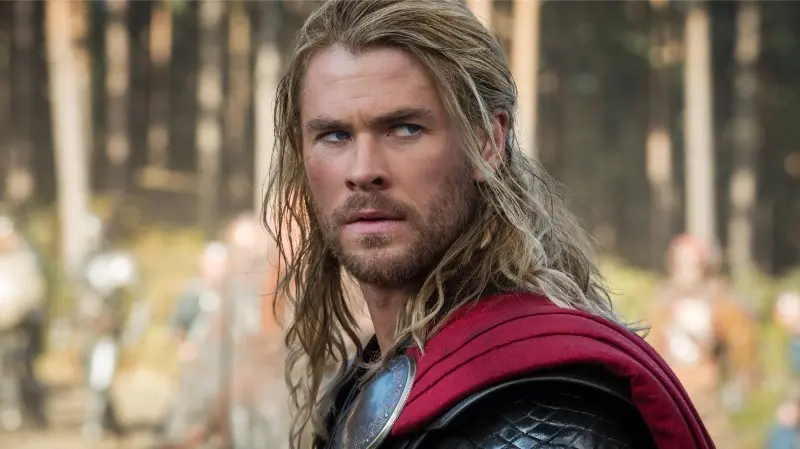
Hemsworth’s first outing in ‘Thor’ introduced Asgard, Bifrost travel, and a royal family dynamic under director Kenneth Branagh. He continued through ‘The Avengers’ films and solo chapters ‘Thor The Dark World’, ‘Thor Ragnarok’, and ‘Thor Love and Thunder’, carrying the hammer and later the axe as key props within stunt coordination.
The role’s physical preparation included weight training and dialect coaching to support Asgardian speech patterns. Costume and hair designs evolved from ceremonial armor to more practical battle gear, while ‘Thor Ragnarok’ shifted toward brighter palettes and arena combat. Crossovers placed Thor on the Guardians’ ship and tied him to cosmic arcs that span multiple franchises.
Benedict Cumberbatch as Doctor Strange
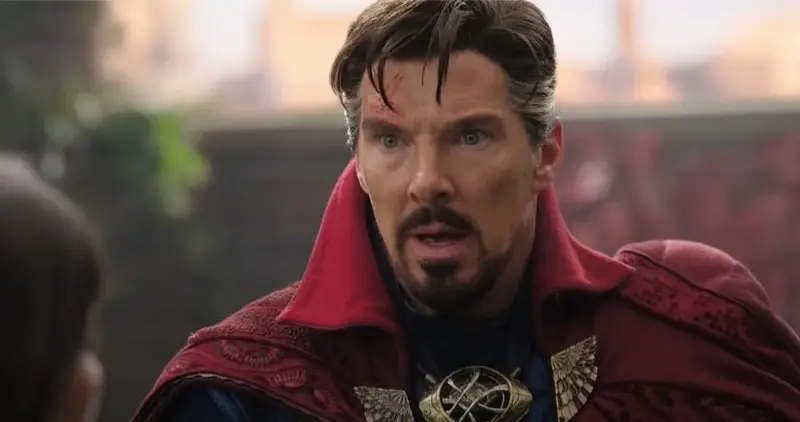
Cumberbatch’s Stephen Strange entered the MCU with ‘Doctor Strange’, a project that delayed its schedule to align with his availability. He trained in illusion style hand movement for spell casting, coordinated with stunt teams for wire assisted scenes, and performed voice and facial capture for Dormammu in the final act.
The character’s guidance role threads through ‘Thor Ragnarok’, ‘Avengers: Infinity War’, ‘Avengers: Endgame’, and ‘Spider Man No Way Home’. ‘Doctor Strange in the Multiverse of Madness’ expanded the magical rule set and introduced alternate reality versions that interact under established continuity rules. The mix of practical sets and digital city folding effects defined the visual identity for the sorcerer’s world.
Vincent D’Onofrio as Wilson Fisk Kingpin
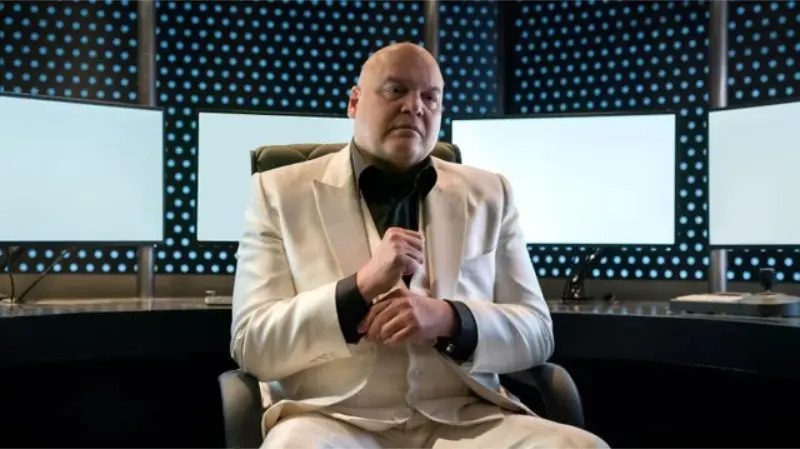
D’Onofrio’s Wilson Fisk debuted in ‘Daredevil’ on Netflix, where the series format allowed multi episode exploration of the character’s business fronts, personal history, and relationship with Vanessa Marianna. Fight scenes used heavy strikes and environmental impacts to distinguish Fisk from agile fighters.
He returned in ‘Hawkeye’ and ‘Echo’, confirming that the Netflix continuity could fold into current MCU storytelling. Wardrobe retained the white suit iconography, while power levels were calibrated to match newer series tone. The appearance path sets up continued street level arcs that connect New York based heroes across shows.
Wesley Snipes as Blade
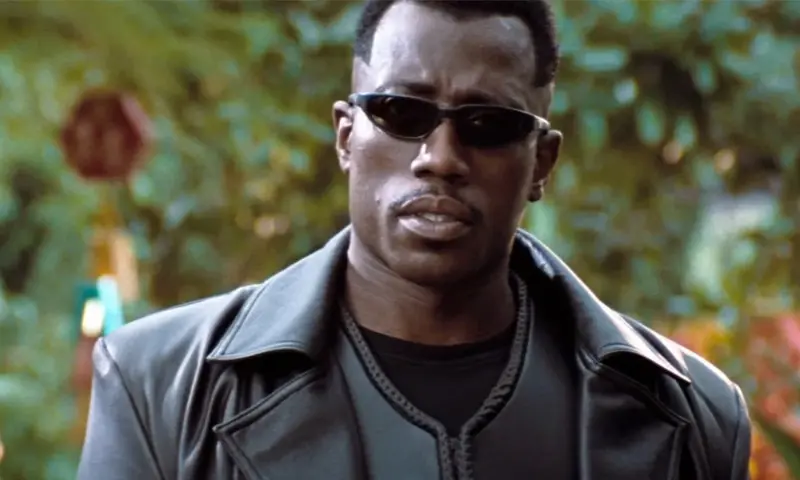
Snipes led ‘Blade’, delivering a daywalker vampire hunter built on martial arts choreography, sword work, and firearms training. The film’s success led to ‘Blade II’ under Guillermo del Toro and ‘Blade Trinity’, creating one of the earliest sustained Marvel film runs before the modern shared universe era.
The trilogy established a darker template that later projects could reference when exploring edgier corners of Marvel material. Practical effects, early digital work for vampire disintegration, and nightclub set pieces built a distinct visual profile. The character’s legacy continued to influence casting and development for later iterations under different studio banners.
Share the Marvel castings you would add in the comments.