Movie Characters Who Never Showed Their Face on the Screen

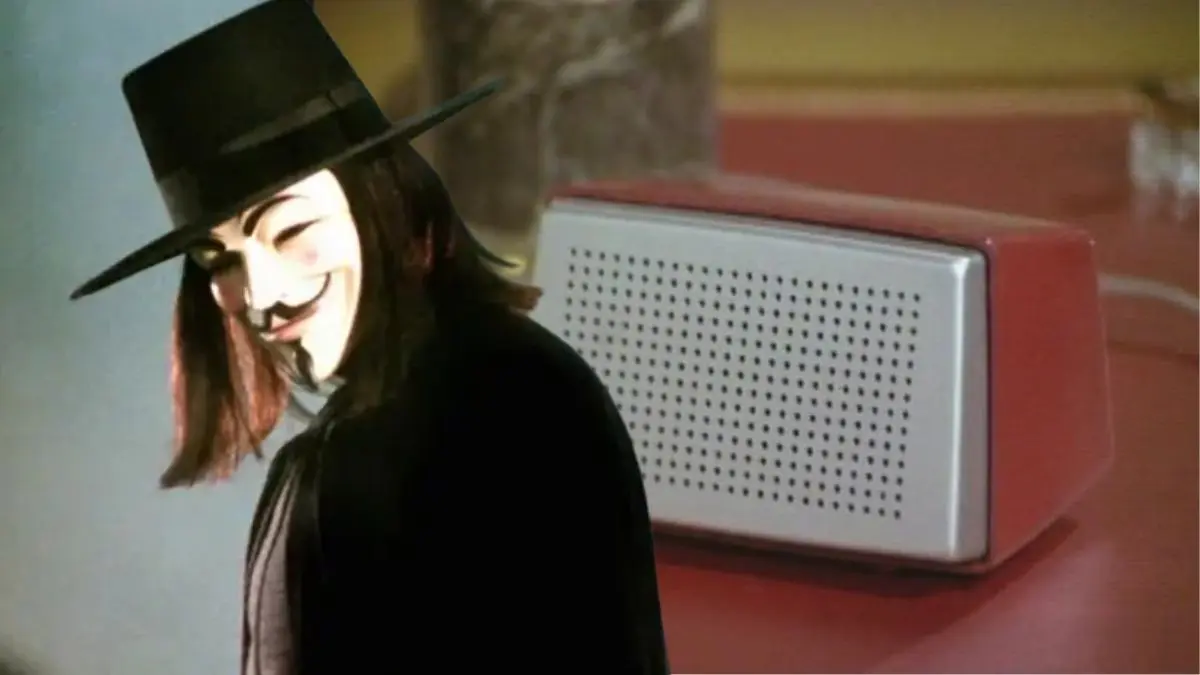

Some movie characters make a strong impact without ever revealing a face. Sometimes they are voices guiding the action from a distance. Sometimes they are beings who exist without a human form. Other times they keep a mask on from start to finish. Either way, the storytelling choice stays consistent all the way through the film.
This list rounds up notable characters who never show a face on screen. Each entry explains how the character appears and what role they play in the story, along with a quick note about who brought the film to theaters. No reveals here and no unmasking moments, just the facts about how each one stays unseen.
Samantha in ‘Her’
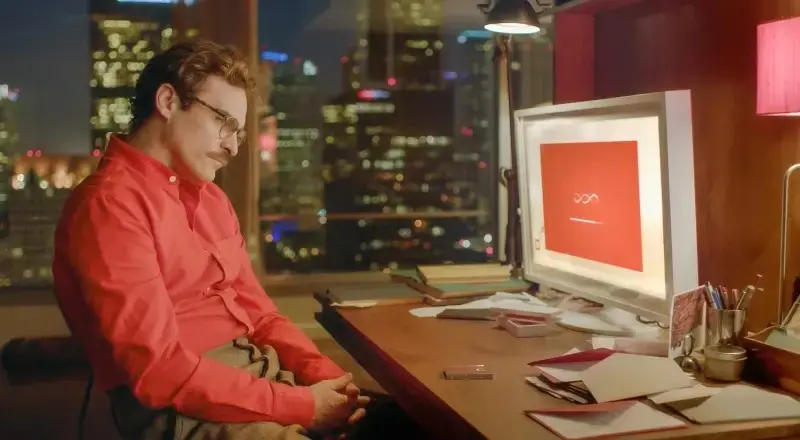
Samantha is an advanced operating system that communicates through an earpiece and a phone. The character is heard but never seen as a body or avatar. Scarlett Johansson provided the voice after the production replaced an earlier recording. The story follows her connection with Theodore as the software learns, adapts, and expands beyond the limitations of a single device.
The film reached theaters through Warner Bros Pictures. Scenes use close mics and ambient city sound to keep Samantha present while the screen shows only the human side of the conversation. The design of the interface avoids any on screen personification so her presence remains entirely vocal.
HAL 9000 in ‘2001: A Space Odyssey’
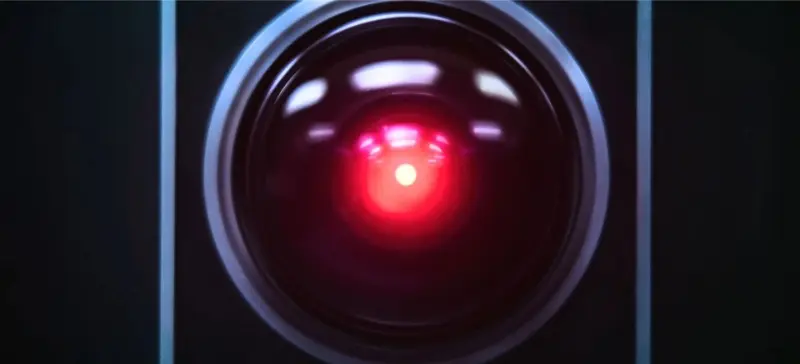
HAL 9000 is the sentient computer aboard Discovery One. The character is represented by camera lenses and control panels rather than a face. Douglas Rain supplied the calm voice that remains steady even as the ship’s mission drifts off course. The absence of a face emphasizes that the intelligence lives in the ship itself.
Metro Goldwyn Mayer distributed the film in theaters. Production used a red lens and simple graphics for HAL’s point of view which kept the computer visible without any human features. Dialogue pacing and silence in the spacecraft scenes make the voice the most dominant presence.
The Blair Witch in ‘The Blair Witch Project’
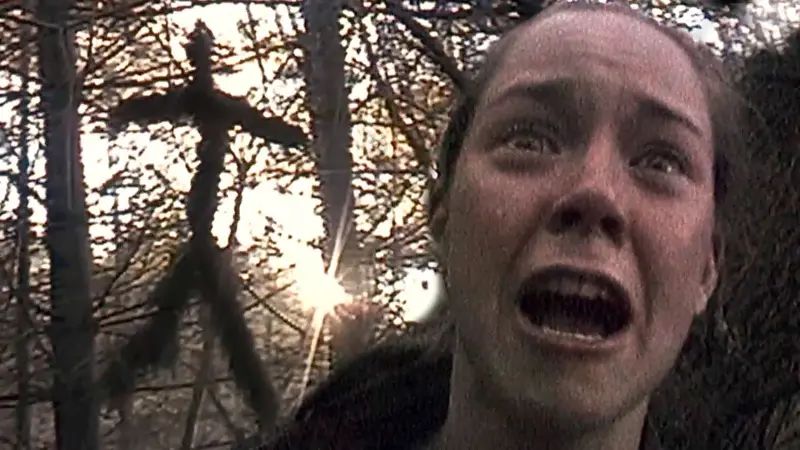
The Blair Witch is an off screen presence throughout the story. The character is never shown directly and the film uses found footage techniques to imply movement, sounds, and sudden panic. The filmmakers relied on reactions from the cast and props such as stick figures and cairns to suggest activity in the forest without any visual reveal.
Artisan Entertainment brought the film to theaters. The production plan used location audio and darkness to eliminate the need for creature effects. The choice to avoid any face or body kept the legend flexible and allowed viewers to assemble the threat from clues.
Rebecca de Winter in ‘Rebecca’
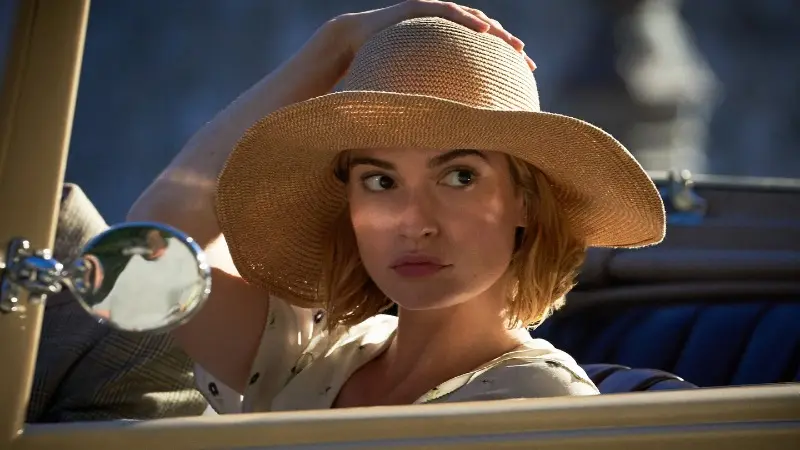
Rebecca de Winter is the title character whose life dominates Manderley long after her death. She never appears on screen in person and no photograph or portrait reveals her features. The narrative builds her presence through testimony, letters, and the reactions of those who knew her, especially the housekeeper who preserves her memory.
United Artists distributed the film for Selznick International Pictures. Sets and props carry her initials and personal items to maintain a visual trace without an image of her face. Scenes carefully avoid any depiction that would fix her appearance which keeps the character defined by what others say.
Charlie Townsend in ‘Charlie’s Angels’
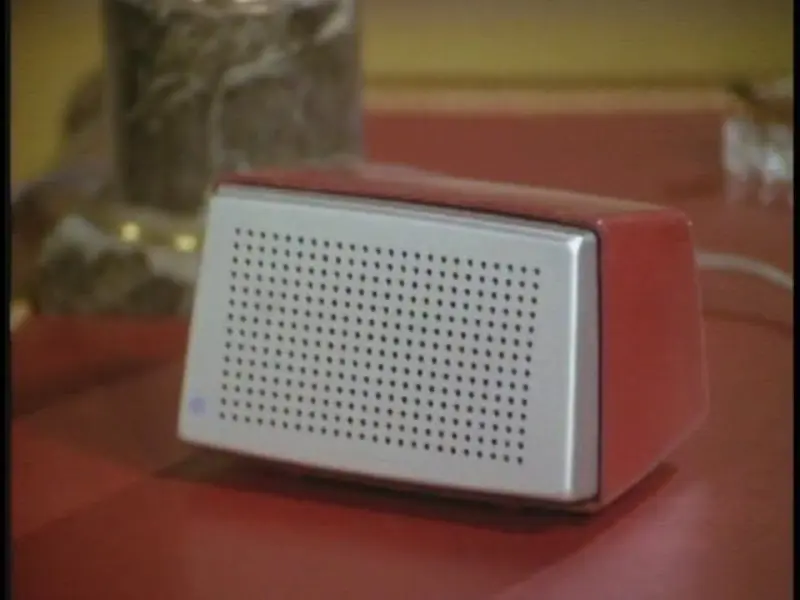
Charlie Townsend directs missions for the Angels through a speakerphone and occasional recordings. The character appears as a voice with no on screen face. John Forsythe provided the familiar tone that delivers assignments and short sign offs. The Townsend Agency offices and gadgets support the idea that he is always nearby yet never visible.
Columbia Pictures released the film through Sony Pictures Releasing. The production uses intercom lighting and framed photographs that never show the boss which preserves the mystery. Even closing scenes keep the character out of view while the voice remains the link between cases.
V in ‘V for Vendetta’
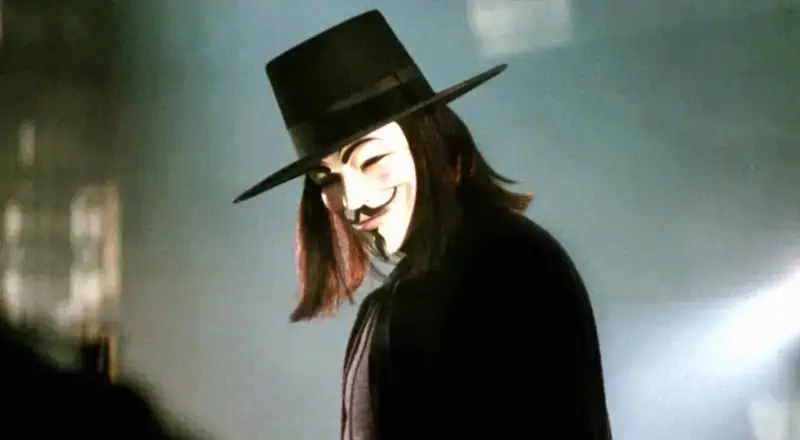
V wears a Guy Fawkes mask from first appearance to final scene. The character never removes the mask and never reveals a face. Hugo Weaving provided the performance and voice after taking over the role during production. Costume design and body language carry emotion while the mask stays unchanged.
Warner Bros Pictures handled distribution. The film uses careful blocking and lighting so reflections and damage never expose skin. Dialogue, music, and props in the hideout fill in character details that a face would normally convey.
Sauron in ‘The Lord of the Rings’
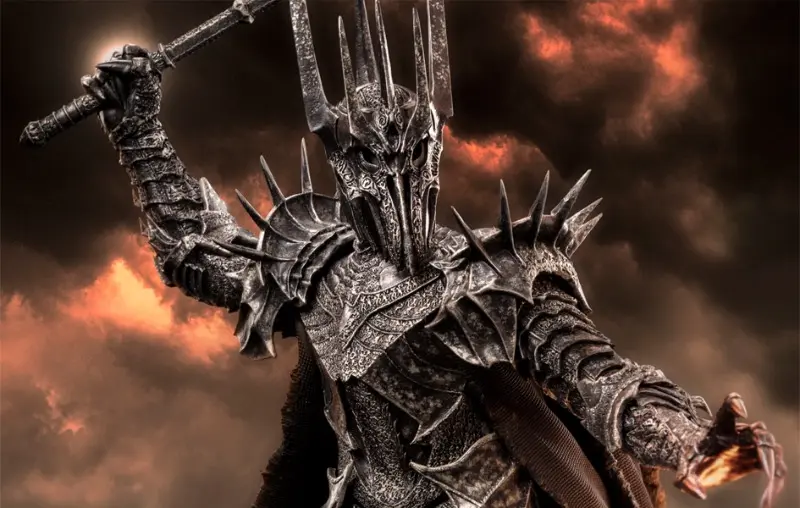
Sauron appears as a fiery eye and as a towering armored figure in flashbacks. No human face is shown at any point. Alan Howard voiced lines for the Dark Lord and for the ring itself, while performers in armor supplied the physical presence in early battle scenes. The character’s influence spreads through artifacts and messengers rather than direct encounters.
New Line Cinema brought the trilogy to theaters. Miniatures, visual effects, and the design of Barad dûr keep the character present as a gaze rather than a person. The absence of a face supports the idea that Sauron exists as power bound to the ring.
Thing in ‘The Addams Family’
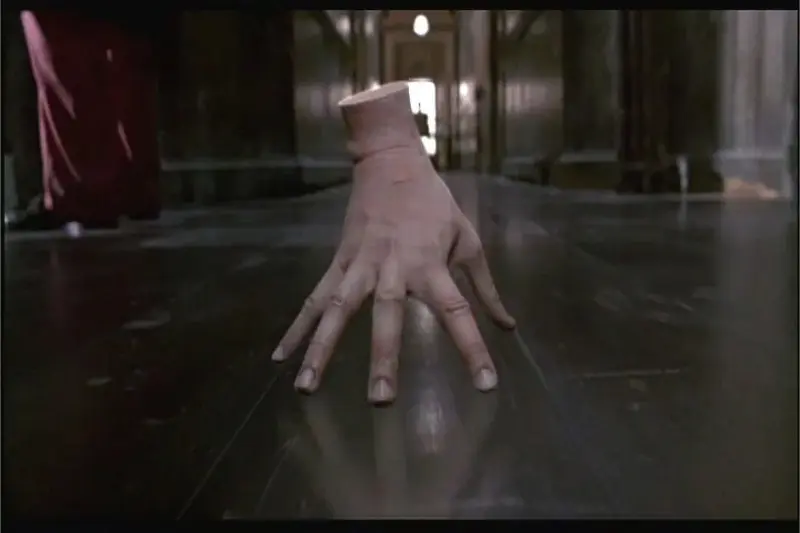
Thing is a living hand that scurries, gestures, and types without any other visible body. The character has no face by design. Magician Christopher Hart performed the role with precise hand acting while effects teams concealed the rest of the arm using set pieces and matte work. The hand communicates through taps and sign like motions.
Paramount Pictures released the films in theaters. Practical effects and carefully dressed sets allowed the character to move through rooms and interact with props in full shots. The approach keeps Thing expressive without ever suggesting a hidden face.
No Face in ‘Spirited Away’

No Face is a spirit with a blank white mask and a dark robe. The character consumes others and echoes voices but never reveals a true face beneath the mask. The mask shifts slightly to show mood while the body expands or shrinks depending on the spirit’s state. The design keeps the identity undefined and dependent on surroundings.
Toho distributed the film in Japan, with international releases handled in many markets by Disney. Animation techniques focus on slow movements and careful staging so the mask remains the only feature. Sound effects and vocal performance create personality while the visage stays concealed.
The Strangers in ‘The Strangers’
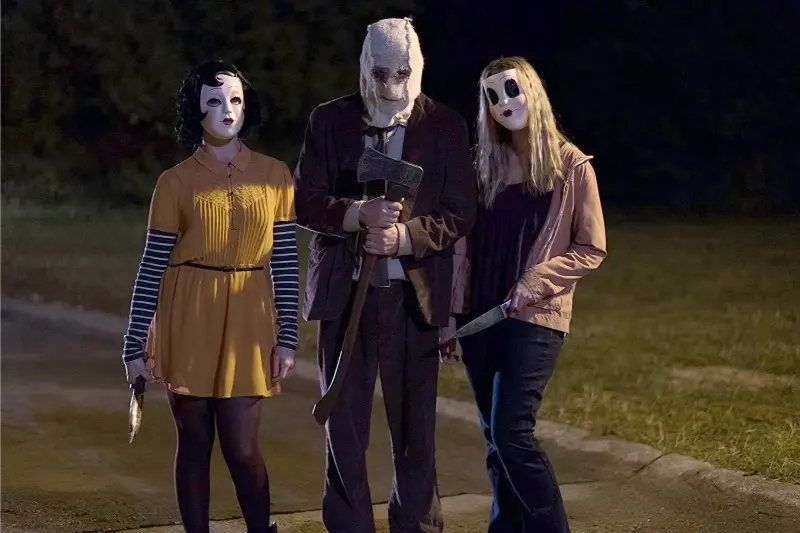
The intruders known as Man in the Mask, Dollface, and Pin Up Girl keep masks on from first approach through the final moments. Their real faces are never revealed and their names remain generic credits. The film frames them at windows and doorways to show presence without identity. Costumes and props are the only clues.
Rogue Pictures released the film in theaters. The production uses practical lighting and minimal backstory so the masks act as the defining image. Camera placement holds wide angles that maintain anonymity while the action moves through the house.
Share your picks for other faceless movie characters in the comments.