That Jules Painting in ‘Euphoria’ Hits Way Harder Once You Catch The Hidden Meaning


The fourth chapter of ‘Euphoria’ season three has people talking, and not for the reason most viewers walked in expecting. Sandwiched between Rue’s spiraling deal with the DEA and Cassie’s influencer makeover, Jules Vaughn quietly carries a canvas into a TV studio and ends up at the center of the most layered moment of the night. Her painting, an unmissable parody of a famous Impressionist work, lands like a grenade in a network television production and exits the episode covered in red paint.
On paper it reads like a throwaway subplot. In practice, the Jules painting has become the conversation everyone keeps circling back to, with art nerds, longtime fans, and casual viewers all reading something different into those few minutes of screen time. The episode, titled ‘Kitty Likes to Dance,’ premiered May 3 on HBO Max and gave Hunter Schafer one of her most quietly devastating arcs of the season so far.
How Jules’s Painting Becomes the Quiet Centerpiece of the Episode
The setup is almost generous. Lexi Howard, working as a writer’s assistant on a primetime soap called ‘LA Nights,’ wants to commission Jules to paint something for the show, which pulls in seven million viewers a week. The pitch is straightforward, that millions will see Jules’s art rather than the dozens who would catch it in a gallery, and the brief leans loose, something Seurat-inspired for a picnic scene.
What Jules hands over is anything but safe. Her canvas is a parody of ‘A Sunday Afternoon on the Island of La Grande Jatte,’ but it includes fourteen penises, with the figures rendered as ghoulish bodies sporting enlarged breasts and exposed genitals. The ‘LA Nights’ showrunner Patty Lance, played by Sharon Stone, is furious.
The fallout plays out in a very Sam Levinson way. The room handles Jules carefully because Lexi has told the team she is trans, but they need every penis and breast removed from the canvas before the scene can shoot. The delay costs production fifty-six thousand dollars in immediate losses, with reshoot expenses pushing the total damage to a hundred and ninety-one thousand dollars.
Rather than salvage the work, Jules makes a different choice. She takes the canvas back, daubs the whole thing in red paint, and adds a giant orange penis as a final flourish before walking out. It is one of the most decisive acts of agency Jules has been given all season, and the episode treats it almost as a side note buried under Rue’s escalating crisis.
The Seurat Parody Behind the Jules Painting
The reference Jules is working from is one of the most recognized canvases in modern art. Georges Seurat began ‘A Sunday Afternoon on the Island of La Grande Jatte’ in 1884, and the work now hangs at the Art Institute of Chicago, where it remains the most recognized pointillist painting in the world.
Stripping that scene of clothes is more than a shock tactic. The original is often read as a strangely desolate canvas, with figures who appear frozen in time and isolated from one another despite sharing the same idyllic green space. Jules pushes that subtext into the open, drawing bodies that refuse to hide and demand to share the picnic on their own terms.
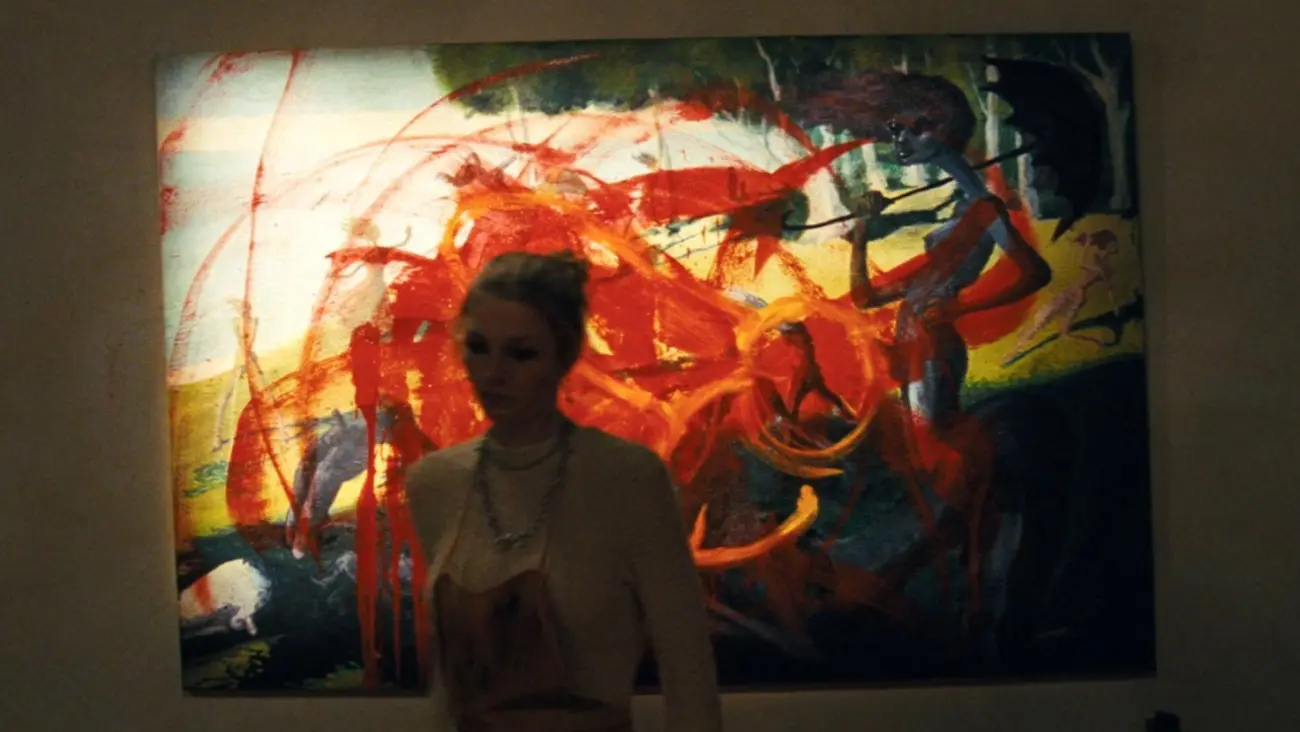
Online, the reading that has gained the most traction is that the painting is autobiographical. A widely shared post argued that the canvas is about how a body that contains both breasts and a penis can exist only if it stays ashamed, and that scrubbing the figures was the point Jules was making about being othered and cast out. That reading lines up with one of Jules’s special episodes, where she broke down her complicated relationship with gender identity and the steps she had taken to accept her body.
Once you sit with that interpretation, Jules’s reaction makes far more sense, since being asked to censor a piece whose entire message is about refusing shame would understandably wreck her. She would rather destroy the work than negotiate it into something the network can swallow.
Lexi’s Commission and the Brutal Math of Network TV
The other half of this storyline belongs to Maude Apatow’s Lexi. She is the one who pitched Jules to her boss, and she is the one who absorbs the full force of Patty Lance’s anger when the painting blows up the day’s schedule. The “don’t be a net negative” line lands like a slap, with Lexi choking back tears as Patty walks her through every dollar lost.
Critics have already pointed out how meta this storyline reads. Sam Levinson is famously exacting on set, having reshot ‘The Idol’ and run season two of ‘Euphoria’ significantly over schedule, and the Patty Lance speech about wasted time and ballooning budgets feels like a writer venting at himself through a fictional executive.
There is also a layer of media commentary baked into the choice of source material. By having a network show request a Seurat homage and then panic at the result, the writers needle the way television tends to flatten challenging art into something safe for advertisers. A Thought Catalog essay this week argued that the standards-and-practices demand that every penis be removed, covered up, or turned into bread loaves doubles as Levinson airing his own grievances about censorship, dropping at a moment when conversations about trans content on American television have only intensified.
For Lexi, the takeaway is just as bleak. Her well-meaning attempt to give a friend a break ends with her in tears in front of her boss and her career hanging by a thread, which was not exactly the soft launch she had been working toward.
Why Fans Are Defending Jules After This ‘Euphoria’ Episode
Reaction online has been split, which honestly tracks for any storyline involving Jules. A chunk of the audience thinks she behaved unprofessionally and effectively threw Lexi under the bus, with some viewers admitting that the network had a point about a fourteen-penis canvas on a family-hour soap.
Another contingent has rallied hard behind her. Fans on X have been sharing close-ups of the painting with admiring captions, and the most-shared analyses argue that Jules’s anger only makes sense if you understand the canvas as autobiographical rather than provocative.
There has also been pointed pushback on how Lexi handled the room. A Reddit comment making the rounds called out the moment Lexi quietly informed her colleagues that Jules is trans, with the user arguing that connecting her gender identity to her artistic style came across as reductive and a touch insensitive.
With four chapters left until the season finale on May 31, the painting feels less like a closed beat and more like a fuse already lit. Now that you have watched Jules drag a brush of red paint across the entire canvas, do you read that move as her standing her ground or as her bailing on the friend who handed her the opportunity in the first place.