Mayday Explained: The Secret Resistance at the Heart of ‘The Testaments’

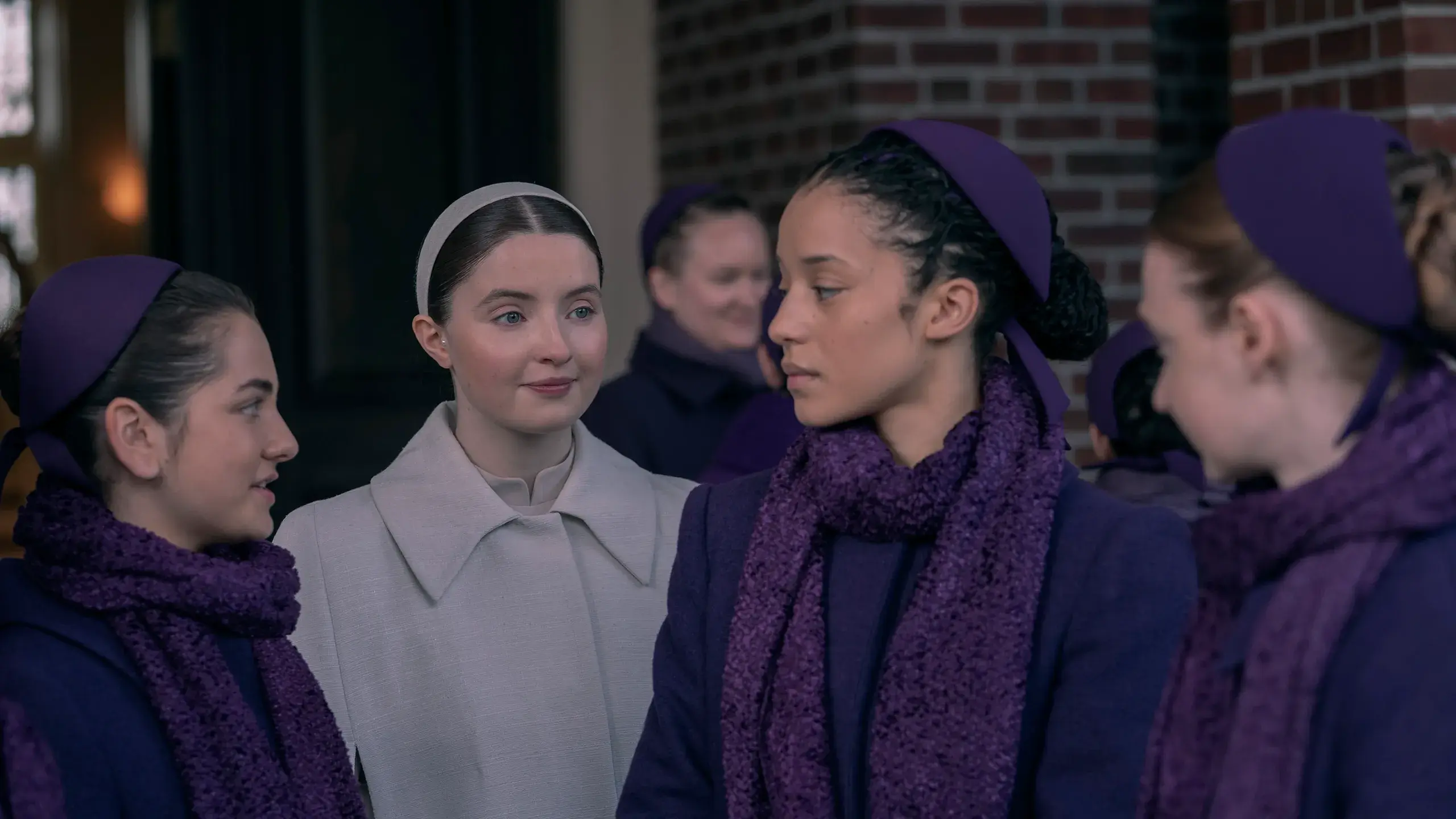

Few forces in the world of Gilead carry as much weight as Mayday, the underground resistance network threading its way through Margaret Atwood’s fiction and now through Hulu’s hotly anticipated sequel series. Whether you’re coming to ‘The Testaments’ fresh or arriving with six seasons of ‘The Handmaid’s Tale’ burned into your memory, the organization represents something far more complex than a simple rebel army.
Understanding exactly what Mayday is, how it operates, and why it drives so much of the action in ‘The Testaments’ is essential for following the story. The Testaments premiered on Hulu in April 2026, following the conclusion of ‘The Handmaid’s Tale’ in May 2025, picking up with a new generation navigating life in Gilead. And Mayday is the engine running underneath almost every plot thread in the new series.
The Origins of the Anti-Gilead Underground Network
Mayday did not begin as a polished, hierarchical organization with a clear command structure. Mayday is a secret resistance group that operates a clandestine cell system working to oppose and bring down Gilead from the inside, with members able to identify each other by speaking the code words in conversation. The deliberate vagueness of its structure is not a weakness but a survival strategy.
Named after the distress signal in radio communications, Mayday was both terrifying and thrilling, functioning as the silent bogeymen for Gilead’s government and the people the Eyes had been hunting for years. Its decentralized nature made it nearly impossible for Gilead to fully dismantle, since removing one cell never exposed the whole operation.
Members of Mayday act as spies, gaining information from important members of Gileadean society, and help political targets escape to safety, with people from all walks of life including Handmaids and Guardians counted among its ranks. The breadth of membership is exactly what gives the organization its lasting power across both the novel and the Hulu adaptation.
How Mayday Operates as the Anti-Gilead Underground
In ‘The Testaments‘, Mayday is not just a symbol. Mayday is an anti-Gilead resistance movement that operates in Canada and has collaborated with people in and outside of Gilead for decades to smuggle oppressed women out and harbor them as refugees. Its cross-border reach is what separates it from purely internal uprisings.

Mayday is hated by Gilead and recognized as a terrorist organization by Canada due to the power and influence that Gilead exerts on the Canadian government, though civilians in Canada appear to support its work. That contradiction, official condemnation sitting alongside public sympathy, gives the organization a fascinating political texture that the show leans into heavily.
It is even possible that members of the Eyes serve as double agents for Mayday, and it is hinted that Gilead tries to keep knowledge of the group quiet, suggesting the regime fears the psychological effect its existence has on the population. Fear of a resistance, as much as the resistance itself, is a destabilizing force for any authoritarian state.
Aunt Lydia’s Role as a Mayday Mole
Perhaps the most jaw-dropping element of ‘The Testaments’ is the revelation of who sits at Mayday’s center of operations inside Gilead itself. Aunt Lydia, a powerful figure within the regime, secretly works as a mole for the resistance movement Mayday, recording her experiences in a manuscript that becomes known as the Ardua Hall Holograph. For anyone who spent years watching her crack a whip over Handmaids, this turn is genuinely stunning.
Commander Judd, one of Gilead’s most powerful officials, is actively trying to uncover a secret traitor slowly leaking intel to the anti-Gilead resistance called Mayday, completely unaware that the traitor is Lydia herself. Ann Dowd’s performance as this double agent carries the weight of decades of complicity and revenge simultaneously.
Lydia recalls her past life as a judge, and her days during Gilead’s founding when she was arrested, tortured, and then co-opted into designing much of Gilead’s social structure, and even from the regime’s formation she had been plotting her revenge. Her arc reframes every cruel thing she ever did as a long game being played for the resistance’s eventual victory.
Daisy’s Undercover Mayday Operative Mission
On the other side of Gilead’s border, ‘The Testaments’ introduces Daisy as Mayday’s unexpected secret weapon. Daisy’s whole life changes when her parents are murdered and she learns they were involved in Mayday, the resistance group fighting against Gilead, before June Osborne arrives and tells her she was born in Gilead and smuggled out as a baby. Her entire identity is reconstructed in a matter of episodes.
Daisy’s supposed parents were in fact agents of the Mayday resistance assigned to protect her, and she herself is Baby Nicole, a child who was “stolen” by her Handmaid mother and taken to Canada, held up by Gileadeans as a symbol of the evil that exists outside its borders. Gilead’s propaganda machine weaponized her existence without her knowledge.
Daisy serves as a Mayday operative working undercover in the Aunt Lydia School for future Wives, with the full narrative eventually revealing that Daisy is actually a nickname and her real name is Marguerite. Rita, the Martha from ‘The Handmaid’s Tale’ now operating out of Canada, has become a vital Mayday operative responsible for preparing Daisy for her undercover mission to infiltrate Gilead.
Mayday’s Endgame and What It Means for Gilead’s Future
The ultimate goal Mayday is working toward is nothing short of Gilead’s total collapse. Aunt Lydia brings Agnes and Nicole together at Ardua Hall, revealing their true identities and shared parentage, in a move designed to set the final stage of Mayday’s plan into motion. The plan converges personal truth with political revolution.
Agnes and Nicole set out on a treacherous journey back into Canada, and Becka sacrifices herself to help them avoid detection, before Mayday confirms it received the documents and the sisters are reunited with their mother. The documents Aunt Lydia spent years collecting become the bombshell that unravels Gilead’s institutional credibility.
Atwood ends ‘The Testaments’ with a transcript from a Gileadean studies conference long after the regime has fallen, in which Professor James Darcy Pieixoto discusses the recently discovered manuscripts that comprise the novel and analyzes their contents, suggesting the central players’ initials may have been carved into a windowsill at a refugee center for escaped Gileadeans.
Mayday does not just win a battle; it plants the seeds for an entire civilization’s reckoning with what Gilead was. Whether you think the show earns that ending or rushes toward it is exactly the conversation worth having, so if you’ve been watching ‘The Testaments’ on Hulu, tell us whether Mayday’s plan delivered the catharsis you were waiting for after years inside Gilead’s walls.