‘The Last Viking’ Ending Explained: Broken Brothers, a Beatles Reunion and What It All Menas


Danish cinema has delivered another emotional gut-punch wrapped in absurdist chaos, and audiences are still trying to make sense of it all. ‘The Last Viking’ is a tenderly cruel dark comedy that premiered out of competition at the Venice Film Festival, following two brothers at opposite poles, a buried stash, and an identity coming apart at the seams. It is the kind of film that makes you laugh until something quietly breaks inside you, and the ending lands with exactly that same disorienting precision.
‘The Last Viking’ is a black comedy written and directed by Anders Thomas Jensen, starring Nikolaj Lie Kaas and Mads Mikkelsen, and it marks the sixth collaboration between this trio of Danish filmmakers. Their previous films together include ‘Riders of Justice,’ ‘Adam’s Apples,’ ‘Flickering Lights,’ ‘The Green Butchers,’ and ‘Men & Chicken,’ making this reunion one of the most anticipated creative reunions in Scandinavian cinema in years.
The Setup Behind the ‘Last Viking’ Ending
Before serving a prison sentence for bank robbery, Anker entrusts his brother Manfred to bury the heist money in the forest by their mother’s house for safekeeping. Upon his release, Anker is frustrated to find that Manfred has since developed dissociative identity disorder with suicidal tendencies and cannot recall where he hid the money bag.
Manfred is shown to have multiple personalities, including believing himself to be John Lennon, a member of the English rock band The Beatles. When addressed as “Manfred” and not as “John,” he hurls himself through the nearest open window or does some other harm to himself. It is a setup that sounds pitch-black on paper but plays with a warmth and sincerity that critics have found genuinely moving.
Mads Mikkelsen brings a deadpan look and a great deal of grace to his role as the psychologically troubled Manfred, and although he is quite banged up by the end of ‘The Last Viking,’ he always bounces back. Few directors would be able to juggle genres and navigate shifts in tone as fluidly as Jensen does here.
Mads Mikkelsen’s Dissociative Identity Disorder and the Beatles Reunion
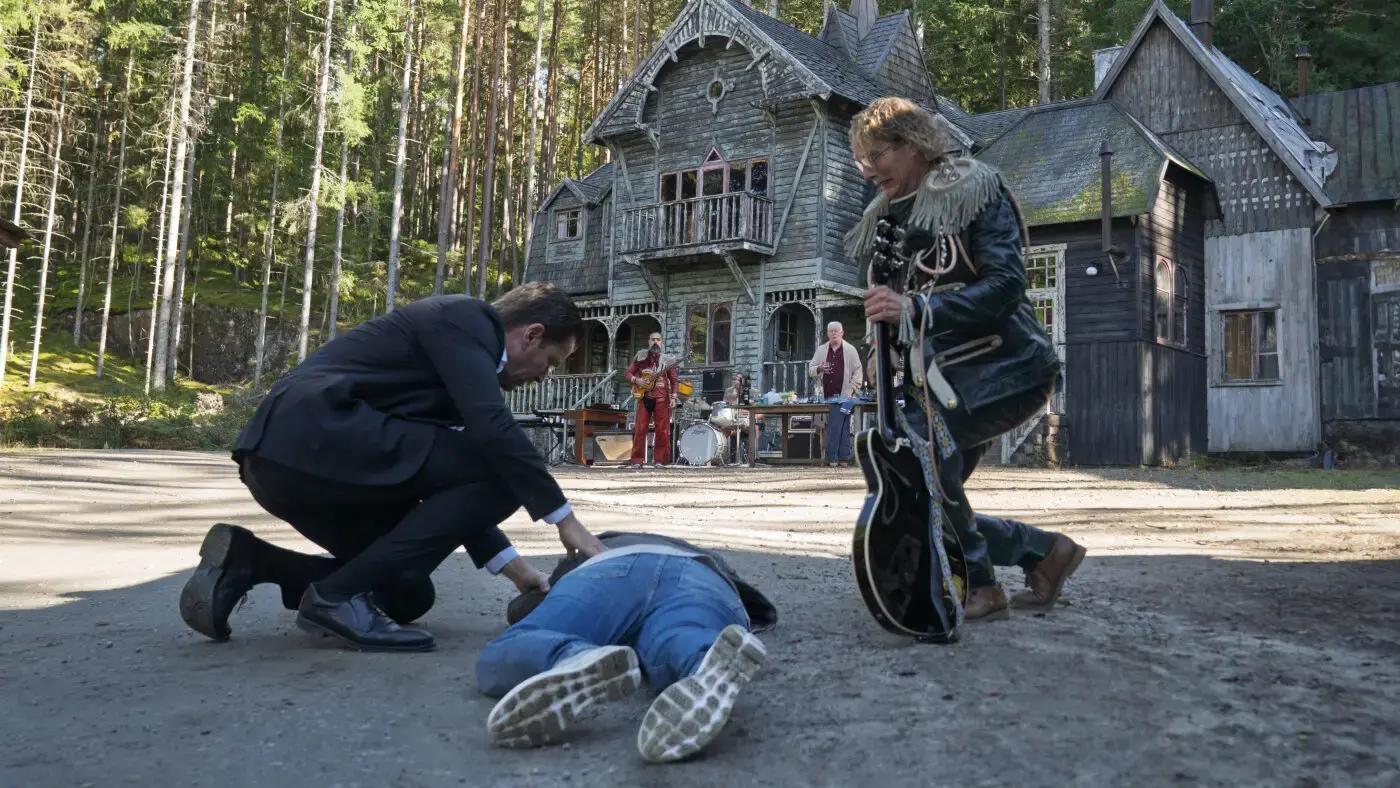
Psychiatrist Lothar wants to stage a “Beatles Reunion” to help Manfred, using other people who think they are the corresponding band members. And so, a motley crew of gangster musicians assembles at the former family home, now being rented out as an Airbnb by Margrethe and Werner.
Hamdan, whose particular brand of the disorder allows him to think he is both George and Paul, dons epaulets alongside the rest of the group to recreate the spirit of the band, in scenes that are hard for anything to be too earnest about.
The absurdity of the situation is precisely the point, and Jensen leans into it with a filmmaker’s confidence that comes from two decades of practice in this exact tonal space.
The film leverages Nikolaj Lie Kaas and Mads Mikkelsen’s finely tuned chemistry to anchor its cartoonish violence and offbeat humor, resulting in a film that is as sincere and affecting as it is bizarre. Audiences who have followed this creative trio across their six films together will recognise the chemistry immediately.
Anders Thomas Jensen’s Dark Comedy and the Weight of Childhood Trauma
Through a few flashbacks audiences learn that the boys had an abusive father who made their lives a living hell, with a pre-teen Manfred often getting the harshest treatment for wearing Viking gear to school. While these details shed some light on the symbolism of the title, the Viking aspect is code for an idiosyncratic take on masculinity, which Jensen’s films have always dissected with humor and tact.
Jensen opens the film with an animated Viking fable in which a chieftain orders the entire village to mutilate themselves to be “equal” whenever a warrior loses a limb in battle, an unexpected prologue in which equality becomes a lethal leveling device. The film then cuts to the present, where the impossible equality between who we are and who we wish we were becomes the brothers’ true conflict.
Themes surrounding childhood trauma, loneliness, emotional repression, and unstable masculinity remain central throughout the narrative. Ultimately, the film becomes both a chaotic Scandinavian crime comedy and a reflection on how emotional damage continues shaping identity and human connection long after childhood trauma ends.
What the Ending of ‘The Last Viking’ Is Really About
The core of the story is that two brothers who could not be more different are forced to work together to solve a common problem, eventually becoming closer in the process. Jensen begins and ends the story with the odd couple scenario, only from different perspectives, finding time to develop ideas that feel genuinely engaging.
The idea of two broken halves completing a whole figure is on full display throughout ‘The Last Viking,’ and it is satisfying to the end.
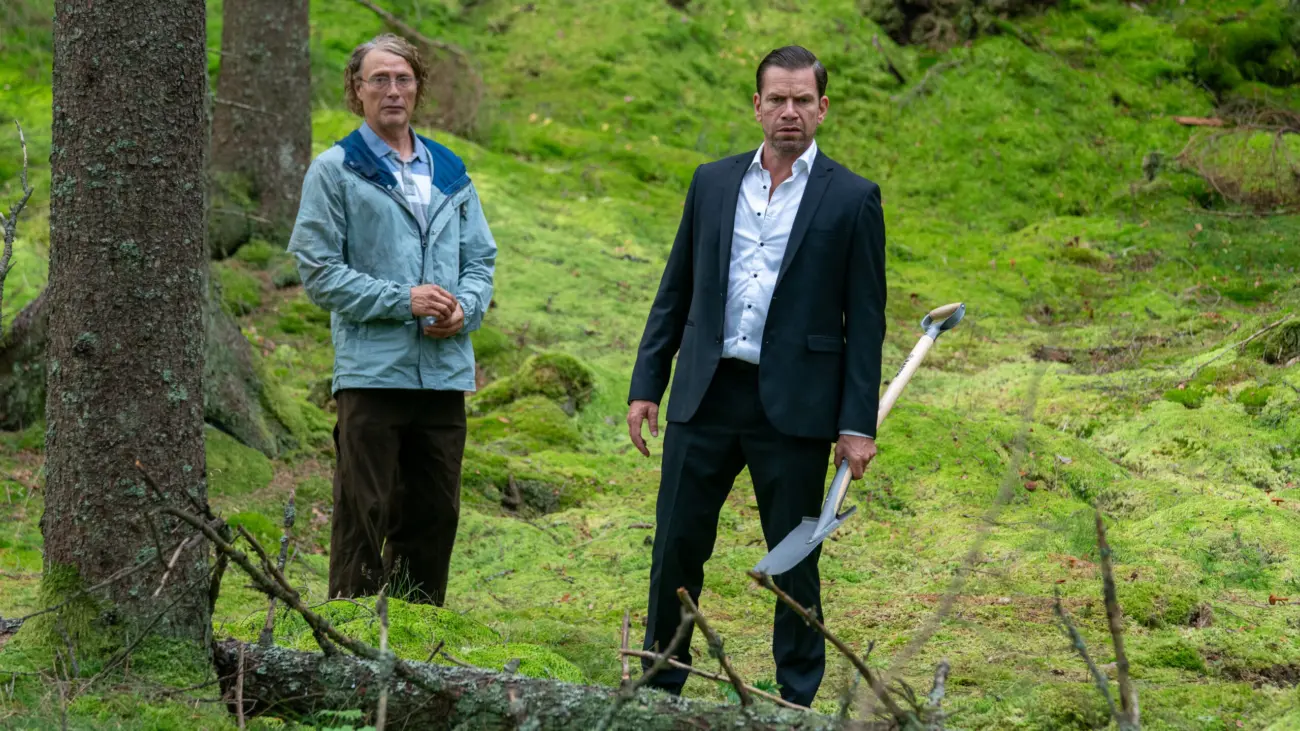
Jensen constructs a classic underdog character in each brother. The money, it turns out, was never the point. The journey back to their mother’s house is a journey back through everything the brothers buried alongside that bag of cash.
No one is “normal” in Jensen’s world. Every character is defined by their own absurdities, only the rest of us do everything we can to hide ours. Jensen brings audiences close through these internal multiplicities, where family bonds become shelters against the absurd, reminding us that mutual acceptance is the real therapy of everyday life. The ending does not offer clean resolution so much as it offers something more durable and harder to fake: two men choosing each other again, damage and all.
Critical Reception and What It Means for Danish Cinema
On the review aggregator website Rotten Tomatoes, 94% of critics’ reviews are positive. Metacritic assigned the film a score of 82 out of 100, indicating universal acclaim. Those are numbers that reflect genuine critical enthusiasm rather than polite appreciation.
Twenty years after ‘Adam’s Apples,’ the chaotic troupe led by director Anders Thomas Jensen strikes again. With its steamroller humor, unsuitable for sensitive souls, this crime caper pushes the boundaries of good taste more liberally than other contemporary comedies. Whether that boundary-pushing lands for every viewer is part of the conversation the film seems designed to start.

In The Hollywood Reporter, Mads Mikkelsen said of the film’s central themes: “This theme of being yourself, as well, but the brother story was, I thought, really beautiful.” Nikolaj Lie Kaas added that Jensen’s storytelling has something of the fable about it, and that he creates his own realm every time.
That realm, in ‘The Last Viking,’ is one of the most emotionally honest places Danish cinema has taken audiences in years, and whether you think the Beatles reunion subplot pushes too far or lands exactly right feels like the real question worth arguing about in the comments.